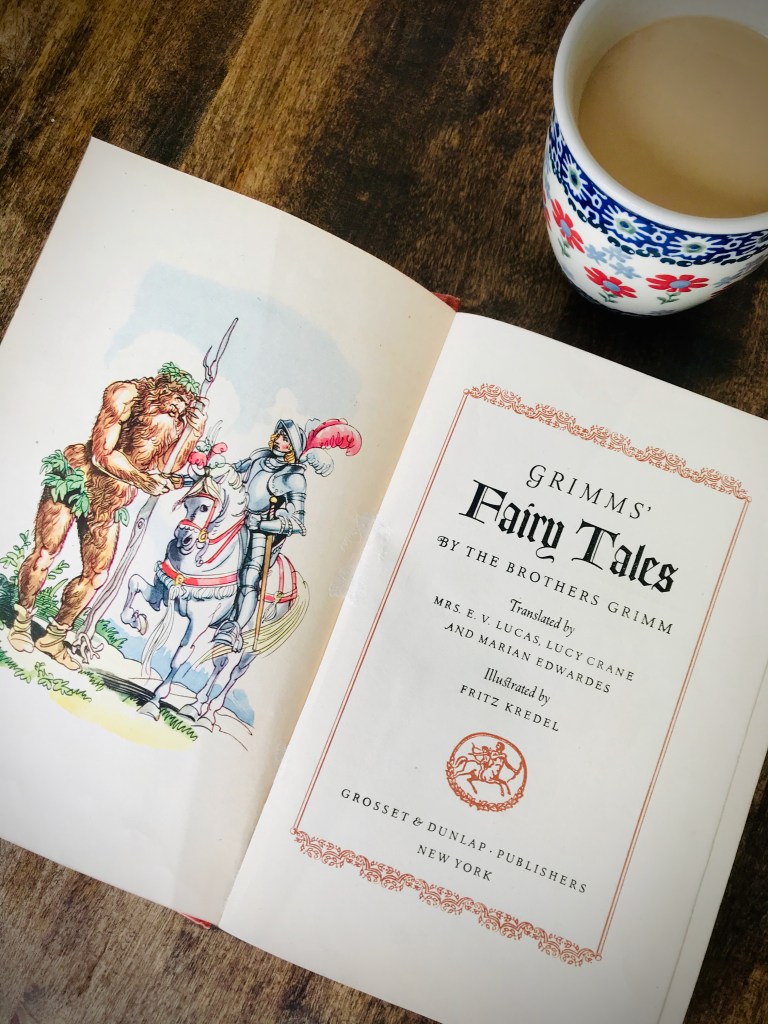
Saturday morning, reading by the window. I’ve got no plans. Maybe I’ll read all day with a cat on my lap, pausing only to eat and make coffee.
Probably I won’t do that, but it’s a nice dream.

Saturday morning, reading by the window. I’ve got no plans. Maybe I’ll read all day with a cat on my lap, pausing only to eat and make coffee.
Probably I won’t do that, but it’s a nice dream.
When I was contemplating a subscription to The New Yorker, I talked it out with my friends wondering, will it be worth it, or will it just stress me out because it comes so frequently? One friend laughed and sent me this bit from The Good Place, which is one of my favorite scenes from the show:
Despite my friend’s warning, I subscribed. And in January, the issues started piling up.
In my zeal after finishing my massive reading project, I put myself on the waitlist for multiple books at the library. At first, because I had to wait in line, there was no pressure, and I read magazines and unwanted books at my leisure.
But then one of my holds became available when I was midway through another book, and I knew I had limited time to get to the library book and get through the library book before it would expire and go to someone else, so I had to hustle. When I was midway through that library book, one of my other holds became available. Then another one.
Meanwhile, the New Yorkers piled up. I kept them in a small stack behind my reading chair in the living room, thinking, oh boy, the more those pile up, the more overwhelming it’s going to feel to get through them, and then they’ll stress me out and I’ll never get to them and I’ll always be behind.
Yesterday, I said, Enough. Forget the library books. I can get those again another time. I’ve got all the January issues of The New Yorker here, and it’s only four, and four is manageable. If nothing else, I can read the short stories and the cartoons from four issues and call it a day.
So I did, and now I feel better. I’ll be able to actually sit down with the next one that arrives in the mail and read it unburdened. And, since I was between books when I finished the backlog yesterday, I was able to begin a new novel last night: Norwegian Wood by Haruki Murakami.
Last year was a big year for my reading life. After reading a few phenomenal short story collections, and because I dared to try writing fiction, I wanted to study short stories. I subscribed to The New Yorker for a weekly dose of curated short fiction. I started with a 12-issue trial, and when in the 10th issue of my trial there was a new Olive Kitteridge story from Elizabeth Strout, I bought a 6-month subscription. Each week when a new issue arrives, and my husband deposits the mail on the kitchen table, I say “ooh!”, pick up the magazine, and flip to the page 2 table of contents to see who the fiction author will be. Sometimes I even read other parts of the magazine, and I have been delighted to come across surprises like personal essays from David Sedaris or Anthony Lane’s “The Intoxicating History of Gin,” which honest-to-god used the word “recharché.”
I also subscribed to a quarterly magazine called Offscreen. It’s beautifully designed, independent, and takes an unvarnished, thoughtful view of technology with the hopes of helping us steer it in humane directions. I enjoy quiet time away from a screen reading and thinking about the tech world we live and work in.
Those subscriptions are novelties in my reading life, and I enjoy their fresh differentness compared to my usual long-form reading. But by far the most significant reading I did in 2019 was to complete my Andrea Reads America project (with a few detours). Oh! And I read two Tolstoy novels! After six years of American literature, I now get to move into the wide open world of reading without rules. If my tracking in Goodreads is to be trusted, I read 60 books in 2019:
Thanks to Matt Mullenweg whose 29 Books in 2019 post inspired me to reflect on my reading life in 2019. I was particularly struck by his comment about how little books cost for how much they give. Looking through my list above, I think I purchased fewer than 5 of them; the rest I was able to borrow from the library.
I started reading I’ll Give You the Sun by Jandy Nelson, and it’s sucking me in so that the world around me goes black, and I have to claw my way out from the pages to not feel guilty for being absent from my family while I sit right here in the living room with them all around me.
It shouldn’t matter. I don’t know why I feel guilty. I think it’s because when I read that way, when I’m pulled into the vortex of a story where I’m walking alongside the characters and my real world disappears, I feel drugged, like I’m doing something wrong. It’s astonishing to me that humans can create experiences like this, that they can draw from the ether of imagination to string together words that, when combined with the gelatenous electric magic of the reader’s brain, makes us merge into something that doesn’t exist in this physical reality.
Speaking of physical reality, I finally gave up on my Barnes and Noble Nook e-reader. I tried to sideload a book from the library via my new laptop the other day — the same book I’m currently reading in physical form because I couldn’t ever get the blasted thing on my Nook and I had to drive to the library a day after I expected to be able to start the book — and I wasted three hours, THREE HOURS OF MY LIFE, trying unsuccessfully to to get access to the book on my Nook via the ridiculous Overdrive to Adobe Digital Editions to Android File Transfer to Nook gymnastics required for the Nook Glow. The process, on my day off, inspired sailor-level swearing until finally I rage-purchased a Kobo e-reader because it’s supposed to be the best non-tablet e-reader for connecting directly to your public library to borrow books.
I am in line for five digital books at my library. I hope my Kobo arrives in time for me to use it when my next hold is released. I’m trying to pace myself on my current book by writing this post and drinking a martini. It’s hard. I want to dive back in.
I’m diving back in.
I read for about six hours straight on Friday to finish War and Peace.
It’s one of those books that I’m glad to have read it, but the process of reading wasn’t a great one. Kind of like Moby Dick. I certainly have a deeper and broader knowledge of Russia’s defense against Napoleon’s invasion that I would have never in a million years have gained otherwise. But like our kids say about history class, “When will I ever need this?”, I wonder why on earth I would ever care to know about Napoleon or his advance and retreat across Russia.
Maybe it’s because I feel gleeful when I understand abstract references in my daily life because of something I learned in a Great Novel that I read. Whenever I recognize a reference to Moby Dick or Anna Karenina, I get an unexpected trill of I read that! So now when I hear anything about Napoleon, even if it’s in something as dumb as Bill & Ted’s Excellent Adventure, I will feel a little tickle of pleasure that I now know something about him.
Honestly, though, what I love most about having read War and Peace is that it brought one of my grandmother’s favorite pieces of music to life for me. As I read the book, and realized what years it chronicles, and especially when the pages took us to the battlefield of Borodino in 1812, and I put it together that Tchaikovsky is also Russian, I realized, this is the cannons and the tolling bells of Tchaikovsky’s 1812 Overture.
Such a fearful spectacle, so great a mass of killed in so small a space, had never been seen by Napoleon nor any of his generals. The roar of the cannon that had not ceased for ten hours, exhausted the ear and gave a peculiar character to the spectacle (like music accompanying living pictures).
Leo Tolstoy, War and Peace
My copy of the novel is 1882 pages if you include the 92 page, ten-part epilogue, which I am. The epilogue, like the novel, is part story and part repetitive philosophical arguments that read like geometric proofs. Snore. I wondered several times if I was just reading a poor translation because of the redundancies. My conclusion is that the book didn’t have to be this long.
Like a runner in a marathon, I set rewards for myself along the way. “When I get to that mailbox I can walk for a minute and drink some water.” Only for me, it was “When I get to page 1382 I can drink vodka.” I bought a little bottle of Stolichnaya and made a White Russian when I was within 500 pages of the end. For my final day of reading, I changed into sweatpants and slippers, cranked up my space heater, made a cup of coffee in my new literary mug that was a gift from my friend, and I blared Tchaikovsky while I read through to the end.
I’m still sorting my understanding of the book. It’s a lot to digest. I spent so much time with it, I think it will linger a long time as I penetrate the layers. When I first finished, I wondered, But where is the peace? The action itself all takes place in war time.
As I went back through the quotes I highlighted, and as I wrote about the novel in my journal, I realized the peace is in Tolstoy. He wants desparately to show that, with rare exception, men don’t want to kill each other, and that war is a devastating waste of life.
In every face could be seen hesitation, and in every heart alike there rose the question: ‘For what, for whom am I to slay and be slain?’
Leo Tolstoy, War and Peace
War robs parents of their sons, children of their fathers, wives of their husbands, and for what?
When the frosts began, the flight of the French assumed a more tragic aspect, from the men being frozen or roasted to death by the camp-fires, while the Emperor, and kings, and dukes, still drove on with their stolen booty in fur cloaks and closed carriages.
Leo Tolstoy, War and Peace
In the characters who find do find joy and meaning, in the characters whose souls do find peace, war is not glorious. Tolstoy shows what we sacrifice when we turn on one another. In War and Peace, the peace is what could be.
Since finishing my Andrea Reads America project, I’ve felt both thrilled and overwhelmed by the reading possibilities before me. I didn’t have my next book planned when I finished the project, and that caught me off guard. After six years of a pretty structured reading life, I suddenly didn’t know what I was going to read next. I picked up War and Peace because I loved Anna Karenina so much and because it’s long, meaning it’ll keep me occupied for a while so I don’t have to make any decisions.
Five weeks later, I’m a little over halfway through the 2000 page brick. And I can tell you, it’s no Anna Karenina. The extended, slow read is good for me, though. It’s like a long train ride: it’s giving me time to look out the window and think. I’m making time now for short stories during the day or in the evening, before I settle into the novel. I love these quick bursts of excellence injected into my days. And as I make my way, day by day, week by week, through War and Peace, I’m gathering book titles and putting them in order in my mind of what I want to read next.
I’ve started a side blog on Tumblr called Books & Drinks about the words and drinks I’m consuming. Running that blog has been super fun so far. And I’ve got to-read lists all over the place — Goodreads, paper lists, random electronic notes to myself. I’ve decided to make the illustrated TBR pile in my Read Harder journal my canonical list. I bought the journal at Ann Patchett’s book store in Nashville in January, so it has special meaning to me, but also, I know where the journal is in my house, I don’t have to look at a screen to get to it, and that’s the place I’m keeping all the recommendations I get from friends.
My reading life is exciting to me again, now that I am free.
P.S. — If you have a book lover in your life and are looking for a gift for them, I highly recommend the Read Harder reading log from Book Riot. In addition to being a journal of the perfect size and weight for both portability and actual usage, it has suggestions for really good books when you want to branch outside of your normal reading. I filled mine this year.