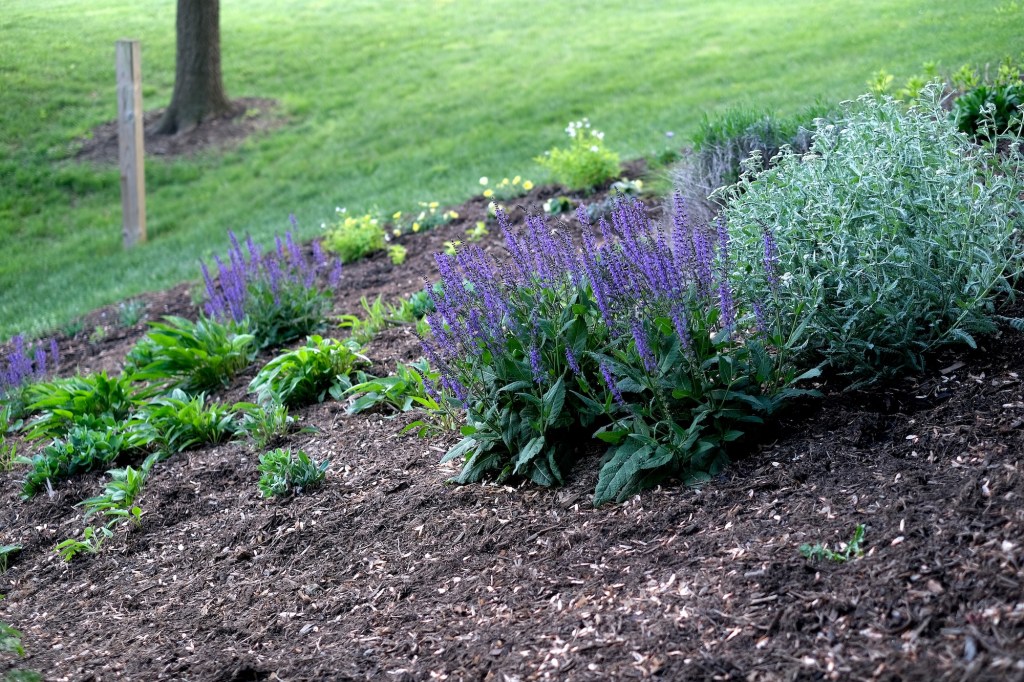
Every day, the world gets greener. Appalachia in spring is lush. It fills your eyes with emerald and peridot, your ears with birdsong in twirs and twees, your nose with cool crisp mountain air.
To ease stress, I watch my garden grow. I pay attention to the flowers. The catmint is blooming in soft blues, and the salvia in indigo spires. The roses have started opening their deep red blossoms, the columbine shiver in lavenders and pinks, and the poppies have buds the size of a baby’s fist.
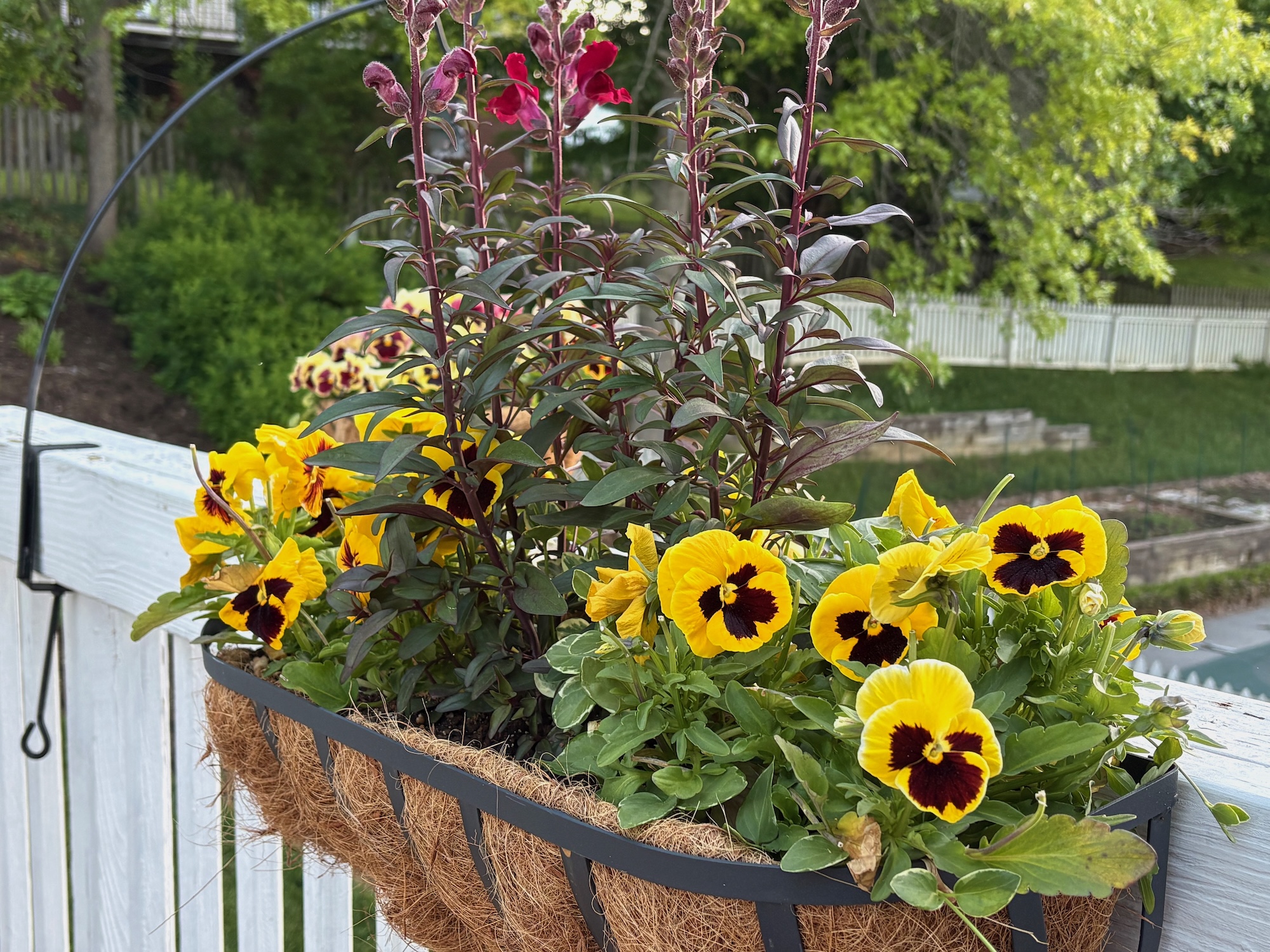
I have been watching the snapdragons in my flower baskets out back. They’ve seemed on the verge of opening for over a week. Yesterday, they finally began. Now I get to watch as each of those buds opens into a crimson flower. I hope the bees climb in.
One of my friends at work gets mad at me every time I say this, but I don’t consider myself to be a very technical person, even though I work at a tech company. At least not compared to all the people I work with. I just want technology to work and do the things I need it to do.
I am decent with language, though, and when things start to get technical, as long as I can ask questions and understand words, I can get there. Fortunately I work with a lot of kind and patient people who are usually excited to help someone else understand the work they’re so passionate about. They answer all my newbie questions and I am enlightened.
And fortunately for me, in this wild world of AI, regular old language can now help me build the technology I need to help me design my garden.
I think in words, not images. This makes it really difficult for me to visualize what something is going to look like if I can’t actually see it: a room painted a different color, furniture arranged a different way, arrangement of plants in a bed. Then, layer on top of that sunlight needs, bloom times throughout the year, vulnerability to different critters, plant form (mounding or upright), foliage type and color, bloom type and color. And then on top of that, I have specific dreams for my garden. As I told Claude, I want to “attract pollinators and to have pretty flowers and pretty foliage, in that order.”
For years, for decades, I have struggled with putting plants together in a way that manages all of the complexities of the plants’ needs and my garden desires while also arranging the flowers in the beds, and the beds in the landscape, in a harmonious and pleasing way. It’s really hard! I’ve tried to graph things out manually or annotate photographs, but I still can’t visualize what it’s going to look like when stuff is actually in the ground and blooming (or not), so it’s always a crapshoot. I mostly I just end up with pick stuff I like at the nursery, put it in the ground and hope it works, and then feel frustrated that everything looks hodgepodge.
When I was on a run the other day, thinking about how I need to solve my new problem of the groundhog eating all of my beloved echinacea, it hit me: can I build software that can help me plan my beds and generate images of what they’d look like with different plant arrangements? Thinking in words isn’t good for visualizing, but it is good for working with conversational AI, where I can just tell it what problems I want to solve and then work together to solve them.
So that’s what I’m working on this weekend. Ultimately, I want an app that will help me design my garden, research plants, and track how plants do over time. I want it to do exactly what I want it to do, in the way I want it done, for the preferences and constraints I care about. It will know everything about my specific garden: what my USDA plant hardiness zone is, which plants get mowed down by deer despite “Deer resistant!” on the tags, and what the size, shape, and sunlight are for all of my flower beds so it can help me fill in with plants that will attract butterflies, and so that the beds will have something interesting going on in every season. And won’t have invasives. And, oh yeah, I also want caterpillar hosts.
Before starting on an app that will allow me to repeat the process with each bed, I started with the one problem I want to solve right now: the groundhog in the echinacea. Starting with the real problems I want to address — my struggle with visualizing and the need to plan around so many mammal grazers — grounded the development and gave us a practice session to build a spec for what the final app will need to contain and what output I want from it.
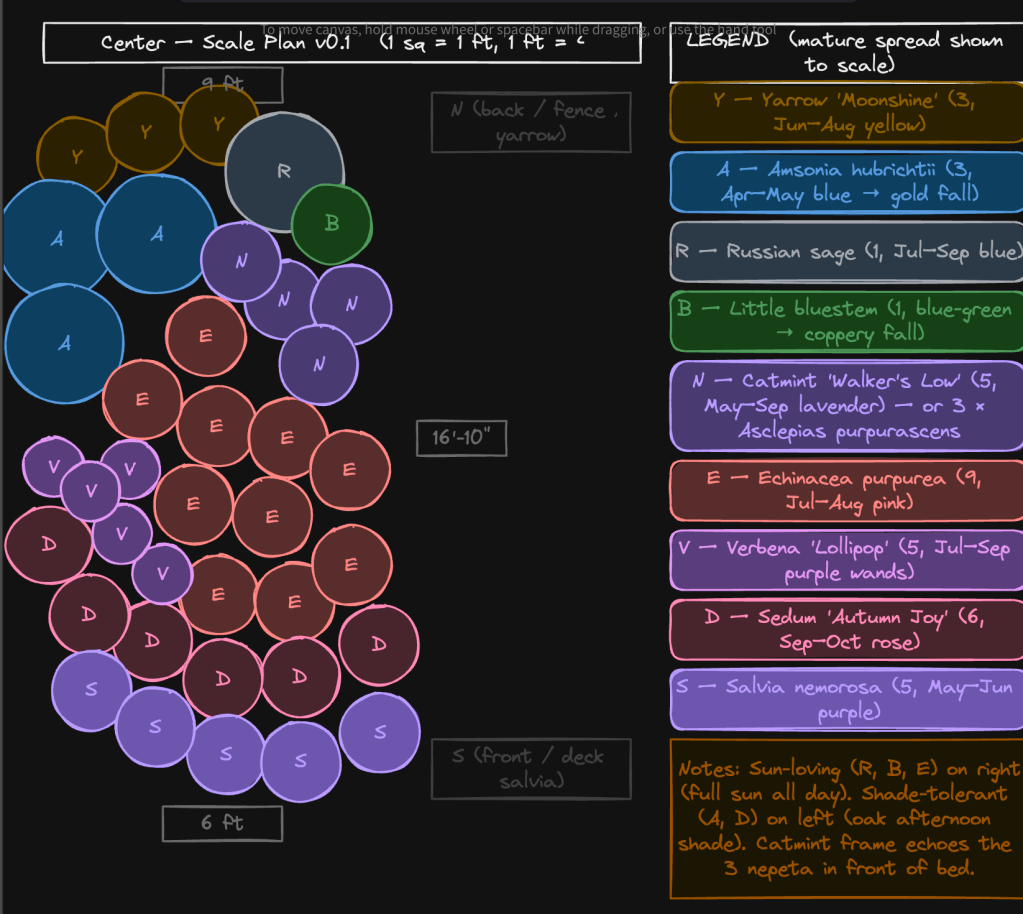
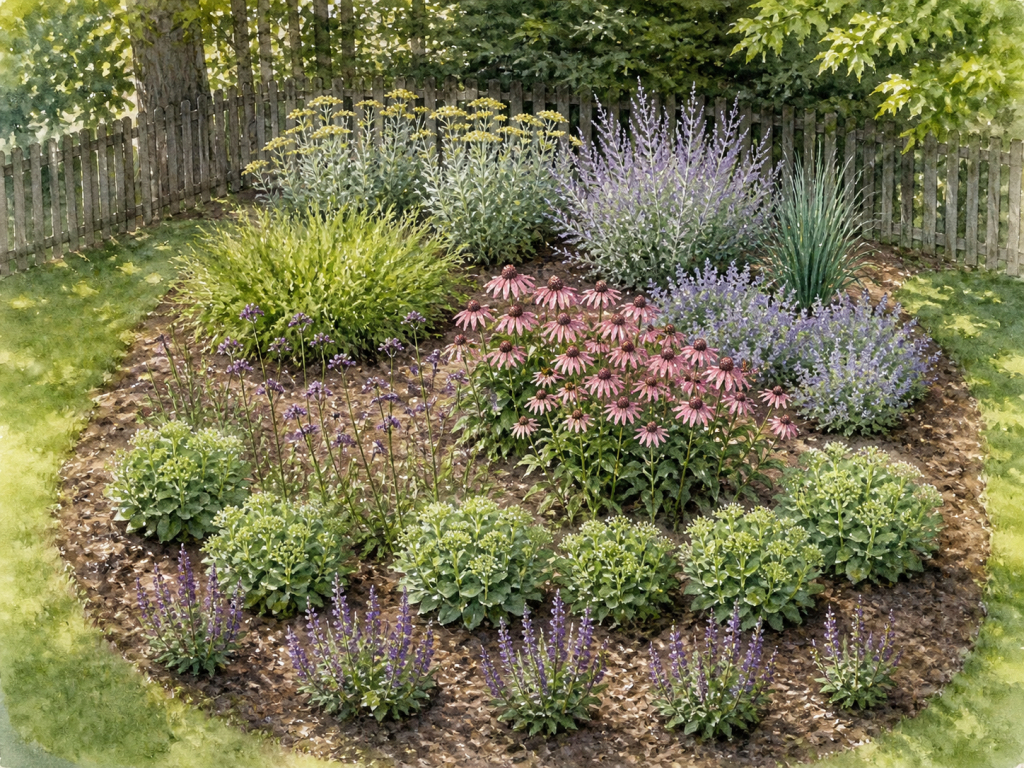
For the back bed, we came up with plants for aesthetics, butterflies, spring, summer, and fall interest, a shopping list for the plants I don’t yet have, schematic plans to help me position the plants, and a funny and also really helpful visual of how the plants will go together.
Schematic plan“Realistic” rendering
We’ve got a long way to go, Claude and me, but I’m delighted by the possibilities. Now it’s using what we did with the back bed — my constraints changed what will go in the database, my excited reaction to the rendering (vs my lukewarm one to the planting plan) bumped up the important of the visual — to execute on the spec. I get to write this post while it does all the technical work of building the software I want.
The forsythia blooms in bright cascades out back. Daffodils beam in butter yellows. Cherries froth in pastel pinks, and tulip tips emerge from the earth. The grass has come to life again: its green growth waves in the wind. We’re not mid-March yet and it’s already time to mow.
The end of winter is in sight. The spring equinox is this Friday, and my annual gardening vacation begins immediately after. I’ll take a whole week to cut back dead stems from perennials, clear leaf litter, and spread mulch. I called my mulch guy yesterday and left a message; I hope I’m not too late to get it delivered on Friday. If not Friday, then Monday at the latest. It takes a few days to spread it all.
If there are still days left of my vacation after all of that, and if the nursery has anything in stock I can put in the ground or in flower boxes, the reward for my labors in browns will be fresh greens and bright bursts of colors.
I can’t wait. If the weather is nice, I’ll take breaks on the back deck in the sunlight. I’ll eat smoothie bowls while I gaze out over the beds and plan what to plant in the open spaces. I’ll imagine what the garden will look like when the flowers grow in. I’ll need to go down and see the bare ground close up to remind myself what was there before and whether I expect it to come up again. I’ll walk laps among the flower beds, thinking and planning, touching the warm earth. Each day will feel wide open: no schedule on a calendar. Just “spread the mulch” or “run to the nursery.” I love it so much.
In the garden, I lose track of time as told by hands on a watch face. Instead, time is told by the warmth of the sun, the growl in my belly, the reapplication of sunscreen, the length of shadows. The garden is one of the few places where time becomes irrelevant to me.
The heat broke this week. We opened all the windows and turned off the air conditioning for the first time in two months. One morning at the pool, I commented on the welcome cool weather, and the attendant said, “Yes! My garden is a mess; it’s been too hot to weed, and I’ve just let it all go.” I was relieved to not be the only one.
All through July, I watched, dejected, through the windows as new weeds sprouted every day. Old ones reached taller than the plants that are supposed to be there. The mornings were too thick with gnats and the evenings too hot to garden, so the weeds continued to grow.
With the break in the heat this week, I finally got out after work to tidy the flower beds. Tuesday evening I tackled the front, and Wednesday, the back. I wore long sleeves, long pants, thick Darn Tough socks, and the hiking shoes I use for gardening. I started at the lowest part of the hill, up against our neighbor’s fence, pulling waist high stalks and digging out grass with my spade.
I turned, hands full of uprooted plants, and walked to the wheelbarrow to toss them in, when I felt a piercing pain in my ankle. A fierce, howling, swear out loud pain. As I cursed to the empty yard, I looked down and saw a yellow jacket stuck in my sock. I kicked at it with my other foot until I finally got it off, then turned to look where it had come from, and saw a swarm of yellow jackets at the fence. I ran away, terrified that any second I’d feel another sting.
I had only just begun my work, and I’d been wanting to get this weeding done for weeks, so I moved to another part of the garden as I waited for the pain to subside. I kept going for another hour or so.
The next morning, my ankle was swollen, and so was my foot. And they itched. Like crazy. I took an Allegra. That afternoon, my foot was twice its normal size, puffy and tight like a balloon-animal, and the skin was red, hot, and angry. I wrapped it in ice and elevated it. I took a Benadryl. I felt my calf and it was swollen, too. I googled “When should I see a doctor for a yellow jacket sting?” I sent a photo to friends. One said, I’m worried for you, I really think you should seek medical attention.
I really didn’t want to go anywhere, I just wanted to lounge and read my book, but I was worried too. I figured it’d be better to go to urgent care in the evening than the ER in the middle of the night, so my husband drove me to the clinic, where the nurse exclaimed when she saw my foot and said oh you poor thing. When the doctor came in, her eyes got big and she poked her head out the door to tell her partner provider, Come take a look at this.
I clearly had an allergic reaction, but the scary part was that in less than 24 hours, I’d gotten a skin infection, cellulitis, which I also googled and shouldn’t have. They gave me a steroid shot and a prescription for antibiotics that we picked up immediately and I took the first dose of in the car on our way home. They’d told me to watch my foot and if it got any worse, go to the ER. The infection was not something to trifle with.
I’m happy to report that the steroids and antibiotics are doing their job, thank God for modern medicine, and though my foot is still a sausage, the swelling is going down and my skin is back to a calm, cool state.
What I’m not happy to report is that the yard makes me nervous now. I don’t know if I should start carrying an EpiPen. I’ll ask my doctor at my annual next month. I do know that if I get stung again, I need to immediately wash the wound. I had no idea that was a thing I was supposed to do.
Daily writing prompt
What is the most important thing to carry with you all the time?
Bunnies snack on the leaves of my rudbeckia out front, but not enough to do any damage. The plants are still full, and the bright yellow flowers still bloom.
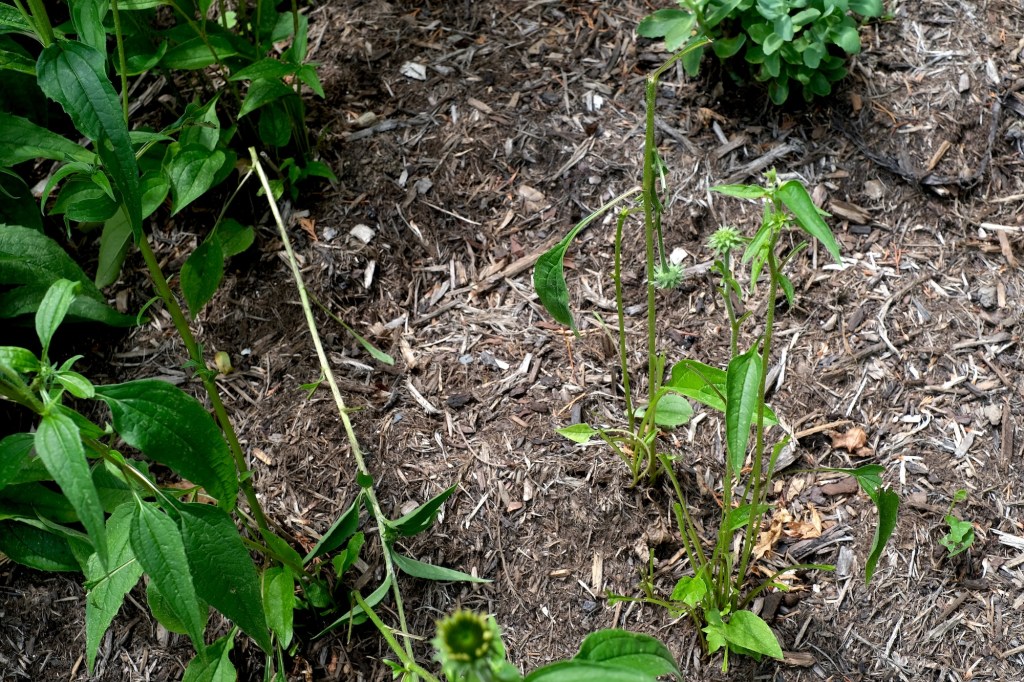
Out back is a different story. Out back, the five rudbeckia I planted at the beginning of my sabbatical are mowed to the ground; a few gnawed stems and a couple strips of leaf remain. There are no yellow flowers with black centers in sight.
When my friend Jessica visited last week, we spent a lot of time together watching the happenings in the back garden. In the mornings we’d see four deer — a doe, two speckled fawns, and a young buck with fuzzy antlers. The doe grazed at the platform feeder filled with seed for the birds, and the young buck looked right into my eyes as he bit a broad leaf off a hosta. He looked right into my eyes as he chewed it, then bit another leaf off.
When we ate inside, my friend and sat on the same side of the table so we could face the glass door and look out. We watched the cardinals and finches at the feeder. We laughed when the squirrel took his turn, and we’d get up to open the door to scare him off, and he’d leap to the nearby tree branch with all four legs spread like he was doing a belly flop, desperate to catch the leafy branch rather than fall to the far away ground.
When we were outside on the deck, we sat at the tall table so we could look out over the railing. We watched chipmunks dash, and hummingbirds drink. We watched bees bumble and bunnies nibble.
One day, we looked out and saw the tops of the echinacea swaying and shaking at the back of the patch. The plants are filled in with leaves now, so the creature rummaging around in there had good cover. We couldn’t see it to identify it. We had no idea what this animal could be — bunnies and chipmunks don’t create such a ruckus. I thought the only things eating my garden were the deer and the rabbits. This obviously wasn’t a deer, and if it was a rabbit, it was a mighty big one. We watched as the swaying moved towards the edge of the patch. I saw a patch of brown bristly fur on a substantial body. “Is it a raccoon?!” Then, a round brown groundhog emerged, pawing the echinacea stems to the ground, stripping leaves off, eating as it went.
“Eeeeeee! It’s so cute!!! Look how fat!”
We watched the groundhog decimate my echinacea plants, then squealed as it waddled off — faster than you’d expect! — fat rolling, its blubbery body low to the ground as it ran up the hill.
The garden has grown quite a bit since I finished mulching at the beginning of my sabbatical. Now the animals are mowing it back down. I’m not sure what all will survive them grazing at the buffet I’ve created, but I am certainly entertained by the tableau.
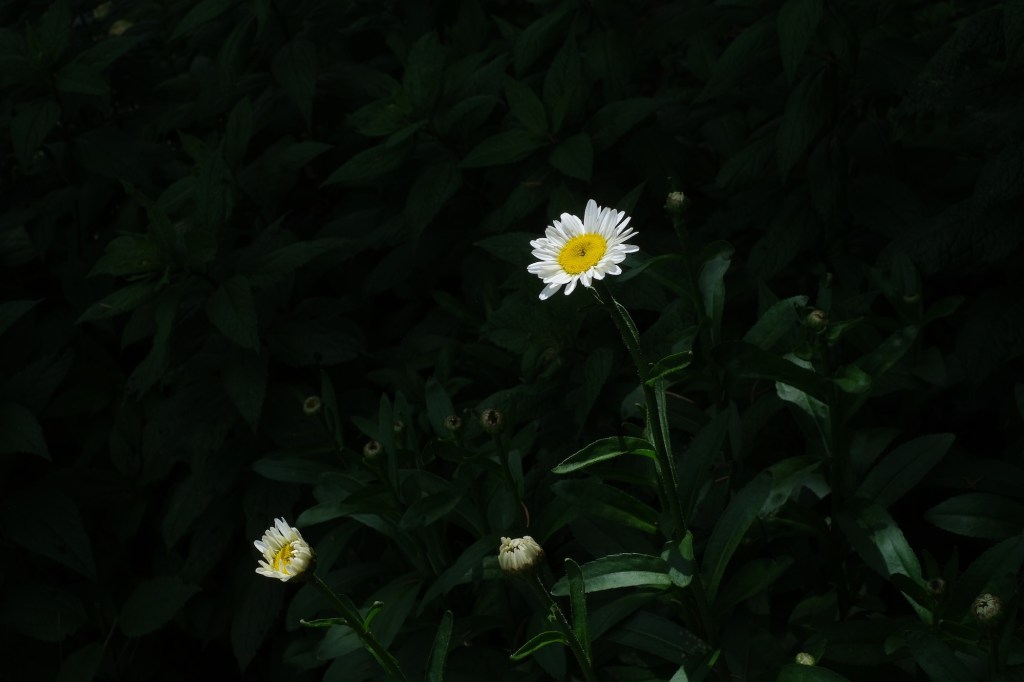
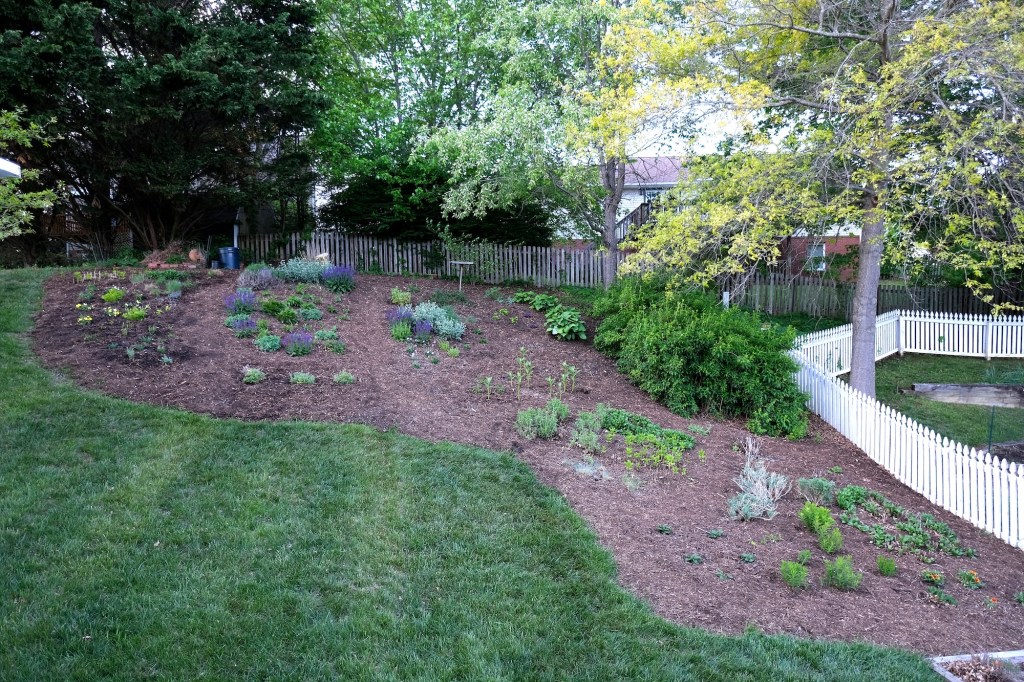
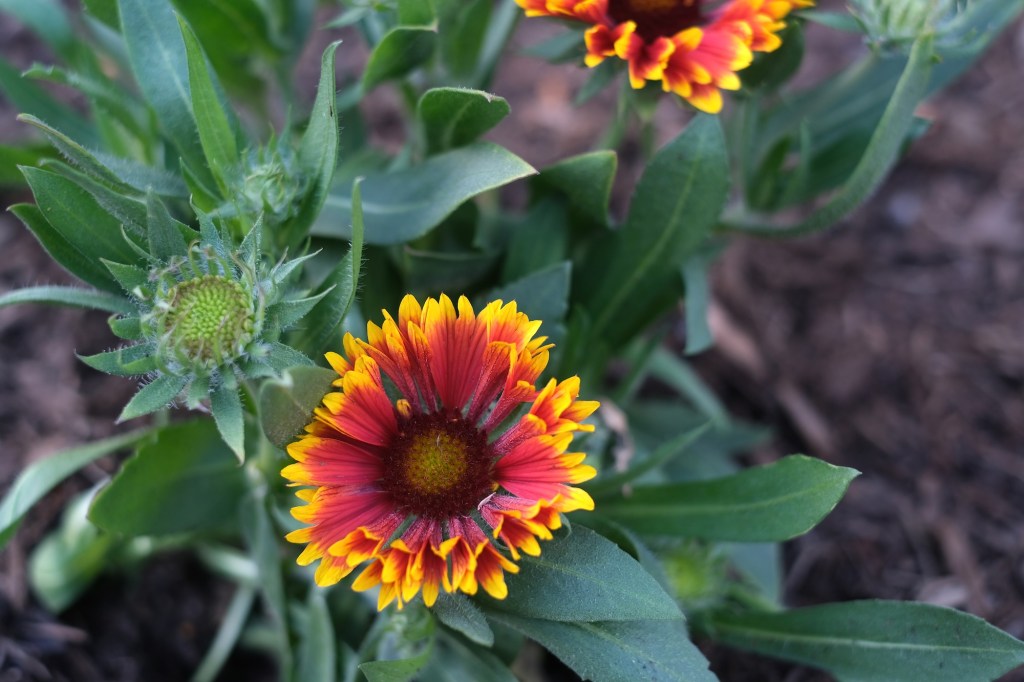
AprilJunePoor hostas. Three down, one to go.Gus the groundhog was here.Bees don’t do much damage.The back yard buffetThere’s still plenty of echinacea left.Nothing seems to be eating the daisies.
After almost four weeks of being on the go, I’m back home and can rest. I wrapped up work, the garden is mulched, I visited my besties in Utah, and we’ve moved our daughter home after her first year of college.
Now, I sit in my favorite chair by our living room window with a cat on my lap and my coffee by my side. Birds twitter in the darkness outside our open windows, and I eagerly await the sunrise. Yesterday, after being in the desert for a week, I savored the wet dew and the profusion of emerald all around me: green mountains, green leaves on trees, green grass. After a landscape of red dust, hard rock, and a scarcity of life, the landscape of home quenches a thirst I didn’t know I had. Here in Appalachia, the world explodes with life. All these lush green plants, making food and beauty from light and water, then feeding the buzzing bees, the chirping birds, the crickets, deer, bunnies, chipmunks, squirrels, beetles, and me.
Because of my trip to Utah, and to Florida to pick up our daughter from her dorm, I wasn’t able to put plants in the ground after I finished mulching the garden a couple of weeks ago. That changed this weekend. I overspent my garden budget in two large trips to the nursery, and am giddy to say that the flower beds out back are finished. Well, finished as much as a garden is ever finished, which is never, but they are finished for now.
One section of the back garden has become shaded by our growing oak tree, which has presented a challenge in recent years, as the sun-loving flowers I originally put in no longer thrived. This year, I tried some new plants I’ve never planted before, including begonias. I’ve always loved begonias — they look like little roses, their foliage is a deep, luscious green, and I could not resist the buttery yellow of the flowers. I bought yellow petunias to match, purple columbine, and a variety pack of coleus for foliage.
I ate lunch on the back deck to admire my work yesterday. When I’m inside, I find myself standing at the back window just to look at it and imagine what it will look like when the plants have grown and established themselves. I think it will fill in nicely over the next few weeks, and I am eager to watch the green grow, the flowers bloom, and to welcome butterflies and hummingbirds later in the summer.
Today will bring another trip to the nursery, this time for the front flower boxes. Once those are filled, the garden will be mostly done, other than weeding and other maintenance. I can’t wait to be able to relax outside in it with my book, my coffee, my sketchpad, or maybe even just my eyes and ears.