Life is a mystery: how we got here, who we are to each other. Why we exist. What it all means. It can be a lot to go through every day and do the work of living. We have to feed ourselves and maintain our lives. Ideally, we stay hopeful in the face of humanity’s long history of greed and violence.
Artists get us through. They draw from something ineffable, some unseen and unknowable source, to bring beauty and meaning into our lives. They help us tap into the gorgeousness all around us. They challenge us to think about things from someone else’s point of view.
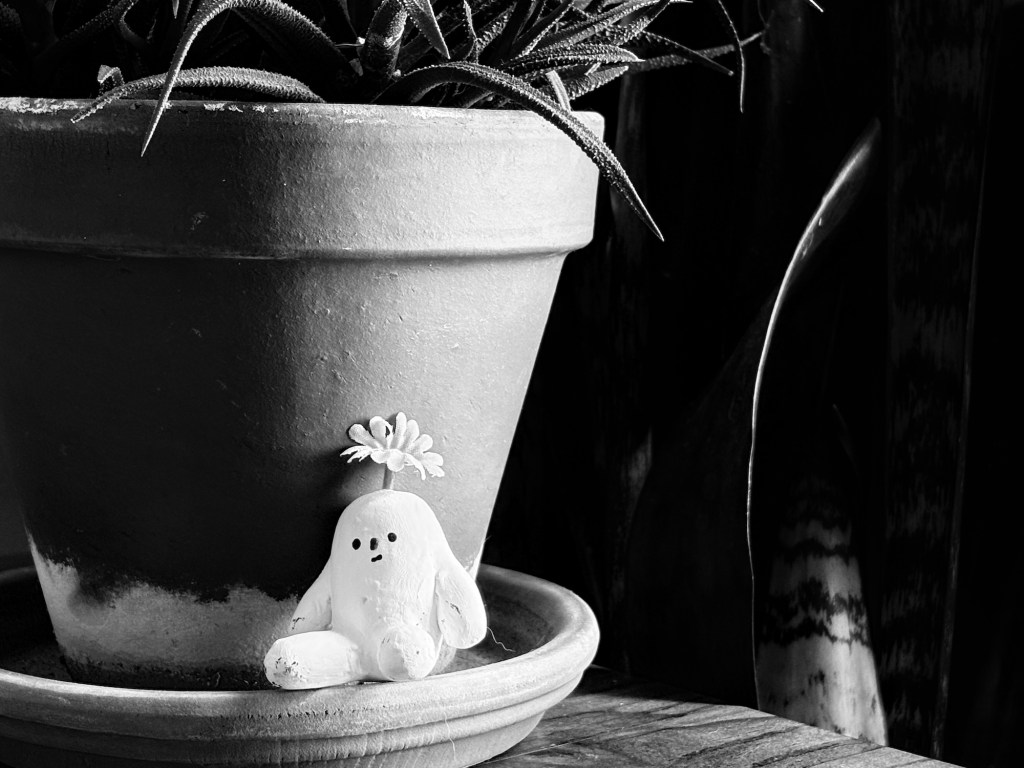
And sometimes they bring small delight, a little giggle when we come across their creations. Like this little guy our daughter made, who makes me smile every time I see him. He’s so innocent and nonthreatening. He looks squishy and sweet and huggable, like a marshmallow, and the little flower sprouting out of his head tells me he goes through the world spreading joy and hope. I love him so much.
A pug is sitting at my feet looking up at me with pitiful eyes, hoping for a crumb of my iced lemon pound cake. The coffee shop is painted a soft green. A long cushioned bench upholstered in floral fabric lines the wall. The front window is framed by cascades of lilac and jasmine. In the back of the café is a flower shop. Two women chat in French as they strip leaves from stems under a ceiling of skylights. A sign on the wall above them says La Fleuriste. The espresso machine whirs. A demitasse spoon tinks in an espresso cup. A florist pours water into a pail and I hear it trickle like a faucet.
-June 11, 2025, Paris
Romantic is a soft, gauzy feeling. It is a blush, a glow. The ruffle of a petal or a skirt. It is the fall of light. It is the rush of love, the hope to create beauty, the glimmering of an ideal. Romantic cherishes what could be and softly, gently, attempts to make it real. In the attempt, it succeeds, if only for a moment.
I am prone to romanticizing. In my younger years, this romanticism could be painful. I wanted romance to last, whether the romance was that fluttery feeling of first being in love or the glowy feeling the golden glimmer of evening light gave. In my adult years, the ephemerality is part of its allure. Romance is special when it shows up.
When I was younger, I also could not square that romance could live alongside truths with harsher colors and harder lines — if the hard realities existed, and romance faded, then my romantic notions must be false. Boy was that a depressing thought. Now I know that life is made of both romance and the not so romantic, and that the hard elements make the romantic — which is just as real — that much more sublime.
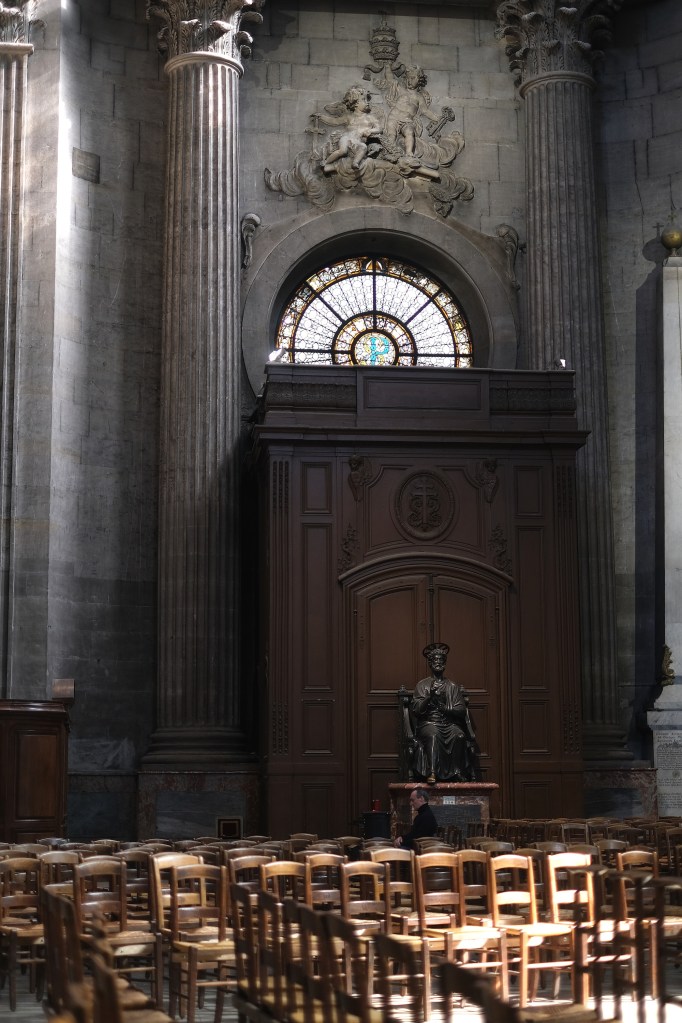
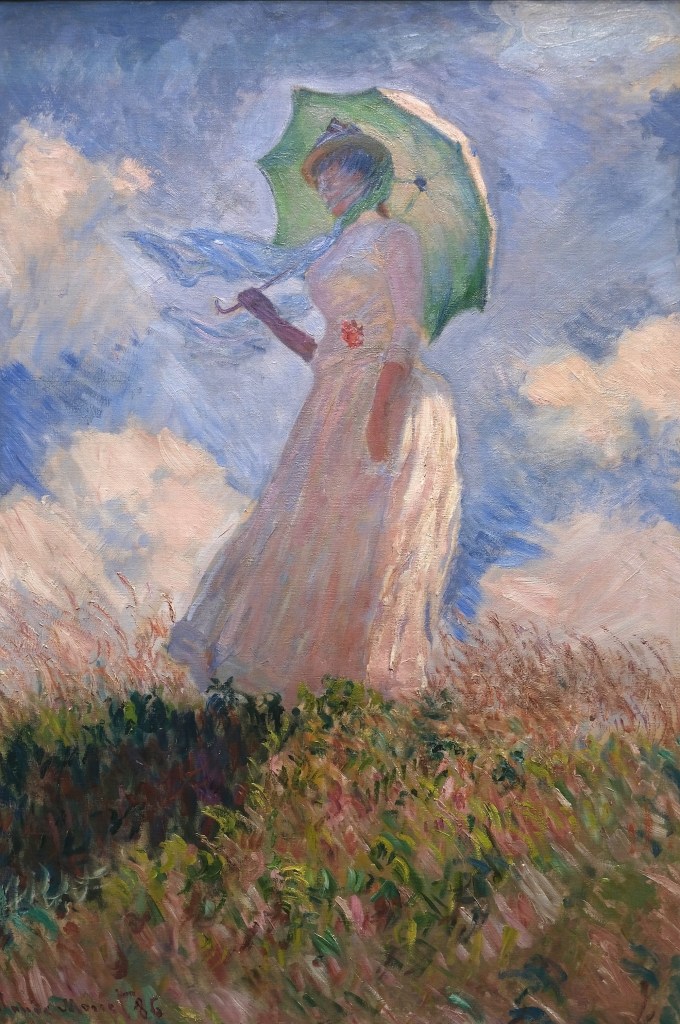
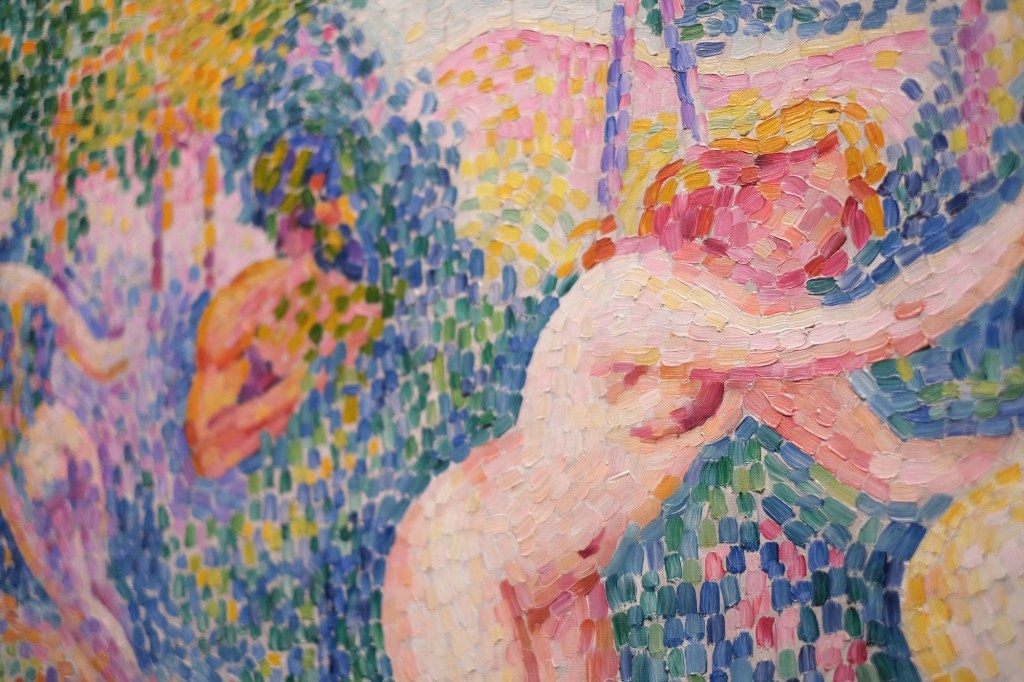
I savor the romantic when I’m lucky enough to experience it: the moment will likely be fleeting. Our days in France were full of romantic moments, including these on my final day alone in Paris, from the fall of light in St. Sulpice cathedral, to the soft floral shelter of Cordelia’s Coffee Flower Shop, to the bright blue door of the apartment where Hemingway wrote words that made me want to visit Paris, to the masterful impressions of mood and light in paintings at the Musée d’Orsay.
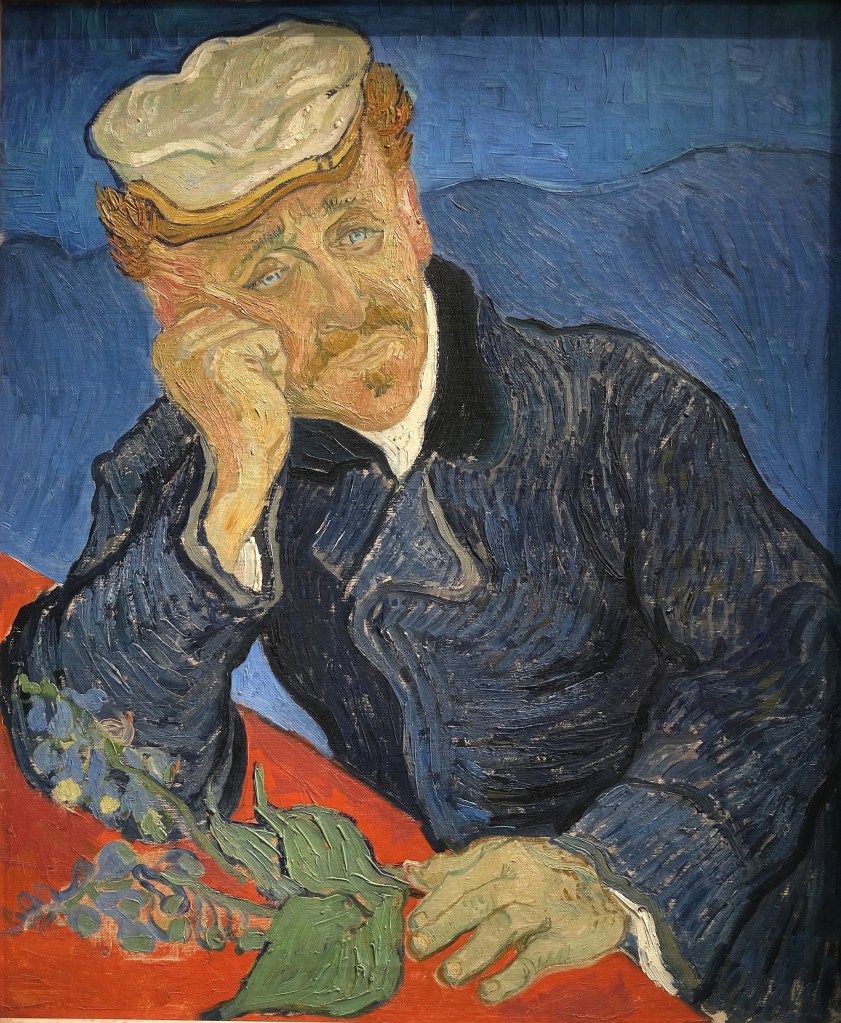
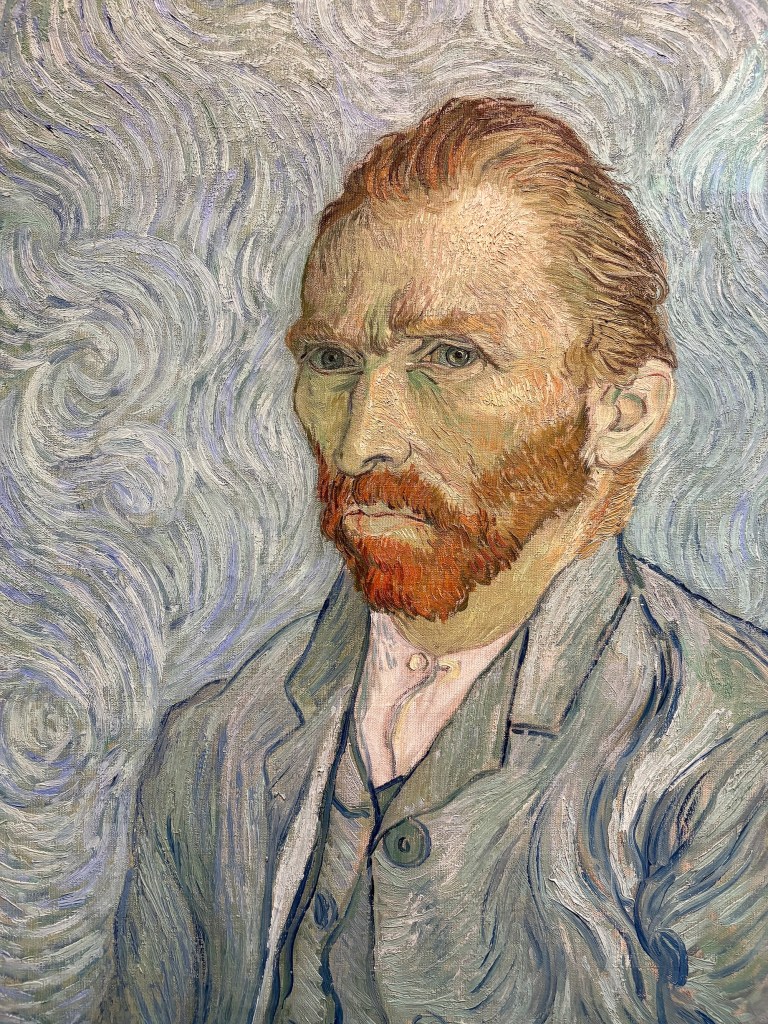
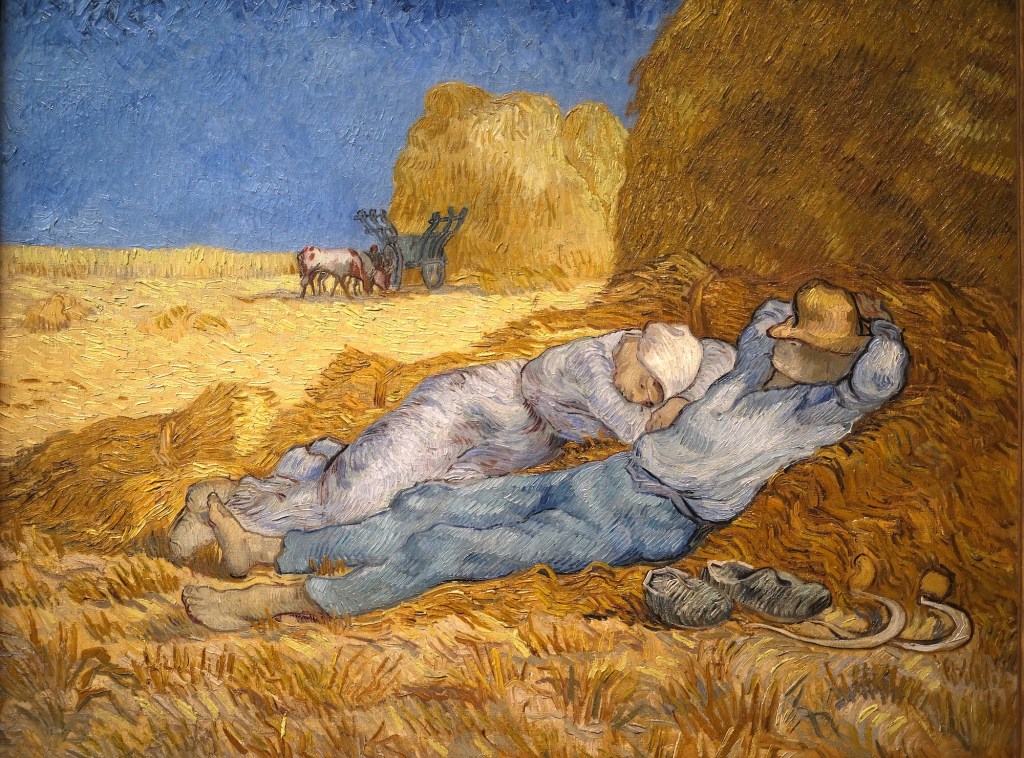
Light in St. SulpiceCordelia’s Coffee Flower ShopI love the wind and the light in these sketches of Woman with a Parasol by MonetAnna Boch, CuilletteDetail from Henri-Edmond Cross’s Flight of the NymphsSo sad. Doctor Paul Gachet by Vincent Van Gogh.Portrait of the Artist, Vincent Van GoghThe Siesta, Van Gogh74 Rue du Cardinal LimoineErnest and Hadley Hemingway lived on the 3rd floor above the blue door. Hemingway wrote about this apartment in A Moveable Feast, which introduced me to the romance of Paris, and he lived here when he started writing about the Lost Generation in The Sun Also Rises.
Do you have weird things in your memory that stand out from childhood, things that you’re not sure why you retained those particular bits of information? I have very specific words I remember from art lessons way back in elementary school, like the different types of columns (Doric, Ionic, Corinthian), like the names Michelangelo and Leonardo Da Vinci, Sistine Chapel and Venus de Milo. Of course I know all these words in my adult life, but I specifically remember that as a child, the words and the images they conjured made me feel some kind of good way, maybe one of my first experiences of feeling awe that those people and those pieces of art existed. They seemed too good to be true, like they couldn’t be real, or at least were totally unreachable to me on the other side of the world. I didn’t conceive that I’d actually be able to ever see any of them myself.
One of the things that has always stuck in my mind from those lessons is bas relief. I don’t know why it stands out to me (har har), but the term has always been there in my brain. I did not feel awe about bas relief when I learned about it because I did not understand why it was important. Maybe that lack of understanding is why the term stuck: if they were teaching us about it alongside Michelangelo and Da Vinci, then it must be special. I assume I’d never seen a compelling example of bas relief, or I’d only seen one represented in two dimensions in the pages of a book, and I just didn’t get it. For 40 years, or however long it’s been since I learned about it, I did not get it.
Now I do. In a little hallway, in what I might have thought was a throwaway room in a dark passageway from one gallery to another, Lille’s art museum has a marble bas relief from 1435 that took my breath away: Donatello’s Feast of Herod.
It turns out, at least with this particular bas relief, and I assume with others as well, that light, once again, is everything.
The Feast of Herod hung alone on a dark wall with tiny hidden light sources in an arc around and above it. The default lighting lit the surface of the carving from the sides and top — not from out in front, which would flatten the image — so that the shallow lighting shone across the carved marble to highlight raised elements, and so that the recessed portions fell into shadow. This created a sense of depth, an illusion that the hallways and recesses in the carving disappeared into the museum wall. They looked inches deep, like I could stick my finger into one of the arches. But those dark halls are only a few millimeters behind the foreground. The entire carving is less than one centimeter deep.
A plaque next to the carved marble slab invites you to press a button. When we pressed it, the light faded to dark, then began to illuminate one side, then the top, then the other side, so that you can see how the image changes depending on where the light falls. Perhaps this lighting replicated how it would appear as the sun rose and fell on it throughout the day wherever it was originally displayed.
Donatello, Feast of Herod
I didn’t get a photo in flat light to show the difference, but you can click here to see one on the museum’s web site if you’re interested. It looks completely different from the image above. The front-lit image on the museum’s website was likely the kind of photograph I saw when I first learned about bas relief and didn’t understand why it was a special kind of sculpture.
When I saw the lighting reveal the magnificence of Donatello’s creation, it blew my mind. How did he and all these other artists figure out the mathematics and perspective to create masterpieces like this? And not only figure out the math, but conceive of the idea to begin with — to create depth in something shallow — and then plan, calculate, and execute it. It’s just unbelievable. I can’t believe it. Except I have to believe it because I saw it.
Spirituality is important to me. Not spirituality in the sense of going to church or worshipping capital G God, though being in a church can sometimes make me feel the connection I seek, to a oneness vaster than me or humanity or earth. When I say spirituality is important to me, I mean that I place a lot of value on tapping into that connection with oneness.
The times I feel spiritual, when I feel that connection, most frequently happen when I am in the presence of great beauty or excellence. Sometimes that’s through food. Sometimes it’s through art, literature, poetry, cinema, humor. Sometimes it’s something in nature, like the wind in the trees or wavelets sighing on sand. Sometimes it’s in the wonder of mathematics and physics and engineering. Sometimes it is a person’s goodness.
When I’m lucky enough to tap into that connection, I feel awe and wonder and humility and euphoria. I feel the universe in the cavity of my chest, which has become vast in its presence, and I believe that the universe is in all of us. When I feel that connection, I know everything is going to be okay, even if only on the time scale of the oneness.
I felt this when I saw Donatello’s Feast of Herod.
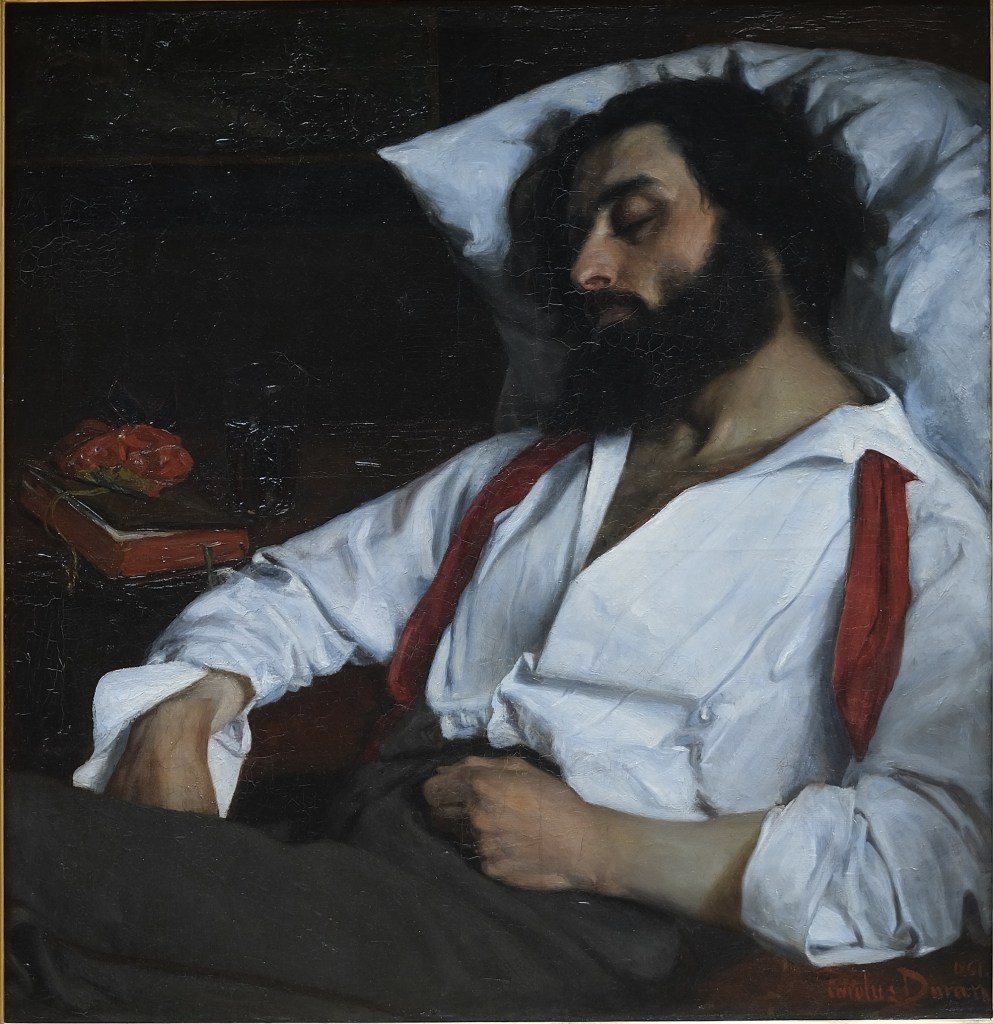
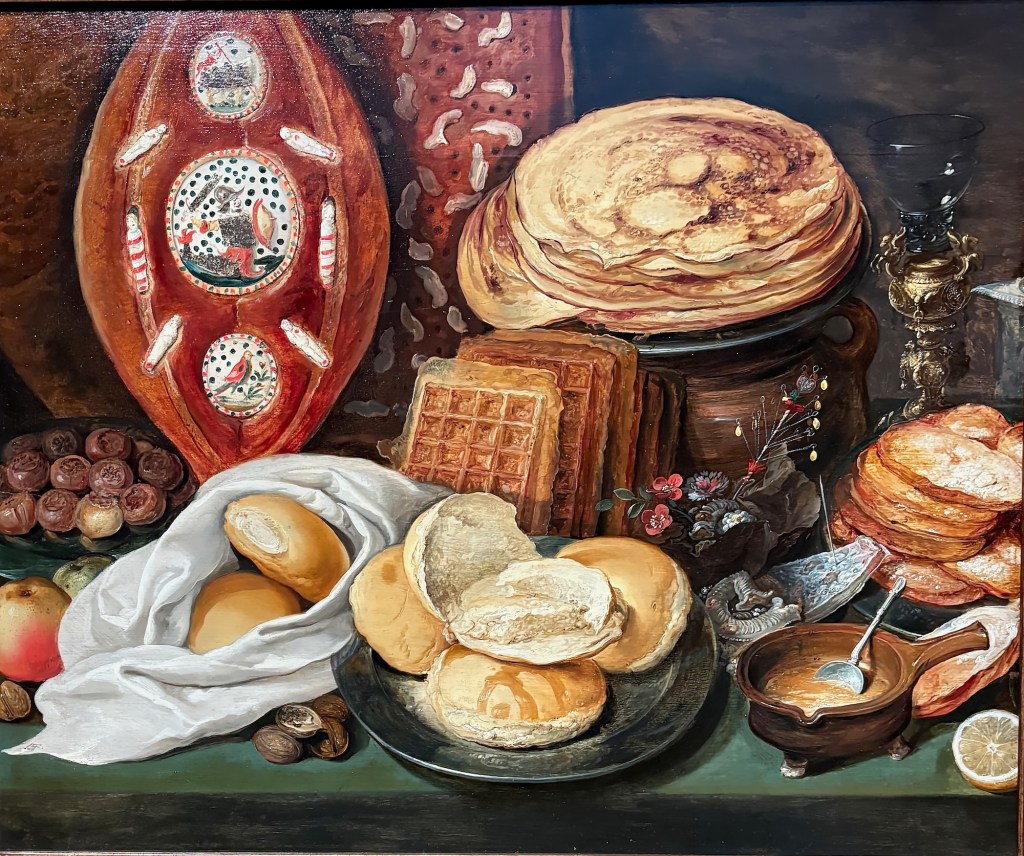
Though it was the most staggering, Donatello’s bas relief was not the only one of the day’s delights that fed my spirit. I also loved the paintings that showed everyday people doing everyday things in their everyday settings, like Therese peeling potatoes, like Durant’s man sleeping, like a funny still life of crêpes and waffles and rolls.Below are photos of some of my other favorite works from our day at the Palais des Beaux Arts in Lille and La Piscine in Roubaix.
La Maison de Therese, SaloméL’Homme Endormi, DurantNature morte aux crêpes, gaufres et cougnole, Francken
I was moved by a marble sculpture of a pieta (another word I remember from art lessons). From across the room I thought it was a sculpture draped in a fabric cloth. I wondered why it was covered, so walked over to see. When I got closer, I realized the cloth is made of stone.
The Architecture of Empathy, John Isaacs
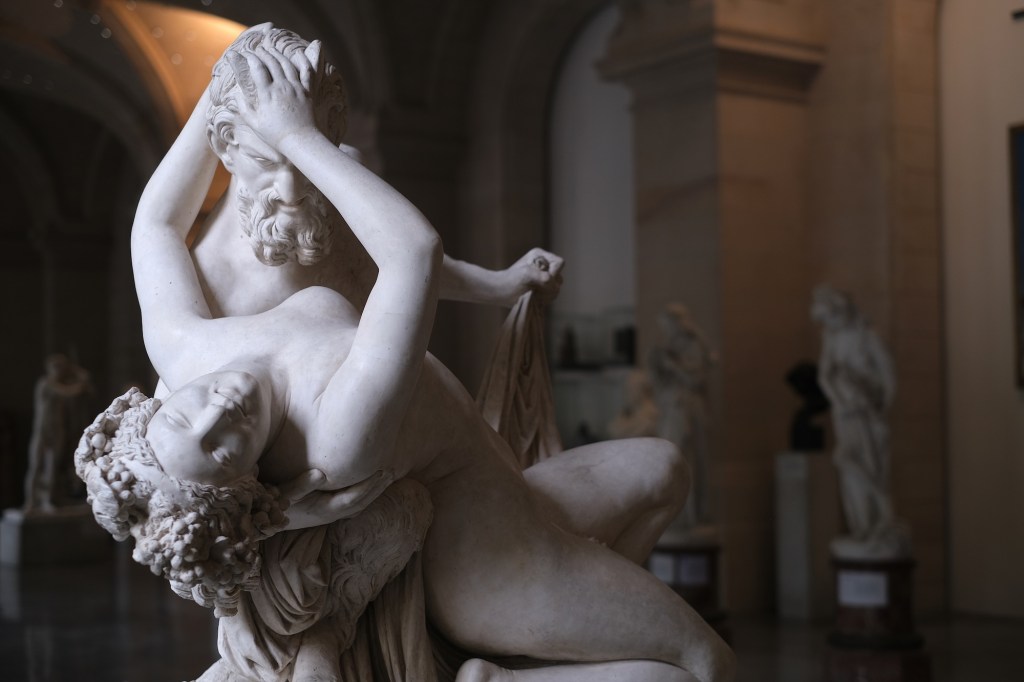
I loved the dramatic lighting on the plaster Satyr and Bacchante. The light was even better than what we saw at the Louvre, though the sculpture itself wasn’t quite as fine.
Satyr and Bacchante, James PradierLa Piscine in Roubaix
I considered trying to see the Mona Lisa, but I got panicky in the crowds. I was in a great hall, a huge red room with paintings bigger than our living room walls, one row at eye-level part of the wall where one might hang a painting, and then another row stacked above so that you had to crane your neck to see them. I hardly looked. I felt suffocated by the swarming mass of people.
I escaped to a part of the Louvre in the Denon wing that preserved the ceiling to show off what the palace had looked like when it was a palace, and that was spectacular, and there was nobody in there, which was nice, but the clock was ticking and I felt pressure to move on and understand the building so I could see more, hopefully with fewer crowds, in the 1 hour and 40 minutes I had left.
-Monday June 2, 2025
Before we left for Paris, friends who’d been told me, “If you go to the Louvre, be sure you go with a plan! Otherwise you will be overwhelmed. Do not expect to see all of it.”
By the time we’d sorted out amongst our family when we were going to do what in Paris, and we’d agreed to go to the Louvre on Sunday while our daughter was with us, there were no tickets left on Saturday or Sunday. The only reservations available were on our last day, Monday, after our daughter had left, at 4pm. Two hours before the museum closed for the day at 6pm. I grabbed three tickets before we lost that option as well. Our daughter could come back to Paris from Lille, but this was our only chance.
I studied the maps of the Louvre before we went and decided I’d focus on sculptures. Typically in the US I visit paintings when we go to art museums. This would be my opportunity to see art I can’t see at home. The Louvre contained names that seemed magical and unreachable and so far away when I learned them in childhood, when I heard them in every art class I’ve ever taken: Michelangelo, Venus de Milo.
Venus de Milo, ~100BCEMichelangelo’s Rebellious Slave, ~1515
Despite looking at maps of galleries ahead of time and trying to plan my strategy, I was totally overwhelmed once I was in the lobby under the glass pyramid of the museum. My husband, son, and I had decided to split up since we had so little time. Even with a map, I could never tell what level I was on or where I was going. With all the people and half stairwells, it was nearly impossible to get my bearings.
And then I would stumble into a hall of magnificent art.
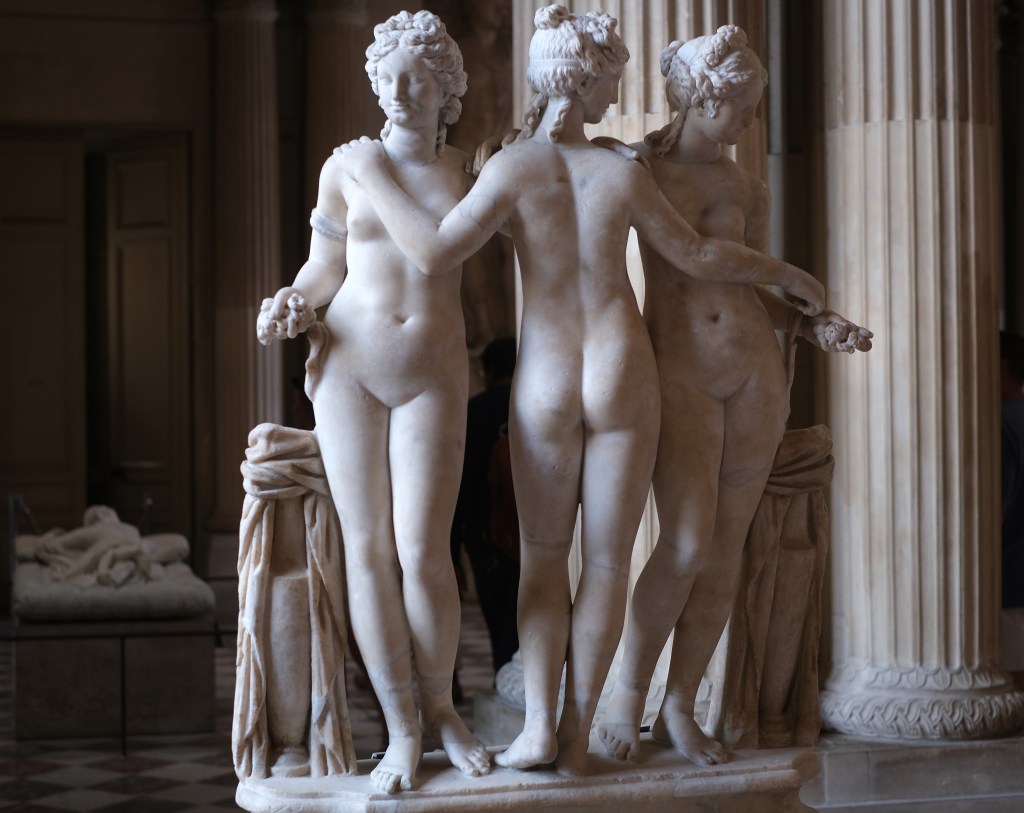
I saw Michelangelo’s Rebellious Slave and Dying Slave, the Venus de Milo, The Three Graces, FlyingMercury by Giambologna. I saw lovers loving. I saw heroes conquering. I saw ancient goddesses radiate feminine strength and glory. I saw Greek marble carved 1800 to 2100 years ago.
I loved being able walk a complete circle around the sculptures to see them from every angle. I loved the way they were placed in the galleries such that natural light from the palace’s windows shone on them. Light is everything. It makes the stone glow. It highlights lines and curves, creates shadows and depth. With a painting, the light and colors and textures are mostly complete and laid on a flat surface by the artist; with a camera in hand, the best you can hope for is to capture the artwork accurately. With a sculpture, you can photograph it from different angles to change the composition of your photograph, and with different light to change the mood. You can extend the art and make additional art of it (not me, but great photographers could!).
Antonio Canova, Psyche Revived by Cupid’s Kiss, ~1790
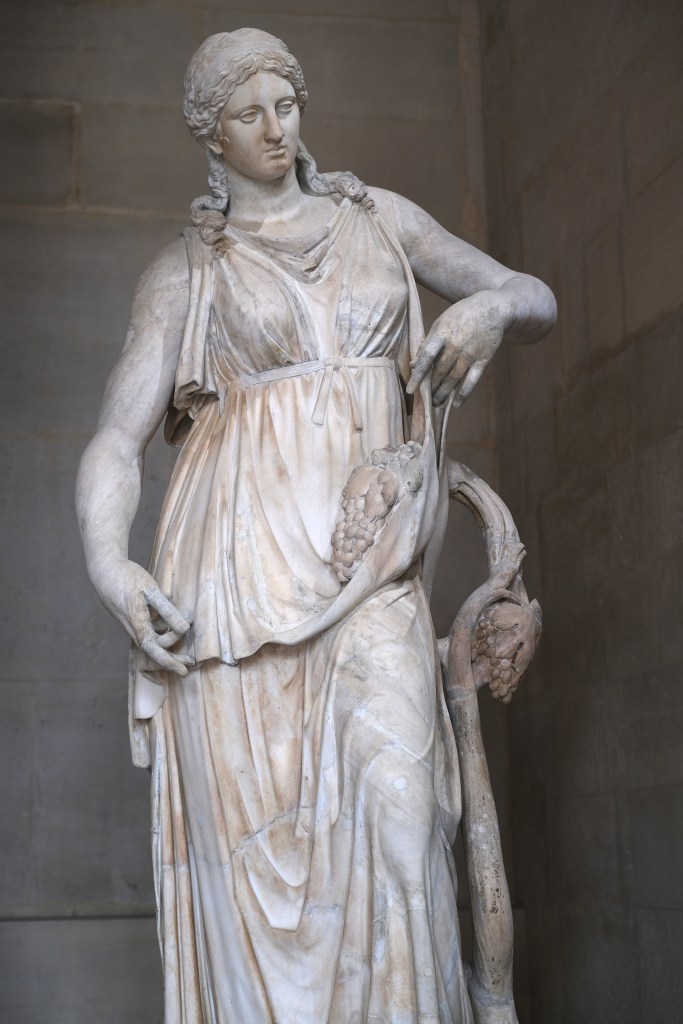
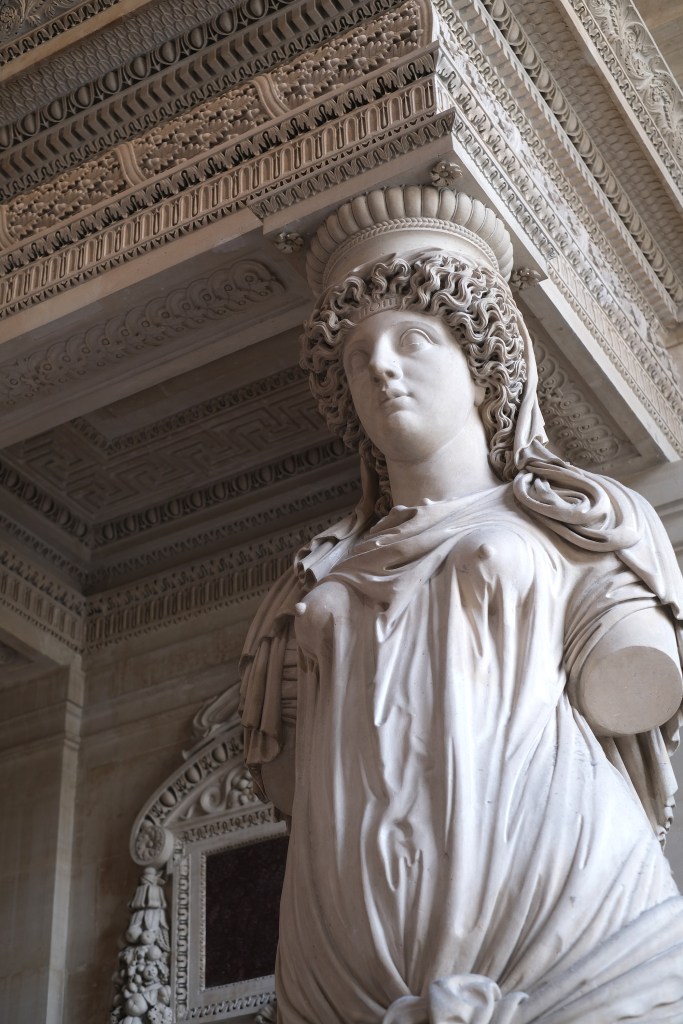
I saw Aphrodites and Venuses, Athena, and the incredible detail of the Caryatid columns from a Renaissance French palace. I saw the beauty of the human body glorified in marble and bronze, the ideal image of the human for these artists and their times, every woman’s and goddess’s breasts the exact same size and shape, every man’s and god’s chest, abs, and biceps muscular and hard and strong. The supermodel has been around for much longer than I realized.
In the sculptures that most captivated me, the marble was so smooth, it looked supple like skin. I snapped a photograph that I intended to capture the exterior of the building from inside the Louvre. When I looked at it after the trip, I thought, “Why is there a naked person in my photograph?” It is not a naked person. It’s a sculpture. That’s how fine the artistry is.
Stone that looks like skin
I was stunned by how perfect these sculptures were, in their shapes and proportions, their grace and details, their smoothness. I could not stop thinking about how mind-numbingly tedious it must have been to work so closely, so precisely, to chip away at the hard stone and make these human forms and ornate textures come out of it. The artists’ patience to suffer that tedium, and their persistence to push through it, resulted in something real, something permanent, something that lasts for all of humanity to experience. This is true of all artists — musicians, writers, painters, sculptors. I am grateful for their patience. I am grateful for their drive and tenacity and madness to make the millions of tiny choices, the millions of tiny marks, that create such wonder that we can still appreciate and enjoy 1 year or 2100 years later.
Caryatid column in Renaissance palace, ~1550
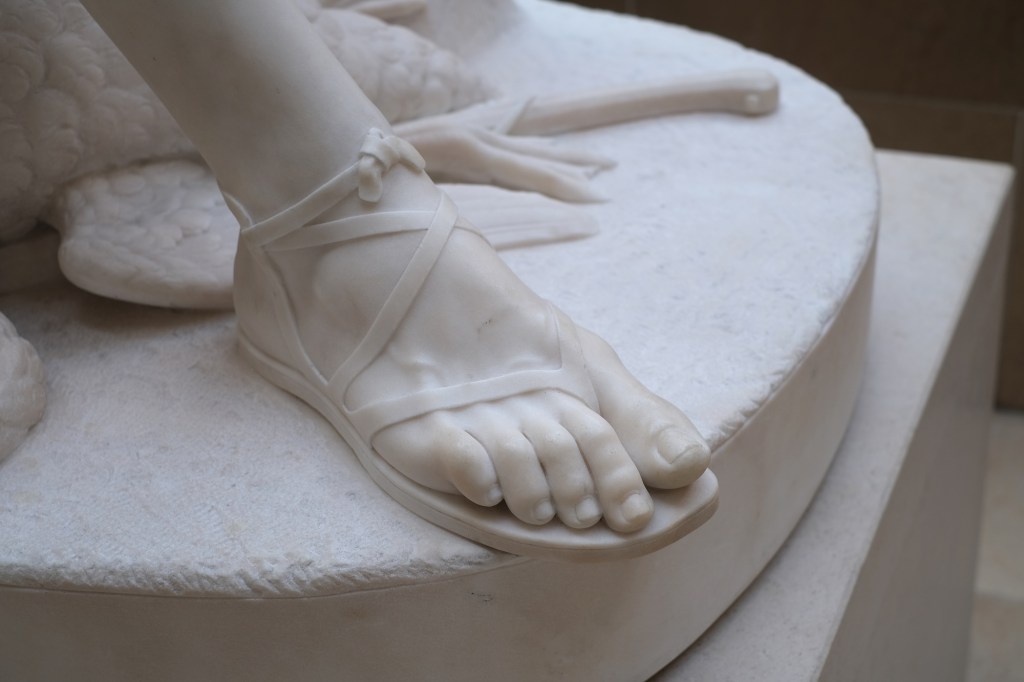
The craftsmanship was impeccable. Other sculptures look rough and crude now after seeing these perfect specimens.
A perfect foot
After spending time with these masterpieces, I still had about an hour left. Looking at a map afterward, I now see that I was on the level underneath the great galleries of paintings, including the Mona Lisa gallery, which was why each time I tried to climb the stairs to explore other areas, I met huge crowds. I could not figure out how to get out of the wing I was in to get away from the masses. I stumbled on an underground passage where you could walk through the Medieval foundations of the Louvre. It was refreshingly cool and empty down there, underground, with those ancient stone walls all around.
I finally found my way out of the Denon wing, which is where the Da Vinci paintings are — one name whose work I did not see — and where the largest crowds were. I exited and went to the Richelieu wing where I had originally intended to go, and where I rescanned my ticket for entrance.
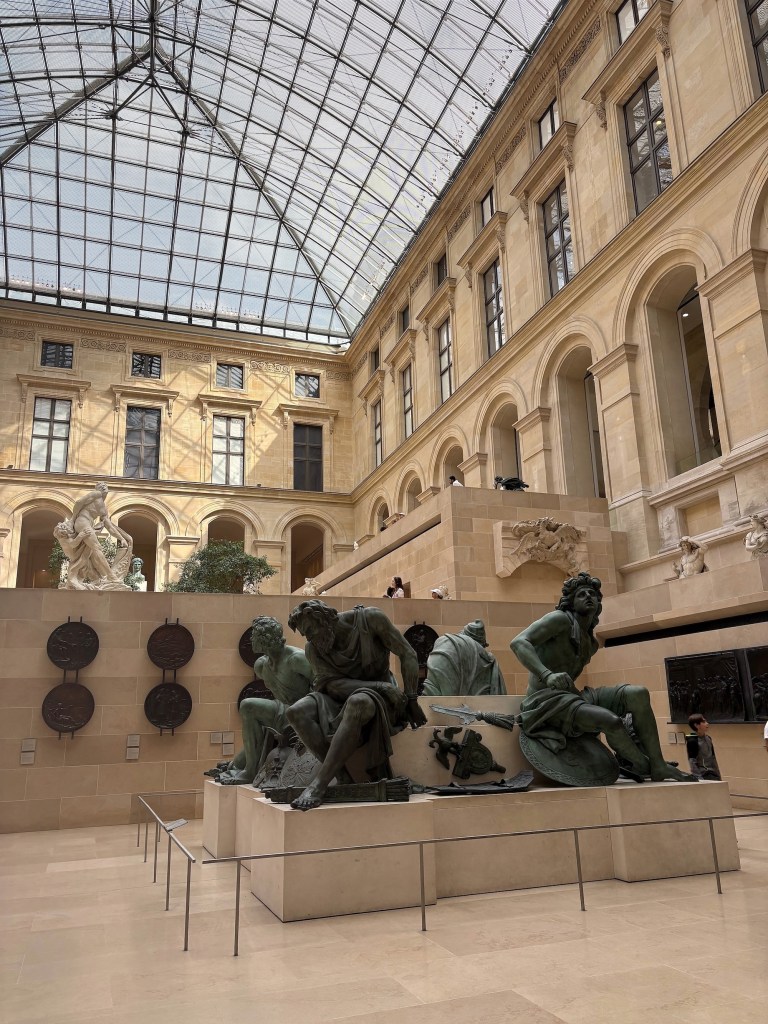
I entered and wandered into the passage on the right. I emerged in a beautiful atrium filled with natural light from a high glass ceiling.
Richelieu Wing, Puget Court
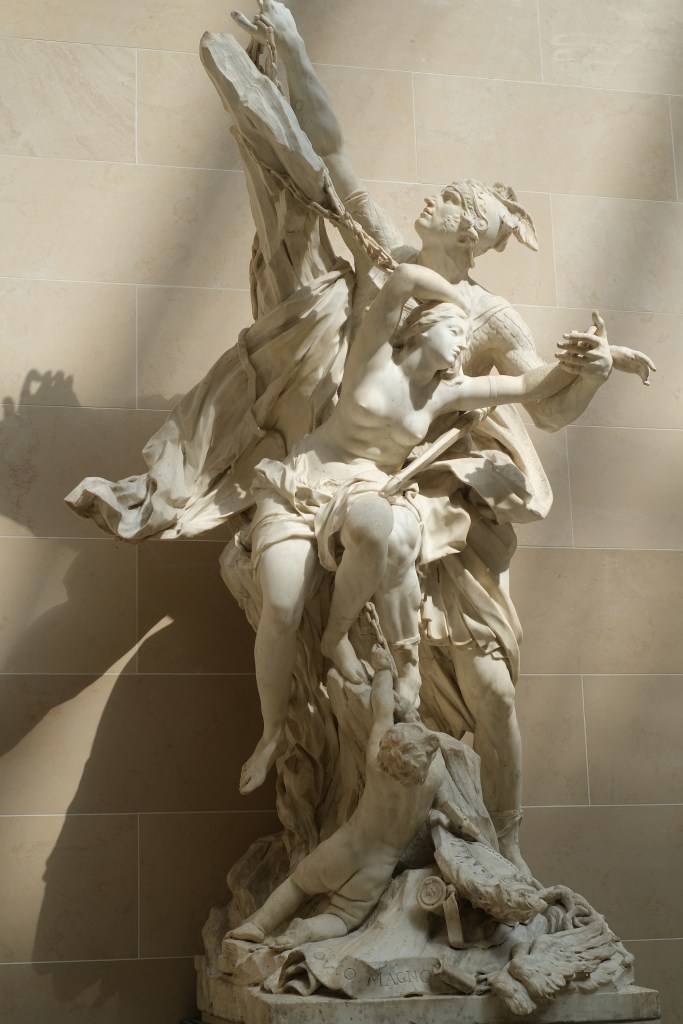
I was surrounded by huge marble sculptures of gods and myths, and there were trees and light, and there were people but not crowds, and there was sunlight and lots of air, and it was glorious. I stood in the entry and felt the sunlight and the clean, open space recharge me. When I climbed the stairs, I was confronted with a spectacular sculpture catching sunbeams.
Pierre Puget, Perseus and Andromeda, 1684; ~5:10pm on June 1
The top of the stairs opened into a gallery streaming with light and that overlooked a serene indoor courtyard. The green of the trees was lovely against the white and cream stone, and it picked up the green of the bronze sculptures, creating a sense of harmony between these natural living beings and the human-made creations around them.
Richelieu Wing, Puget Court
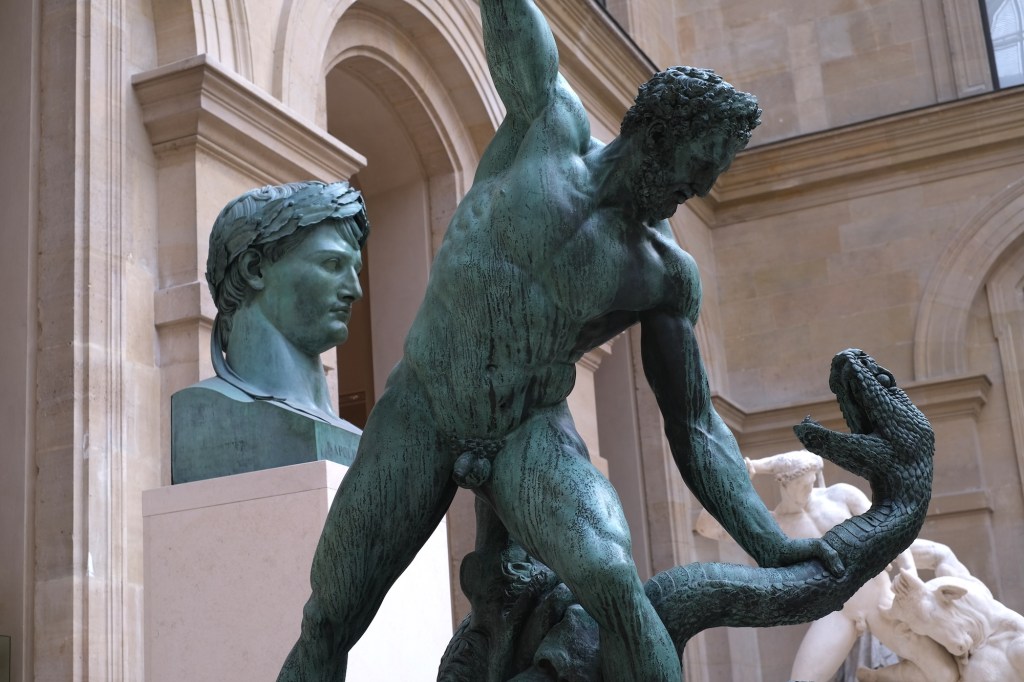
I stood and watched people interact with the sculptures, looking up at them, photographing or having their photograph taken with them, like the goofy grinning man who had his picture made with the bronze Hercules conquering a serpent, as if he, too, could conquer such a beast.
Hercules Fighting Achelous Transformed into a SnakeTheseus fighting the Minotaur
I spent the rest of my time at the Louvre in this hall. I can’t get enough of this place. Of Paris, of the art, of France. I want to come back.
We got out of town this weekend. My husband booked a night in a bed and breakfast in Richmond, across the street from and owned by the Virginia Museum of Fine Arts (VMFA). It’s an actual B&B, not an Airbnb. I find myself struggling to say “B&B” without the “air” on front anymore. I’d almost forgotten these still exist, and it’s such a pleasure that they do. The innkeeper put a cheese plate in the fridge for us, which is a delight. We’re nibbling on it now as we rest our feet after getting lost in our wanderings through the museum.
I knew we were coming to Richmond, but I didn’t know about the B&B, nor did I know about the art museum. This means I also didn’t know there was a Frida Kahlo exhibit. I don’t know much about Kahlo, except that she’s instantly recognizable. She’s an icon. Portraits of her are arresting.
The exhibit was packed, which confirmed to us that we need to plan our trip to the Louvre smartly so that we don’t feel like cattle. The further into the exhibit we went, the more air and space we could find. This worked out great for me, because that’s was where the portraits I wanted to see were. The colors in the color photos! The drama in the black and whites! But really, the colors. They’re irresistible. They suck you in.
I spent a while with that final one. There’s so much to contemplate.
After the Frida exhibit, Brian and I wandered upstairs, which was much quieter. We saw the Fabergé eggs, which were as opulent as you would expect and are amazing to see in real life. They sparkle with gemstones and intricate gold filigree and are so beautiful. I also got to see a Van Gogh that for some reason moved me to tears. I don’t know why. It just made me feel, I don’t know, wonderful.
Daisies, Arles. Vincent Van Gogh
Tomorrow we’ll visit the botanical garden. I can’t wait to see what’s blooming! Maybe I’ll get ideas for my own flower beds at home.
Describe a positive thing a family member has done for you.
The windows are closed but for a small crack. It’s chilly out there. Rain poured down a few minutes ago. Birds twitter in the darkness.
Yesterday it was so warm, every window in our house was wide open. Sheer curtains billowed in the breeze. I washed the Suburu in the driveway and waited for the mulch to arrive. The tiny sparkles in the pearly paint delighted me as the grime rinsed away. Music played on the bluetooth speaker in the garage. I listened to Chronixx in the sunshine while I sprayed and sudsed the car. It occurred to me that an unexpected benefit of my time off may be that music will re-enter my daytime life. I can’t concentrate at work with music playing, so I mostly spend my days in silence. The reggae made me feel good; I want more of that.
I blogged yesterday about how a painting or a song is the result of a million different decisions. Every brush stroke is a choice. Every note. At the end, those choices make a work of art. It occurred to me as I washed the car that the life we create for ourselves is also the result of a million different decisions. Each choice adds another brush stroke, another note. Our lives are works of art.
Art is a choice. It is a fight against complacency. It is a decision to forge a life that’s richer, more uncomfortable, more mind-blowing, more uncertain. And ultimately, more beautiful.
– Bianca Bosker, Get the Picture
As midafternoon approached and the mulch still hadn’t arrived, I could choose to be annoyed — I could call and complain and simmer in irritation — or I could take a nap. I chose to nap in the warm afternoon as curtains billowed. It was beautiful.
A few minutes after I woke up, the phone rang. The mulch was on the way. I played Protoje on the stereo and coated myself in sunscreen to prepare for the garden. Our daughter likes the Hawaiian Tropic Sheer Touch sunscreen with teensy specks of glitter in it. Every time I use it, I think of her and feel joy. I shimmered, and I smelled like summer. The sun shone, green popped in the garden, and birds hopped around at the feeder.
I shoveled mulch for two hours. I got about a third of the way through the first pile before going in to shower and make dinner. I covered both mounds with tarps weighted with bricks since the forecast showed rain in the night. Dry mulch is already heavy enough to cart up hills in a wheelbarrow, I don’t need to double the weight by moving it wet.
The sun is almost up, and I think it’s stopped raining. I’ve got four days to spread this mulch. It’s time to get going.















 Butterfly Mind