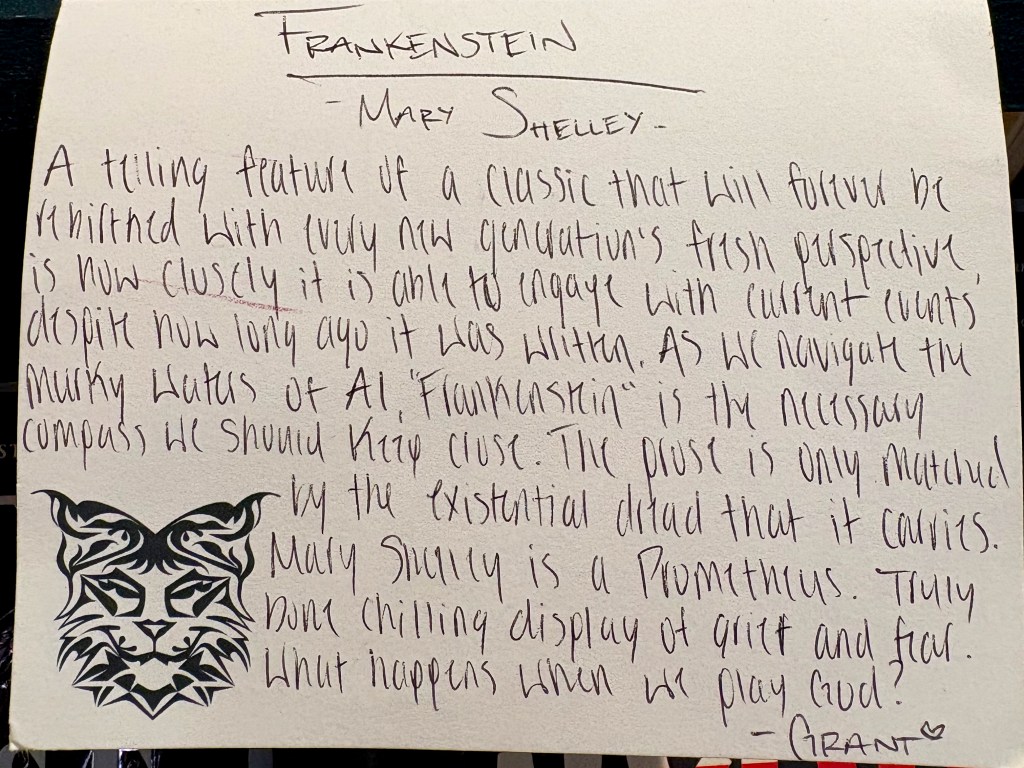
I am reading Ann Patchett’s newest novel right now, and I wish I didn’t have to work or sleep so I could just read straight through. I’m here writing to keep myself from opening it before work. I don’t want to have to wrench myself away.
Patchett is one of those novelists that I’ll read everything she writes. I click with her characters—I love Eddie in Whistler, as everyone in the book does as well—and how beautifully she exposes the hearts of humans, and the intricacies of our relationships with one another, with family, with children and parents and lovers and friends. She doesn’t create cheap drama. Bel Canto is a marvel.
I’ve managed to stretch Whistler over three days so far. I’ve now succeeded in holding myself back from opening it before work. I don’t think I’ll be as successful on my lunch break.
I’m reading Matthew Butterick’s Practical Typography, and with each section—Why does typography matter?, hyphens and dashes, letterspacing—I think, ahhh, so that’s why I love the way The New Yorker looks. They are attentive to every tiny detail of publishing. The finished product is gorgeous as a result.
Our son gave me a subscription to The New Yorker for Christmas. While I waited for the first issue to arrive, I downloaded the app. I opened it and blurted, “It’s so beautiful!” I love the shapes of the letters, the clean layout, the negative space, the humor of having to scroll to get to The Lede section. But mostly I love the shapes of the letters.
Every week when my physical issue arrives, I get a jolt of pleasure to see the iconic New Yorker font on the cover, with its crisp, tall characters and jaunty flips on the toes of the Rs and the K. I love the curls in the 2s in the date, and the ampersand looks like it should be holding a martini or smoking a cigar.
When I read the pages, I appreciate the clean columns, the perfection of the punctuation, the addition of white space to break up large blocks of text, and precise layouts that end every article or short story at the bottom right of a page, finished off with a small black diamond. Each piece is self-contained and immersive, without interruption or “continued on page 28.” The writing in the New Yorker is thoughtful and in-depth, and they honor the quality of the writing with careful attention to what it looks like on the page.
Typography is the visual component of the written word.
Matthew Butterick, Practical Typography
I read a book last year, Get the Picture by Bianca Bosker, that had a point that still resonates with me: any piece of art is a series of deliberate decisions. As I learn more about typography, I realize now how intentional every single choice is in the New Yorker. As evidenced by the number of chapters in Butterick’s book, there are scores of typographical decisions to make when creating a publication. The New Yorker makes all the right ones for my personal taste—it delights me that they use ö in words like coördinate or coöperate—and it executes with perfection.
As a person who writes online but has zero experience with typography, other than to know what I like when I see it, I now have a much deeper appreciation for all the choices that go into making the software I’m using to write this blog. As I read Practical Typography, I’m learning a million new things—including how to make a proper em-dash, which I’ve now done three times in this post because I’m so excited by my new skill—and I was also overwhelmed by the rules and possibilities for line, word, and letter spacing, font choices, line length. My blogging theme (Livro, by Automattic) does all that for me, and for that, I am grateful. All my respect and appreciation to the designers who bring beauty to online publishing through choices I didn’t even realize were choices to make.
I thought I’d read this book before, but after finishing it this week, I’m not sure I have. I thought Fahrenheit 451 was a book about book burning and censorship, which it is, but it’s moreso a book about feeling threatened by ideas. In it, government didn’t insist on banning books. A particular political wing didn’t insist on banning books. Instead, society elected to stop reading books. Life felt easier and less dangerous and “happier” when people didn’t have to be confronted with the conflicts, tension, messiness and open questions of what it means to be human and alive and interacting with the world around us.
451 ℉ is the temperature at which paper burns, and in Fahrenheit 451, the burning of books is the hook that catches the reader. Rather than putting out fires, firemen burn. They respond to calls that report neighbors who own books, and they show up with their flame throwers instead of their fire hoses. The imagery is compelling.
But what it’s really about, and what is frightening in its prescience, is that though this book was published in 1951, it predicts a world where people are so distracted and consumed with screens and with listening devices in their ears at all times, to the media that is firehosed at them, that they stop thinking for themselves. That’s what this is about, and what books represent in the novel: individuals’ thoughts and ideas. The people in the Fahrenheit 451 world don’t question. They don’t think for themselves. They don’t engage with art or ideas, or think about the world around them or the choices they make. They stop interacting with the actual physical world. They don’t touch grass or watch cattle graze. And while they’re all inside their homes being controlled and “happy” because they are avoiding the messiness of reality, they get bombed to smithereens.
The main character in the book, Guy Montag, is a fireman, and realizes early in the book that he’s not actually happy, it is not actually “a pleasure to burn.” He is empty inside. He doesn’t know his own mind. Until he begins to read the books he’s squirreled away over his years as a fireman, stealing them from the houses he burns.
Ironically, or perhaps not, this book has been banned many times. It’s about so much more than burning books, and it shocked me to see the earbuds in particular. Nothing like that existed in 1951, but boy do they now. I bet Ray Bradbury would have been an interesting person to hang out with.
When I heard Christopher Nolan was releasing a cinematic adaptation of The Odyssey this summer, I thought, oh yeah, I definitely want to see that. The Odyssey, along with the Iliad, is among our original stories, told orally nearly 3000 years ago, and the first of our written works in the West, about 600 years BCE. Countless plays, novels, poems, stories, and films flow from these works. The story-telling of the Bible flows from them. Shakespeare references the stories before they were even translated to English in ~1615. They are the foundation on which our storytelling in the West is built.
Last spring, I read both for the first time since college (if I even read them in college — I don’t remember!). Barely a year later, my only recollection of The Odyssey was that the scene with the Sirens was so much shorter than I expected. Out of 400 pages of story, the Sirens were maybe half a page.
I just finished reading The Odyssey again in preparation for the movie, and I had a much richer experience this time. I bought a physical copy of Emily Wilson’s translation, underlined, wrote notes after each of the 24 books, and joined in a community read-along. And once again, I was surprised by many things. One was that we think of Odysseus as being heroic, which he was in his time, not because of moral choices but because of his strength as a warrior. And yet, he’s full of sorrow. He is continually weeping. He’s the called the unluckiest man alive. I typically think of his odyssey being one of overcoming obstacles to get back home, and that it’s a success story because he ultimately does get back home. But there is so much death and bloodshed along the way.
I was again surprised that the things so many of us think about when we think about the story — the sea-faring, the Cyclops, the lotus-eaters, the Sirens; the six-headed Scylla and the whirlpool Charibdis — are quite small relative to the real stories. Those “adventures”, as I typically think of them though they result in the deaths of every man Odysseus left Troy with, are contained within 4 of the 24 books of The Odyssey and less than a quarter of the page count. There’s so much more to it than those cinematic scenes!
This is what I’m super curious about with The Odyssey movie coming out on July 17. Is it going to just build around these scenes because that’s what everyone wants from a movie of The Odyssey, or is it going to do justice to the other 75% of the epic? I’m sure battling giants and cyclops and being lashed to a mast will be great eye-candy, but there’s so much more to the story. I cannot imagine trying to edit this whole thing down to two or three hours of film.
I’ve got my fingers crossed that the movie will get into some of the deeper ideas the poem presents: the ethics of hospitality, of caring for strangers, of being good hosts and good guests; the longing for home and our rightful place, despite being presented with other options that might look like a pretty excellent life; the roles of fate and free will; the importance of knowledge and information — and the sharing of stories to give and receive both. And can we even believe Odysseus as a narrator? He’s the only one who survived the journey back in these 20 years since he was last seen in Ithaca. And so much more! I’m eager to see where the movie goes deep. If none of these points, at least it will hopefully be something fun to feast our eyes on.
I’m off work this week. It feels amazing to have time to myself that I don’t have to rush through, that I don’t have to be productive in.
Each morning, I get up and blog. I check the writing prompt in my site’s dashboard, and it’s usually enough to get me going. I moved my swim lane reservation from 5:30am to 9am, because I like having time to get up and eat, write, and have some coffee before I go to the pool. Once I’m there, I take as long as I want; I don’t have to rush. I add in extra kick drills because I have the time and it’s super fun to zoom down the lane with fins on. In the afternoons, I walk around the garden and check all my flowers, then sit and read under the dogwood tree.
I’ve got two books going. I’m reading Go Gentle by Maria Semple, the author of Where’d You Go, Bernadette? and I’m re-reading The Odyssey in preparation for the movie coming out in July. I read it for the first time just before my sabbatical last year, and this year I joined Book Riot’s read-along of the book to have some community around it. It’s super immersive this go round, now that I’ve gotten through my first time and have some familiarity with it. My first morning run after beginning it, the clouds were pink and stretched across the sky in long fingers, and I felt all effervescent and connected under the rosy-fingered dawn.
One of my stray thoughts as I read is that as Odysseus and his son Telemachus show up on the shores of other kingdoms, and are brought into the palaces, they are fed and clothed and taken care of by their hosts, even though their hosts don’t know who they are. Often they are given fine gifts, and their hosts make promises to ferry them across the sea, before they even tell their names. Is there a message here: be kind to beggars and strangers, you never know what greatness lies beneath?
I mentioned this to our son, who is reading Crime and Punishment, and he laughed and said the opposite is true there: the narrator’s friend hosts him and cares for him, not knowing he is a murderer. We talked about it over coffee, because I was able to take him out for coffee yesterday with all my free time. Then we went to the grocery store together, midafternoon when everyone else is working and the aisles are blissfully empty, to buy shrimp and cilantro, sour cream and slaw. He made us shrimp tacos last night between the France/Iraq and Norway/Senegal World Cup matches.
In a few minutes, my husband and I will hit the road to head to his cousin’s wedding. It’s a Thursday pool party in Lake of the Ozarks, Missouri. It’s not an easy place to get to from here. The closest airport is three hours away, and the drive is 13 hours. We decided, what the heck, let’s take the week and make a road trip of it. All of our drives tend to be north and south, always on the same highways. We’ll see new scenery on this drive: we’re going west. I’m not sure if I’ll blog from the road or not. I’ll see how I feel. What freedom!
For whatever reason, reading as a pastime doesn’t seem to elicit side-eye or shame like playing video games or watching TV does. Reading is just as much of an escape from the real world as screens are, and as an avid reader, I often wonder, what am I trying to escape? I wonder if I spend too much time consuming words rather than living life. I spent most of my walk yesterday interrogating what it is that I want to distract myself from.
The counterpart of that distraction from reality is attention to what I’m reading. I read a story the other day, “Many Worlds” by Ayşegül Savaş, that I can’t stop thinking about. In it, three characters talk about a lot of heady things. Lots of deep, philosophical conversations about life and living. Yet, only one of the characters, Aleksi, lives his life in the ways they talk about — “doing things that interest him and somehow making it work” — while for the other two, Defne and Mete, the talk is just talk, performed for the thrill of feeling cool, thought exercises that result in no real change. Later, after Aleksi has dropped out of their lives with no warning, Mete remembers fondly, after a party with hipster suburbanites where the talk is of homemade kombucha:
“I just remembered how the three of us would hang out and have those epic conversations. We’d talk about so many things that mattered, you know, rather than fermented drinks.”
Characters like Aleksi, or Janice MacLeod of Paris Letters who quits her job and spends two years wandering Europe, inspire me. They actually do the thing they say they want to do. They break out of the trappings of social norms, of making money to sustain a certain kind of life, of comforts that may be comforts or they may be chains.
I haven’t done anything drastic like these characters have done. I haven’t given up my house or my job or my belongings to pursue a different kind of life. But I admire them deeply, and they inspire me to take baby steps. In Paris Letters, MacLeod spends a year purging all of her possessions, to get herself down to a backpack. I’m not going that far, but my husband and I did clear out a bunch of stuff in the early part of this year to simplify our lives. Our ultimate ambition is to make it easy to pick up and go.
I guess this is how I make myself feel okay about all the reading: does it inspire me? Does it change me in some way? I know entertainment for entertainment’s sake has its own value, I don’t want to discount that. But I also want to be cautious: I don’t want to mistake living through other people’s stories for living my own life. I’d like to be brave enough to make big changes all at once, but I think it’s also okay to make small ones as inspiration strikes.