Eleven days ago, I shared a photograph of a chrysalis I found dangling in the compost. I’ve been checking it every day. Yesterday, the green sheath turned clear, and I could see the butterfly’s black and orange wings inside.
Today, I ate lunch perched on top of our deck table like I usually do when the weather is nice. The crickets were back at it with the chirping after their silence this morning in the fog. The oak has a few fully red leaves now. I only remember it going straight to brown in the past; I don’t remember it stopping through red on the way. Either the summer rains made a big difference this year, or it goes quick and I miss the red every year, or I’ve just not paid close enough attention. But this year there are glossy ruby-red leaves, and they’re beautiful.
The sun was hot on my shoulder; it was too warm for the jeans and tee-shirt I wore. The more I sat while I ate, the more things I saw that I wanted to do on my lunch break: fill the bird feeders, water the salvias and blanketflowers I transplanted, check on the chrysalis. When I’d set my plate down after eating, the wind lifted. It added a beautiful shushing to the air as it rippled through the oak leaves on the tree. I decided grab my camera and check on the chrysalis.
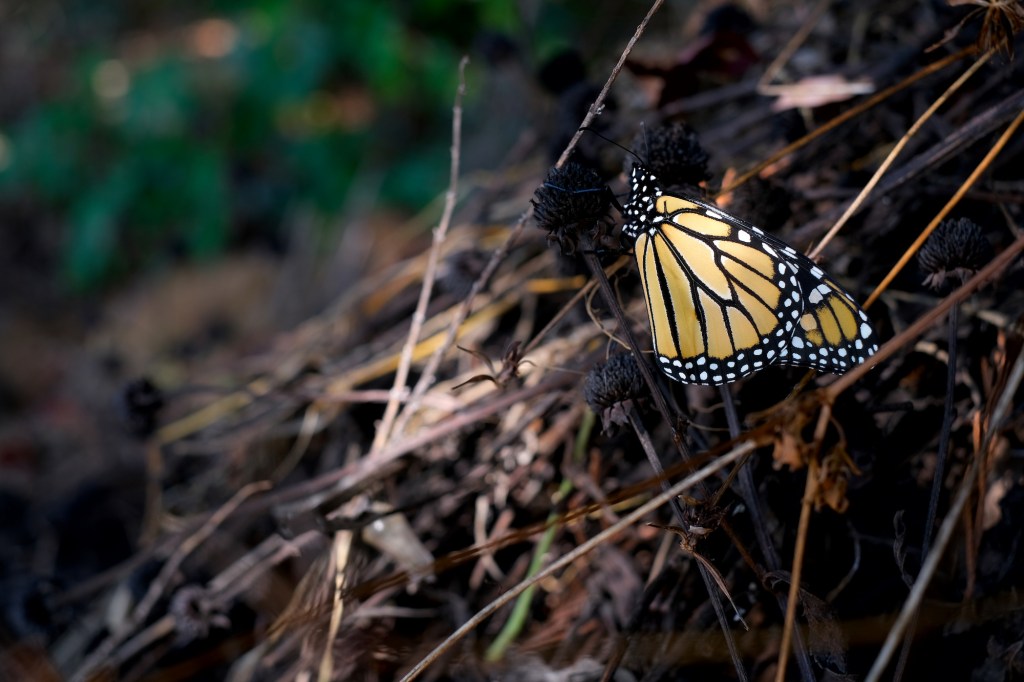
When I hiked up to the top of the hill, I saw the freshly emerged butterfly drying its wings a few inches from its empty chrysalis. An hour in either direction, and I might have missed it.
Empty monarch chrysalis on compost heapNew monarch butterfly
A lot has happened in the garden since my last update in May. Flowers have blossomed and gone to seed, and now that we’re in August, butterflies are everywhere.
Everything starts out so fresh and clean in June, and by August things are looking pretty raggedy. But August is when the butterflies are laying eggs. Soon it will be caterpillar season and I’ll have to be patient with the spent plants — I’ll want to rip them out, but you never know when butterflies might be pupating under leaves. In a few weeks I’ll find chrysalises dangling from porches and fences, and then the new butterflies will be out drying their wings before their first flight. That’s worth letting plants hang out in the garden past their prime.
When I returned home after a weeklong trip to Whistler, I was giddy to walk around the garden and find not one monarch butterfly emerging from its chrysalis, but two.
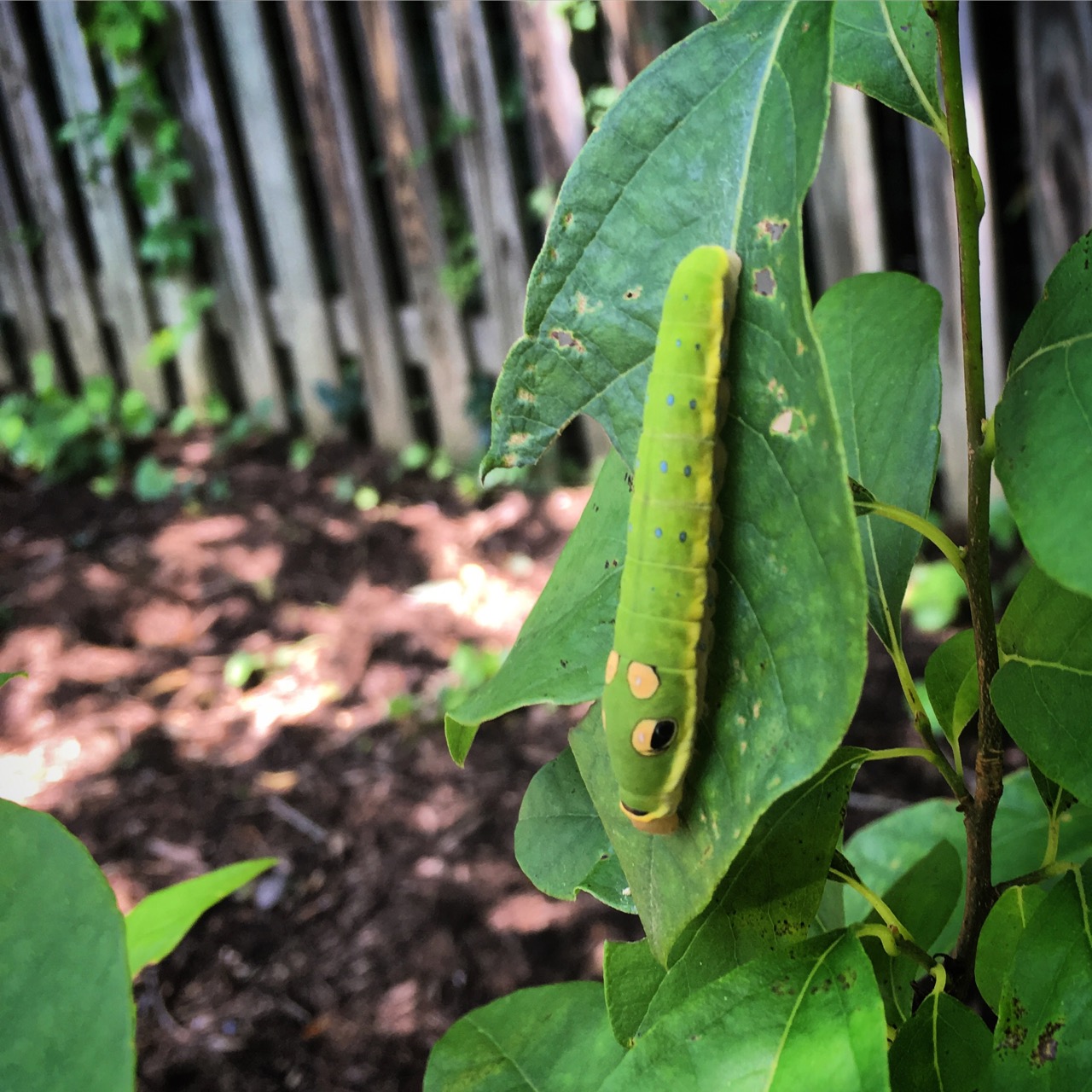
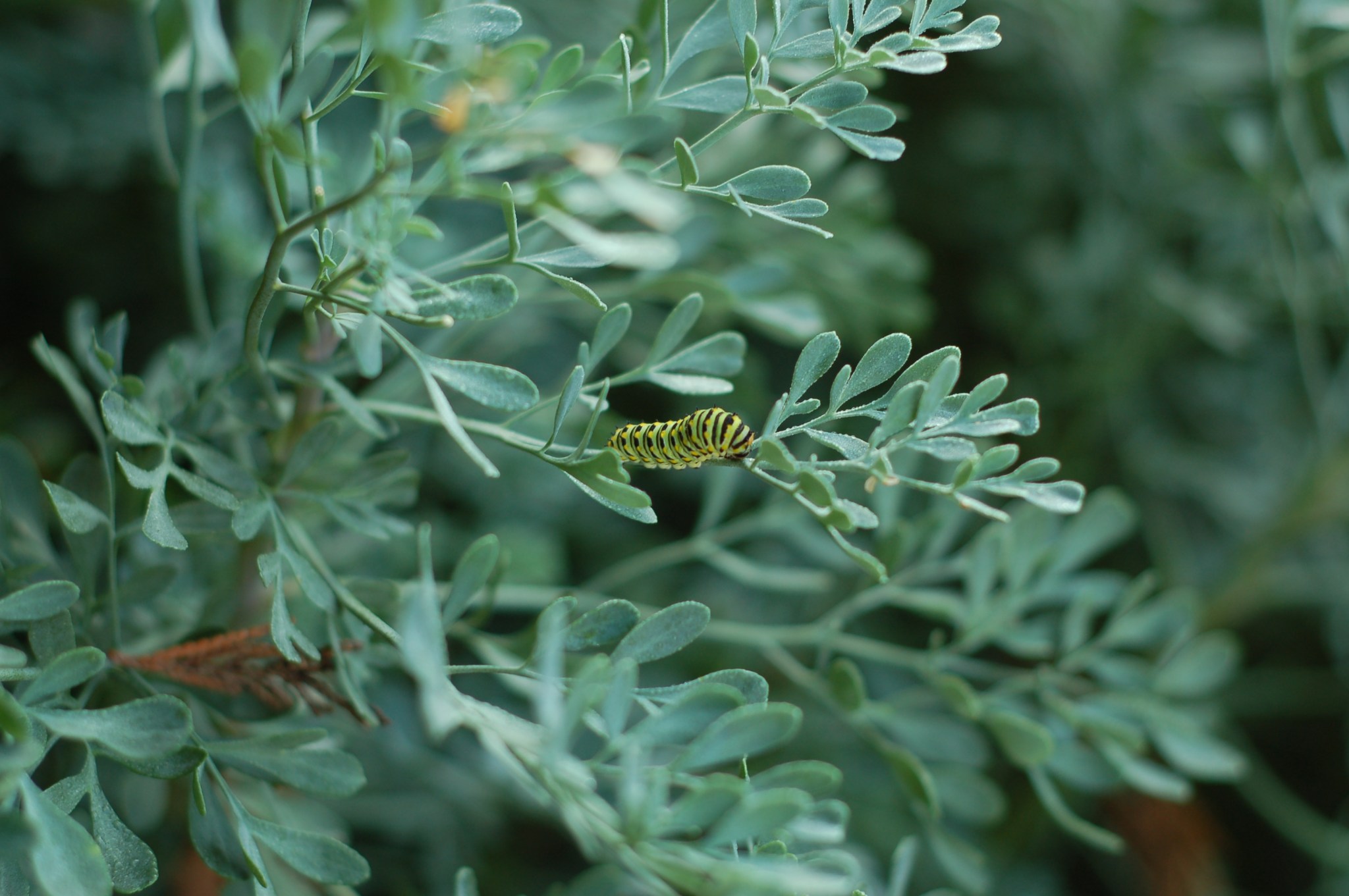
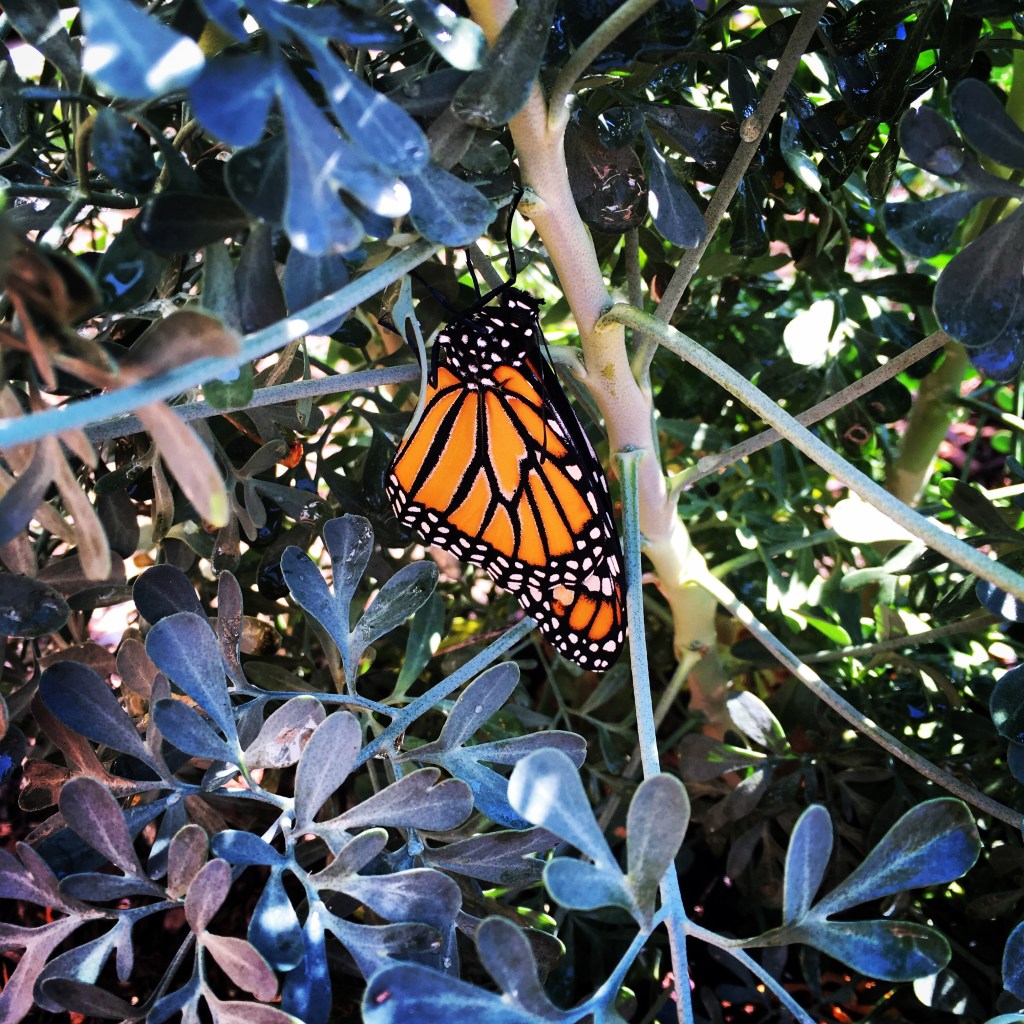
Newly emerged monarch on rueAfter finding those, I of course crawled around in the mulch and dirt to inspect the undersides of leaves. I found three more monarch chrysalises plus a bunch of fat swallowtail caterpillars who will soon be crawling off to metamorphasize as well.
This is SO EXCITING Y’ALL. Here’s a full caterpillar catalog of what I’ve found so far:
Some friends at work are also interested in butterfly gardening, and are looking for host plant ideas. Since we work for a company that makes, ahem, blogging software, my friend naturally asked “Did you do a blog post on what all you planted?” Nudge nudge.
Shockingly, I have not. So here it is! Kris and Liz, this is for you.
The plants
For Mother’s Day, our son gave me Christopher Kline’s book, Butterfly Gardening with Native Plants: How to Attract and Identify Butterflies. Combined with a bunch of online research, experimentation with a butterfly garden in Florida, and talking to bunches of people who garden for butterflies and caterpillars, this book helped me plan a garden that includes both host plants (that caterpillars eat) and nectar plants (that adult butterflies drink from). The most successful plants in our garden are the following:
Host plants
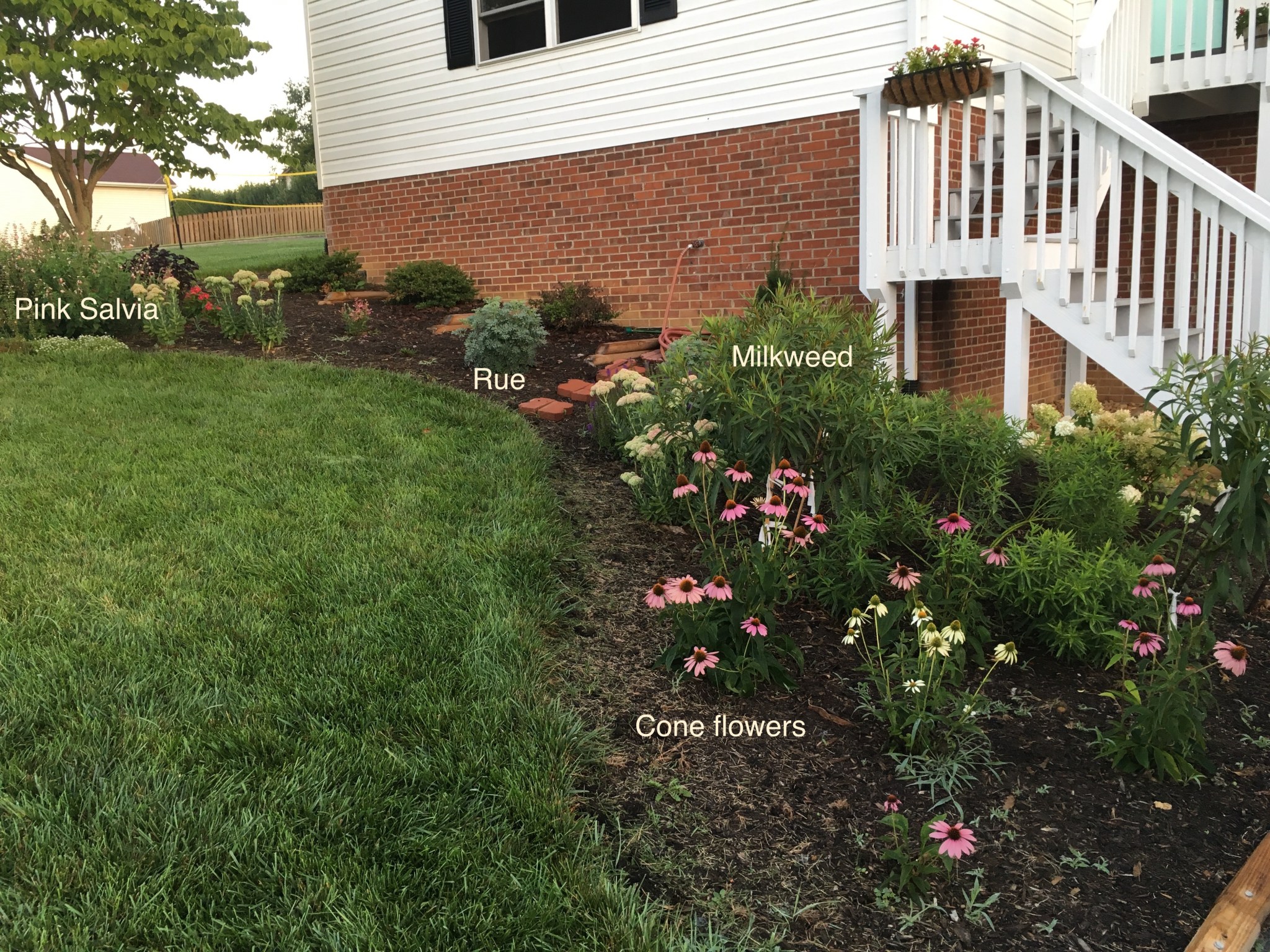
Milkweed (Asclepias): We planted both common milkweed and swamp milkweed. These are by far the most insect-loved plants in the garden. They are constantly covered in various species, including aphids, beetles, and, late in the summer, monarch caterpillars. Milkweed is both a nectar plant and a host plant. We’ve seen adult giant swallowtails and monarchs drinking from its flowers, and have found at least a dozen monarch caterpillars on it. Word of warning: milkweed will get covered in aphids. The caterpillars will still come even when every surface is crawling with aphids, so we kept our milkweed intact even though it’s not very attractive once it has stopped flowering and it’s coated in tiny orange insects.
Rue (Ruta graveolens): This is possibly my favorite addition to the garden. The leaves are a silvery blue-green, the plant stays neat and tidy (it doesn’t get leggy or messy), it can take the heat (and drought) and still look healthy, and the swallowtail caterpillars adore it. As an unexpected bonus, the monarch caterpillars love it for building chrysalises. We’ve found at least 3 chrysalises in the small, shin-high plants.
Butterfly host and nectar plants
Nectar plants
Milkweed: all the butterflies big and small love milkweed.
Indigo salvia: Aside from the milkweed, these purple flower spikes are the most popular in the garden for butterflies to drink from. Bees also love these flowers.
Pink salvia: Okay, maybe these are tied with the indigo salvia for nectar popularity, at least for hummingbirds. I see hummingbirds drinking from these almost every time I sit in the garden.
Bee balm (Monarda): Butterflies and hummingbirds love this as well. Hummingbirds dart between the pink salvia and the bee balm.
Thai basil: I’ve seen some small butterflies and moths (and caterpillars) on these flowers.
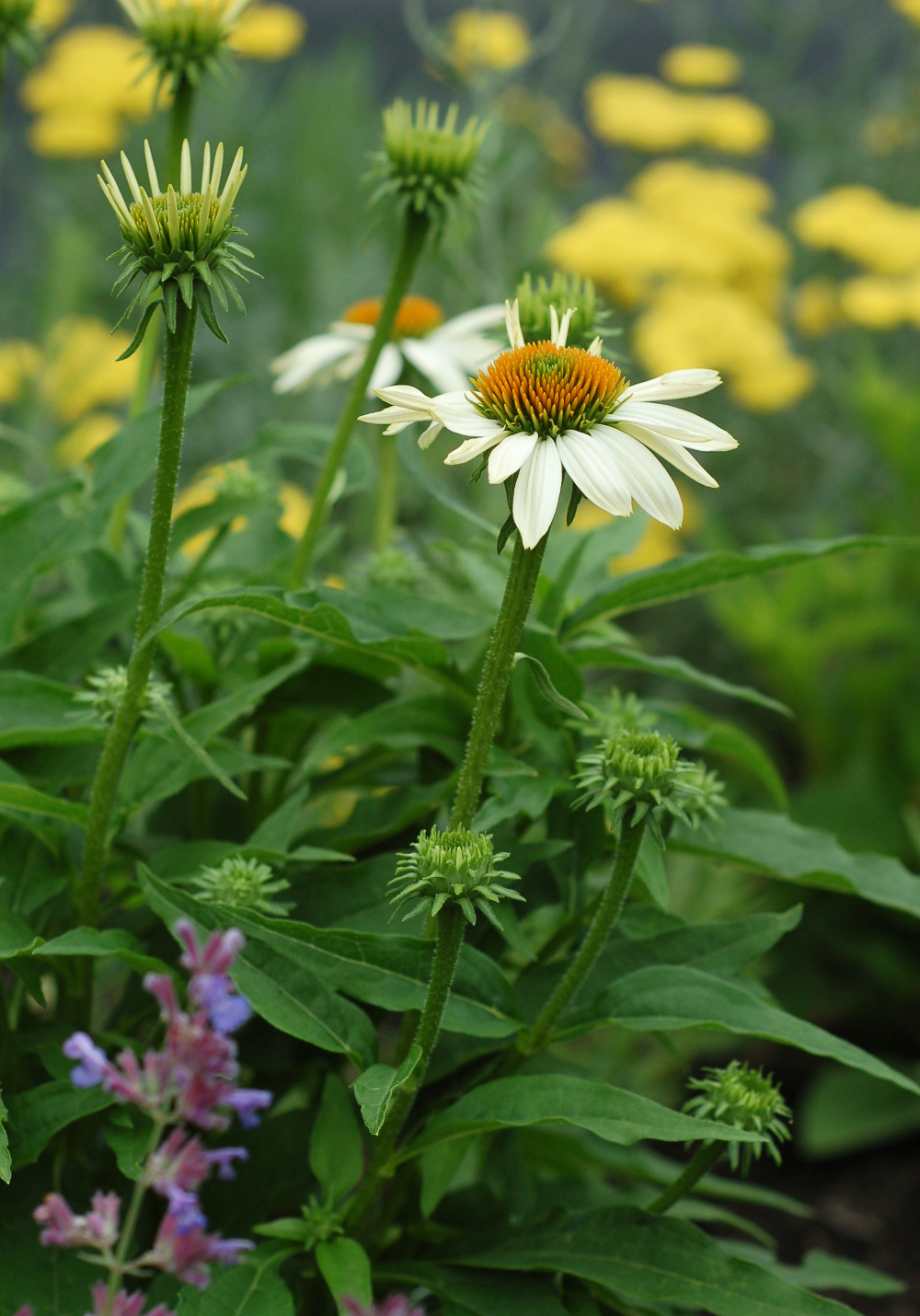
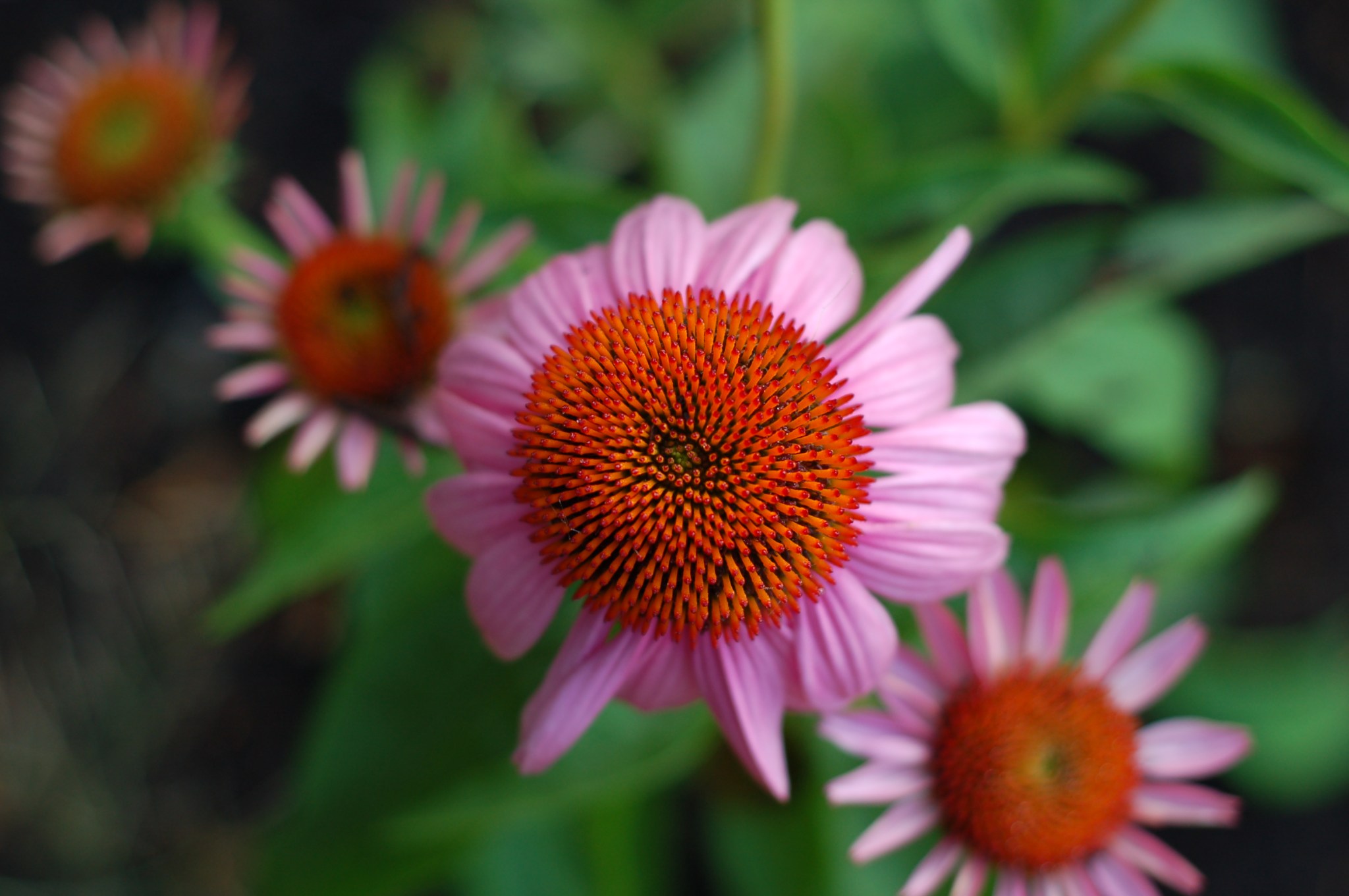
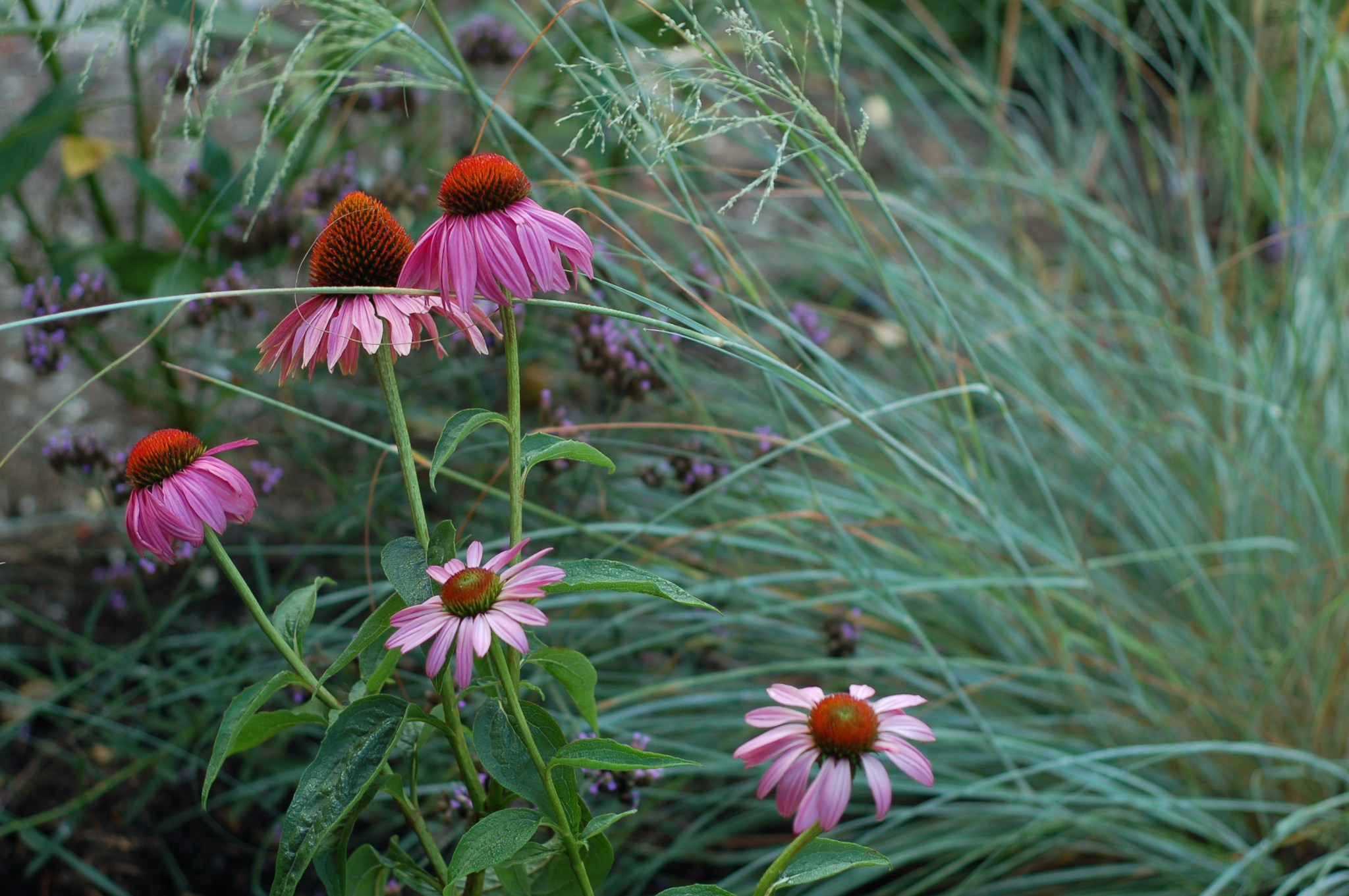
Butterfly host and nectar plantsCone flowers: Butterflies always visit these.
Joe Pye weed: Butterflies love to drink from Joe Pye flowers. Joe Pye weed gets really tall and floppy unless you get the dwarf varieties.
Monarch on Joe Pye weedWe planted some other things that weren’t as awesome as we expected:
Parsley: parsley is a host plant for swallowtails, but the swallowtail caterpillars definitely opted for the rue over the parsley, at least this year. I didn’t find any caterpillars on the parsley, and found at least a dozen on the rue.
I guess the parsley is the only one :-). We have lots of other nectar flowers — brown-eyed Susans, Mexican blanket flowers, some other stuff I can’t remember the names of — but the ones I listed above were definitely the most successful.
If you can identify any of the caterpillars in the catalog, please let me know! I think most of them are probably moths, but I don’t have a good ID book.
Earlier in the year, I wrote multiple times about our different strategies for killing grass to build a flower bed. Since then I’ve blogged pictures from the garden, from reading,writing, butterfly-watching, and blogging under our dogwood tree, and photographs of the butterflies and caterpillars who live in the small ecosystem we helped create.
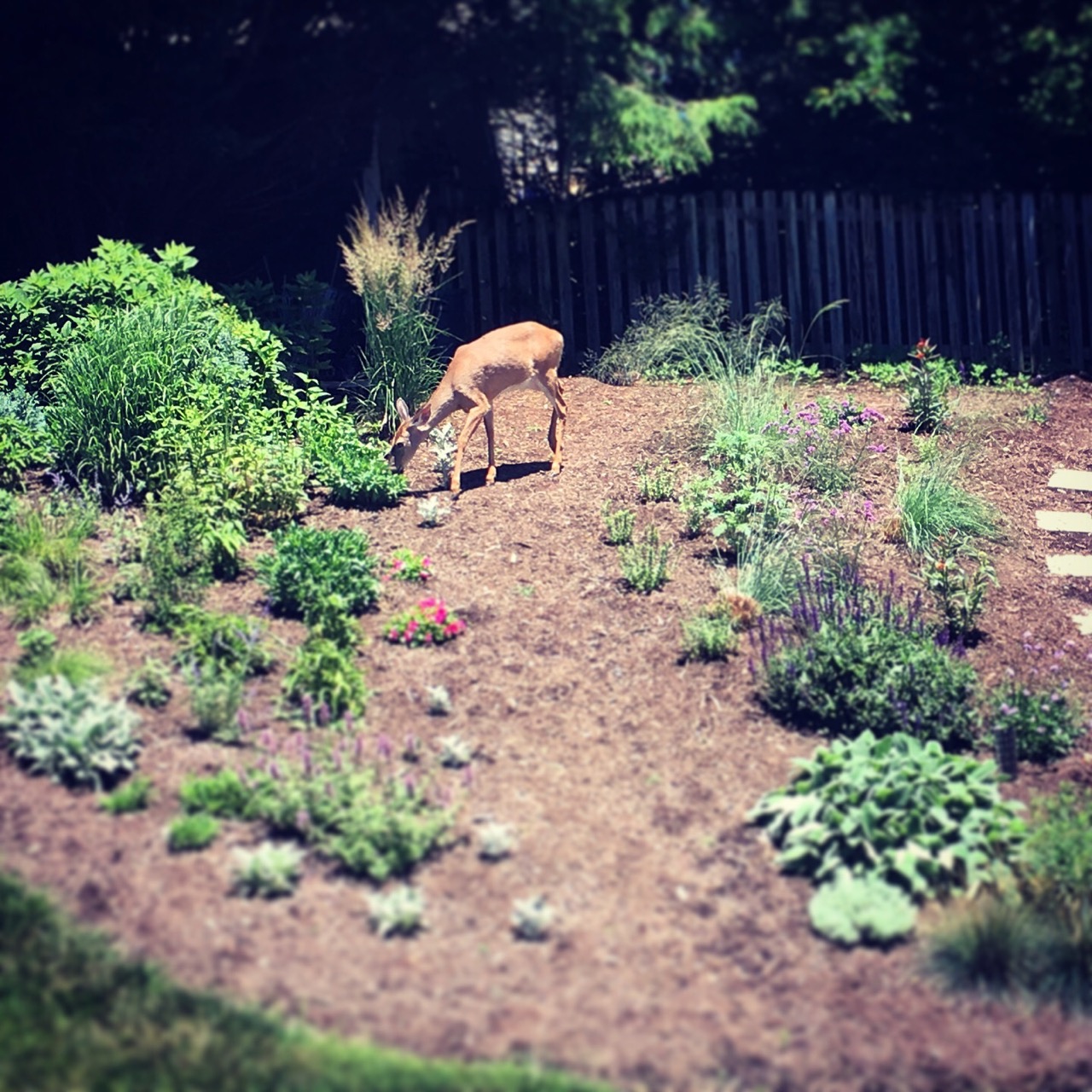
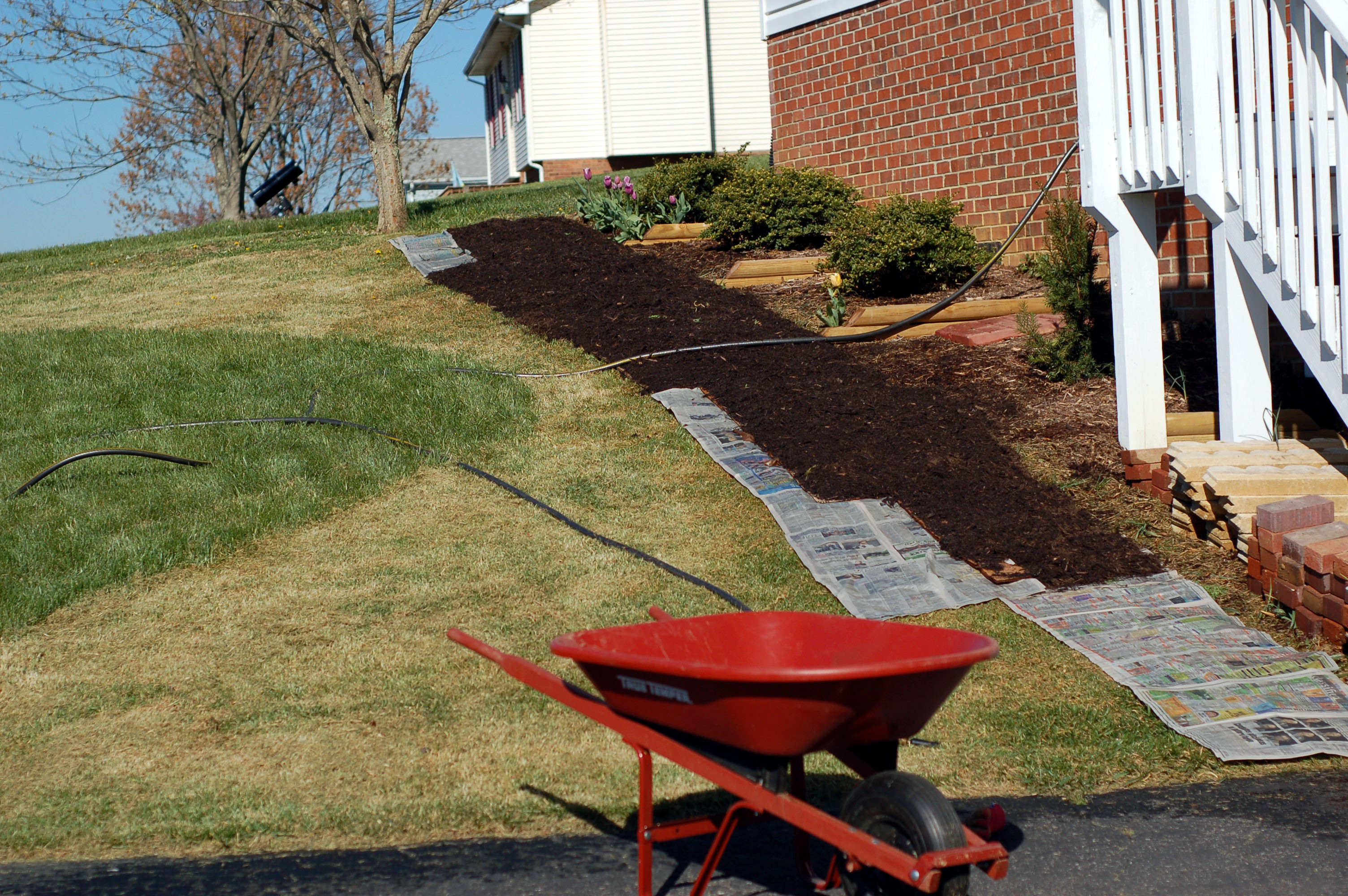
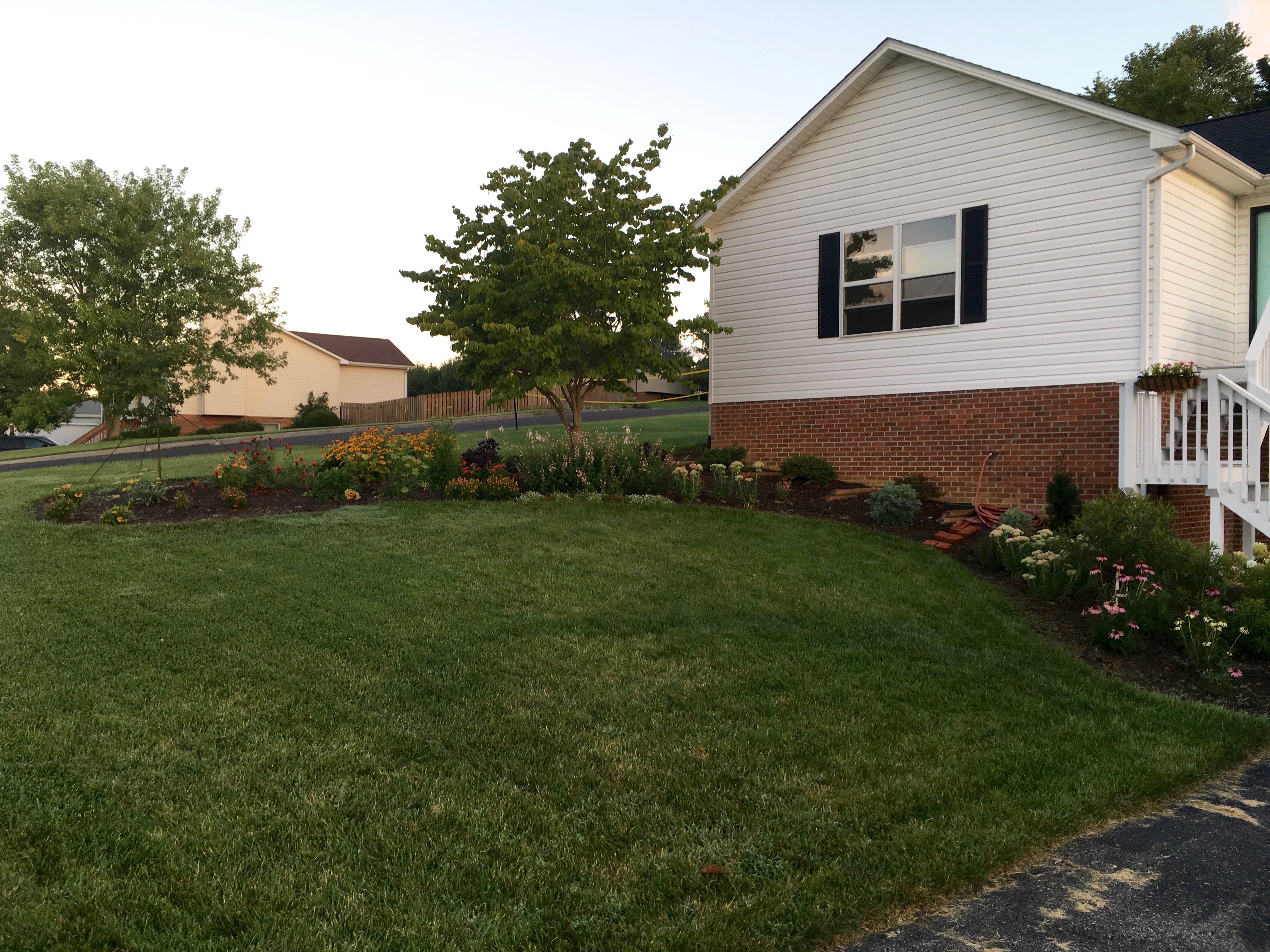
I realized though, that since my April post about building a flower bed, when we were still in the process of killing grass, laying out cardboard, and shoveling mulch, I never brought it back around to show the garden in its full summer glory, with before and after pictures. So here goes (I don’t have before and afters from the same angle, but hopefully you’ll be able to see the difference):
Before:
Building the bed
Now:
Morning flower bed
Monarch on Joe Pye Weed
Basil forest
Flowers in the morning
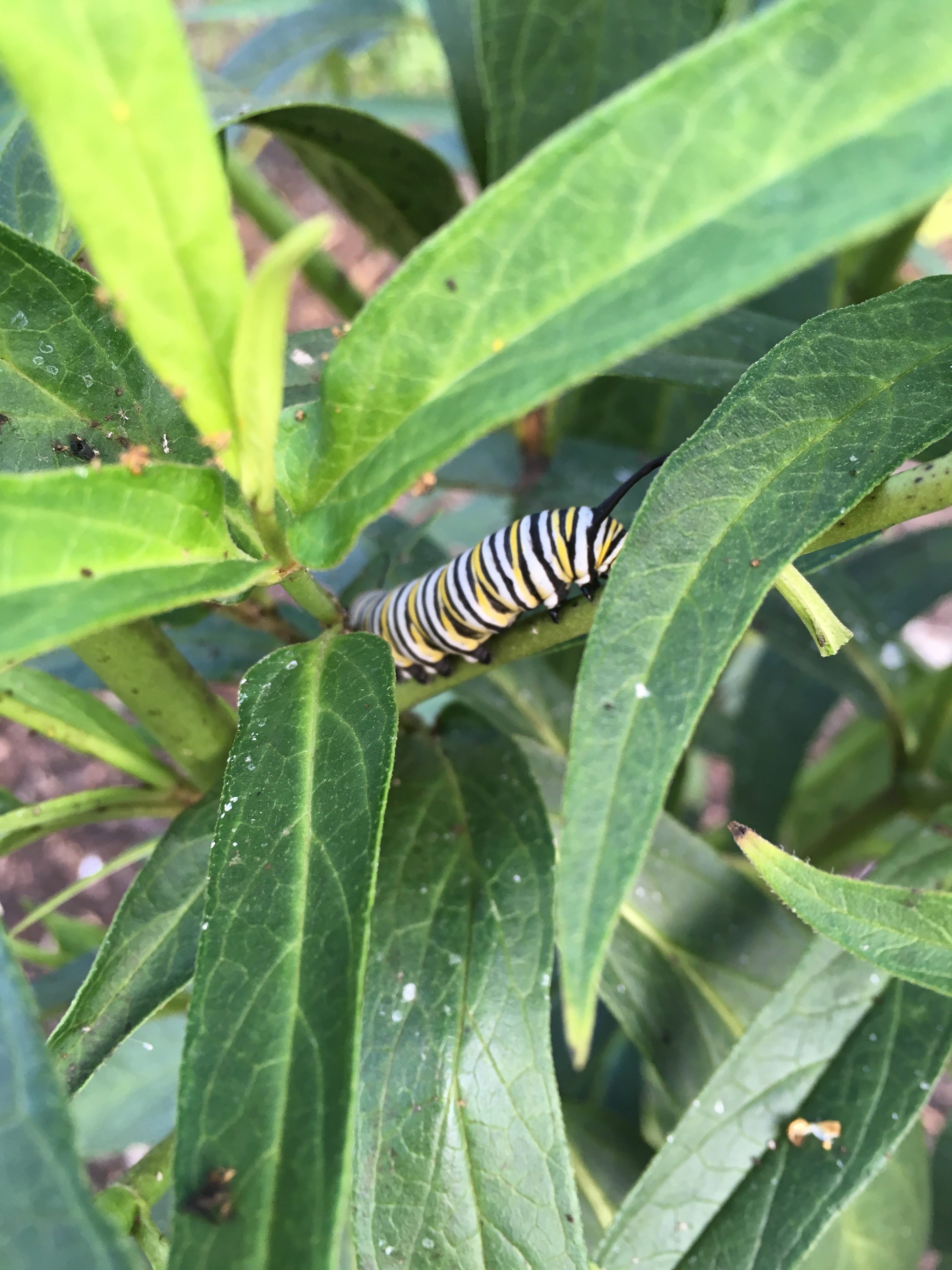
Monarch caterpillar
Garden in fog
Monarch chrysalis
Caterpillar feet
Monarch on Joe Pye weed
Parsley flowers
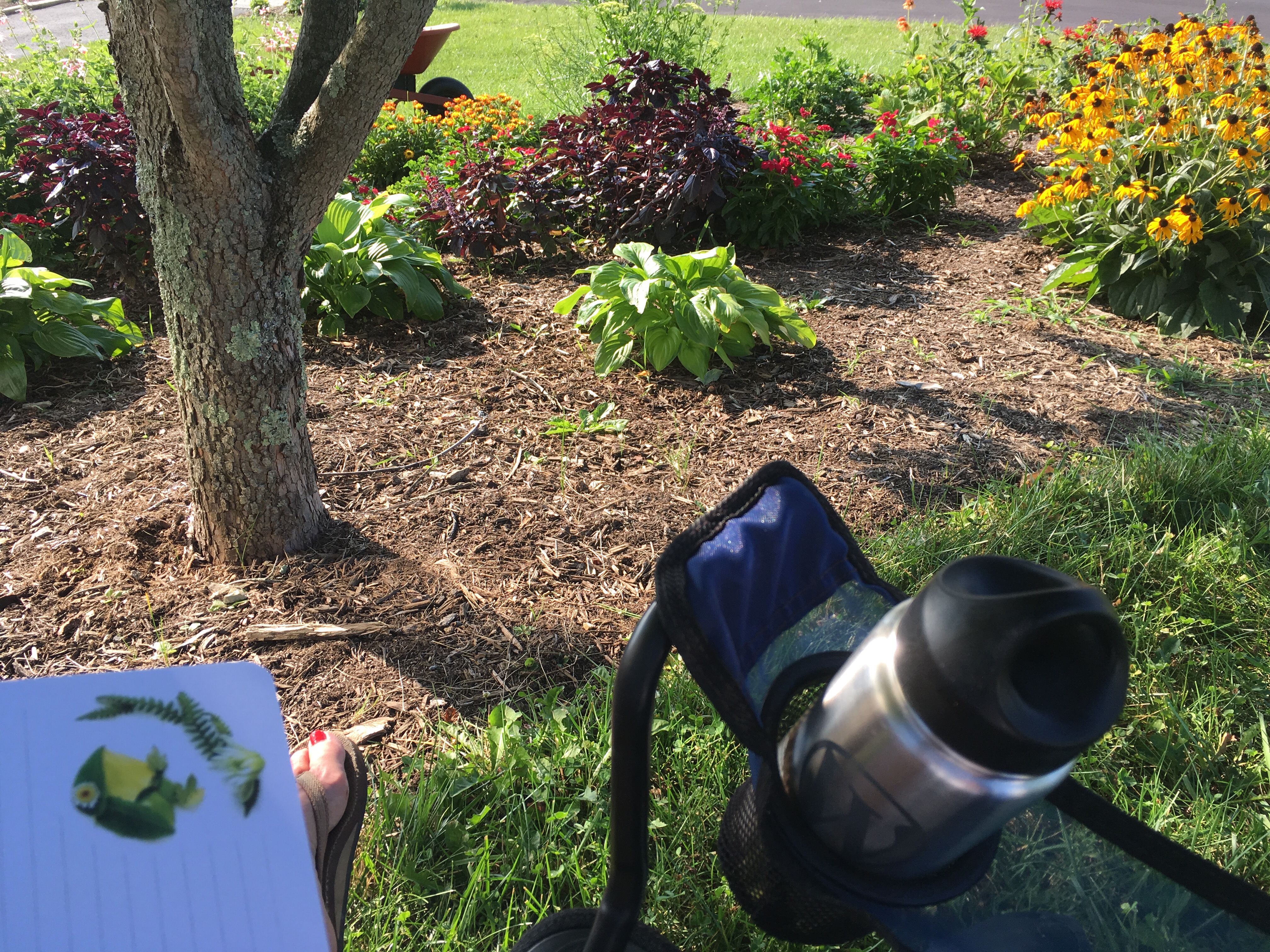
Reading under the dogwood
I wanted an herb garden and a butterfly garden, now we have both butterflies and herbs. We’ve made endless batches of pesto and basil gin smashes.
The kids and I check for caterpillars and chrysalises every day. At last count we have about 8 monarch caterpillars and 10 swallowtail caterpillars, and we think we found a monarch chrysalis in progress yesterday in the rue bush. All the work has paid off :-).
All that work laying out flower beds, killing grass, shoveling mulch, and digging 150+ holes to drop plants into has paid off. I’m sitting under the dogwood tree, watching a hummingbird drink from pink salvia flowers not ten feet away while further down the garden a monarch lays eggs on the milkweed.
It has been weeks since I’ve had a chance to bring my chair under the dogwood to enjoy the flowers, but yesterday, beast though it was for all the chores, I got all of my must-dos done so I could do exactly that: sit under a tree and watch the hustle and bustle of a summer flower garden.
Writing and butterfly-watching
We’ve been getting more butterflies as August marches on, and I usually see them from the car window as I arrive or depart the house, or from the living room window while I type on my laptop for work. Not enough do I come out and sit in the fresh air with the mountain breeze and the insect sounds.
Yesterday, amidst all the chores and errands, I squeezed in some gardening in the horrid heat. I got to see everything up close again and engage with the flowers, the herbs, the bees, the dirt, the aphids. I waded through waist-high salvia to deadhead, chopped forests of thigh-high basil, cut milkweed so infested with aphids I couldn’t touch it without getting little orange bodies all over me, and pulled tufts of grass and dandelions until my fingernails hurt.
And in the middle of all that chopping, weeding, and squirting aphids with soapy water, I saw our first monarch caterpillar. That fat, squishy, striped baby butterfly made every bit of the work worth it.
Now, I hear the rat-a-tat of cicadas, the buzz of two fat bumblebees, the honk of a Canada goose flying overhead, and the shh-shh-shh of my husband sanding our canoe in the garage. A cool breeze lifts the pages of my pretty journal, and glassy dragonfly wings shimmer in sunlight over the grass. The butterflies weren’t out when I first came out. The morning was too young. But now they’re coming.
It’s Sunday morning and I’m under my tree again. These past days have been hot ones, but under the dogwood, I’m able to stay cool. This is my favorite place to be on weekends — in a camp chair, in the shade of my favorite tree, observing the garden.
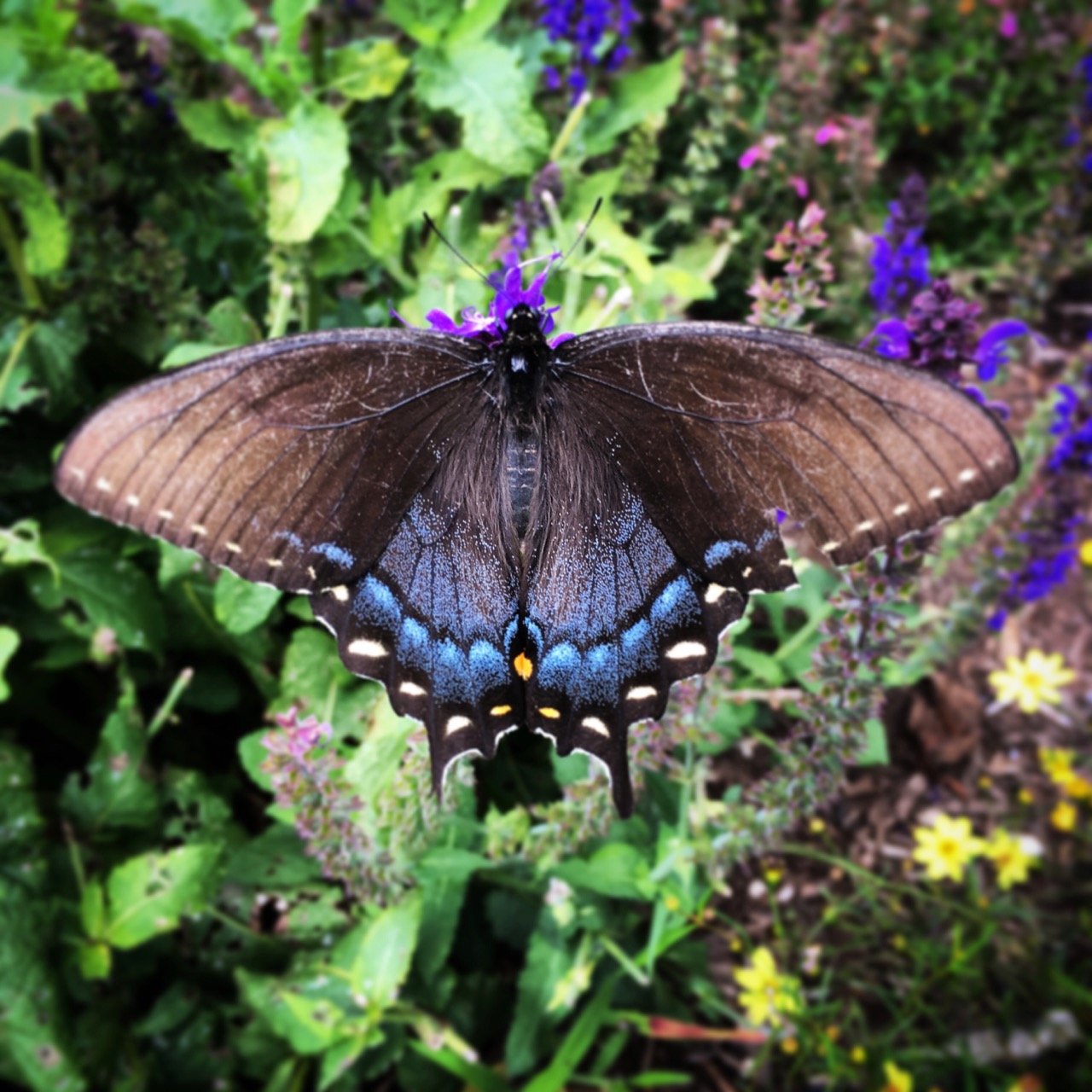
A few minutes ago, from the chaise lounge inside, I watched a swallowtail drink from the milkweed for a good five or ten minutes. Its big wings beat furiously as it flitted from flower head to flower head and drank deeply. When it finally flew away, it staggered like a drunken sailor.
“Maybe it was a female and now it’s going to lay eggs on the parsley!” I said. “Or the rue.” I tried to peer farther out the window to see the parsley plants.
Then it occurred to me that the resident bird population might eat any caterpillars we get. “They’ve eaten all the blueberries, too,” said our son.
Oh well. This is the way of things.
I moved outside for a better view of the host plants, to watch for any signs of egg-laying. The swallowtail hasn’t come to the parsley, but a hummingbird is drinking from the bee balm about 15 feet away. It’s tiny body shimmers emerald in the sun, and its wings hum as it beats them fast enough to hover while it drinks from red trumpets.
Ooh ooh! Here comes the swallowtail! Towards the parsley, close to the parsley, will it see the parsley?
Nope, flew by without stopping. Dang.
It’s okay. Butterflies have been rare so far this summer. Now they’re finally coming. They’ve found the little oasis we tried to create, filled with host plants for caterpillars and nectar for adults. I see five flitting through the garden right now as I type.
















 Butterfly Mind