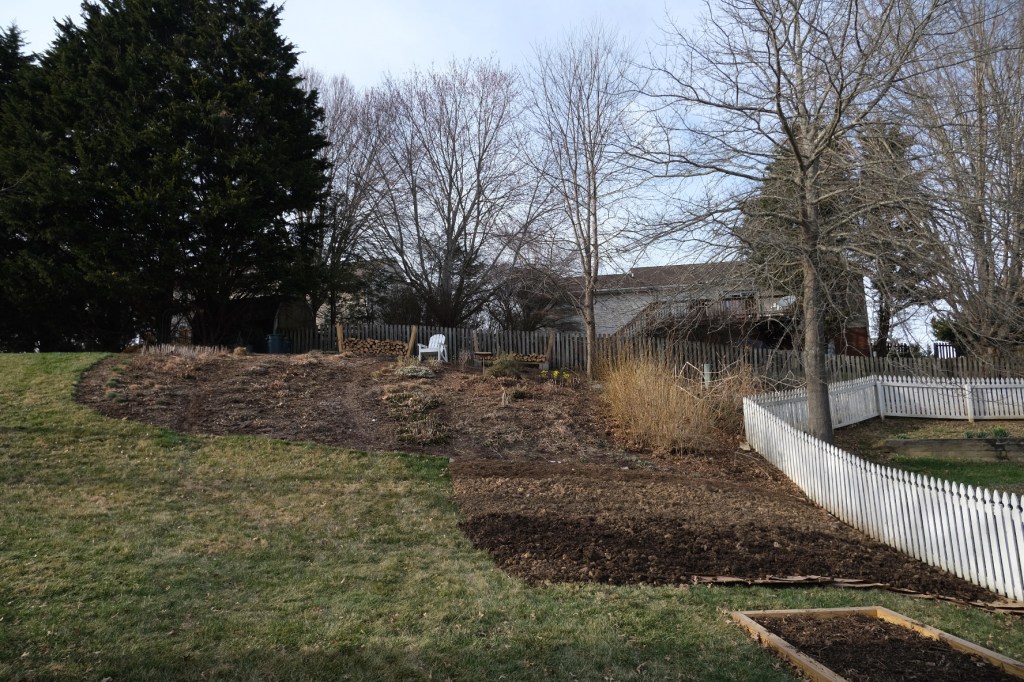
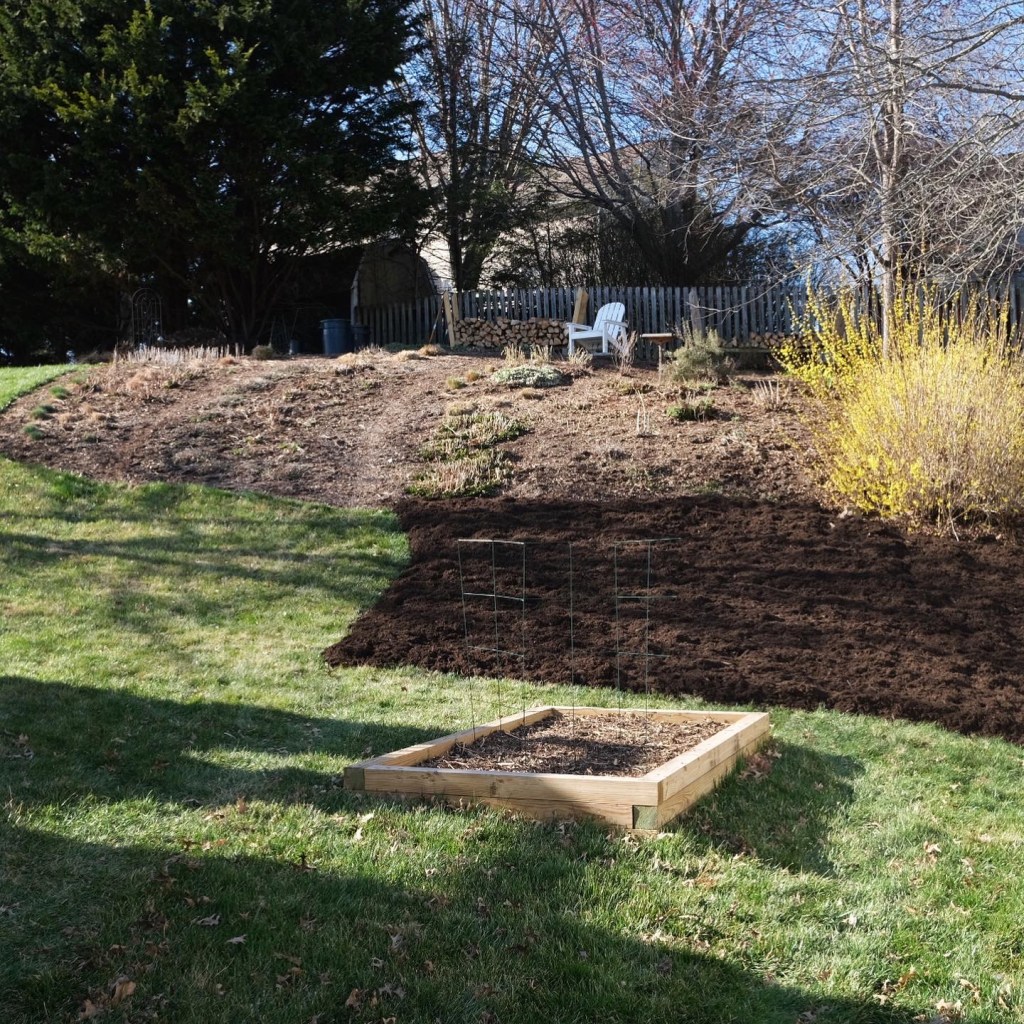
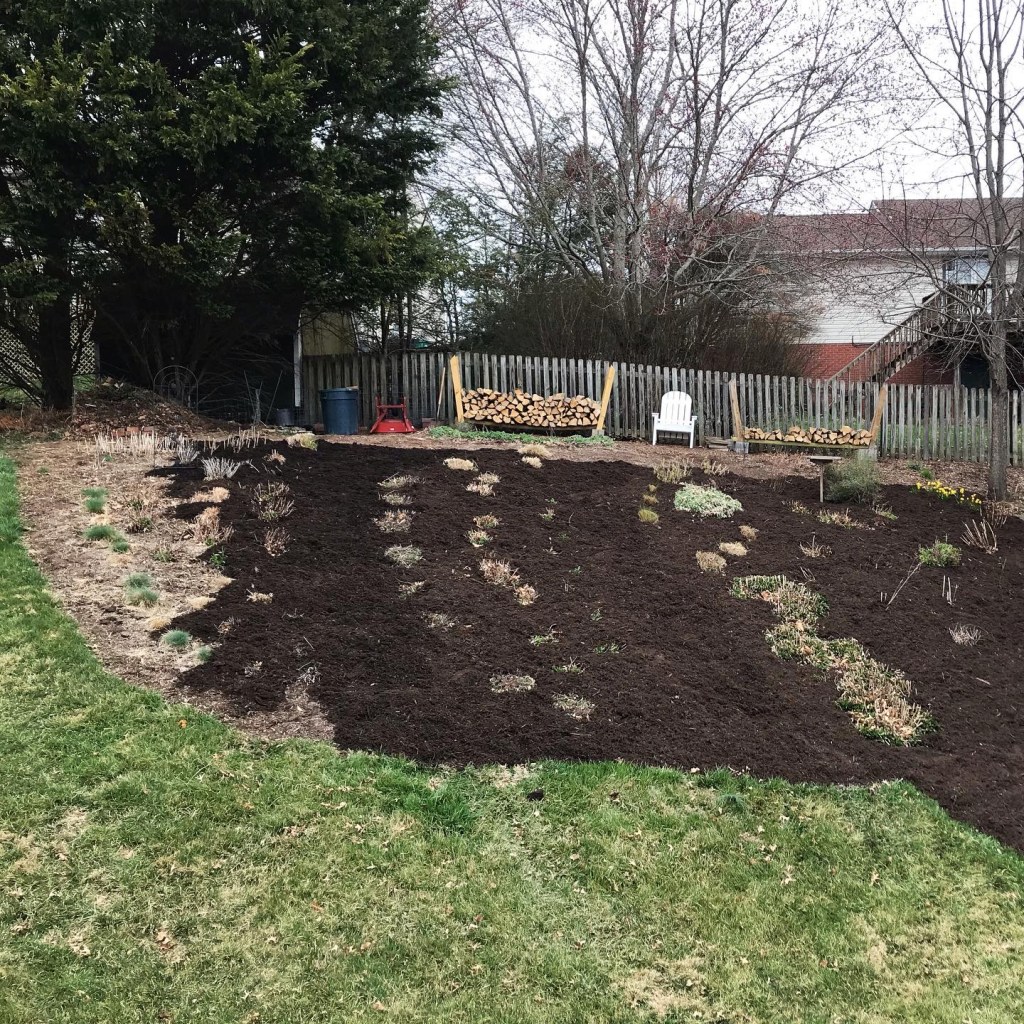
Each spring, I take a week off of work to tend to the garden. Mostly this means spreading mulch over all the beds I killed grass for so I can grow butterfly-friendly plants. I’ve lucked out with weather each year, including this one. My vacation began on the spring equinox, and I had five days of sunshine and warm enough temperatures to work in short sleeves.
In previous years, I ordered 12 cubic yards of mulch to be delivered on the first day of my vacation. This year, thanks to the new bed I carved out in winter, I ordered 14 yards.
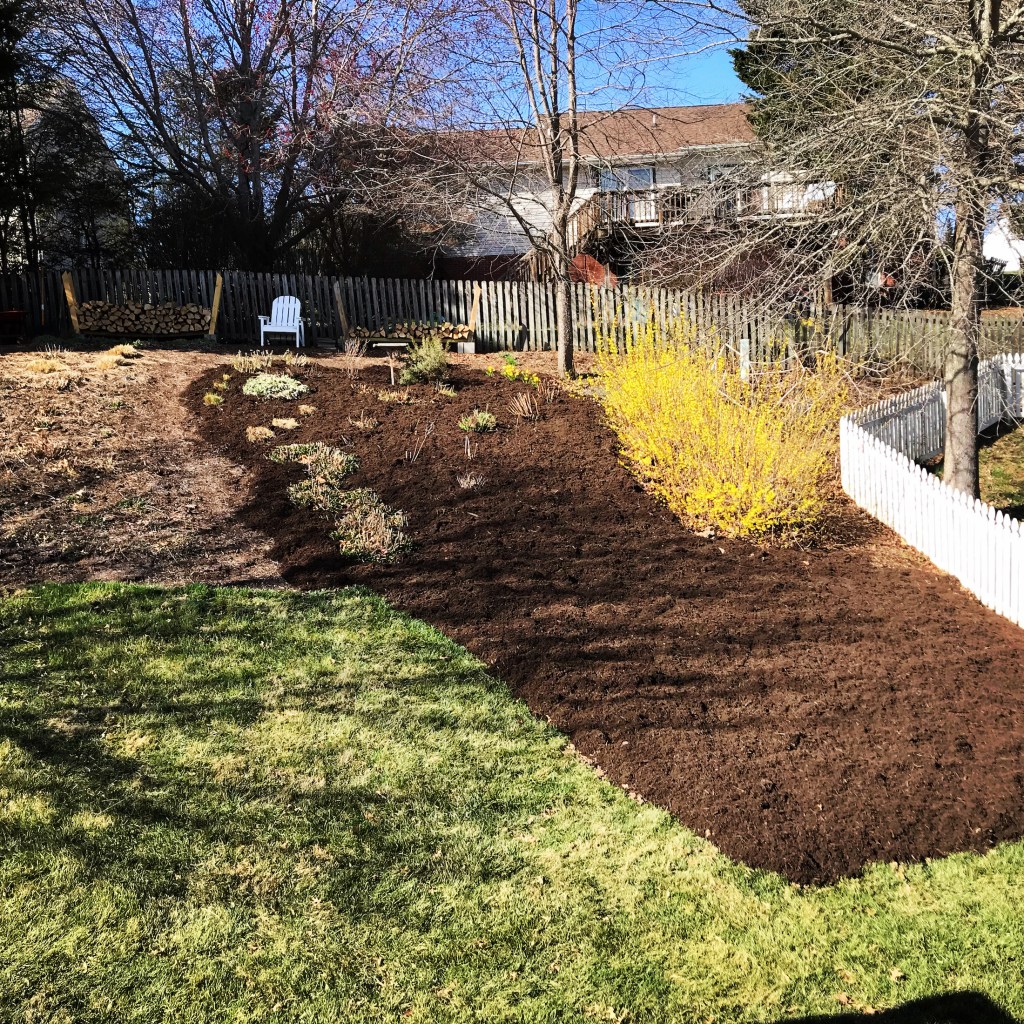
And it wasn’t enough. I called my mulch guy mid-week, and luckily he was able to deliver two more yards for me while I still had time to spread it. I finished on Friday, just before the rains of the weekend. Now, I’m back to work today, but the garden is ready for April rains, lengthening days, and sunshine. My chairs are out there, ready for me to sit in them as soon as it’s warm enough.
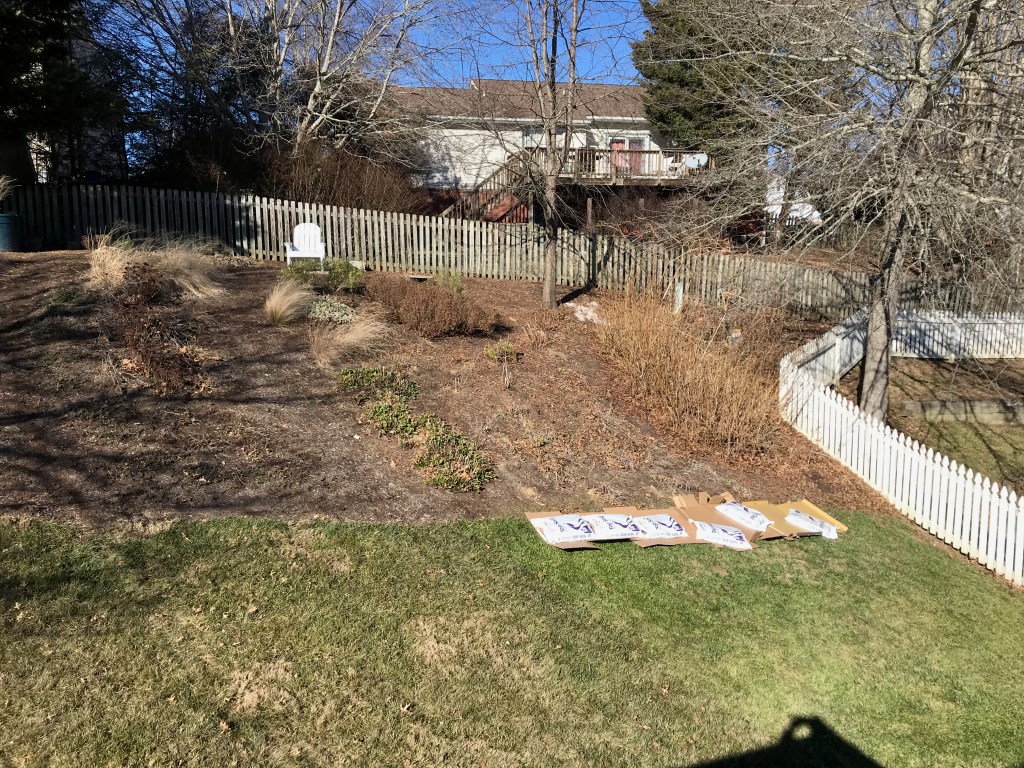
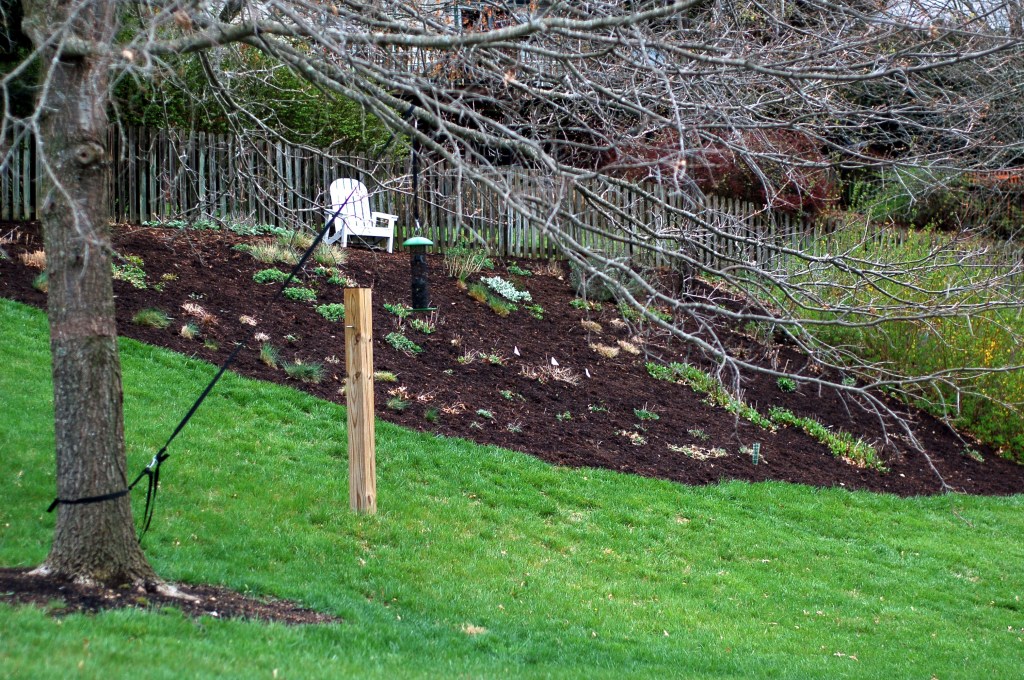
Back bed before mulch
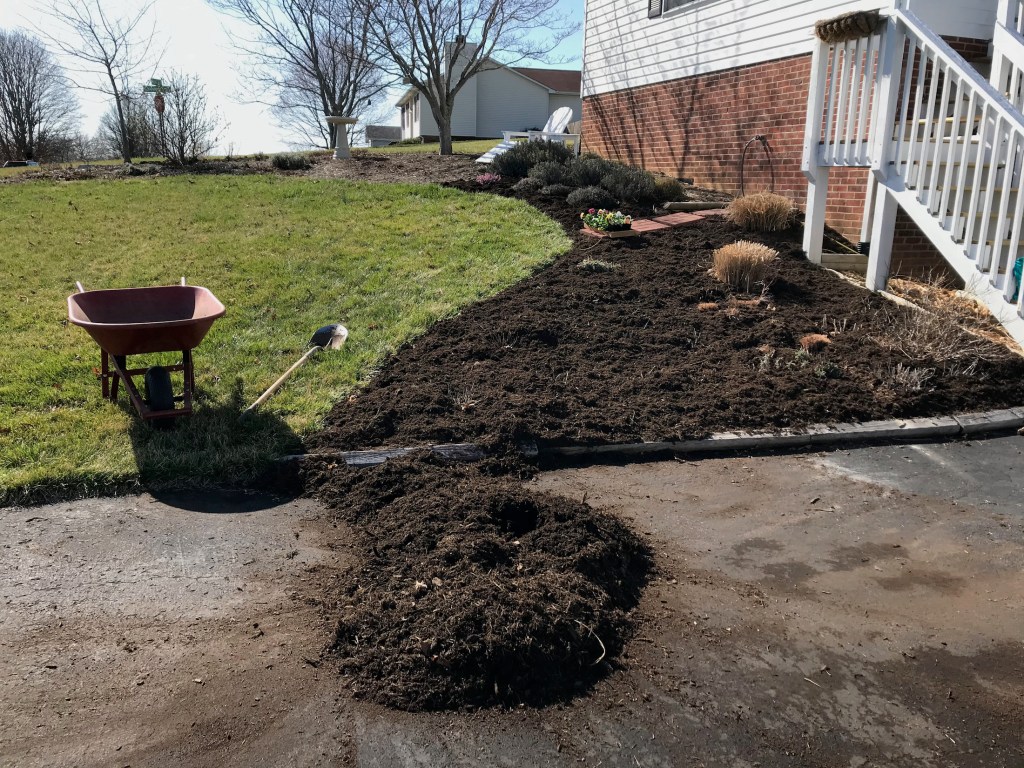
Front pile in progress
Almost done with front pile
This is where most of the front pile went
Making progress with the second pile of mulch
Gah! Ran out of mulch
I couldn’t make it stretch; I needed at least 2 more yards
Once I decided to kill more grass, I called my mulch guy to ask if they delivered top soil. He said yes. I got excited, and I asked him for three cubic yards, as soon as possible. That was two weeks ago. A snow storm was on its way at the time, and his dirt was still wet from the last snow. “I’ll call you when the weather is okay to deliver,” he told me.
Thursday afternoon, I was on a run on our second consecutive warm, sunny day — the first sunny days in what seemed like weeks. My phone rang when I was about 10 minutes from home. It was my mulch guy, so I stopped to walk, and panting, I answered the phone. Maybe he could deliver that day!
“Hi! I’m calling about your top soil, the weather finally is clear – ” he said.
“YES!” pant pant. Very excited. Grinning.
“We’re about to get another six days of rain -“
“Can you deliver it today?!” I said. In my excitement, I kept interrupting him.
“Yes. Today is the only day. I’ll be there in 30 minutes. You want it at the top of the hill, yes? I’ll meet you there.”
He delivered it in the late afternoon. I covered it with a tarp as the sky clouded over. With six more days of rain on the way, I wondered when I’d get a chance to spread it. If only I could get the cardboard down and the dirt on top of it, the rainy days would be perfect to water it in and get the cardboard good and soggy so that it will start breaking down at least a little bit before I want to start planting. With potted seedlings, I can dig through the cardboard for their roots to get into the earth. I’m worried about sowing seeds though; if the cardboard is still too stiff and new, and I sow seeds in the dirt on top of the cardboard, their new roots won’t be able to penetrate it. The sooner I can get the cardboard over the grass to kill it, and under the dirt and rain to start breaking down, the better chance my seeds will have.
Planting plans: flat-leaf parsley, basil, milkweed, Mexican sunflower, and jalapeños I can start indoors then transplant the seedlings. Zinnias, chives, cilantro, and dill I will want to sow directly in the bed.
Yesterday, I couldn’t stand not taking advantage of the coming wet weather. So despite gross gray skies, rain, and a constant drizzle, I decided to go ahead and lay down the load of cardboard I’d collected from a nearby recycling dropoff. The soil was sodden and heavy, and I’m lucky I didn’t throw my back out as I shoveled, wheeled, dumped, and spread. It was pretty grueling work, and I was glad when I was done. Today, I sip coffee at the window and watch with glee as rain soaks my work.
I need maybe one more load of cardboard to finish off the area for my bed. Hopefully by the time I get to that final load, the soil will be drier. And spring will be that much closer by then!
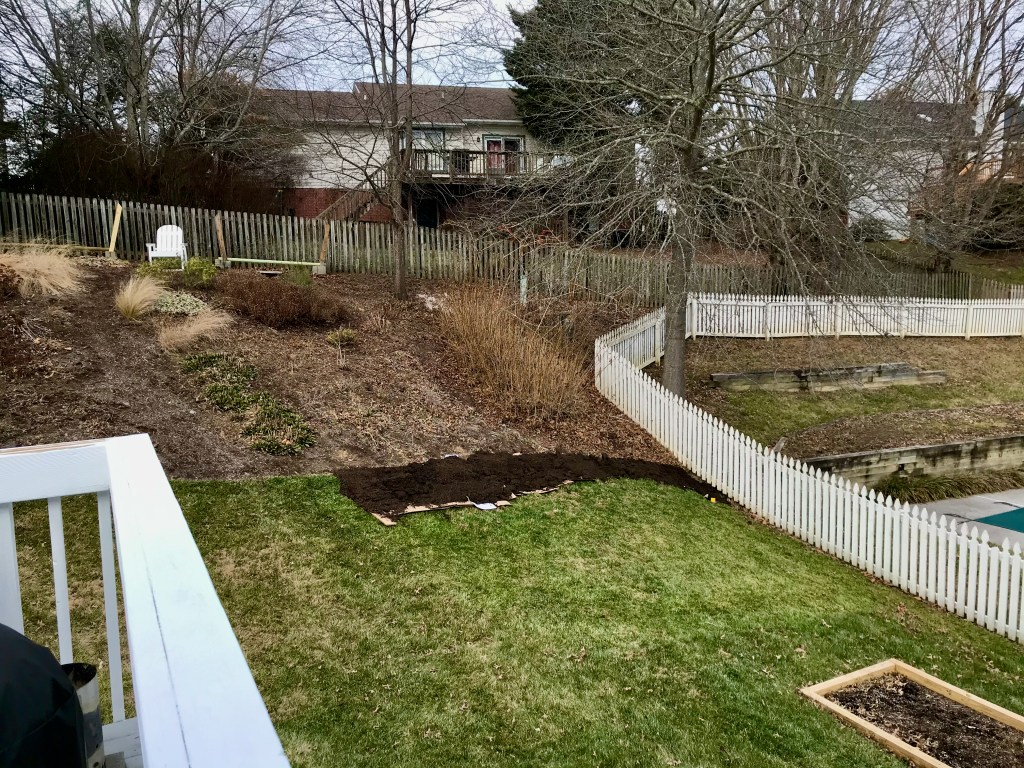
Cardboard over the grass I want to kill
My wet dirt
Halfway there
The deck on the right is where I sit in spring, summer, and fall to watch the garden
Done! For today. This took about 2.5 hours. One more session should do it. Except I need more cardboard.
At the end of every summer, I think, cool, the garden is good. It looks great. I will leave it as it is; I won’t obsess during winter or move a bunch of stuff around in the spring.
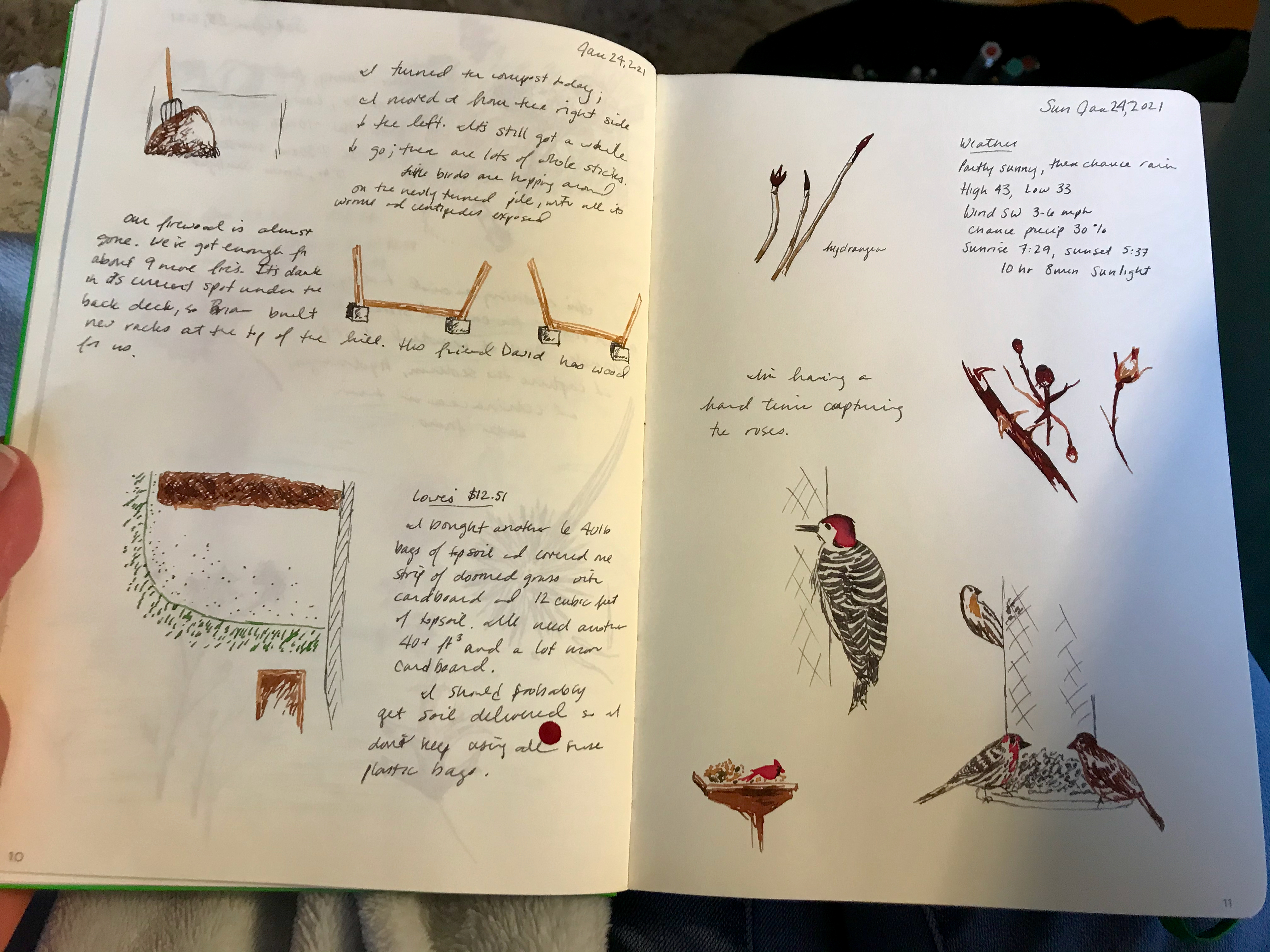
Then January comes. I order seed catalogs. I pace. I look out the windows. This year, I started a journal — with drawings! — to help me see the garden’s beauty even when the colors are just a dozen shades of brown.
Jan 23 garden journal
Jan 24 garden journal
Jan 31 garden journal
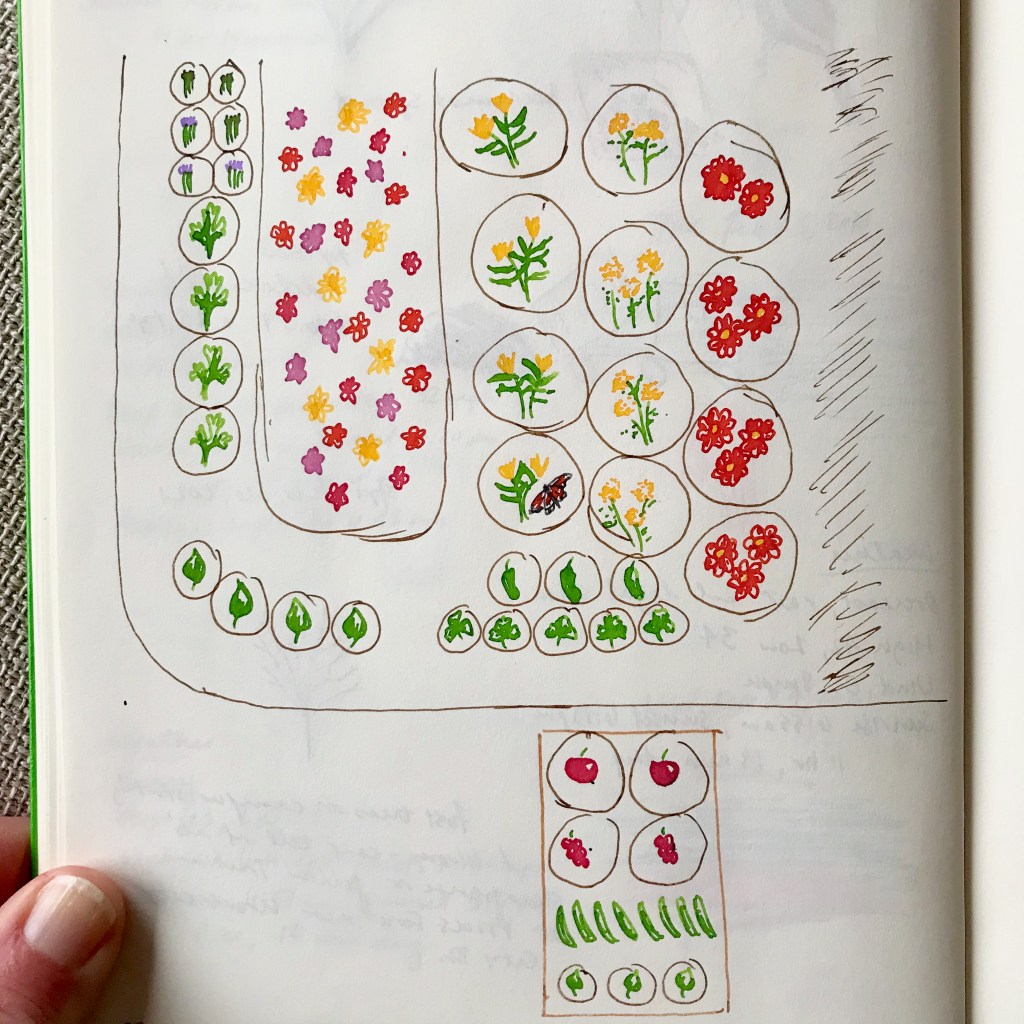
As I looked at seed catalogs and paced and looked out the windows, I thought, you know, I really want a big swath of Mexican sunflowers. And a giant patch of zinnias for the butterflies. And I really want more milkweed, too, and dill.
But all the beds are already full.
So I paced and looked out the windows more. I looked for a place a bed could go. A place with sun and that I could reach with the hose and that was somewhat level so the tall Mexican sunflowers wouldn’t flop down the hill when they could no longer bear up under their own weight.
There’s a big section of one flower bed that gets too much shade in summer for me to grow the things I want in it, but I realized if I pull it down a bit, I can create some space that gets more sun, is less steep, and would be a perfect place for a big flower patch.
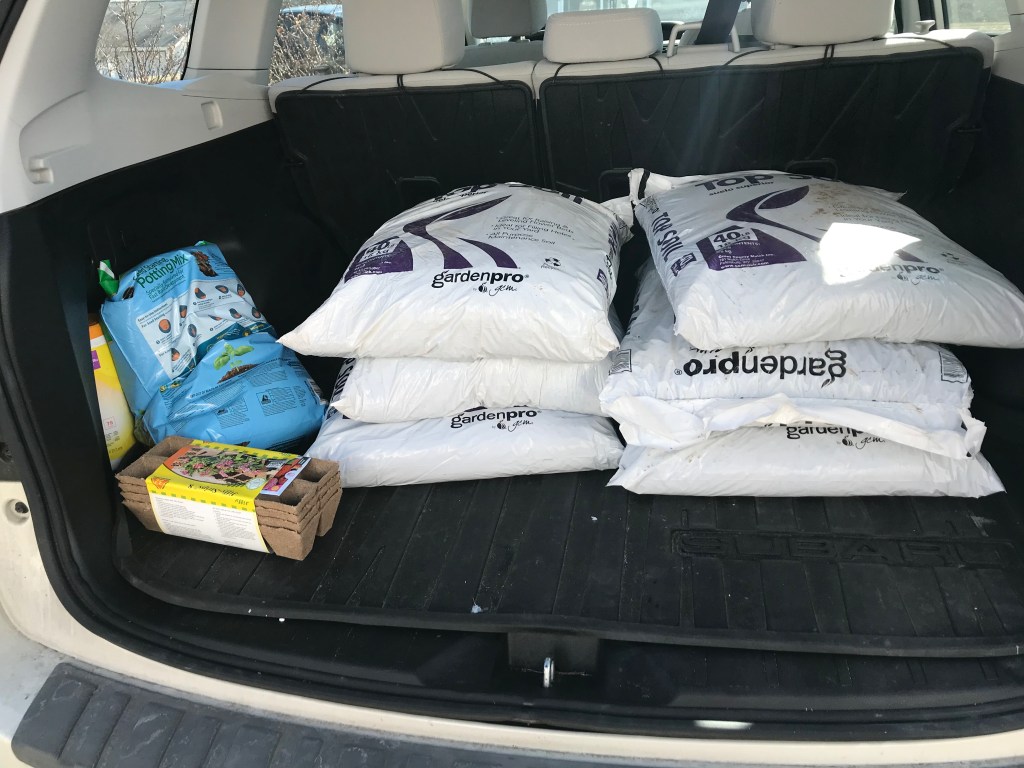
We still had a bunch of cardboard boxes left over from Christmas, so on a warmish day (for January — it was maybe 45 ℉), I set the lawn mower on its lowest setting to shear the grass close to the ground in the area I want to transform into a bed. I broke down the cardboard boxes, spread them out, and weighed them down with bags of topsoil.
Topsoil
Super sheared grass to kill – Jan 23
Cardboard layer – Jan 23
My idea is that if I start now, I can create a physical barrier between the grass and the sun to kill it. Meanwhile, I’ll cover the cardboard with topsoil to weigh it down. The topsoil will also provide dirt to scatter seeds directly into come May when it’s time to sow zinnia seeds. I’m hopeful the next three months of snow and rain will soften the cardboard enough that by the time June gets here and the zinnias are sending down roots, they won’t hit an impenetrable barrier.
First row of cardboard and dirt – Jan 24
This is all very much a fly by the seat of my pants idea, by the way. I’m pretty sure it will work.
However, I fear it will only work if I get started, like, now. As soon I exhausted our cardboard supply, I plotted when I could put more down. I had time off scheduled today, and I thought, awesome, I’ll do it then!
And then this happened.
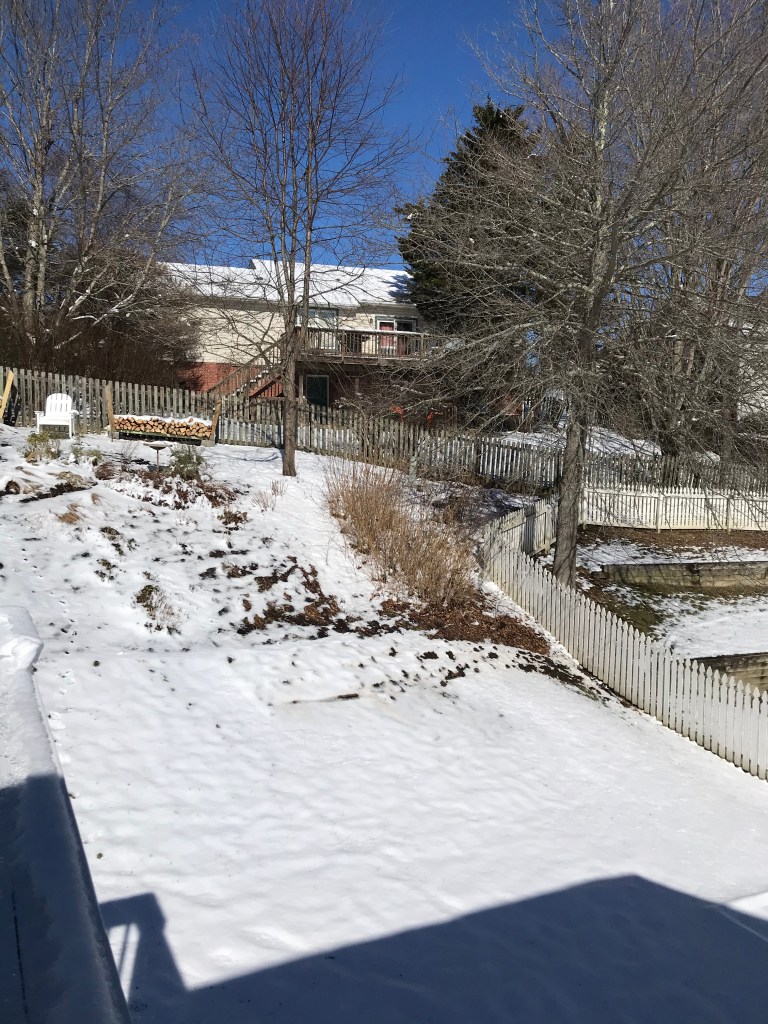
Hello snow. Jan 31.
Which means the area I wanted to work in today looks like this.
Guess I won’t be working in the garden.
Now, instead of laying more cardboard down, I’ve decided I should extend the bed even further, all the way around the raised bed, because why not? I can put in some sugar snap peas.
I couldn’t work out there today, but after a coworker inspired me with his compost delivery, I did put in an order with my mulch supplier for dirt to be delivered next week or the week after, depending on the weather. That gives me two weeks to scrounge up more cardboard, and hopefully not come up with more ideas of where to kill lawn. I don’t know how my back will handle shoveling this much more mulch in spring.
March through June are full of green growth, spring flowers, cloudy days mixed with fair ones, and rain. July 1, the faucet turns off and the sun turns on. Summer flowers begin to bloom. In early July in our corner of Virginia, many of the butterfly attractors begin to open up, and host plants have enough leaves and fresh greenery for butterflies to feel confident their baby caterpillars will have something to eat.
Because of the lack of rain, July also means fewer clouds and a more assertive sun. The lawn has already lost its lush green of spring, and by the end of the month, many of the flowers that are peaking now will turn crispy. I took some photos yesterday to catch them before they turn.
The butterflies aren’t here yet, but they will be soon. Around 6pm yesterday, after I’d put the camera away, a monarch flitted around the front beds for at least half an hour. I never did see it land for a drink, but there are tasty treats here: it will come back.
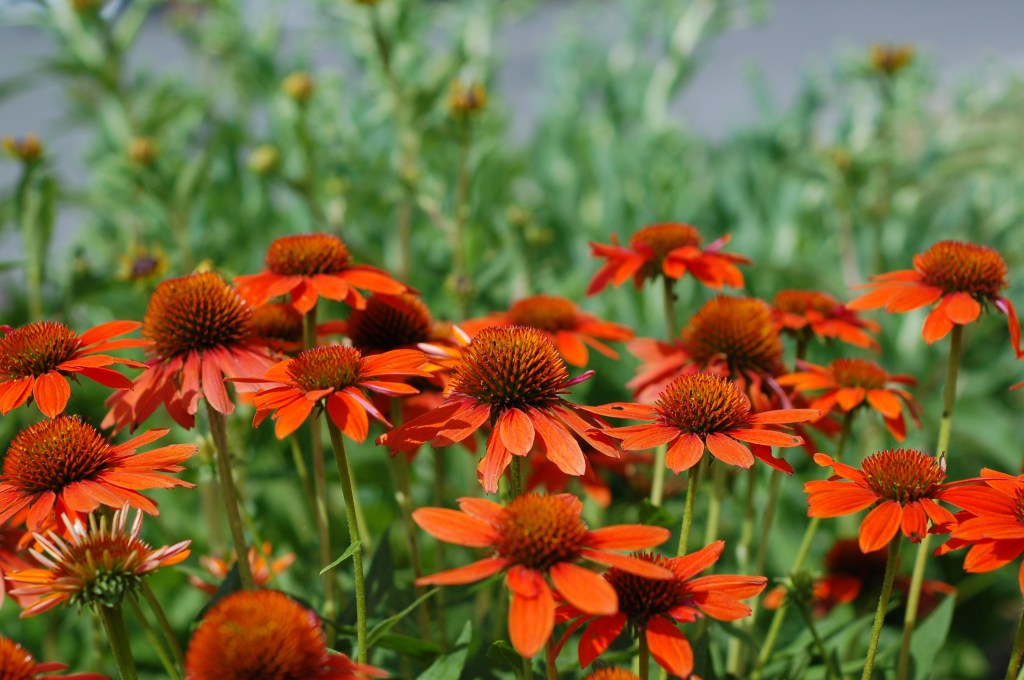
Lavender: bees love it.White coneflowersMy perch: lavender where I can smell it, and nectar plants where I can watch for butterflies (there’s also a swamp milkweed as a host plant for monarchs)Black eyed Susans starting to flowerOrange coneflowers
Back beds
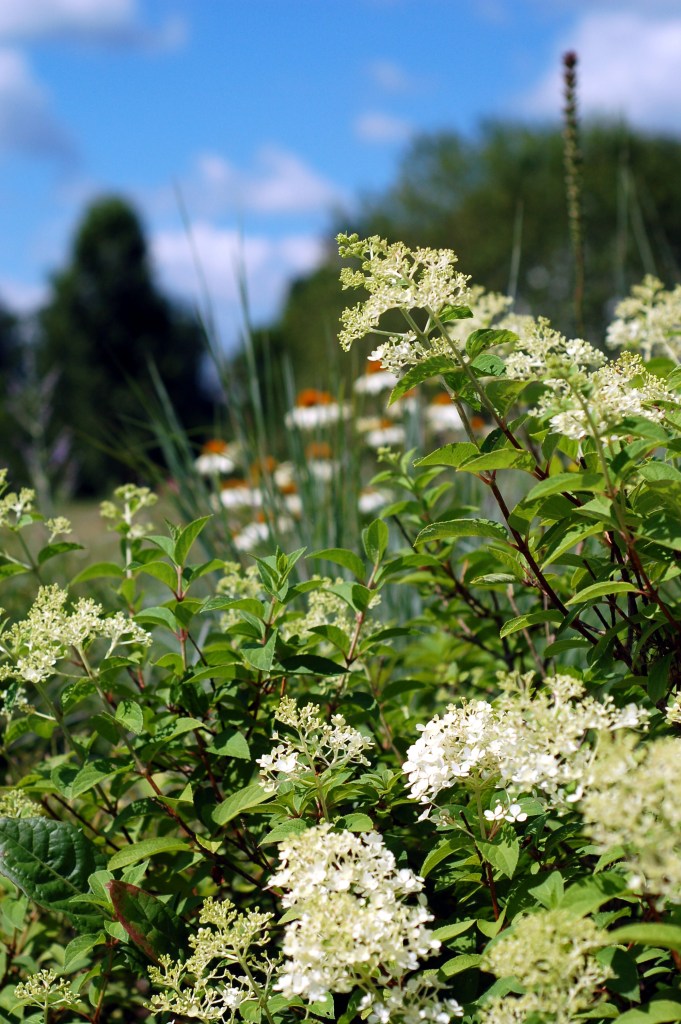
The back beds include nectar plants along with host plants like rue, spicebush, dill, and milkweed.
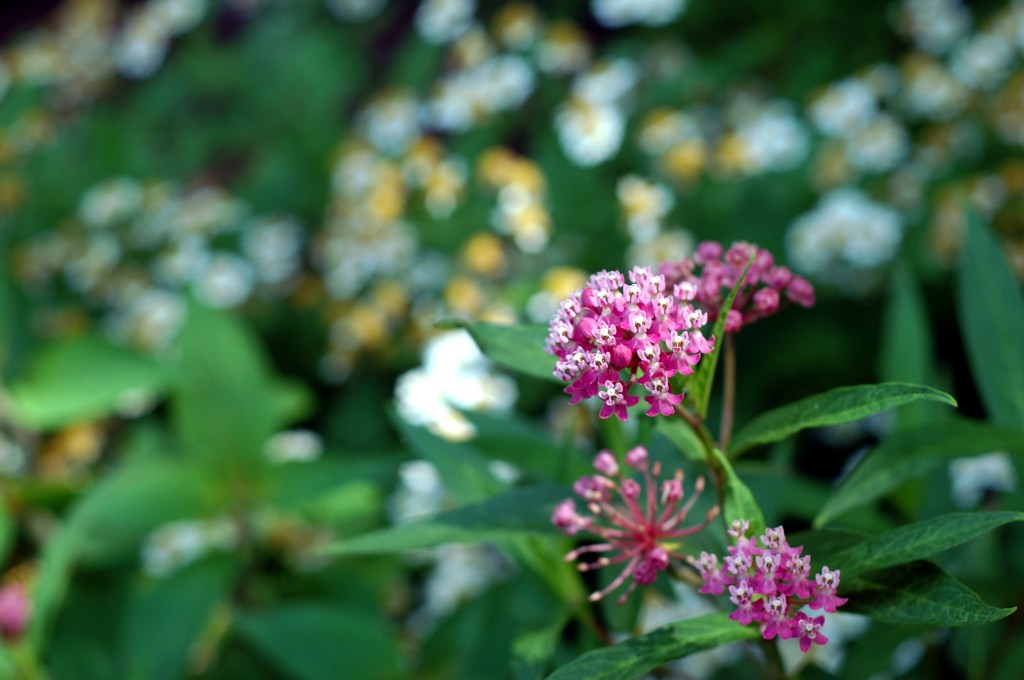
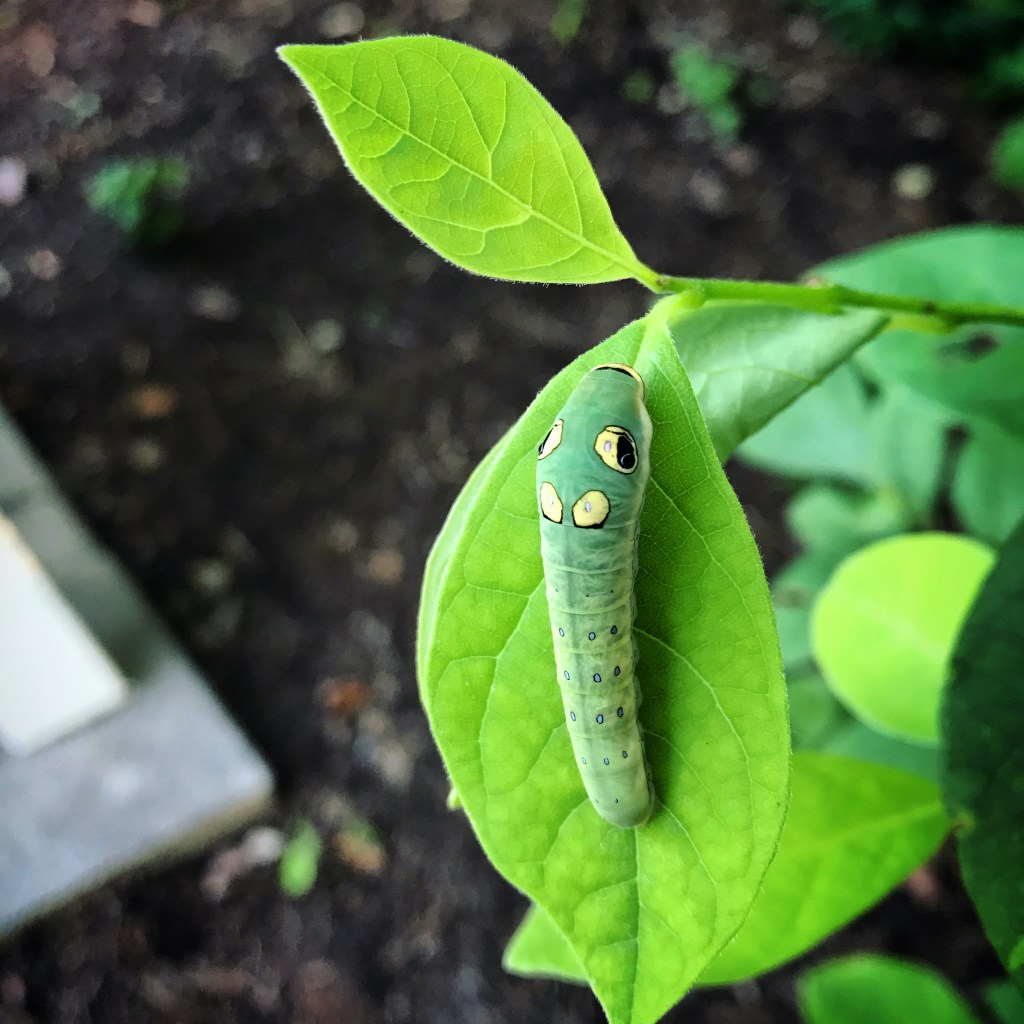
Milkweed flowersAgastache (foreground), with verbena, bee balm, and dill in the backgroundSpicebush swallowtail caterpillar
Bee balm and dill (hummingbirds love the bee balm; dill is a host plant for swallowtails)
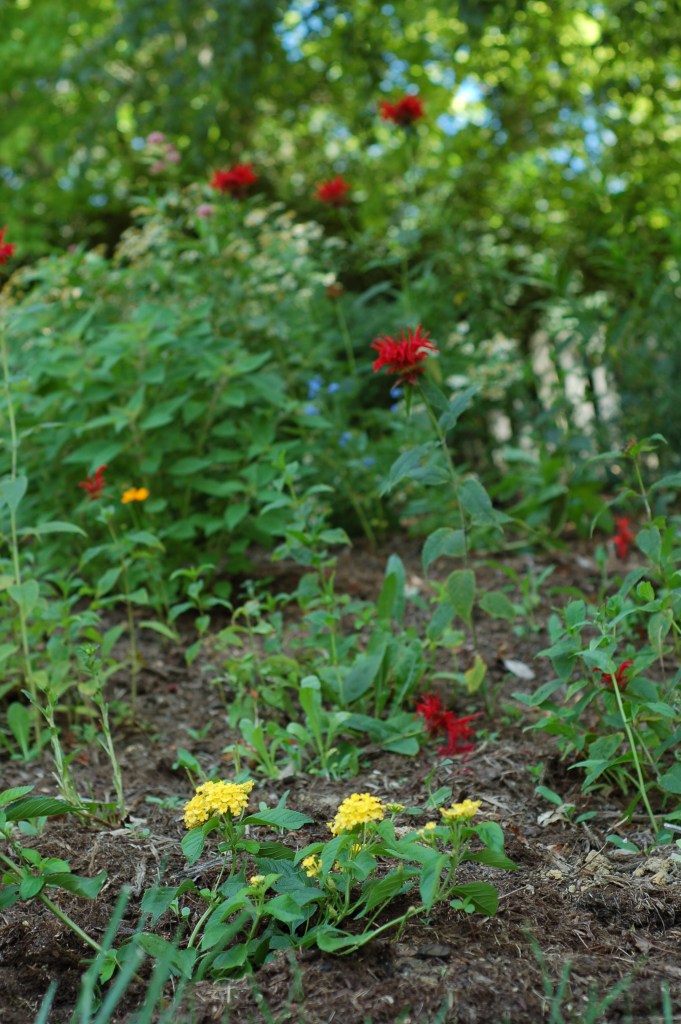
Lantana and bee balm pop here, but this is also where all the milkweeds are (not shown; milkweed is host plant for monarch caterpillars)
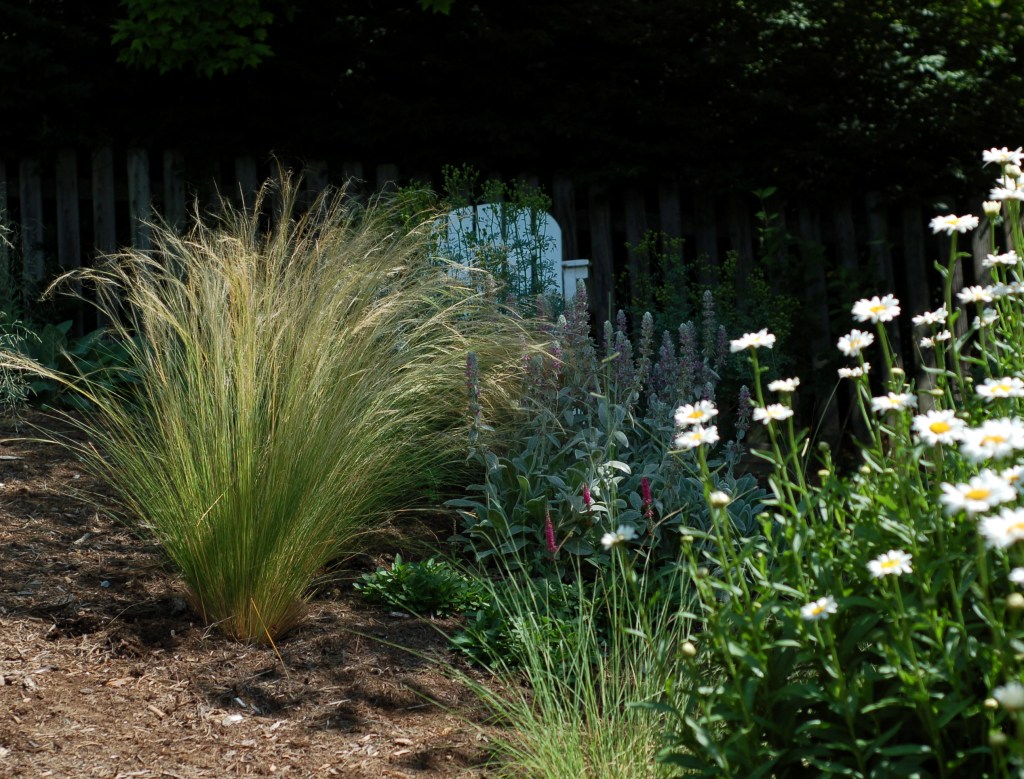
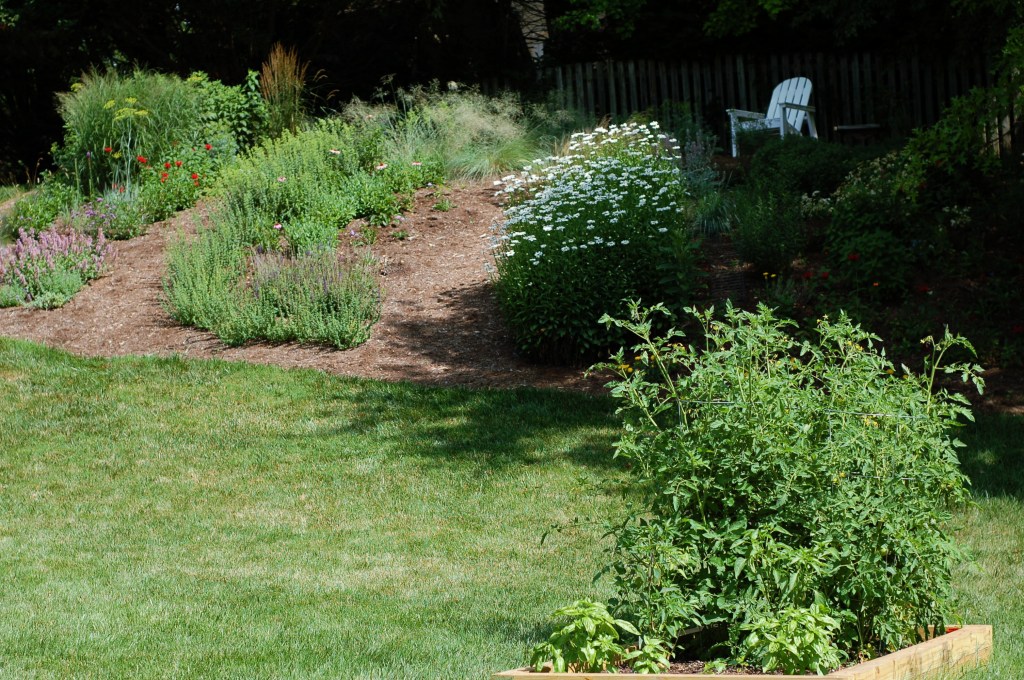
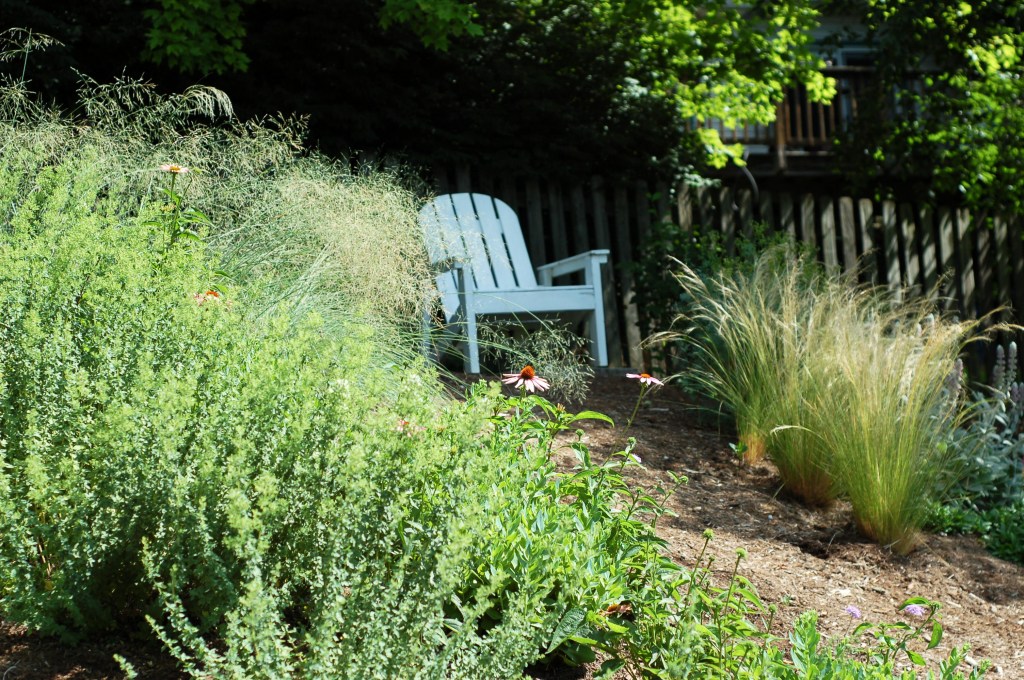
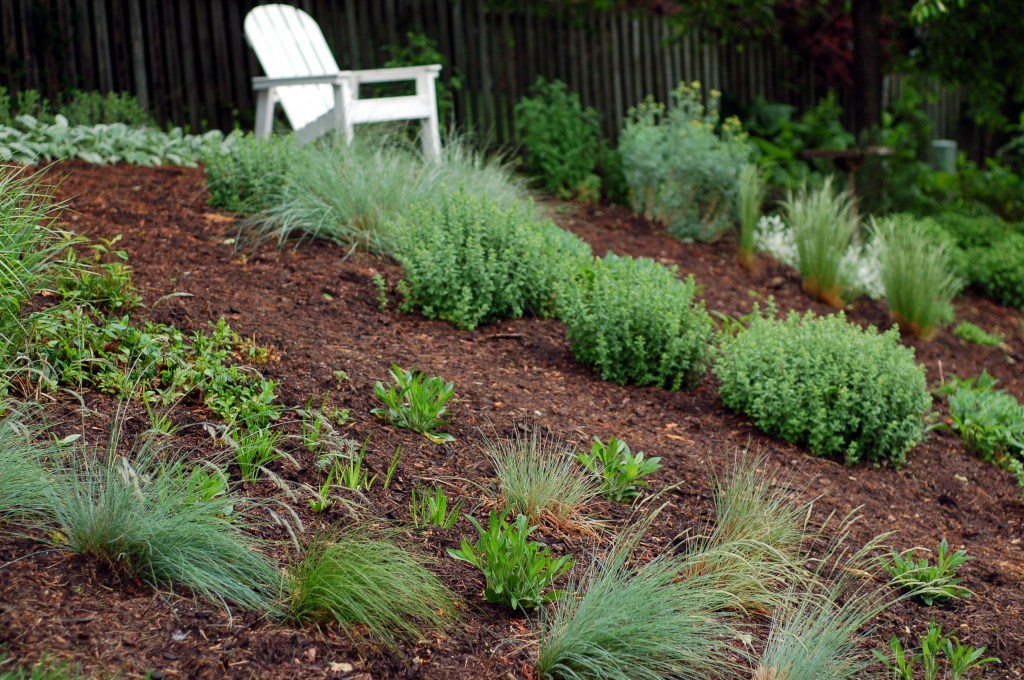
Mexican feather grass (left): my favorite ♥️. The rue is behind the feather grass; rue is a host plant for swallowtail caterpillarsTomatoes and basil thrive in the raised bedEchinacea, marjoram, dill (background)View from hammockMy feather grass again 😍
Time has slowed down since the pandemic began. Weekend errands, drives to and from the aquatic center, and swim meets are all gone. We planned to sail on Saturday. We had the boat hitched up and drove further away from our house than we have in 72 days now.
But the highway was closed, and traffic on the detour was backed up for miles. We turned around and came home. My boat hat transformed into my reading in the garden hat.
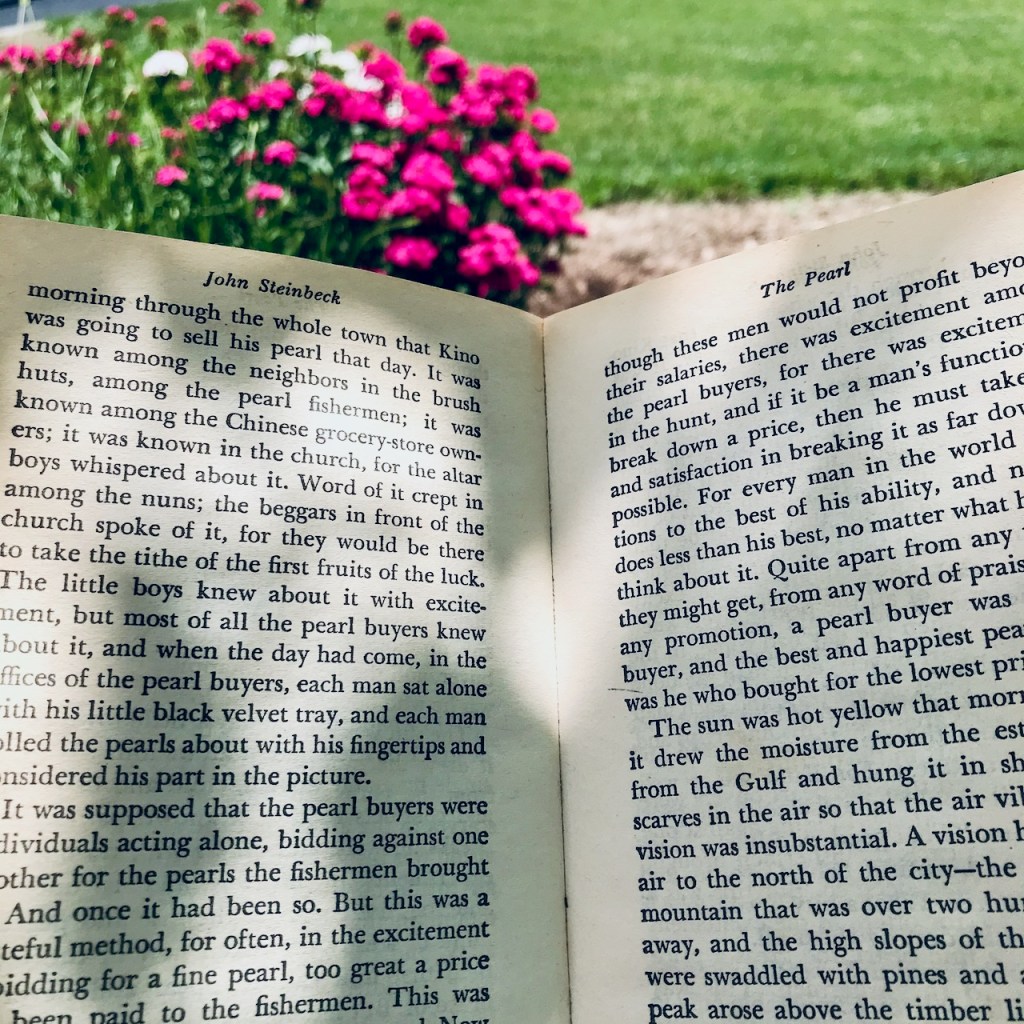
I sat in the garden and read Saturday and Sunday both. If the sun was up, I was outside. I finished one book, and then another. And I took some photos of the lush emerald green. The garden never as deep and fresh a green as it is in May..
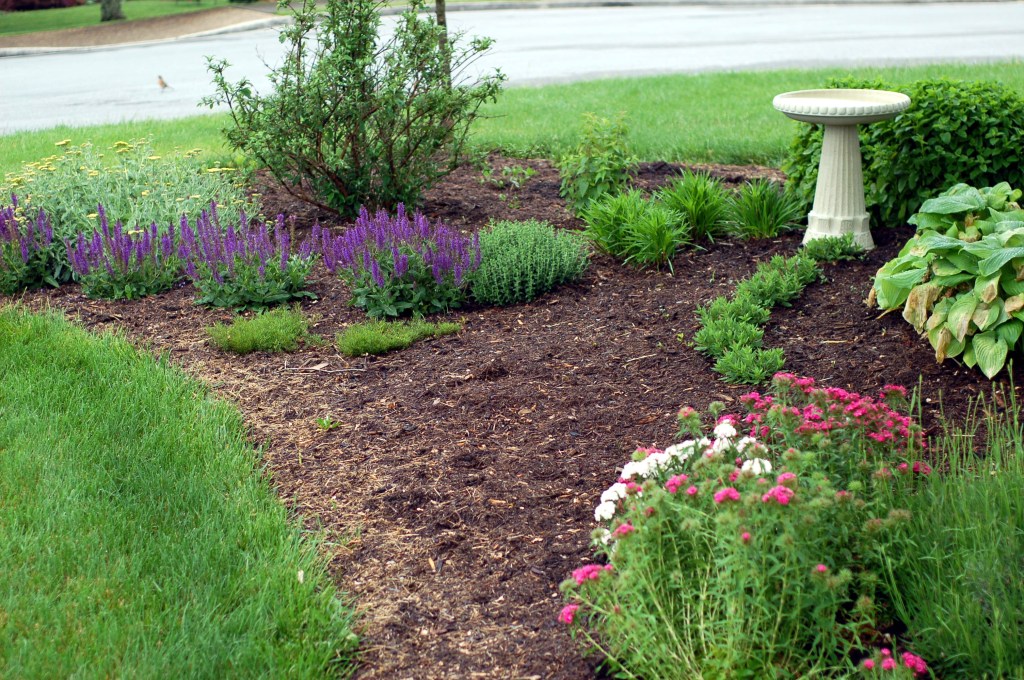
The basil we started from seed went in the ground this weekendI read The Pearl almost entirely from the garden this weekendMy little prairie bed with my new bird bath in the background 😍
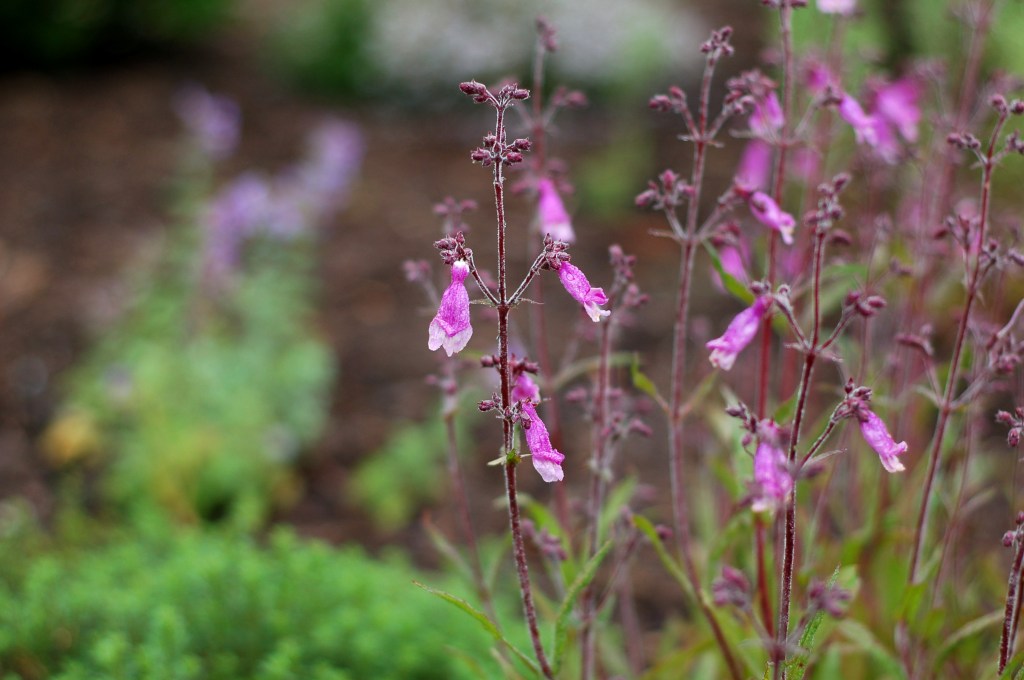
Penstamon
Lamb’s ears
Orlaya
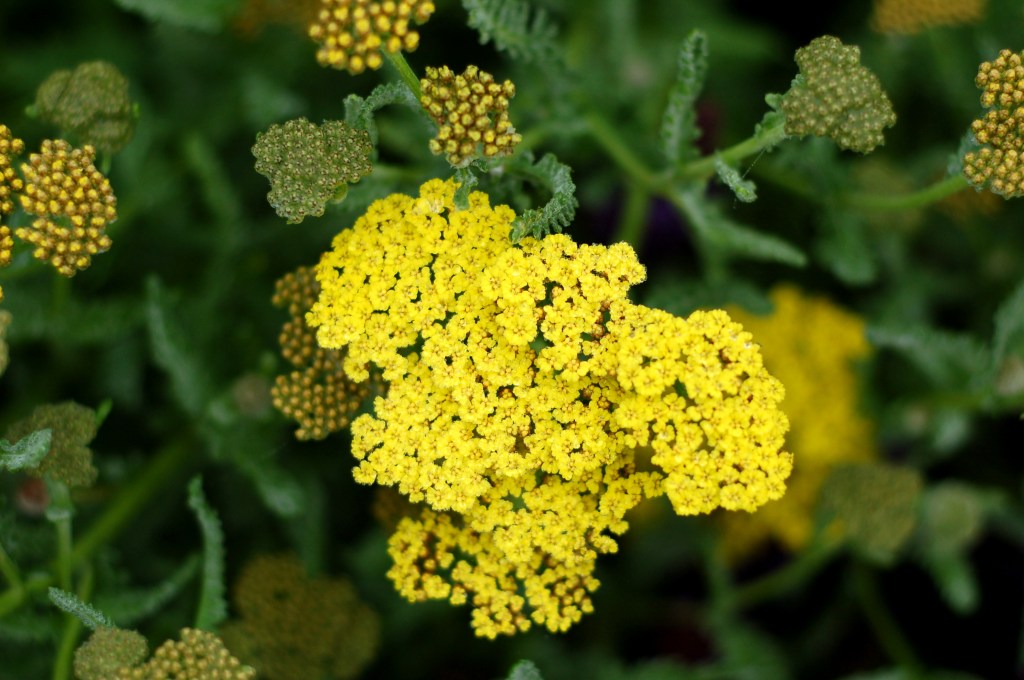
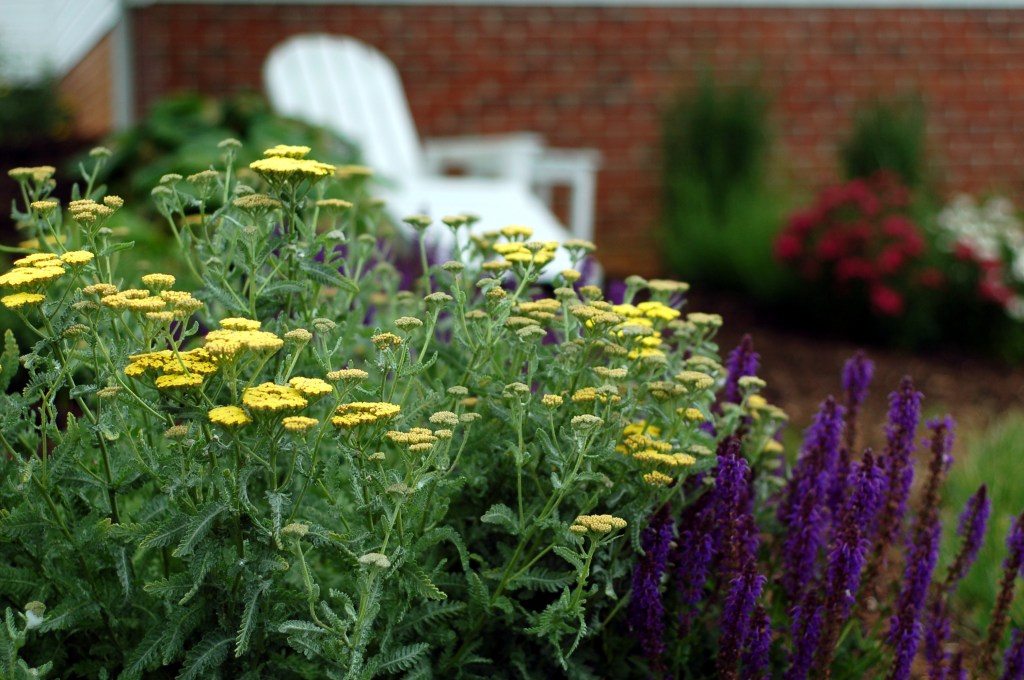
Yarrow
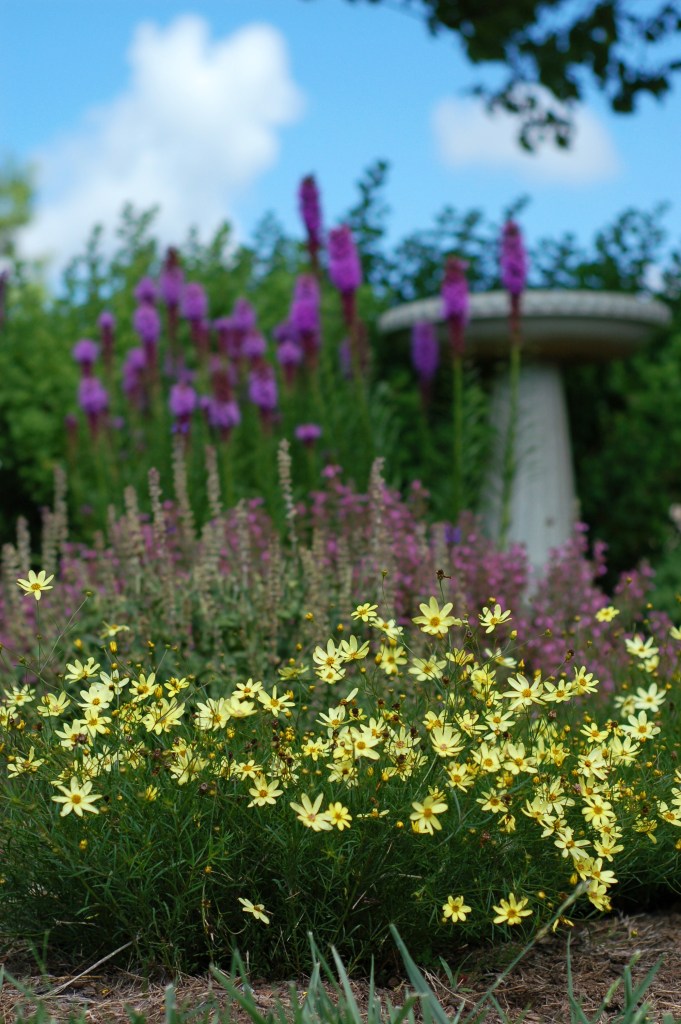
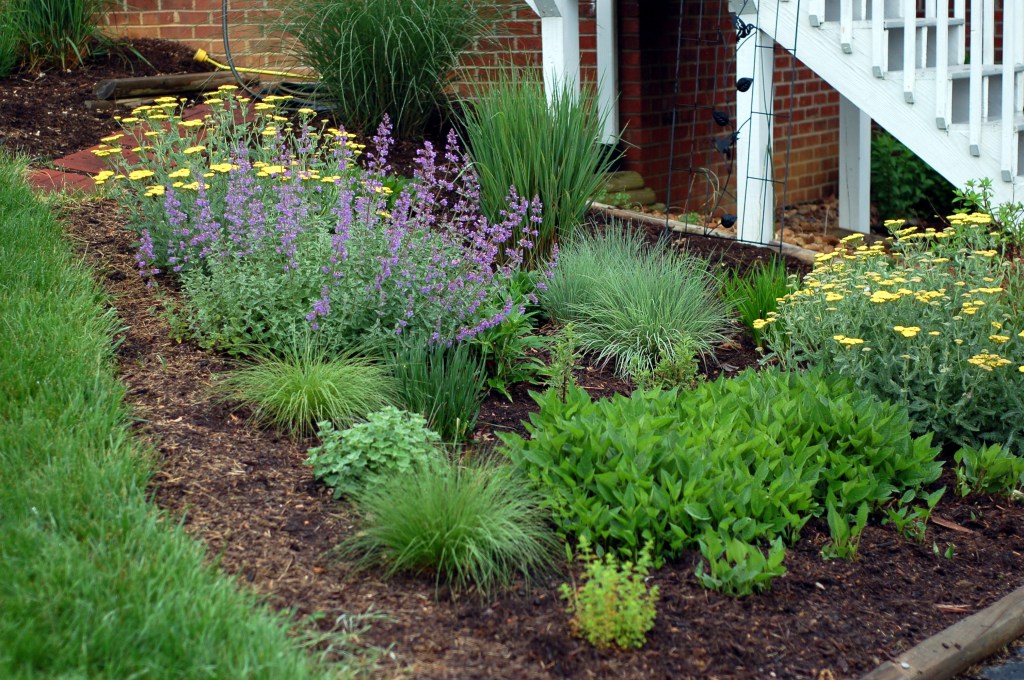
Prairie bed with yarrow, catmint, prairie dropseed, black eyed Susans, switchgrass, liatris, and little bluestemYarrow and salviaMy new bird bath the kids gave me for Mother’s Day ♥️My favorite grass in all the garden: Mexican feather grass
Yarrow and catmint
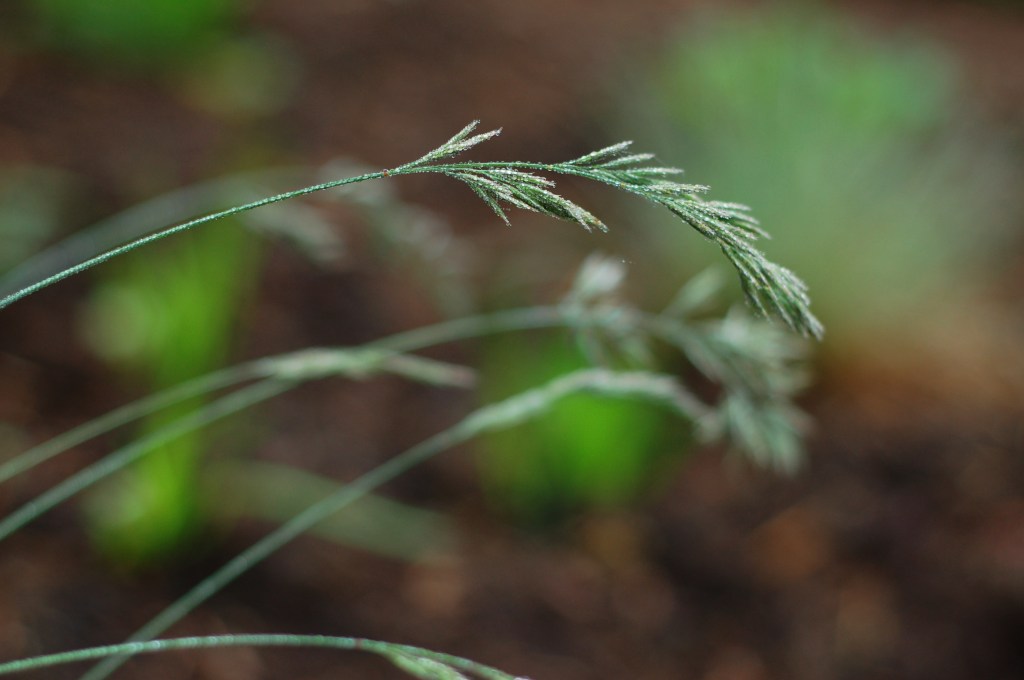
Dewdrops on fescue heads
The back bed starting to fill inOur little house with my reading chair under the dogwood tree
I’ve spent the past five days in the open air. I am on my annual garden vacation. Instead of listening to news of the coronavirus, I’ve been outside in garden gloves and hat.
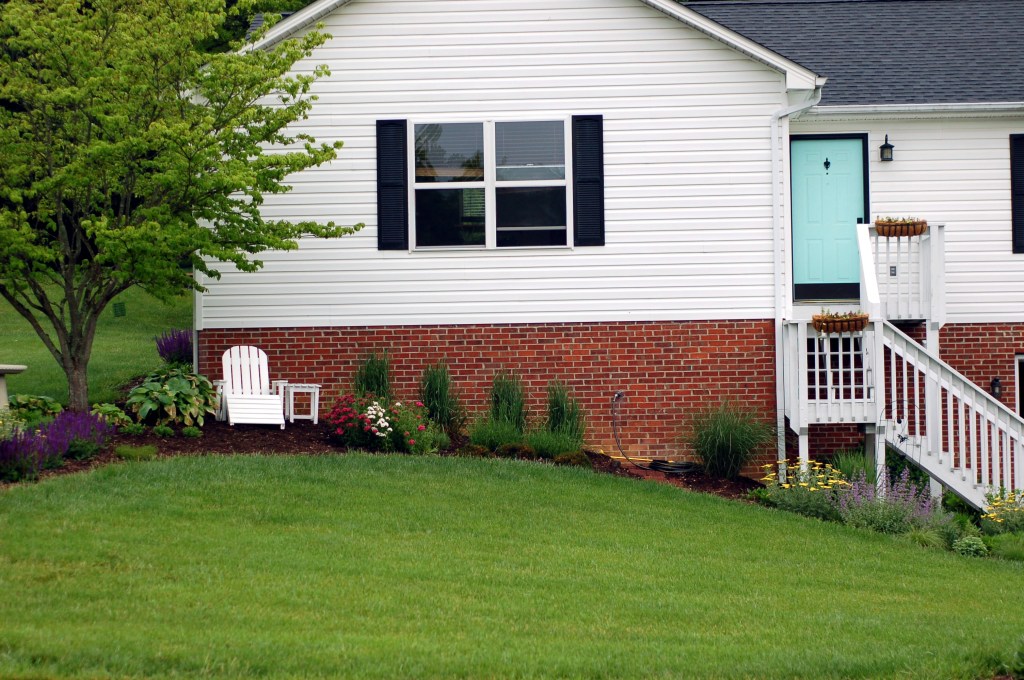
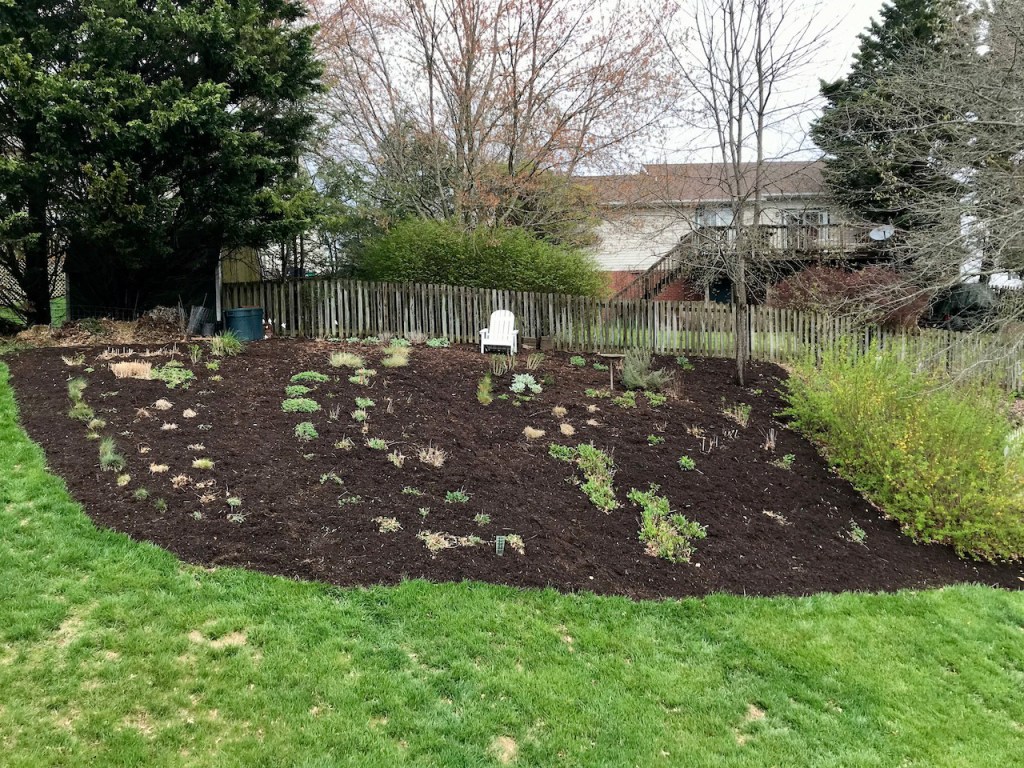
Over the past five years we’ve lived in our house, I’ve killed a lot of grass to create flower beds for butterflies. I’ve accumulated perennials over those years as well. In March, instead of the beds being barren and brown like they were when I first created them, green leaves and shoots emerge. They make me giddy every year. Green! Renewed life!
Each spring, I take a week off of work to spend in the garden, to get it ready for the birds and butterflies (and bunnies and deer). I move plants around to change things up year over year, and then spread about four tons of mulch over all the beds.
This week was that week for me. I finished spreading the mulch yesterday. With the lockdown in place, I’m grateful for five years of plant-buying. I don’t need to go to the nursery; I don’t have any big gaps to fill in, and I do have packets of zinnia and cosmos seeds for the places that do need filling.
Now I can sit back and watch it all grow.
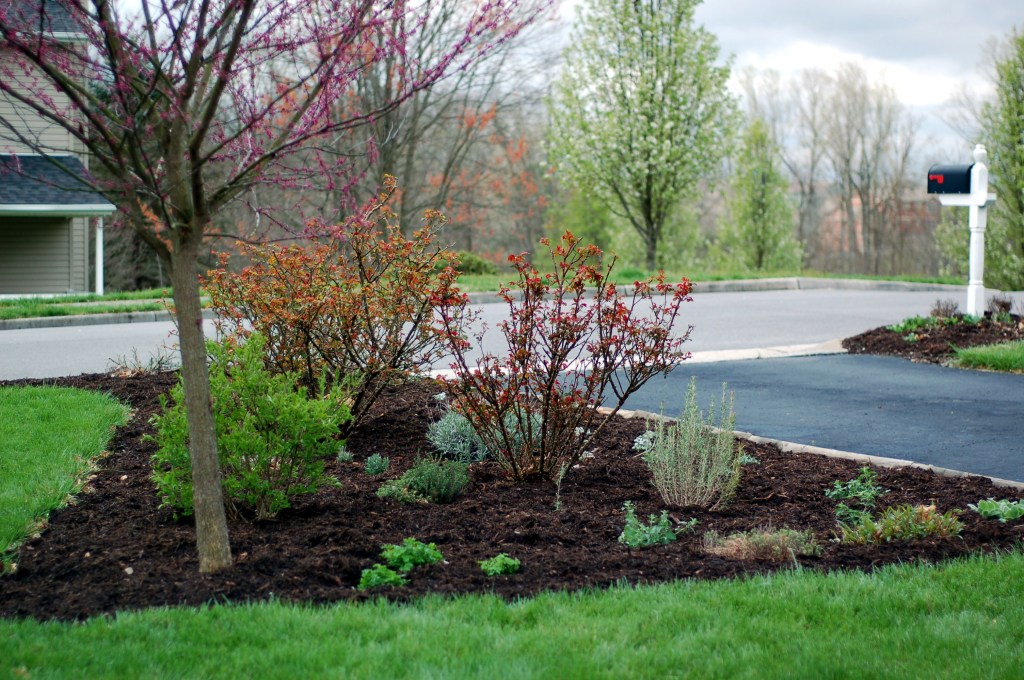
Front Beds
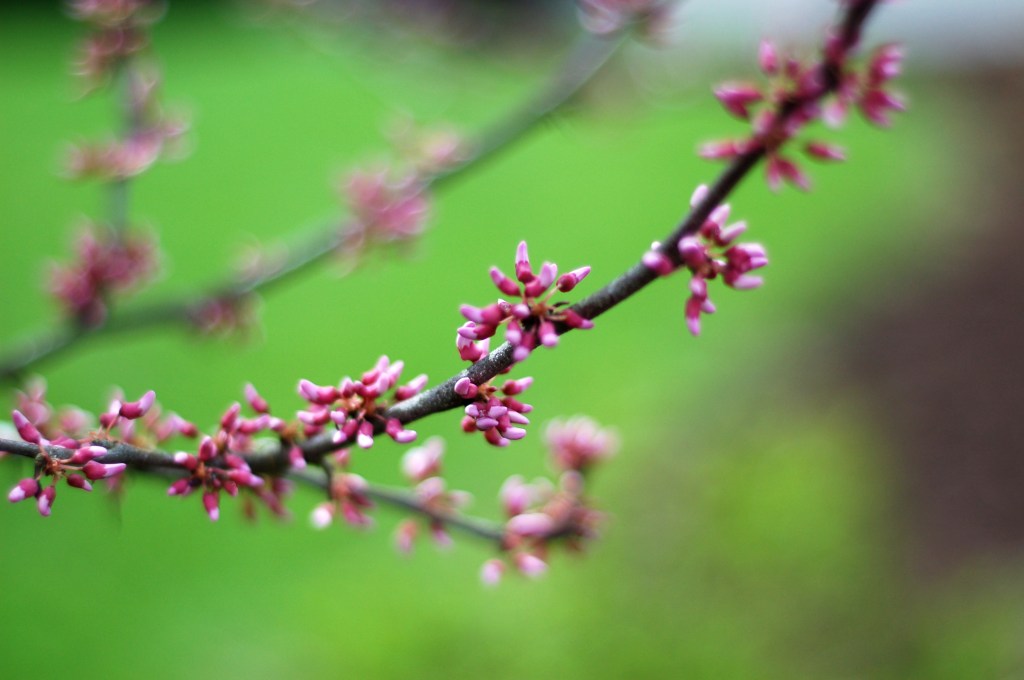
Redbud budding
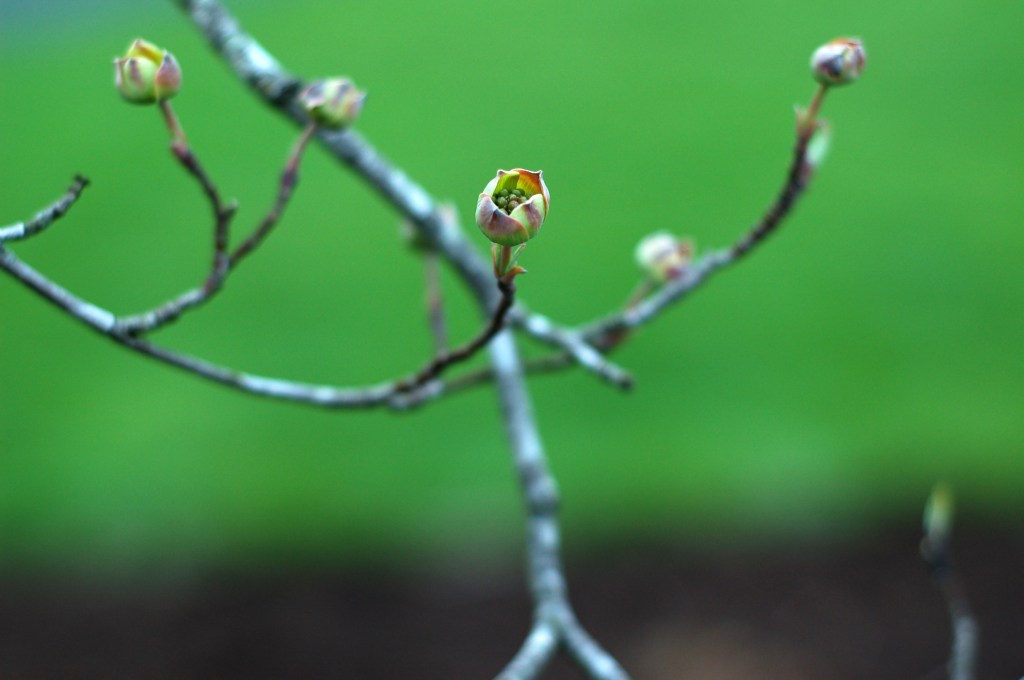
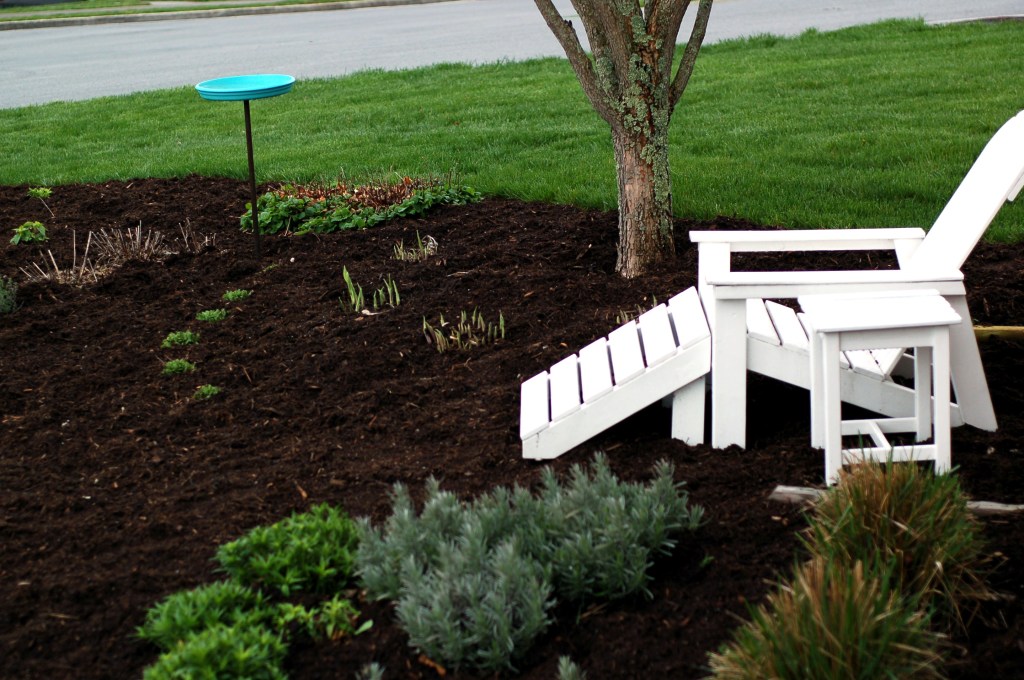
Rose and redbud bed (and herbs, lilac, silvery blue wormwoods, and artemesia)Dogwood budDogwood, butterfly bush, yarrow, and lavender already visible; butterfly attractors of milkweed, gallardia, salvia, liatris, and agastache, plus the delicious smelling lemon balm will come laterHostas emerging under the dogwood; lavender and dianthus at the foot of my chair; Karl Foerster grass shorn for new growth in right of frameThe bed in front of the stairs is a prairie type bed, with switchgrass, prairie dropseed grass, little bluestem grass, black eyed Susans, white coneflowers, liatris, sage, New England asters, calamint, Russian sage, and nepeta (catmint with blue flowers)
Back Hill
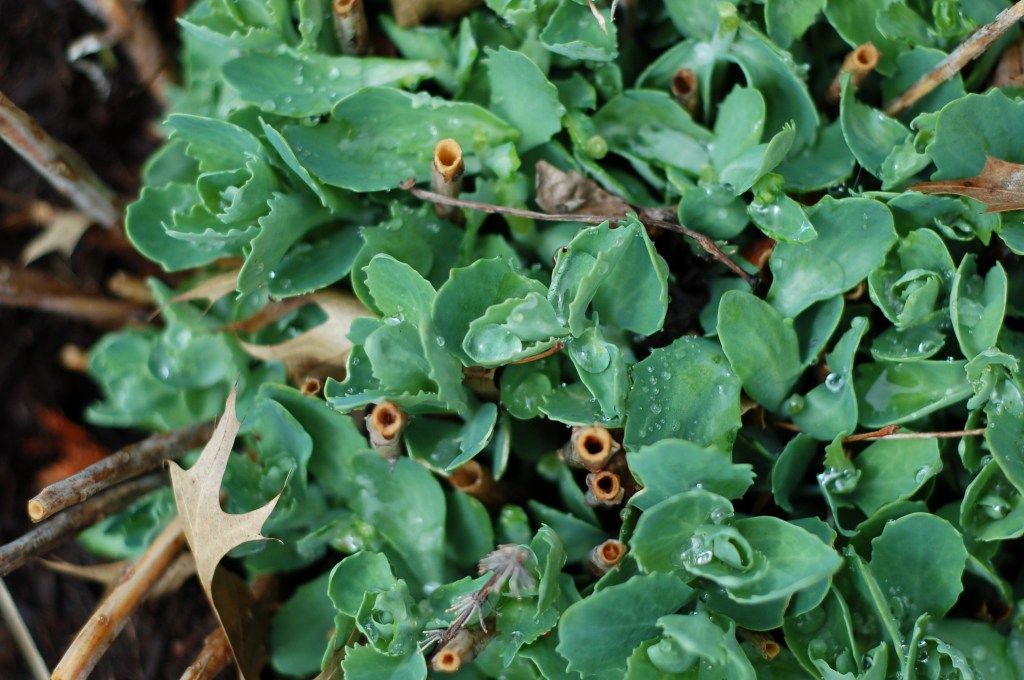
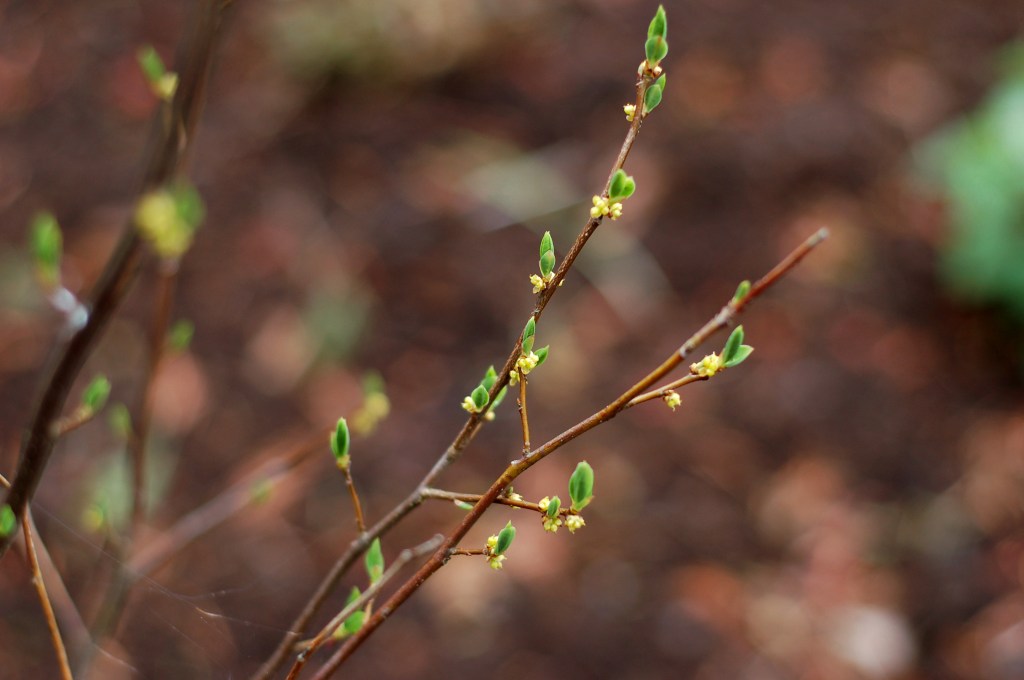
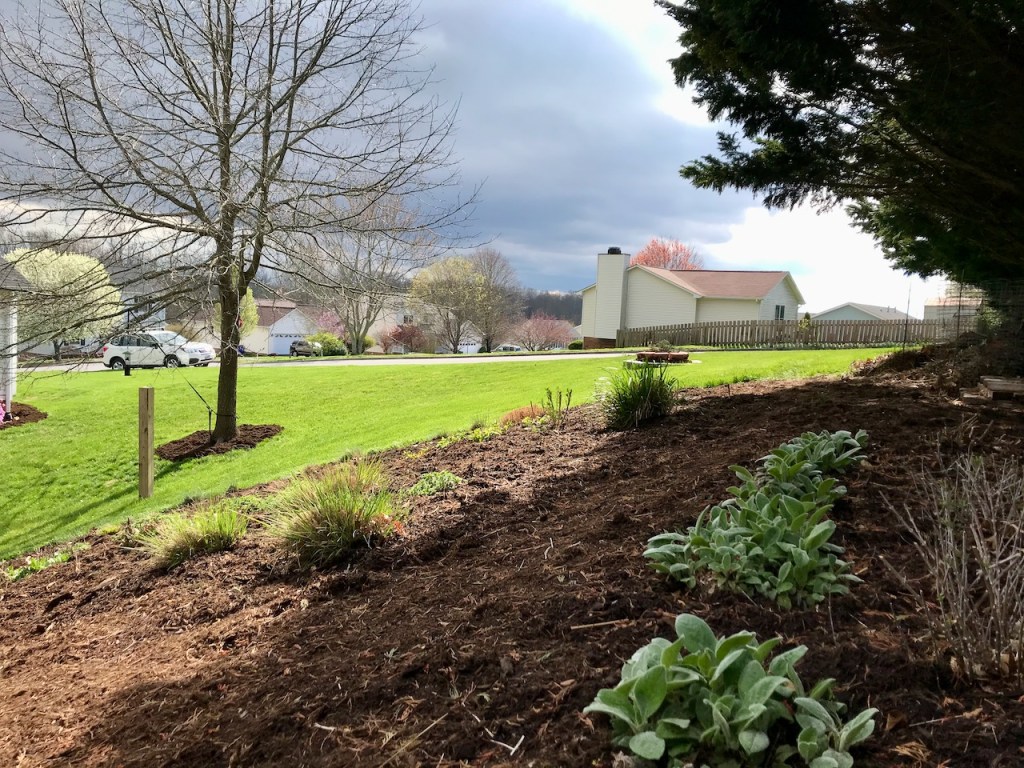
Rhododendrons in bloomLeftmost bed: grasses, agastaches, bee balm, rue, Joe Pye weed, nepeta, black eyed Susans, lollipop vervain Middle bed: wind dancer grass, echinacea, sedum, marjoram, scabiosa, indigo salvia Right bed: rue, Mexican feather grass, lamb’s ears, pink veronica, mums, Shasta daisies, blue gramma grass, little bluestem grass, milkweed, goldenrod, bee balmRain on sedumsSpicebush in bloomMy throne at the top of the hillHosta emerging; I caught it before the deer eat itBack bed and hammock treeBirdseed and rosemaryLate afternoon from the top of the hill
This is my entry for the Discover Open prompt. Also, if you like plants and butterflies and other gardeny stuff, I publish progress of this garden throughout the butterfly season at garden.andreabadgley.blog.





























 Butterfly Mind