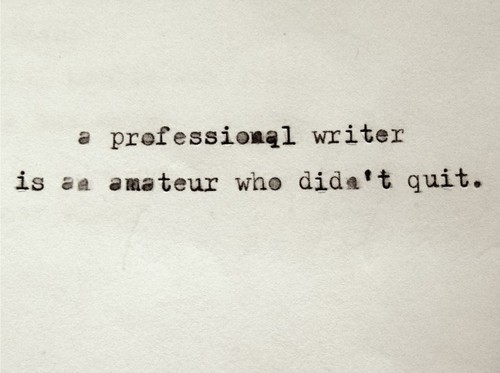
I apologize for writing about writing again, but I’m having a moment. A moment of feeling crushed by Friday folders filled with requests – money for the art fundraiser, canned goods for the food drive, volunteer hours for the PTO, donations for the fall festival – and workload stresses for my professor husband, and soccer and swim tournaments, and party planning and gift triage (wish-list management, shopping, ordering, returning) for both kids’ upcoming birthdays smack in the middle of holiday season, and endless requests of “Mom, can I have a pear? Mom can I have a bandaid? Mom will you take me to Target? Mom, can you cut this tag? Mom, what’s for snack? For lunch? For dinner? Mom, can I have a piece of Halloween candy?” all piled on top of all the normal everyday demands of laundry and groceries and cooking and cleaning and ironing and play-date scheduling and initialing homework and driving to sports, and everyone wanting and needing and requesting, including me wanting for myself – I want to write – and I’ve got nothing left to give. To anyone. Anymore.
In the face of this, I’m having a moment. A moment of I can’t do it all. I can’t write and do everything else. I can’t fulfill my role of supporter with any kind of grace while also dedicating fully to my “writing career.” As I develop my skill set and hone my craft, I want to go deeper, but as CEO of the household, I have to pull back. And if I can’t go in all the way, I figure why go in at all.
I was thinking this way, thinking of giving up, thinking “I’m silly for even considering myself a writer, of saying I’m working towards a ‘writing career’ – it’s not a career if nobody’s paying me!” when I heard Angela Duckworth speak in a recent episode of the TED Radio Hour. The episode’s title? Success.
In her talk, Duckworth, who is a recent MacArthur Genius grant recipient, explained that IQ wasn’t a predictor for success in her seventh grade math students. This was curious to her. If IQ couldn’t be used to predict academic success, what could? She began studying other groups – military cadets, rookie teachers, salespeople – asking in every instance, “who is successful here and why?” Over and over again, she discovered “one characteristic emerged as a significant predictor of success and it wasn’t social intelligence, it wasn’t good looks, physical health, and it wasn’t IQ.”
What was it?
“It was grit.”
Grit. A favorite word. It’s in my lexicon.
As Duckworth explains:
Grit is the disposition to pursue very long-term goals with passion and perseverance. And I want to emphasize the stamina quality of grit. Grit is sticking with things over the long-term and then working very hard at it.
My husband and I have talked about this before, that it seems that talent and aptitude do not guarantee success. Though I feel he has both in spades, when everyone in our families made a big deal about his PhD, he downplayed his talents, claiming the degree was not an indicator of intellect. It merely indicated that he had endured. He had a career goal, and the PhD was required to achieve that goal, and so he just kept going until it was done. He didn’t give up, even when it was really, really hard.
The same was true for me with distance bike rides and triathlons. I’m no athlete. Phys Ed class brought down my GPA in high school. But as a young adult, when I committed to the AIDS Ride, to raising $2000 and riding my bicycle from North Carolina to Washington DC, I didn’t give up. I didn’t complete the 330 miles at the front of the pack, but athlete or not, I started, and I didn’t quit, and so I finished.
And when you start something, and you don’t quit? You finish. You succeed.
I have the same passion for writing as I did for those athletic events, only I don’t have as much time to dedicate as I’d like. I’m chomping at the bit. I want to take it to the next level. I want to write and write and write, I want to spend 3 or 4 hours a day writing, I want to pursue ideas that require concentration and focus, I want to run with it. But I also want to be Mom, and I can’t do them both and do them both well, and that makes it really, really hard. It makes me want to say I can’t run with this, what’s the use, this isn’t working, I am Mom, not writer, I quit.
Grit is living life like it’s a marathon, not a sprint. – Angela Duckworth
I’ve completed an Olympic distance triathlon. I’ve birthed two babies without painkillers. I’ve been a stay at home mom for ten years and have not thrown a child or myself out a window. I can do slow and steady. I can endure.
When host Guy Raz asked about how we might build perseverance, Duckworth replied, “believing that change is possible inclined kids to be grittier.” By knowing that change is possible we can believe that persistence will pay, we can acquire grit, we will recognize that even when failure seems eminent, we can succeed on the other side because failure is not a permanent condition.
I know change is possible. I know that every situation is temporary, including these Mom years, when our kids are young, and they need me. My perceived failure as a writer is not a permanent condition. The moment I’m having? The one I mentioned in the lead of this post? It will pass. In fact, in the time since I began drafting this piece on Saturday morning, and now, as I finish it up on Sunday evening, it already has. Change has already occurred. I no longer feel like quitting. And as for the sprinting? I don’t need to race. I want out of the gate, but I can keep warming up for a while first.
I can do slow and steady. I can endure. One day, maybe ten years from now, maybe fifteen, I will get to the point where I no longer feel the need to put quotes around my “writing career.” I’m gritty, damn it. I will succeed.
How gritty are you? Take Duckworth’s test here to find your grit score.
 Butterfly Mind