My husband and I woke before the sun this morning and couldn’t get back to sleep. We filled water bottles and I made a PB&J while it was still dark out. Since we were up anyway, we decided to go hike the most popular trail around here; we’d get there long before the crowds.
We bundled up in fleeces and sweatshirts and woolen hats, and buckled into our little convertible Mazda with the top down. We rolled out of the garage into a thick fog, and when it thinned enough that we could see through it, I saw the full moon in the mist, a little more than halfway down the western sky. It was still a half hour until sunrise, and we drove in the dusky morning light.
Heat blew from the convertible’s vents, and I turned my seat warmer on. We dove through swooping curves and up and over rolling hills as the sky pinked and the moon glowed. There it was to our left, in the mist above a mountain meadow. Now it was behind us, above the trees and the curved ribbon of road. The fog thickened again.
I stuffed my hands in my hoodie’s pockets and felt cold mist on my cheeks. The world felt magical with the wind rushing by and no roof over my head.
Usually, swallowtail caterpillars spend all summer munching the rue in the garden, along with any dill or parsley I’ve planted. This year, I’ve checked the rue nearly every day since May. Until yesterday, I didn’t find a single one of these fat little stripey guys.
This has been a strange insect year for us. No swallowtail caterpillars. Tons of wasps. A yellow jacket nest under the stairs. Mosquitos in the house. At least we had the monarch caterpillars and chrysalises, and the butterflies and bumblebees have been a constant.
I’ve got the garden in a better place than it was a couple of weeks ago. I just remembered I need to water all the plants I planted last weekend. I hope I haven’t already failed them, less than a week in. Cool weather makes me forget the watering step.
And thank god it’s finally cool. The weather has been spectacular the past few days. With the garden in a tamer state, but still filled with plenty of seeds and shelter for the critters, I can enjoy the cool air, changing colors, and dying back, and know that our one little swallowtail caterpillar will have a safe place to overwinter in its chrysalis.
This year, I’ve started appreciating leaves. When I hike, when I garden, when I visit botanical gardens, I typically look for the flowers. My husband, who appreciates the subtler things in life, loves the foliage. Our garden is a riot of flowers flowers because I’m the one who planted it. But what this means, I’m learning, is that when the flowers fade, and the flowery plants don’t really have anything else going for them, that if there are no foundation foliage plants, the garden looks like crap.
Gardening is a constant learning process. I don’t know that I’ll ever get it right. But each year I can try to get it righter.
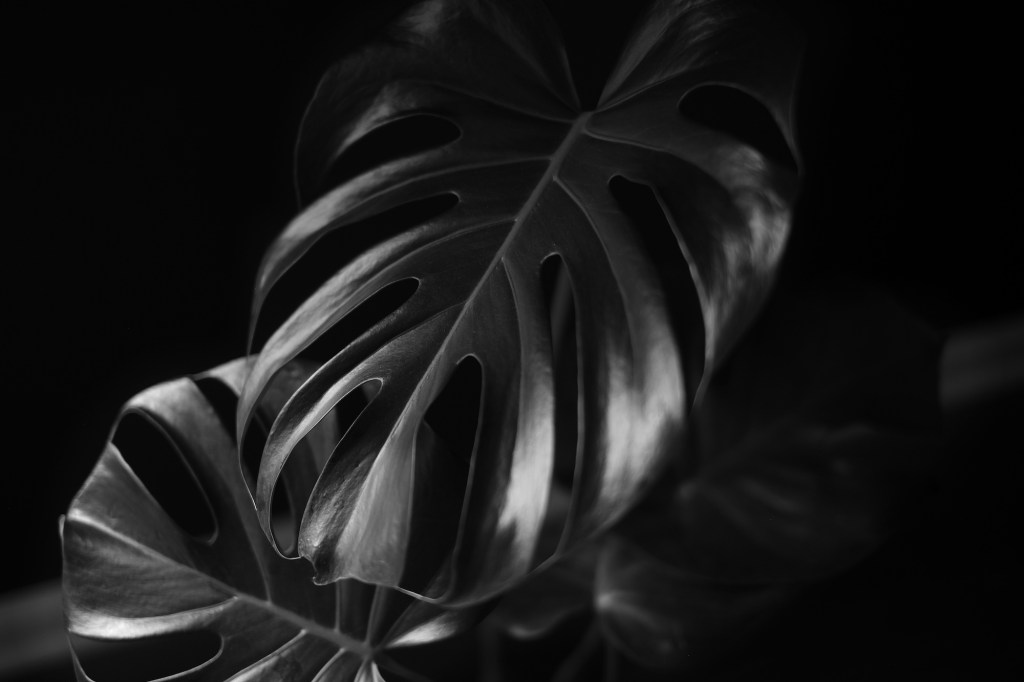
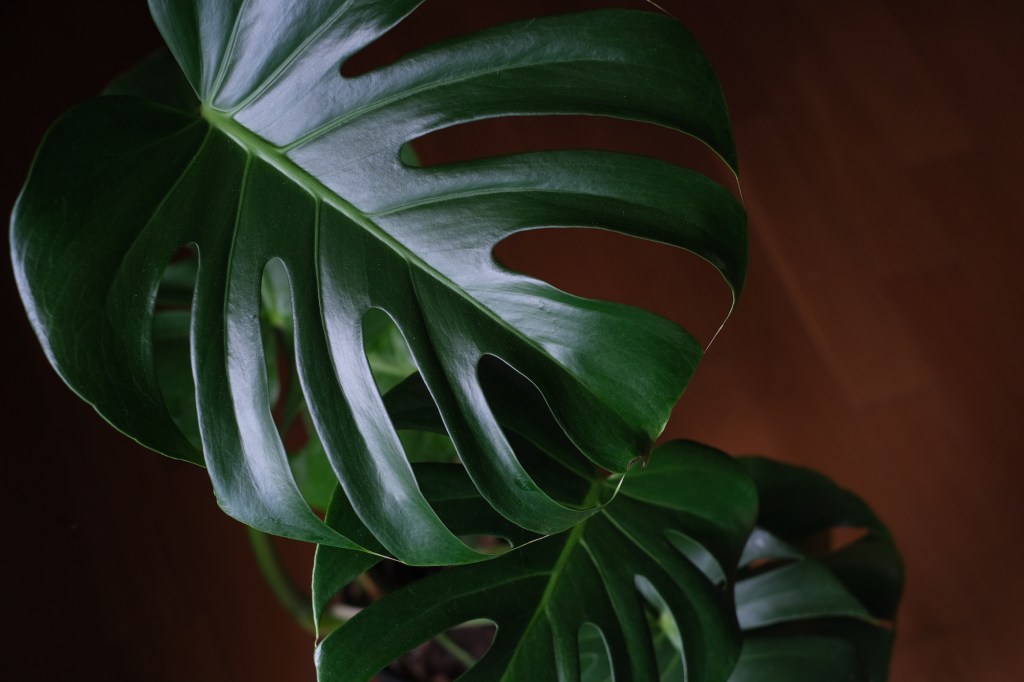
During the summer, I was inspired by the leaves of a ridiculously cool houseplant my husband bought. I have never been so attached to a houseplant. Every day, I look at it and I love it. I mean, look at this!
How cool is that? Here it is in color:
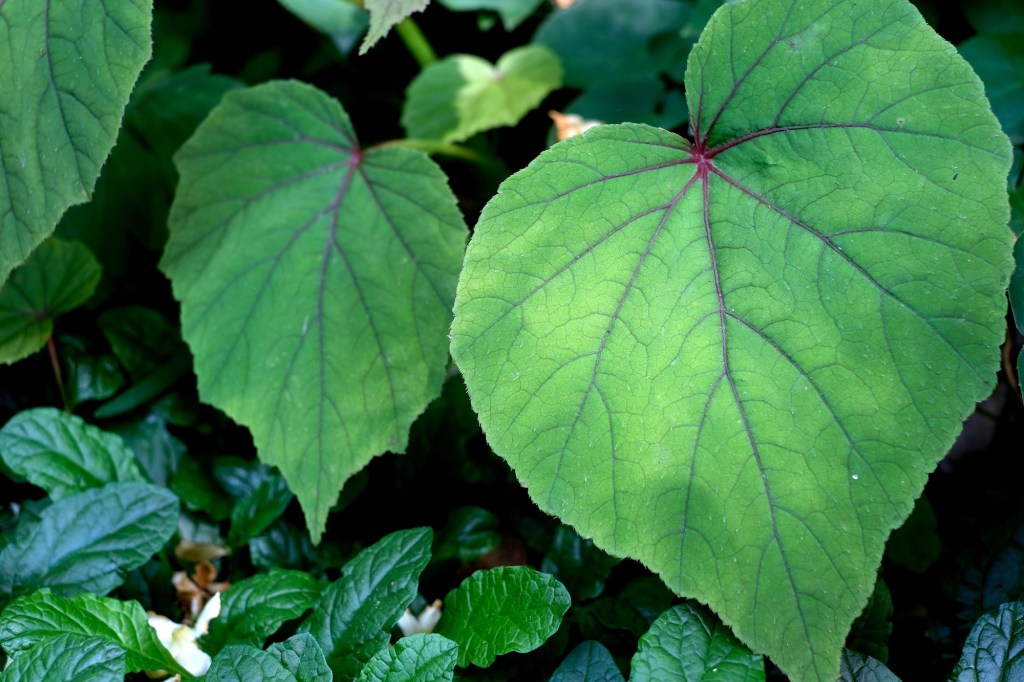
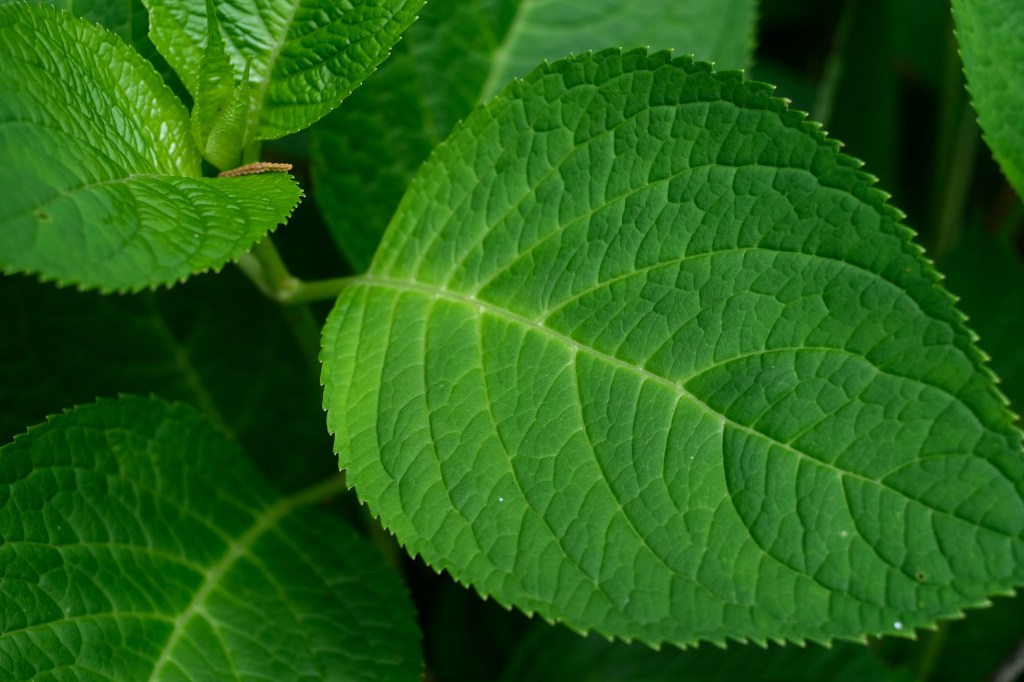
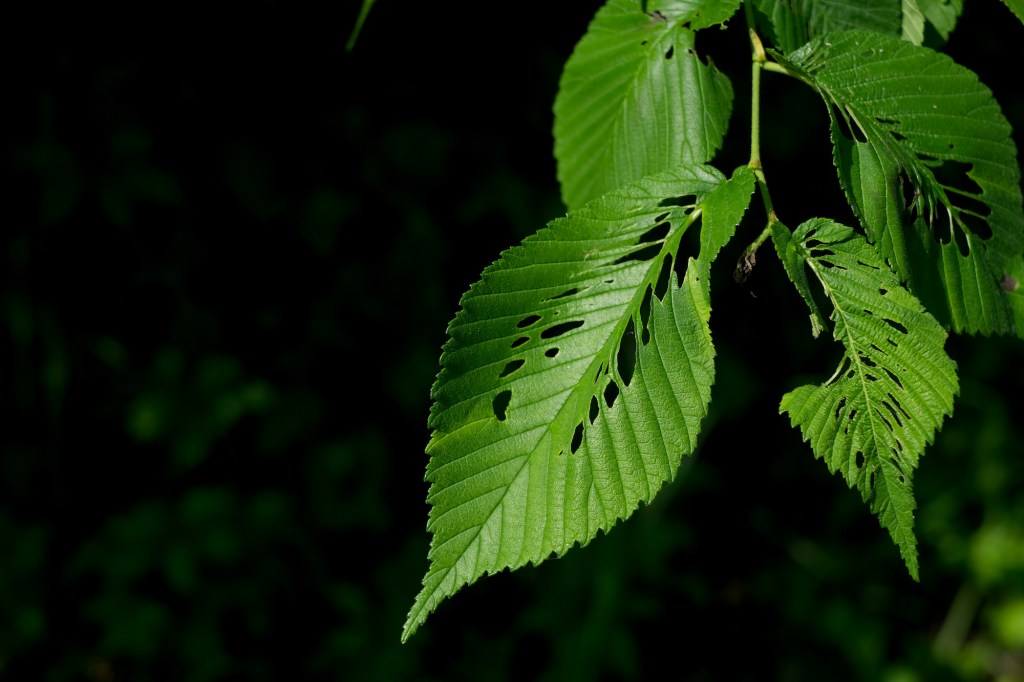
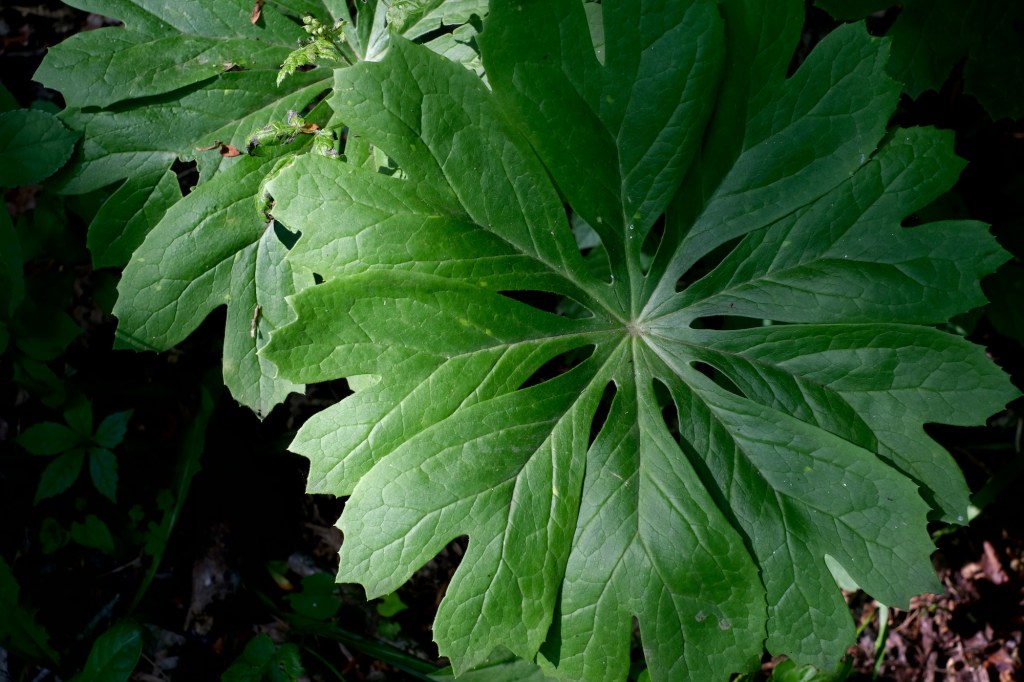
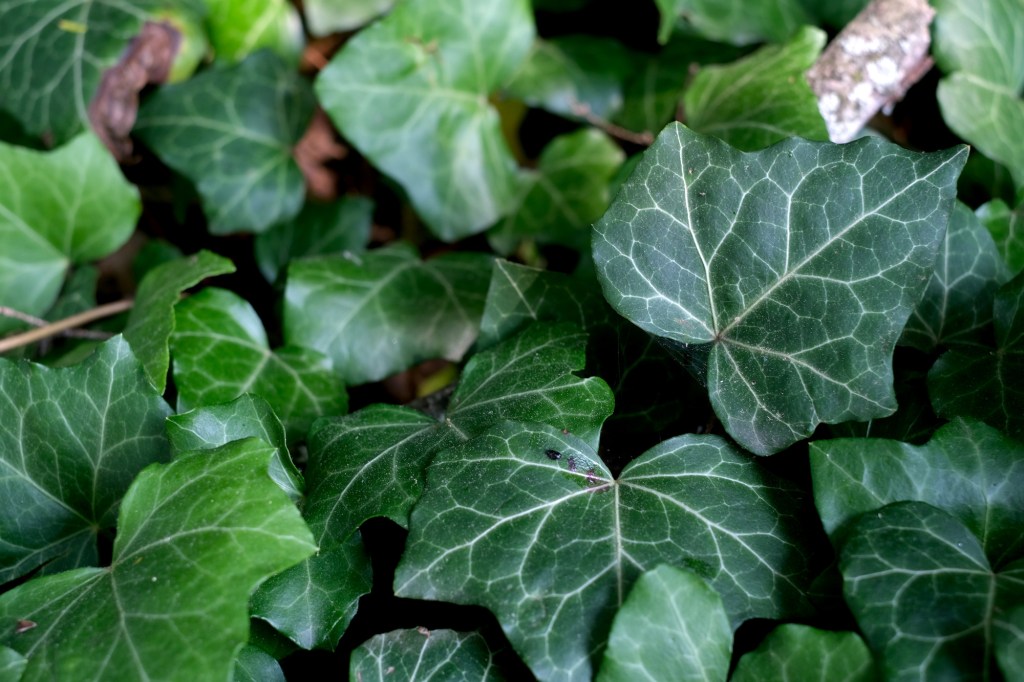
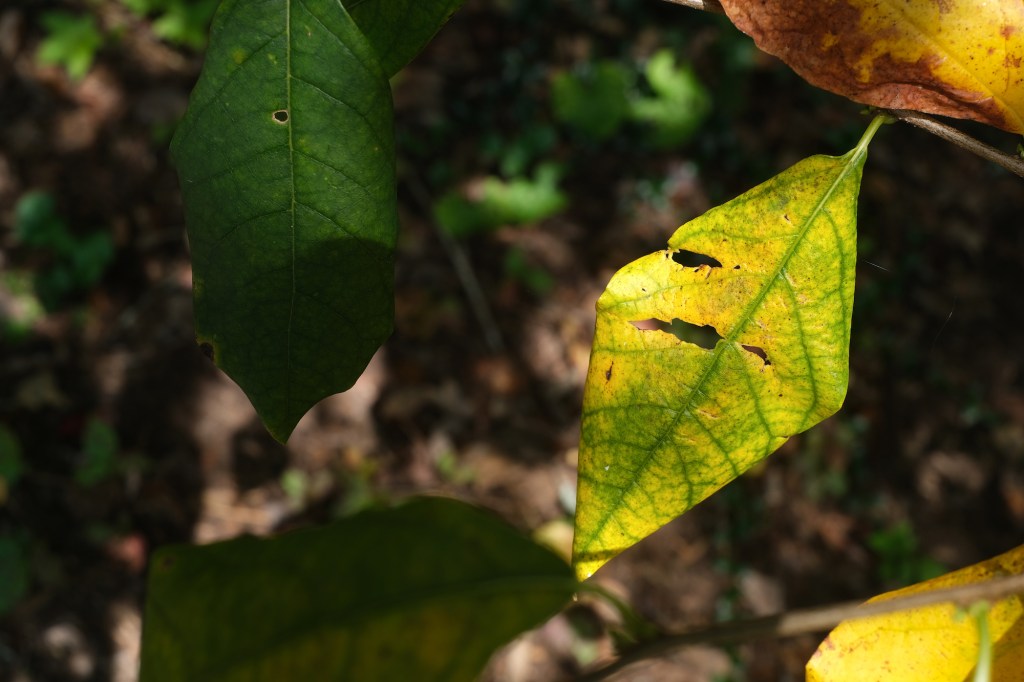
This plant got me into leaves. I went on an early summer walk and photographed leaves instead of flowers. I started a leaves tag on my photo blog. On a recent hike through the woods, in early September when all the flowers were spent, I started looking for hint-of-fall leaves. I shot a few photos. I did the same recently in my garden as I mourned how raggedy the flower beds look this time of year.
So now I’m on a foliage kick. And not just because of fall! I like green leaves too. Though fall is a pretty great time for the gift of foliage.
Some years our oak makes acorns, and some years it doesn’t. When I mowed the other day, I saw a round green nut with a little brown cap on the ground, and I knew this was an acorn year.
Last week, I took a few minutes to explore under our oak tree. I wanted to find an acorn, and I did. I had planned to take it up to the deck with my journal, but instead I sat down in the grass in the dappled sunlight. In our eight years of living here, I’d never sat in the grass there on that little hill under the oak, never seen our house or the tree or the neighborhood from that perspective.
The breeze was cool, and the sun warm in the places it reached me through the leaves. On my drive home from the pool that day, I saw maples tinged with red and pink. Just a touch. Like acorns on the ground, pink-tinged maples portend the coming cool crispness of fall.
After I’d sat for a few minutes in the quiet, I heard the flutter of wings above me as a bird lighted on the bird feeder. As soon as I turned my head to see it, I heard a flutter again as the bird darted back into the tree. I looked up, and a little black-capped chickadee perched alert on a swaying limb above me, just a few feet away.
The ground around me was littered with empty acorn cups. This must be what the squirrels are so busy with. I picked up an acorn they hadn’t gotten to yet, a plump green one. In my hand, I held the potential for an oak. This little green nut, smaller than the pad of my thumb and nestled in its cute brown cup, could grow a tree twice as tall as our house.
These trees make hundreds, maybe thousands of acorns in the hope that at least a few will be buried and take root. Then, on water and sunlight and nutrients in the soil, they’ll grow. They’ll make leaves that turn light into food. That never fails to blow my mind. Sunlight! Into food! It’s magical to me. They’ll take carbon dioxide out of the atmosphere and release clean oxygen for us to breathe. The oaks that these acorns will become, buried by squirrels and forgotten until they sprout, these oaks will clean the air, and provide us shade, and make leaves that rustle prettily in the breeze. They’ll make shelter for birds and food for squirrels. They’ll stabilize the earth if we give them space to.
The messier the garden gets with dried out perennials long past the point of being attractive, the more likely I am to find monarch chrysalises in the debris. I mowed earlier this week in the shadows of the late day, and when I pushed the mower past the compost pile, I saw a chrysalis hanging off a desiccated, composting stem. I saw one hanging from the underside of the birdbath bowl. There’s one hanging off an upright post on the stair railing. There were three hanging from tomato cages stored on their sides under the porch stairs.
This time of year, I become desperate to tidy the garden. The beds that were so lush and green in the spring and summer now look ramshackle and abandoned. The once vibrant rudbeckia, with its emerald foliage and sunshine yellow flowers, looks like someone took a blowtorch to its blossoms; black stems stand in a sea of brown-spotted, crispy leaves. The goldenrod is no longer grassy-green and gold, tall, and swaying in the breeze, and the shasta daisies no longer bursts of dazzling white on proud stems. Instead, the two have fallen over, exhausted from reaching for the sun, and are now tangled up together in a thicket of brown brush. The underleaves of the yarrow and lavender are musty silver-black instead of the fresh silver-green of spring, and the Joe Pye weed, which now reaches my shoulders, looks like the remanants of flower stems that have been left in a vase too long: the bottom leaves are rotting, and the stalks a dusty brown.
Once the flowers are done, and their petals curl to crispies, the plants transition to making seeds. It’s not a pretty process. I know this, and yet I struggle every year. I want to cut things back because I can’t stand the mess, but I also want to leave it because the joy of my garden is not just the greenery and pretty flowers, it’s that it surrounds our house with a little wildlife preserve. I garden because I like the birds and the insects, the chipmunks and bunnies and squirrels. I love watching them all, and I am delighted that they come hang out in our yard. The garden is intentionally full of botanicals for butterflies and birds because they’re what’s interesting about plants to me: I don’t want a sterile garden that just has pretty flowers, I want a garden that invites all the creatures.
This time of year, when the garden is its messiest, and every instinct in me screams to clean it up, is harvest time for the birds, and shelter time for the work caterpillars need to do. As soon as I think I can’t take it anymore, and I’m ready to cut it all down, a goldfinch will land on a crunchy echinacea cone and start eating the seeds. It’ll bob there, a burst of happy yellow brightness atop the black stem, and I decide, okay, I can leave the echinacea a little longer. But just the echinacea. Everything else must go.
Then I mow the lawn and see a chrysalis on the compost pile. I remember the chrysalises under the stairs, under the birdbath, in the nepeta and pineapple sage, the rue and the Russian sage last year. I look across the swaths of spent stems and brown withered leaves in the garden, and I know there are likely a dozen chrysalises tucked away in that mess. And I know I won’t cut it back. I can’t bear to. What if I kill a poor caterpillar on its way to becoming a butterfly?
I set today aside to garden and to tidy at least some stuff so I don’t have as much work to do in spring. I can cut some stuff back and still leave plenty for the animals. But wouldn’t you know it, it’s raining. Maybe it’ll ease up and I can take advantage of the hydration to put some stuff in the ground instead of cutting stuff back. I’ve been wanting mums and a couple of shrubs…
I ate lunch outside atop our white wooden table yesterday. I dangled my feet over the porch railing and watched a monarch butterfly float from flower to flower. It drank deeply from a magenta zinnia, pirouetted into the air, then dropped down onto a fiery orange blossom to drink again. I wondered if the butterfly is fresh from a chrysalis I’ve been watching. One of the three under the porch stairs looked ready the day before: instead of the bright green translucence of a new chrysalis, the sheath was transparent, and I could see the folded orange and black wings of the butterfly within it.
The mums are a deep brick red, and the sedums like blushing cauliflowers. I love these rusty hues after the bright yellow and cool lavender flowers of summer.
I’ve hardly sat on the deck since spring. The weather is finally perfect for it now. I wore short sleeves yesterday, jeans, and bare feet. Wind rustled the leaves of trees all around me, and the breeze was cool on my arms while the sun on my back was warm. I couldn’t see the bird feeder because the oak is still heavy with foliage that obscures it. I see a few red-tipped leaves, though. Soon the branches will be bare, and the birds will come to eat, and I will lunch with them.