“We Americans,” he said, “like change. It is at once our weakness and our strength.” – W. Somerset Maugham
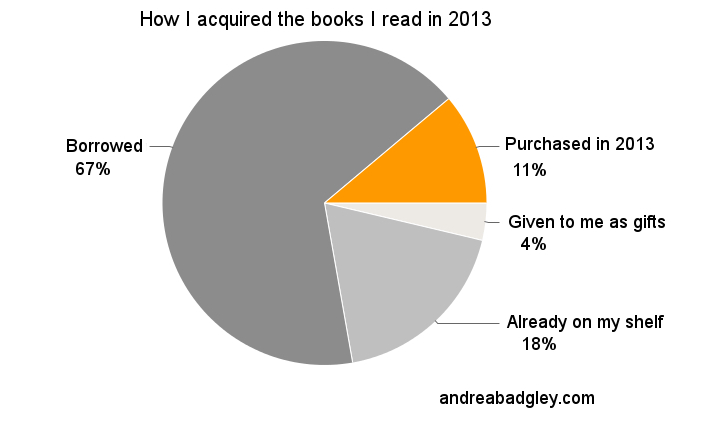
I am reading too many books right now. I generally only read one book at a time. Well, amend that. I am more comfortable only reading one book at a time.
When I was younger and had leisure time and my only responsibilities were to study and go to school, I was book monogamous. Once my schoolwork was done, I’d tear into fiction, the sole book I was committed to at the time, and I’d read for hours on end. I did not start a new book until I finished the first one.
In my 20s I discovered creative nonfiction (though I didn’t know it was called that at the time). I think the game-changer for me was The Soul of a Chef by Michael Ruhlman, and so I added nonfiction to my reading repertoire. By then I had a job and could not read during the day, so any nonfiction I picked up had to be reading-in-bed worthy. It had to read like fiction. And still, I read one book at a time.
Then somewhere in my 30s I started exploring other nonfiction. I picked up works that were still interesting, but maybe not as page-turning as a well-written biography or Ruhlman’s The Soul of a Chef. I started reading writing books, and nonfiction about introverts, and I Thought My Father Was God, a book of essays from NPR’s National Story Project. As an at-home mom, nonfiction lent itself well to my new role. Because I’m not going to sit down and read a writing book or a compilation of essays cover-to-cover, I’d read my nonfiction in small pieces, during the day. During work hours. I craved injections of knowledge in my cloistered at-home life, and as an at-home mother I had small pockets of time during the day to read, while I nursed a baby in the early days, or at lunch now. Reading fiction at home while everyone else was at work seemed decadent, like eating bonbons, and nonfiction allowed me to read during the day without feeling guilty. iction remained my special treat, not to be consumed til after 5 o’clock, like a well poured cocktail. It was my prize at the end of the day.
Consequently, over time, I found myself not reading one, but two books at a time. This was fine, kind of. It made me a little uncomfortable, dividing my attention like that. But, since I separated the types, and kept it to one book of each – a nonfiction title for daytime and a fiction title for night – the dual reading became manageable. I began to be able to handle it. I thought of the nonfiction as being educational, as if I were at work, and the fiction as it always has been, as my pleasure.
But I have found that this reading two books at a time is a slippery slope. A gateway to rampant reading polygamy. Before I knew it, in addition to a daytime nonfiction title and a nighttime fiction title, I also had a book of short stories going. And in addition to my writing book, maybe I picked up a memoir as well. Next thing you know, I’m reading short stories during the day (I know! I may as well paint my nails while I watch soaps!), and I’ve even got an audiobook as backup for those occasions when I’ve listened to all my favorite podcasts.
Now? There are 8 books on my currently-reading list. As a result, I feel scattered, like I can’t commit. It’s hard for me to get into any one story when I’ve got so many going at once. I get distracted by my options, all these starts that need to be finished, and rather than being eager to dive into a single work for the simple pleasure of consuming its words, these books have been reduced to loose ends I must scramble to tie before my reading life unravels.
I don’t want my reading life to unravel.
I’ve got a plan. Book club is next week, and so our group pick, W. Somerset Maugham’s The Razor’s Edge, has become my number one priority, even though I was really, REALLY enjoying reading Little Miss Strange (a coming of age novel set in 1970s hippie love culture – for night reading) in tandem with Joan Didion’s Slouching Towards Bethlehem, (poignant essays of the same era – for day reading), when The Razor’s Edge finally became available at the library. Once I finish Maugham, which I’m pretty sure I’m going to need to read during every available reading minute (including daylight hours) in order to finish in time for book club, I’ll return to Didion and Little Miss Strange. After that, I’ll finish the very excellent Rose Metal Press Field Guide to Writing Flash Nonfiction, the first writing book since Anne Lamott’s Bird by Bird that I could conceivably read cover to cover. It may even be reading-in-bed worthy.
And then? Then I will become a monogamist again. I can’t handle the stress of all this juggling. All this infidelity.
Except, what will I read during the day? Maybe I can read two works at a time. I’ll separate the types, and keep it to one book of each – a nonfiction title for daytime and a fiction title for night. That will be manageable. I think I can handle that.
Four books I’m currently reading:
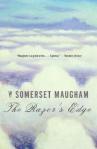 The Razor’s Edge by W. Somerset Maugham: This is our book club pick for October, and now that I’ve put all other books aside to concentrate on it, I’m turning pages like nobody’s business. Americans in postwar Paris, a society snob, a war vet trying to find God? Yes please.
.
 Little Miss Strange by Joanna Rose: Set in 1970s Denver, this coming-of-age novel about Sarajean, a child of love children, throws you into the center of the free-love hippie culture. Pre-adolescent children wander the streets while their parents are thrown in jail for drugs, or are shooting heroin, or are taking lovers. It’s an intimate immersion in that world, and I am fascinated by it.
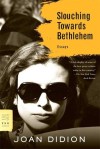 Slouching Towards Bethlehem: Essays by Joan Didion: In my studies of creative nonfiction, Joan Didion’s is a name I come across over and over again as a pioneer of the New Journalism, of weaving literary techniques into news reporting, of writing prose that makes fact read like fiction. Slouching Towards Bethlehem, her essays of the same era as Little Miss Strange, is mesmerizing on its own, but is also a fascinating companion piece, daytime nonfiction to pair with Rose’s nighttime fiction.
 The Rose Metal Press Field Guide to Writing Flash Nonfiction: Advice and Essential Exercises from Respected Writers, Editors, and Teachers edited by Dinty W. Moore: This is one of the most readable writing books I’ve come across. Divided into a series of issues relevant to writing flash nonfiction, or any kind of writing, really, this field guide provides micro-essays on various topics (voice, place, objects, memory), a writing prompt for each topic (prompts I actually use rather than just looking at and saying, that’s a good idea), and then an example essay. When I’m stuck in my practice, I open this book and get started.
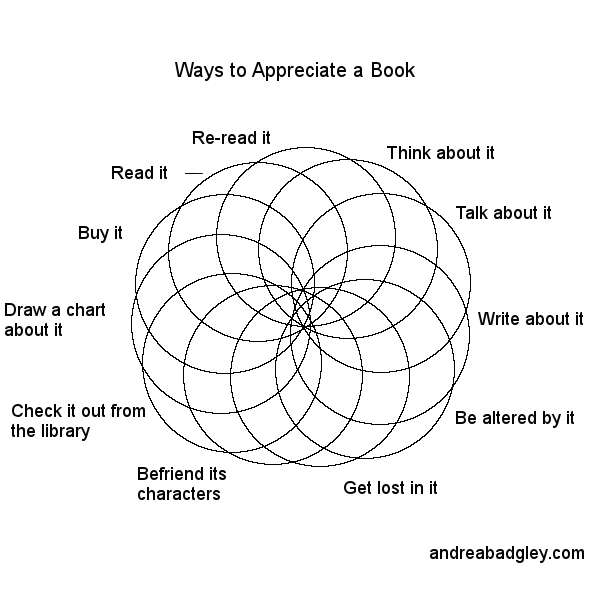
What about you? Are you a one-at-a-time reader, or do you read several books at once?

 ‘Salem’s Lot, by Stephen King: I was a young teenager when I went through my Stephen King phase. My family lived in a large house on a small island off the coast of Georgia. At the time there were only a few houses on the island, and our road was dirt, not asphalt. We were a twenty minute drive from the mainland (ie a hospital), if there was an emergency. We were isolated. My room was on the second floor, and I had a white day bed with brass knobs on the corner posts. My bed was pushed up against the window, so that when I propped my head against the pillows to read, my body lay inches from the glass, my face in the center of the single four-foot pane. On the other side of the glass, a few feet from the house, swayed a cabbage palm, its moppy head at eye level with my bed.
 Gone With the Wind, by Margaret Mitchell: I was once traveling and got delayed in Atlanta for several hours – maybe six or eight? I had brought with me the 32-pound hardcover of Gone With the Wind, and with so much time on my hands, rather than sit in the loud and bustling Atlanta airport, I decided to take the Marta train downtown to Centennial Olympic park. I lugged Mitchell’s tome with me and found an outdoor table at a café where I could watch kids chase bursts of water shooting up from the ground in the Centennial park fountain. As I read with my huge book splayed flat on a black iron café table, the moist Georgia heat pressed down on me. Condensation from my icy Coke trickled down the cup and pooled, then dripped onto the sidewalk below. I didn’t understand Atlanta, this city that seemed to be both South and not-South, with its messy tangle of inelegant roads and its fast pace and its strange mixture of old and new that I rarely experienced in coastal or rural Georgia. For four hours I sat with my dripping cup and I turned pages. I read the city – it’s pre-Sherman heyday, its burning, its invasion by outsiders, the fierce pride and dignity of its natives, reconstruction’s disregard of the South’s ways, of gentility, and Atlanta’s in-your-face rise from the ashes – on the pages of Mitchell’s book as in real life I breathed its air, drank its Coke, and listened to the laughter of its children, finally, through a work of fiction, understanding the history of this proud city that rose and fell, and then rose to what it is today.
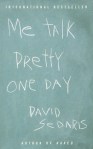 Me Talk Pretty One Day, by David Sedaris: (There are, um, a few F-bombs in this piece. Consider yourself warned.) Though it wasn’t the first time I read Me Talk Pretty One Day, my most memorable reading took place in Minnesota where, in the Mom circles I ran in, I never heard a single swear word (much to my dismay). I sat in the bleachers at the ice skating rink where my daughter wobbled back and forth in her lessons, the paperback in my lap, and I read “The Rooster,” a story about David’s brother, Paul, who “politely ma’ams and sirs all strangers but refers to friends and family, his father included, as either ‘bitch’ or ‘motherfucker.” Paul’s response to his father’s various lectures was, “‘Fuck it,’ or on one of his more articulate days, ‘Fuck it, motherfucker. That shit don’t mean fuck to me.”
 Butterfly Mind