This feels like a silly question to explore. It seems like, if one realizes one wants to begin a prayer practice, it would be obvious to know how to go about it.
It turns out, if that one is me, that it’s not so obvious at all. I do not have a faith tradition to teach me, nor am I looking for one. It’s not new to me that I seek spiritual connection. I’ve had several transcendent moments in my life that were but a moment, and they still nourish me decades later. Spirituality is important to me.
It has only just occurred to me, at age 51, though, that a good way to cultivate that connection in my daily life would be through prayer. I’ve dabbled with meditation, but it doesn’t fulfill what I’m looking for. At least the way I’ve practiced it, it lacks the element of spiritual intent, of relationship with something greater than myself. I’ve used it more as a means of paying attention to my attention rather than, say, expressing gratitude for this purring kitty on my lap or appreciating the wind in the trees, or making space in any way to acknowledge the greatness of the world and universe around me, and the gift of existing in it.
Having had this revelation this morning that I want to begin a prayer practice, and I’m going to begin today!, I then got down to the nuts and bolts of it, of what that actually means, and how to go about it. Prayer is often presented as an appeal: a request for something. I don’t think that’s all prayer is, though. It can also be gratitude. It can be appreciation. It can be an attempt at oneness.
What I want from prayer is to build a relationship with the guiding forces that are larger than me, a “higher power” in the parlance of addiction recovery, and to recognize that higher power and appreciate it and be in communion with it.
My first thought always, of course, is to start a journal. A prayer journal. And to read books about prayer. If you are laughing, it’s okay. I’m laughing, too. It seems so ridiculous to feel like I have to learn how to pray. Just do it, already!
I did just do it before sitting down to write this, but it felt super awkward. My first obstacle was, how do I address the divine? If this is a conversation, who or what am I having a conversation with? God is too patriarchal, Goddess feels better but still anthropomorphizes the force, and “dear vast force of the universe” feels cheesy and hard to build a relationship with.
Ultimately I ended up doing some gratitude journaling, and it was okay, but not quite there. I think my first step is going to need to be as simple as carving out time each day to practice. Everything new feels weird at first.
Do you have weird things in your memory that stand out from childhood, things that you’re not sure why you retained those particular bits of information? I have very specific words I remember from art lessons way back in elementary school, like the different types of columns (Doric, Ionic, Corinthian), like the names Michelangelo and Leonardo Da Vinci, Sistine Chapel and Venus de Milo. Of course I know all these words in my adult life, but I specifically remember that as a child, the words and the images they conjured made me feel some kind of good way, maybe one of my first experiences of feeling awe that those people and those pieces of art existed. They seemed too good to be true, like they couldn’t be real, or at least were totally unreachable to me on the other side of the world. I didn’t conceive that I’d actually be able to ever see any of them myself.
One of the things that has always stuck in my mind from those lessons is bas relief. I don’t know why it stands out to me (har har), but the term has always been there in my brain. I did not feel awe about bas relief when I learned about it because I did not understand why it was important. Maybe that lack of understanding is why the term stuck: if they were teaching us about it alongside Michelangelo and Da Vinci, then it must be special. I assume I’d never seen a compelling example of bas relief, or I’d only seen one represented in two dimensions in the pages of a book, and I just didn’t get it. For 40 years, or however long it’s been since I learned about it, I did not get it.
Now I do. In a little hallway, in what I might have thought was a throwaway room in a dark passageway from one gallery to another, Lille’s art museum has a marble bas relief from 1435 that took my breath away: Donatello’s Feast of Herod.
It turns out, at least with this particular bas relief, and I assume with others as well, that light, once again, is everything.
The Feast of Herod hung alone on a dark wall with tiny hidden light sources in an arc around and above it. The default lighting lit the surface of the carving from the sides and top — not from out in front, which would flatten the image — so that the shallow lighting shone across the carved marble to highlight raised elements, and so that the recessed portions fell into shadow. This created a sense of depth, an illusion that the hallways and recesses in the carving disappeared into the museum wall. They looked inches deep, like I could stick my finger into one of the arches. But those dark halls are only a few millimeters behind the foreground. The entire carving is less than one centimeter deep.
A plaque next to the carved marble slab invites you to press a button. When we pressed it, the light faded to dark, then began to illuminate one side, then the top, then the other side, so that you can see how the image changes depending on where the light falls. Perhaps this lighting replicated how it would appear as the sun rose and fell on it throughout the day wherever it was originally displayed.
Donatello, Feast of Herod
I didn’t get a photo in flat light to show the difference, but you can click here to see one on the museum’s web site if you’re interested. It looks completely different from the image above. The front-lit image on the museum’s website was likely the kind of photograph I saw when I first learned about bas relief and didn’t understand why it was a special kind of sculpture.
When I saw the lighting reveal the magnificence of Donatello’s creation, it blew my mind. How did he and all these other artists figure out the mathematics and perspective to create masterpieces like this? And not only figure out the math, but conceive of the idea to begin with — to create depth in something shallow — and then plan, calculate, and execute it. It’s just unbelievable. I can’t believe it. Except I have to believe it because I saw it.
Spirituality is important to me. Not spirituality in the sense of going to church or worshipping capital G God, though being in a church can sometimes make me feel the connection I seek, to a oneness vaster than me or humanity or earth. When I say spirituality is important to me, I mean that I place a lot of value on tapping into that connection with oneness.
The times I feel spiritual, when I feel that connection, most frequently happen when I am in the presence of great beauty or excellence. Sometimes that’s through food. Sometimes it’s through art, literature, poetry, cinema, humor. Sometimes it’s something in nature, like the wind in the trees or wavelets sighing on sand. Sometimes it’s in the wonder of mathematics and physics and engineering. Sometimes it is a person’s goodness.
When I’m lucky enough to tap into that connection, I feel awe and wonder and humility and euphoria. I feel the universe in the cavity of my chest, which has become vast in its presence, and I believe that the universe is in all of us. When I feel that connection, I know everything is going to be okay, even if only on the time scale of the oneness.
I felt this when I saw Donatello’s Feast of Herod.
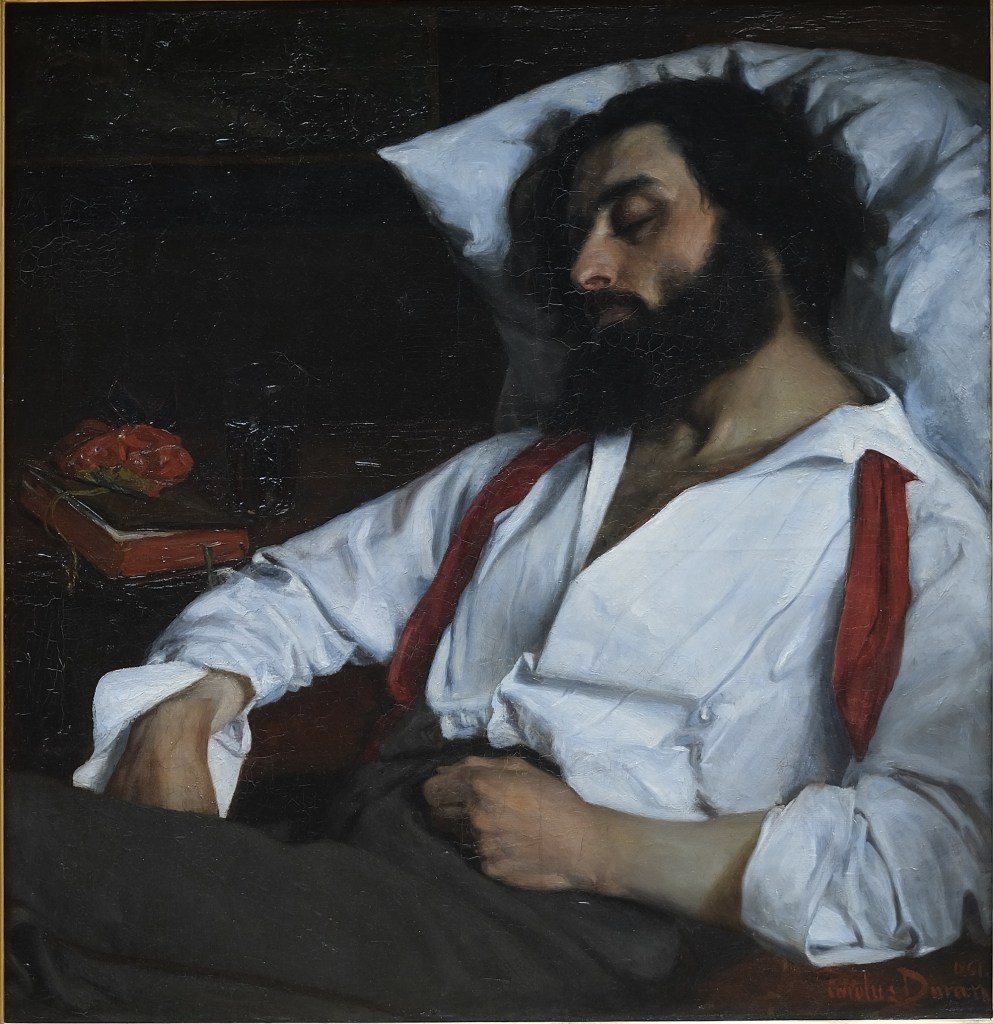
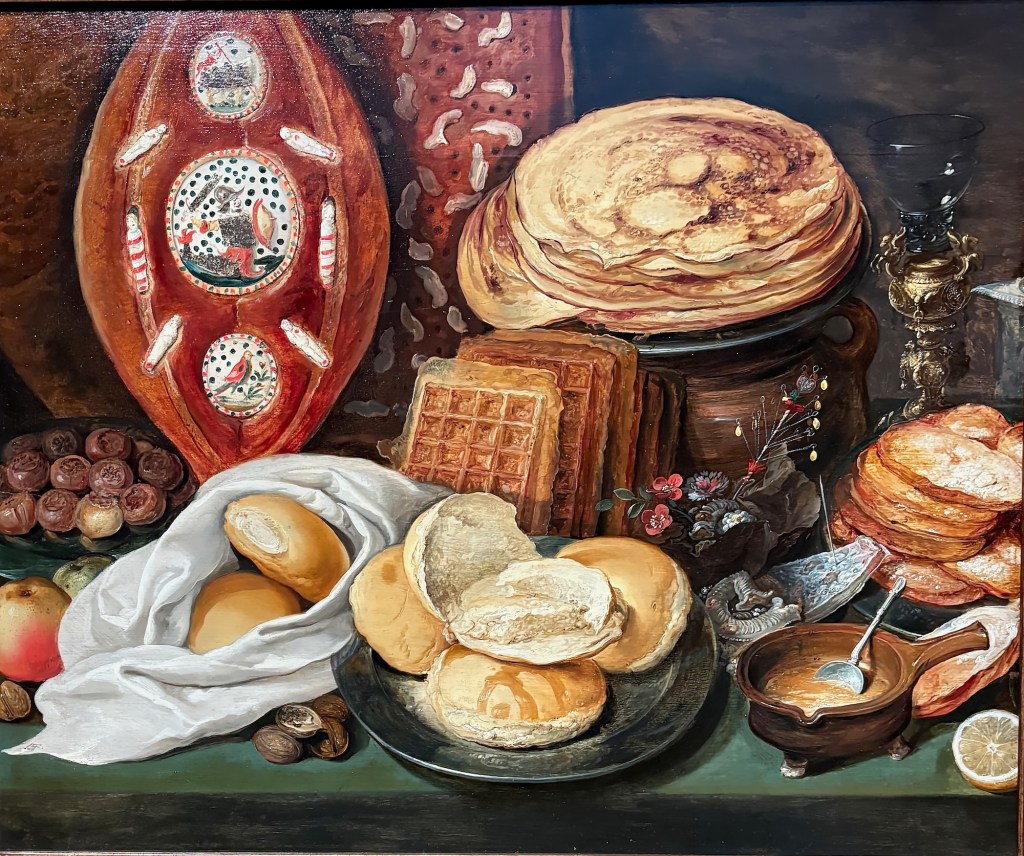
Though it was the most staggering, Donatello’s bas relief was not the only one of the day’s delights that fed my spirit. I also loved the paintings that showed everyday people doing everyday things in their everyday settings, like Therese peeling potatoes, like Durant’s man sleeping, like a funny still life of crêpes and waffles and rolls.Below are photos of some of my other favorite works from our day at the Palais des Beaux Arts in Lille and La Piscine in Roubaix.
La Maison de Therese, SaloméL’Homme Endormi, DurantNature morte aux crêpes, gaufres et cougnole, Francken
I was moved by a marble sculpture of a pieta (another word I remember from art lessons). From across the room I thought it was a sculpture draped in a fabric cloth. I wondered why it was covered, so walked over to see. When I got closer, I realized the cloth is made of stone.
The Architecture of Empathy, John Isaacs
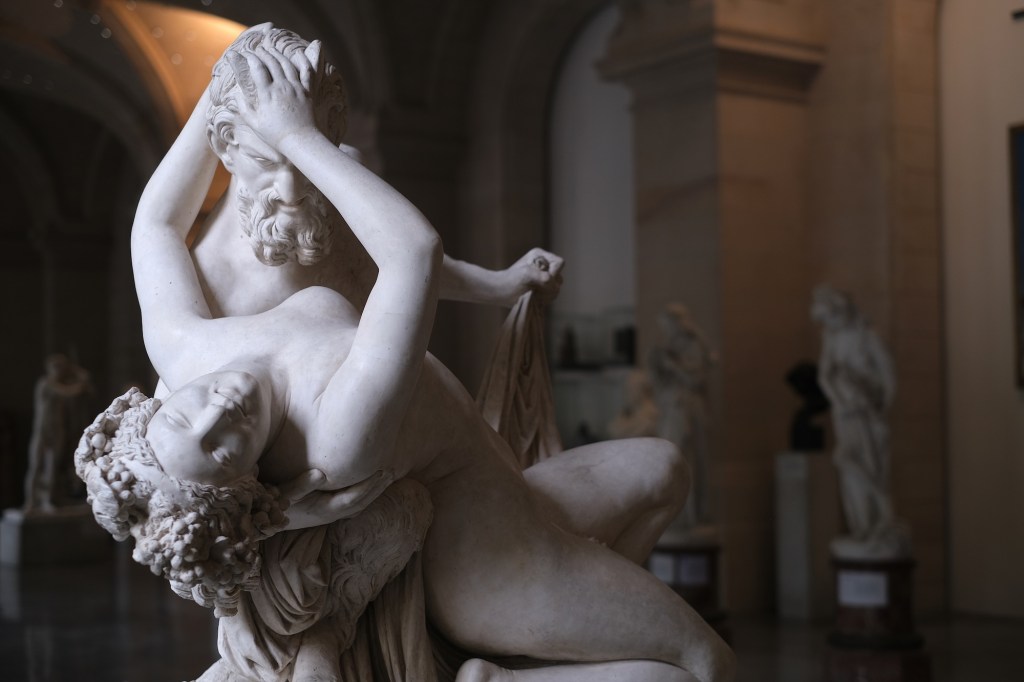
I loved the dramatic lighting on the plaster Satyr and Bacchante. The light was even better than what we saw at the Louvre, though the sculpture itself wasn’t quite as fine.
Satyr and Bacchante, James PradierLa Piscine in Roubaix





 Butterfly Mind