I’ve blogged seven days in a row. Yesterday, I had already run out of things to say. To keep going, I pulled a prompt from a reflection deck of cards, wrote for ten minutes, and published.
Today, I was tempted to just not post. But I know what happens when I don’t post: one day turns into two, then several, and next thing I know, I haven’t written in weeks because nothing seems worthwhile to write about, and even though I want to blog, the inertia of not-blogging is hard to overcome, and then it becomes a whole thing: do I blog? What will I say?
I figured today I’ll push through and post anyway, just to keep my momentum. I’ve got the energy and drive to publish, if not a topic. I’ll just put my keys on the keyboard and let them go.
This morning as I unloaded the dishwasher, I listened to the How to build a happy life podcast’s season finale, where they talk with someone from one of the world’s longest running study on happiness, with data going back to 1938. The study has followed people through all stages of life. The researchers have found patterns of what shows up for the happiest people. They’ve asked people at the end of life about their greatest regrets. I had to stop every couple of minutes to take notes, and the five main notes I took were these:
Take care of your body like you’re gonna need it til you’re 100 (1st of 2 shared traits of happiest people).
The happiest — and healthiest — people are the ones with lots of social connections, of all types, including intimate partners, friends, and work and casual relationships (2nd of 2 shared traits of happiest people).
Maturity is marked by not pushing love away, whether through negligence or actively rejecting it. Love is most important thing, at all stages of life. Cultivate it, welcome it.
As you age: stay engaged with the world. Garden, find community. Stay physically, intellectually, and socially active.
Quote from Joseph Campbell: “If the path before you is clear, you’re probably on somebody else’s path.” Meaning, you’re likely following “shoulds” and others’ expectations, not your own. It’s okay and even good for the path ahead of you to be unclear.
I feel like there are topics here to explore more fully in future blog posts if I keep pushing through. If you’re also struggling to blog and these spark anything for you, I’d love to read what you have to say about them.
You’re an awesome blogger, right? You never run out of ideas, you work your full time job, exercise daily, manage your household, and still publish regularly on your blog. You post exciting content every day and can sustain your level of blogging forever and ever, amiright?
Yeah. Me neither.
Sad blogger.
Days go by, and then weeks. You think about how good posting would feel: to write, to publish, to get those likes and comments. But you don’t actually do anything about it. The longer your blog sits untouched, the more pressure you feel to make your next post AWESOME to make up for being a slacker. Which of course means you now have writer’s block, because really, who can write under the pressure of having to write something amazing? So you don’t post. Your visitors leave. Your views trickle down to zero. You feel like a terrible blogger and you go cry in a corner.
It doesn’t have to be this way.
I found a way to make time for your blog so that you can not only fit it into your life, but so that you have something to write about every time you put fingers to keyboard.
My name is Andrea Badgley and I’ve been blogging for four years on my personal site here at andreabadgley.com. When I first started my blog, I was a stay-at-home mom and published multiple times a week. I had a decent following, and was gaining more online friends every day.
But when I started working full time, I no longer had time or focus for my blog. I stopped publishing regularly. My views and followers dwindled. I felt bad about myself for neglecting the blog that I had not only grown to love, but that helped me find my career path with WordPress.com.
Blockers
Abandoning my blog was not okay with me. So I tried to figure out what was keeping me from blogging. I determined that I had two blockers:
Time
Topics
During my blogging drought, I’d think, I don’t have time for my blog anymore, or if I made time, I’d sit down with my pen and paper only to be blocked by, I don’t have anything interesting to say. So I came up with a way to make time, and I devised a tool that ensured I’d never run out of topics.
First, let’s talk about time.
Carve out 10 minutes per day
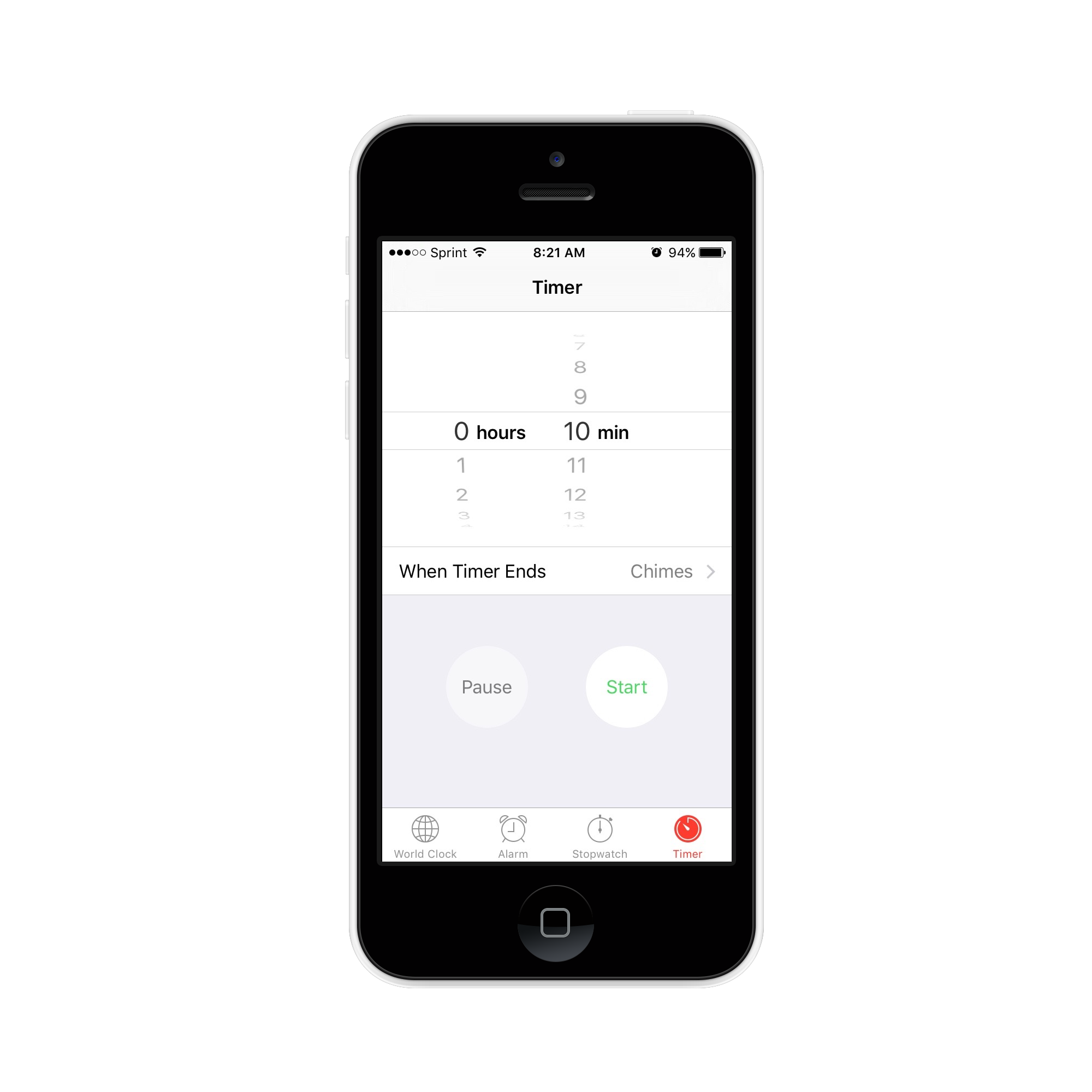
I was once a member of a group who met weekly to write together. We often did what’s called a free-write: we’d set a timer, write for 10 minutes without lifting our pens from the page, and when the timer dinged, we put our pens down and read what we wrote.
Timer
To make time in my life for blogging, I iterated on the idea of the free-write and decided to carve 10 minutes out of my day, every day, to write.
Ten minutes is so little. You can do it after a 6AM workout, when an early morning run has gotten your creative juices flowing. Or you can do it as soon as you wake, when you’re still in a dream state. Or you can do it on lunch, or with a cocktail. Or in bed when you realize, oh crap, I haven’t written yet today.
The main thing to remember is that ten minutes can be squeezed in anywhere in the day.
Pro-tip
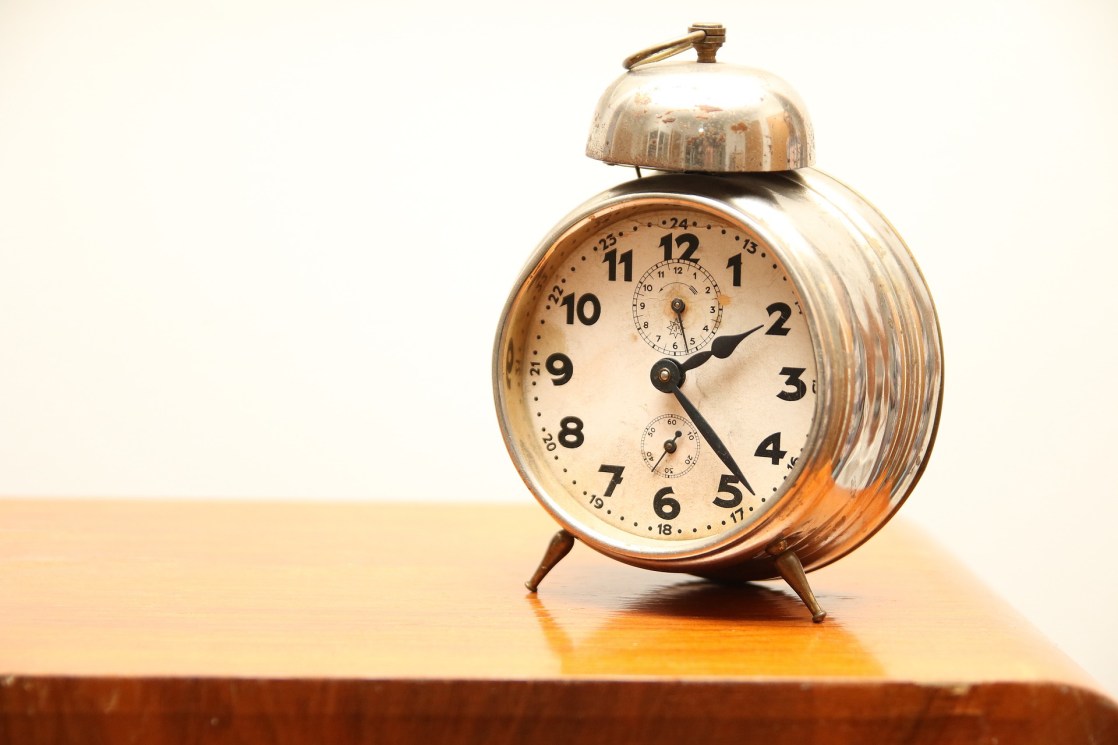
Use an alarm to remind yourself to write
To really make this work, here’s a pro-tip: Create a trigger. Carve out a specific time of day and create a cue for your writing time so that you will make a habit of it. Set an alarm for when you want to write, and give yourself a reward for following through: a peaceful house in the early morning, or an afternoon cup of coffee to go with your writing time. Pairing a trigger, like an alarm, with a reward, like coffee, will help you build a habit of writing every day.
Keep topics on hand
The ten-minute write takes care of the time issue, but what about topics?
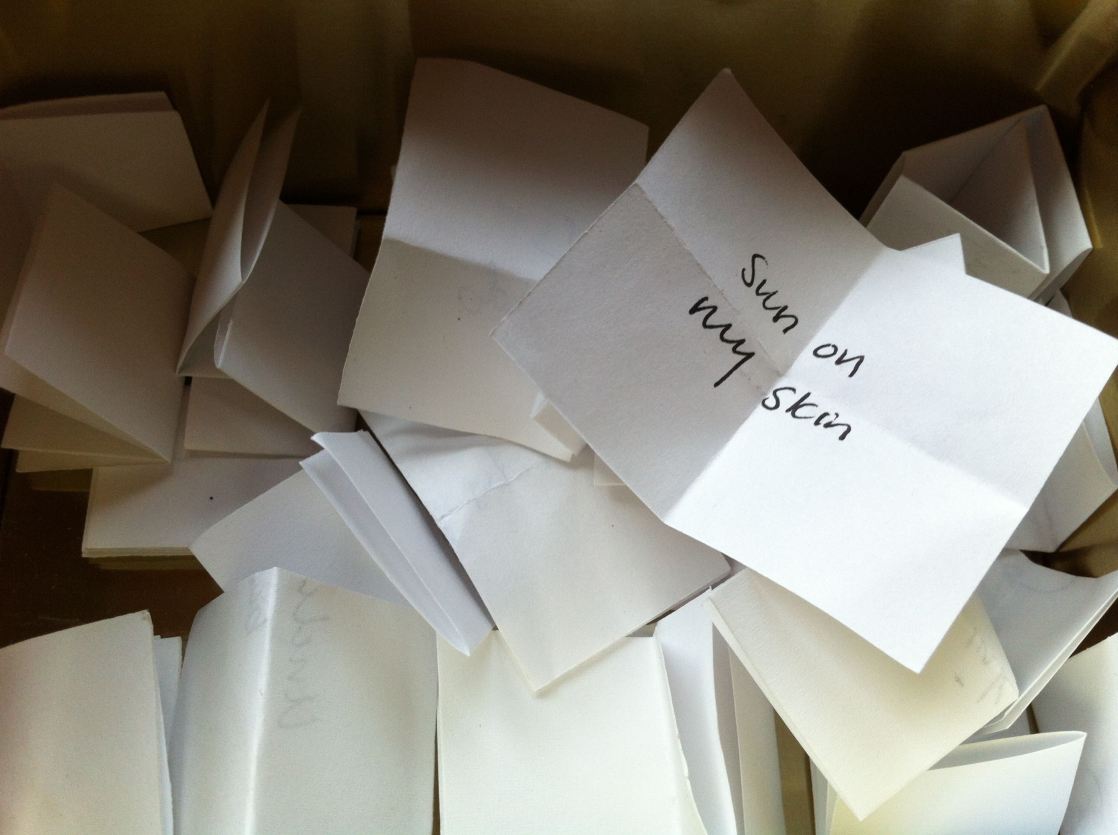
Prompt box
Again, I’ll turn to a writing group strategy. At our gatherings, we placed a silver engraved box filled with folded slips of paper in the middle of the table. At the beginning of each free write, one of us would pull a piece of paper from the box and read the words written on it aloud. We’d then write for ten minutes about whatever the prompt was.
This same strategy works for blogging. To create a prompt box, snip a sheet of paper into about 30 slips. On each slip, write a word or phrase that has meaning to you. Examples of some of mine are thunderstorms, rolling pins, and salt marshes. If you’re writing for a business site, you could seed your box with employee names, materials you use, or anything unique to your business or the way it operates.
Once you’ve written your prompts, fold the slips and place them in a box or some other vessel. Whenever you sit down to write, if you have nothing to say, pull a prompt out and start writing.
Timer + Prompt Box = Writing
To overcome writer’s block and start publishing again, pair the ten-minute free write with the prompt box. During the time you’ve carved out for your writing, grab your timer and your box. Pull a prompt, write for ten minutes, and when the timer dings, stop writing. That’s it.
Does this really work? What about editing?
Case study
The 10-minute write motto
In April 2015, I dedicated to publishing a 10-minute write every day for 30 days. Each morning, beginning March 31, I poured a cup of coffee before my work day started, pulled a slip of paper from my prompt box, started a timer, and wrote until the timer dinged. I did a quick scan for spelling and punctuation errors, tagged the post AprilDaily, then scheduled the post to publish the following morning.
The scheduling delay allowed me to do additional editing if I wanted to, but I rarely did. Why didn’t I edit? Because during that month, I learned to live by this creed:
Perfect is the enemy of Done.
Publishing this way is liberating. Some posts will bomb, but some posts will take off more than you can anticipate. It’s like shooting 100 frames to get the right photograph: every shot isn’t going to be brilliant, but each click of the shutter helps you improve and sets you up for when a prime moment arrives for you to capture it; because you’ve been practicing, and because you’re ready, you’ll capture it beautifully.
Using the prompt box and the timer, I published every day in the month of April. My blog no longer sat empty and neglected. Visitor climbed 26%, and views increased 45% over the previous month, from 3700 in March to 5400 views in April. My blog was active again, and readers loved the spontaneity of it. In fact, they got involved by sending me prompts. When I wrote from a reader’s prompt, I gave credit and linked back to their site, helping build community.
Giving yourself meaningful topics to write about and then carving out the time to write will get you not only practicing, but will get you publishing again. It will make your blog active and will bring visitors to your site.
Starting is the hardest part. Once you start, the writer’s block wall will begin to crumble. By making a habit of writing, and by making sure you always have topics on hand, you’ll be able to reduce that wall to a pile of rubble that you can easily kick out of your way.
Get writing
So how do you get started? Create a prompt box. Make a list of 20 things you love: moss, mountains, bacon, brioche. When you are out in the world, whether eavesdropping in a coffee shop or watching an acorn roll across the sidewalk, make notes of objects or scenes that strike you. Record a voice memo on your phone or ink these ideas on your hand if you have to so you can remember them. When you return home, add those mementos to your prompt box.
Then? Write.
Pro-tips
If you’re really worried about editing, set your timer for 7 minutes to give yourself 3 minutes for edits.
Write every day, but publish every other day. This will allow you to stockpile posts for when you are on vacation or for those days when you don’t want to share what you’ve written.
To mix it up for your readers, keep a handful of photos on hand. A compelling photograph with a well-written caption doesn’t require a long blog post and can take only minutes to craft.
AprilDaily posts, where I published a 10-minute write every day during the month of April
NovemberDaily posts, where I replicated the AprilDaily experiment and had similar results with increases in visitors and and views
If you have questions or decide to try publishing in 10 minutes per day, I’d love to hear about it. Let’s keep the conversation going with the hashtag #10minwri. Have fun!
Special thanks to my writing partners at The Joyful Quill for introducing me to the 10-minute-write, and to Luca Sartoni and GetSpeak.in for the tremendous support helping me prepare for this presentation.
At first I didn’t mind. I was having fun with the kids picking blueberries and making pasta, and I was fine with writing being a simple practice in painting scenes from our days. But as days gather into weeks, I am restless. I am not satisfied with my work. My posts here seem flat – they are simply descriptions of events and conversations lifted straight from the pages of my journals. My posts didn’t seem alive, and until I stumbled across the quote above, I couldn’t put my finger on what was missing.
Ideas. With endless activity, and constant togetherness, and nonstop doing, there has been no place for ideas.
It’s not a novel notion, this concept that new thought introduces depth and verve and significance to both writing and conversation. My husband and I laugh about this all the time with our 7 year old daughter, how she regurgitates “And then this happened, and we did this, and she said that.” Ultimately we prod her, “Yes, but how did it make you feel? What did you think of that?” so we don’t die of boredom listening to a recitation of events. Then I come along and do the same thing with my writing and wonder why it has no life. Or I struggle with revisions, with injecting my thoughts and feelings, when my critique groups says, “It’s really good – your descriptions of the pool and swimmers are wonderful – but I want more of you in it.”
In the first weeks of summer I didn’t feel the need to turn inward. I didn’t care about my mind going any deeper than sensory experiences. But now I find myself checking the calendar – when does school start again? How many more weeks? I crave solitude, and mental space to think about bigger things than that day’s to-do list. For on the rare occasion when I do have an idea, I don’t have the stamina right now to sit with it. In summer, there is little time for “moodling,” as Brenda Ueland* calls it, for “being idle, – because thoughts come so slowly.”
I guess my brain had had enough with the neglect, because I was up this morning at 4 instead of 6. Moodling in bed. Wide awake, two hours before my alarm, contemplating, should I just get up now and sit with the page? I have a first line – “I’m in a funk.” The rest will come when that cursor blinks in my face. I can nap later if I need to.
So here I am. Fortunately, one thing I learned on my path to adulthood is that day follows night, spring follows winter, life dies, and through its death, provides nutrients for new life. Always. No matter what place or mood I’m in, I won’t be there forever. Whether I can’t stop crying because of PMS, or the kids are on my last nerve after the seventh “Get these LEGOs off the stairs!”, or I’m simply in a funk because it’s summer and I’m dissatisfied with my writing, I always take solace in knowing my mood will change. It may even teach me something along the way. The PMS will pass and I’ll be laughing again. The kids will finally get it on the eighth try and I’ll forget there were ever LEGOs on the stairs. Summer will end and I’ll be able to think again. To moodle. To digest doings, and till feelings, and react to life. And maybe, if I’m lucky, to cycle back through to an idea phase, alive with new thought after a season of dormancy.
I have officially run out of story ideas. A friend of mine has encouraged me to submit work to the Southern Women‘s Review, and as the deadline approaches, I find myself creatively crippled.
I am a Southern woman, born in the South, raised in the South, and after a few years in the not-South, we have settled down in my motherland and will raise our children in the South. Anything I write, then, is fair game for this journal: “Submissions should be from women who were born in or grew up in the U.S. South; currently live in the U.S. South; or write about the U.S. South.”
But that’s not enough for me, to be a born and bred Southerner and to currently live in the U.S. South. I feel like I should write about the South, about how I never felt like I fit in as a Southerner growing up (I didn’t like sweet tea, for one), but when I moved away and folks sincerely thought the South was like Deliverance, that if they stopped their cars in the southeast they’d risk violent rape by toothless bumpkins, I defended my home against their ignorance and developed a fierce pride for my region. Or I could write about how I didn’t understand the South for so many years of my young life – Southern pride, the clinging to Dixie flags, the continued obsession with the “War between the states” – and how Gone with the Wind (the book, not the movie) explained my heritage and helped me understand Southern culture better than any history class ever could. Or maybe I should write about my experiences as a Southern woman who explored other regions, who has lived in other parts of the country and loved them, but how it still feels like a homecoming to move back to Virginia, even though I’ve never lived here.
Or maybe, I could write about my childhood in the South. About my Grandaddy and Nannie’s farm in Eatonton, Georgia. Where we dug worms from the wet soil of the creek bank, in the shade, by the old mill on their farm, then threaded them, still squirming, on our hooks to catch yellow-bellies in Crooked Creek. Where a trip to the hardware store with Grandaddy, in his old silver Ford pick-up truck with a shiny black steering wheel knob and the shifter on the steering column, was the highlight of our visit when we’d stay a whole week. Where we dug potatoes, and planted carrots in neat rows, and shucked corn and snapped peas under the walnut tree by the tractor shed. Where in the morning I’d say, “Wait Grandaddy! I’m coming with you,” while I hurried to put on my Nannie’s boots to walk through the dewy grass, past the scuppernong vine, and the gourd birdhouses, and the peach orchard, to the compost pile behind the barn. Where Nannie had a plaque on the wall that said “The only way to kill time is to get busy and work it to death.” Nannie, who’d grin and say “Scat!” when we’d sneeze, or “Skin the cat,” when my brother would peel off his sweaty shirt from working in the stagnant middle-Georgia heat. Nannie who worked crossword puzzles, and made cornbread stuffing, and raised three kids while Grandaddy flew bombers in the wars.
Or my mind goes back to Grandma and Grandpa’s house on 6th Street, East Beach, St. Simons Island, Georgia. Grandma with her pretty pastel pillow mints in a crystal dish on the sideboard, with the $2 she left under our pillows when we’d visit, with bottles of Rolaids on every end table, between all the couch cushions, tucked in the cushions of each chartreuse chair, where nowadays someone’s cell phone would fall, and get lost, and be found when the chair suddenly vibrates under someone’s bottom, surprising them so that their eyebrows shoot up and their mouth forms an “O.” Grandma, who introduced me to A Clockwork Orange, her favorite vinyl record, with that strange and wonderful white cover, with a man in a bowler hat and one set of false eyelashes who smiled an enigmatic smile as he emerged, dagger in hand, from a black triangle. Grandma who taught me how to brush my teeth with my finger when I forgot my toothbrush, who had a rosebush by her front door, and who’d give me scissors and a vase when I asked if I could cut pink roses for her. Grandma, who said “You all” instead of “y’all” in her sophisticated, old money, soft Southern drawl.
And Grandpa in his seersucker suit, quiet, always smiling, who’d disappear to his room upstairs, full of light and warm salty air, with a clear view of the dunes, and the wide tan beach, and the distant sound of waves swishing over sand. Grandpa who had a podium up there, with the biggest dictionary you ever saw, and an old black and white TV with a rabbit ear antenna and a knob that you turned with a satisfying click to change the channel. And Grandpa’d come back down with a handheld wooden maze where you’d have to deliver the tiny silver bead from one end to a hole in the other. Or with a wooden puzzle cube that we’d pull apart and spend hours trying to put back together. Grandpa, a career diplomat, who earned his law degree after his three sons had grown up and moved away, who was scorned as a young man by Grandma’s parents (for being poor) until he started working for the State Department, when his now proud mother-in-law began submitting his and Grandma’s travels to the Atlanta Journal’s Society pages. Grandpa, who loved Heavenly Hash ice cream, who smiled and waved at us, the grandkids coloring quietly on the green shag carpet, during the evening hours when Grandma would settle in with her gin and milk to talk politics with her sons and their wives.
But those are just descriptors, right? Childhood memories of an aging Southern woman who has returned to the South. There’s no plot. There’s no story there. So here I sit, wondering what I will write.
Instead of staring into a cold glow of pixelated light this morning, I kept the computer shuttered away in its desk and sat by the window, where blackness transitioned to grey, and grey blushed warm and pink as dawn approached. I turned on a lamp, pulled Natalie Goldberg’s Writing Down the Bones from the shelf, and folded my legs underneath me on the couch to write, pen in hand, ink on paper, in a marbled composition book.
I went to bed last night not knowing what I’d write about today, and I woke up in the same state of emptyheadedness. I didn’t know much, but I did know that staring at the same computer screen I stare at every morning at 6am wasn’t going to inspire me. I needed to change things up, to disrupt my routine. To jibe.
While I waited for my coffee, I flipped the pages of Goldberg’s book till I found an exercise that looked easy. Page 87. Lots of empty space with two lists of words. One list nouns. One list verbs. Sweet! I like lists.
The exercise, entitled “The Action of a Sentence,” instructs you to fold a piece of paper in half. I did this in my composition book. On the left side, write a list of ten nouns. I wrote:
On the right, write a list of ten verbs. Goldberg actually instructs you to “Think of an occupation; for example a carpenter, a doctor, a flight attendant,” and then write verbs that accompany that occupation. I missed that part though (remember, no coffee yet?) and just wrote some verbs:
jostle
drape
billow
slice
sizzle
nick
stitch
thrust
peel
jibe
Then? Put your nouns and verbs together in sentences, and voilà! You are writing.
A stiff wind peeled fresh dogwood petals from their branches.
With velvet ink, she stitched sentences onto paper.
The cold martini billowed warmth into her belly.
The candelabra draped the room in light, and in shadows.
Chartreuse shoots sliced the black earth, stretched toward the light, and unfurled triumphant cotyledons.
A butterfly jibed, frantic to find shelter as the storm gathered strength.
She thrust the Dutch oven into the coals, angry that he had swindled her. Furious that she had misjudged.
Sunlight sizzled on a sapphire sea.
Her goggles were jostled in the maelstrom of elbows and feet, already leaking two minutes into the open water swim.
Staring out the window, he nicked his knee, tap, tap, tapping it with a sharp, dried fingernail clipping.
This 72 inch geographic relocation, from sitting at the computer to sitting by the window, and the changes that resulted from it – natural light and an incandescent lamp; a paperback (not electronic) writing book, opened to page 87, tented on the couch; my hand moving across paper; lists of nouns and verbs, and the physical action of stitching them together to sew sentences – has electrified me. Has shuffled my synapses.
I feel a high level of productivity coming on.
Goldberg sees writing as a practice that helps writers comprehend the value of their lives. The advice in her book, provided in short, easy-to-read chapters with titles that reflect the author’s witty approach (“Writing Is Not a McDonald’s Hamburger,” “Man Eats Car,” “Be an Animal”), will inspire anyone who writes—or who longs to. (from Natalie Goldberg’s website)
It took every ounce of willpower in me, but I worked out this morning. I wanted more than anything to just stumble over to my French press and make my morning cup of coffee, but I’ve been crabby lately, and between the rum balls, pralines, snowball cookies, and hot toddies (not to mention the cut-out cookies I’m making today), I knew exercise was the only thing that would help my mood without my crashing an hour later.
And now, my coffee brews as a reward.
I had great momentum going this summer and fall, both with exercise and with writing. I was the fittest I’ve probably ever been, and I was writing more public content than I’ve ever written. I even had a piece accepted into the upcoming issue of the Southern Women’s Review. My first publication. I got the acceptance email the day before we packed the U-Haul, and I haven’t even really processed the awesomeness of it.
Because our lives became consumed by the move. By cleaning up our former residence. Unpacking boxes. Disposing of waste. Removing 1974 curtains, replacing them, struggling to accept the 1974 countertops. Examining paint chips, trying to figure out where to keep the China.
Meanwhile, I lost momentum, for both exercise and writing. There are cookies to be made and eaten. Christmas presents to wrap. Carpets to be vacuumed. And moods to plummet.
So I’m taking baby steps. Whereas I used to power through hour-long Jillian Michaels workouts, I’m limping through 20 minutes. And while I felt like I was cranking out some good stuff when I was writing regularly, now I feel like I’m just writing to overcome the inertia of not-writing. To get the words flowing again, if not the ideas. Those will come with momentum. Won’t they?




 Butterfly Mind