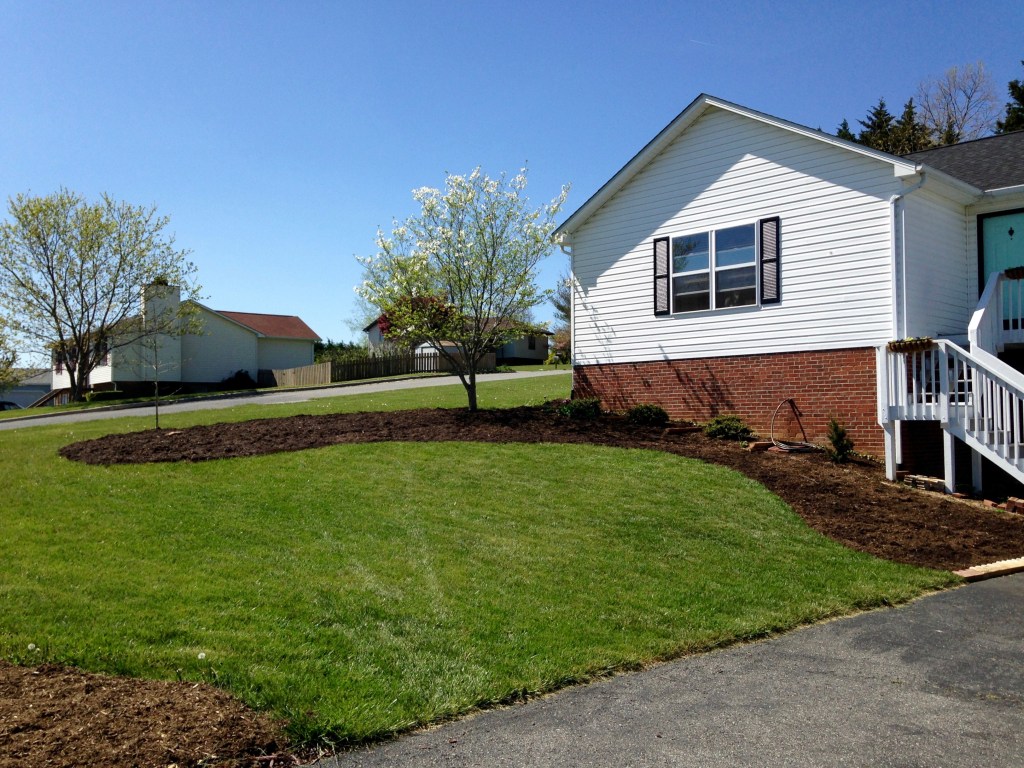
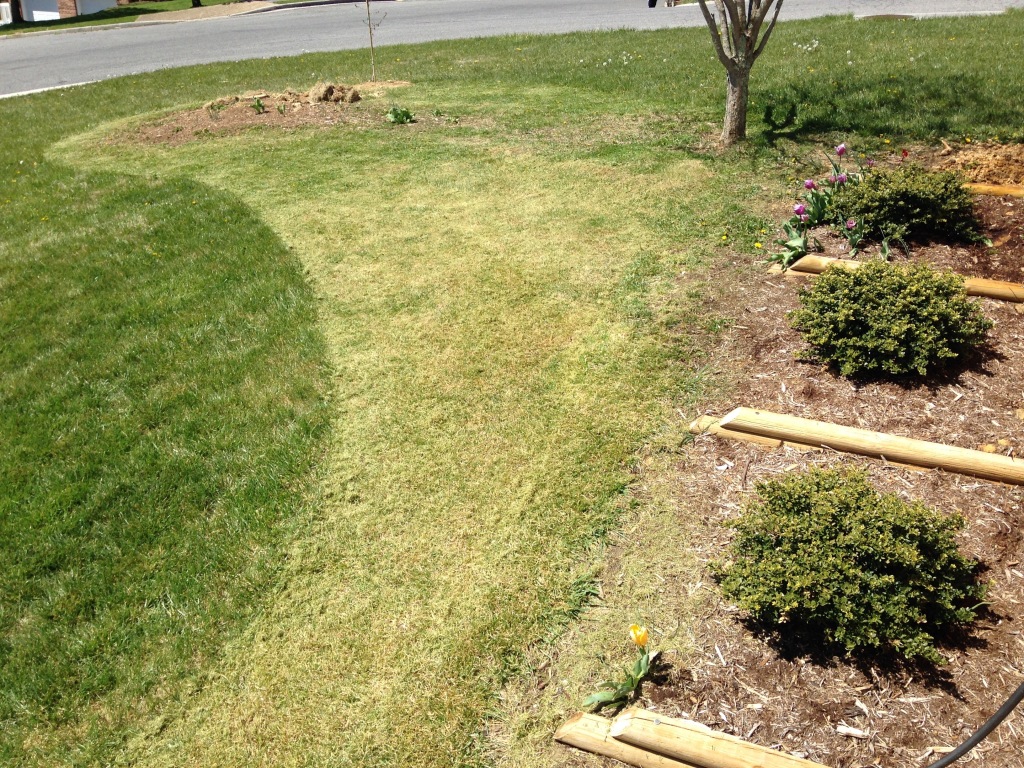
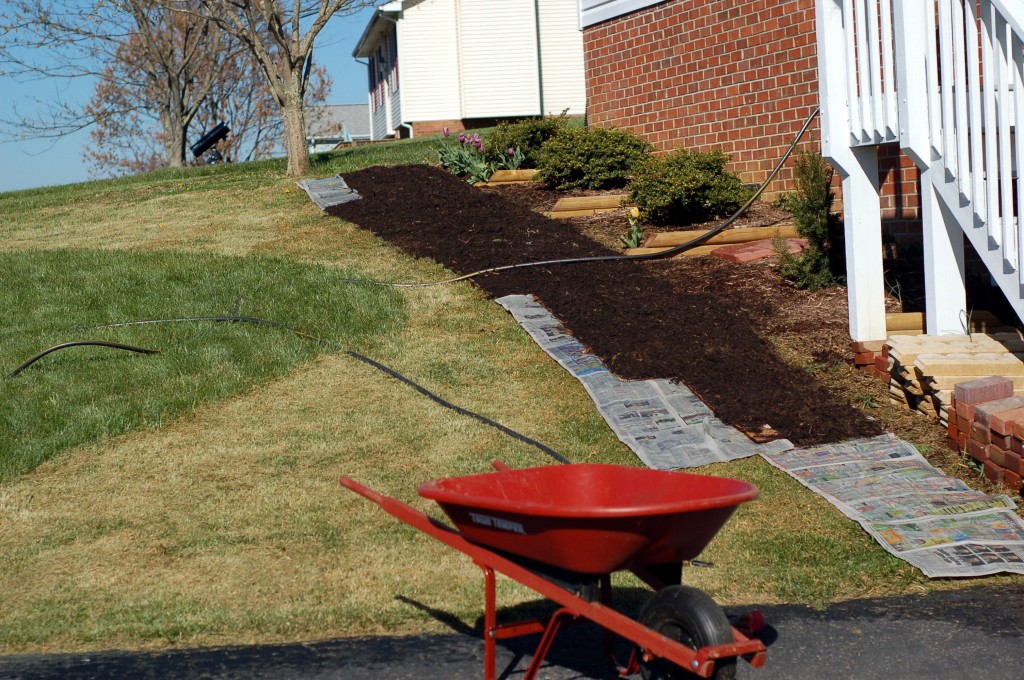
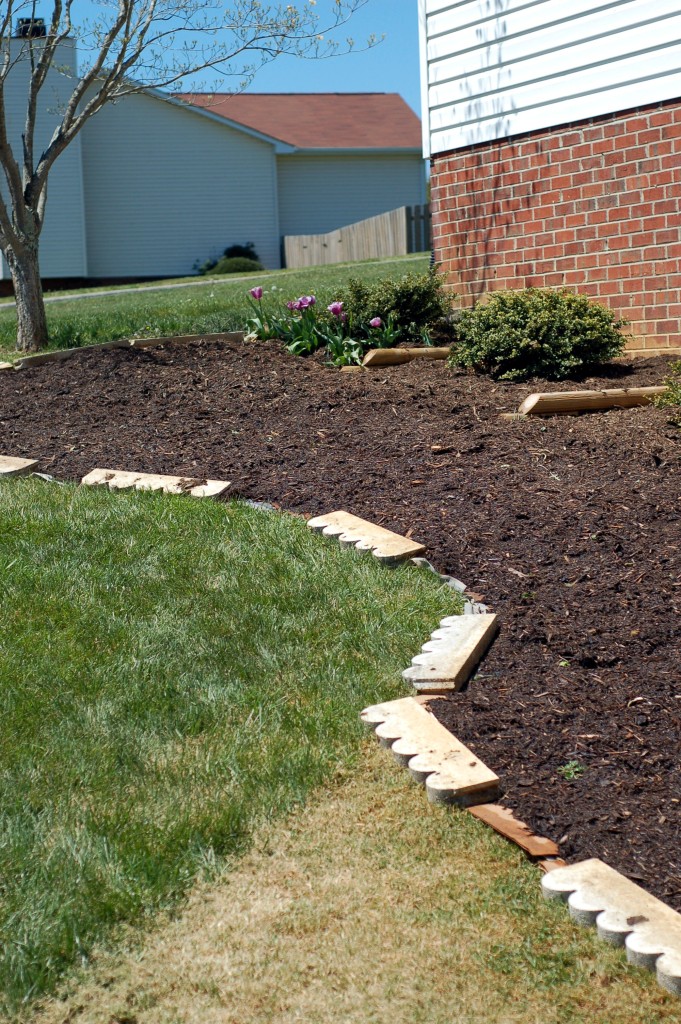
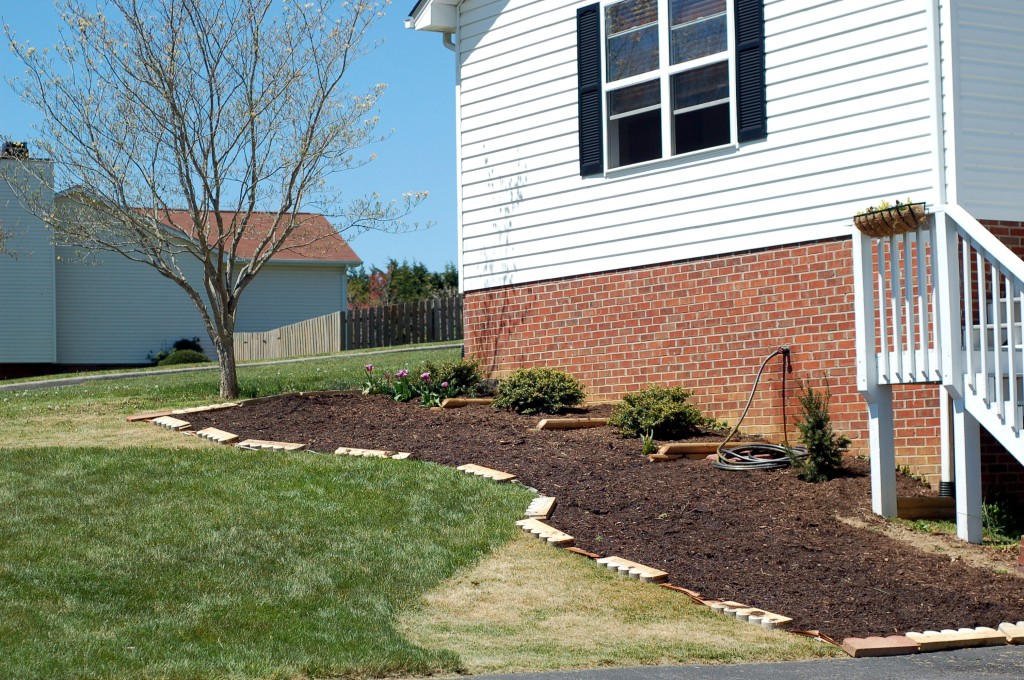
For those of you following the ongoing saga of our attempts at killing grass (1, 2, 3), we’ve gotten the flower bed cardboarded and mulched.
Before:

After:

Now it’s time to work on the herb plot.
“You know how you can spot a dogwood tree?” I ran my hand down the trunk of one at the Duke Gardens.
“By its bark,” I said. And then giggled. It’s dumb, I know, but it’s one of those things I remember from my ecology classes at the University of Georgia.

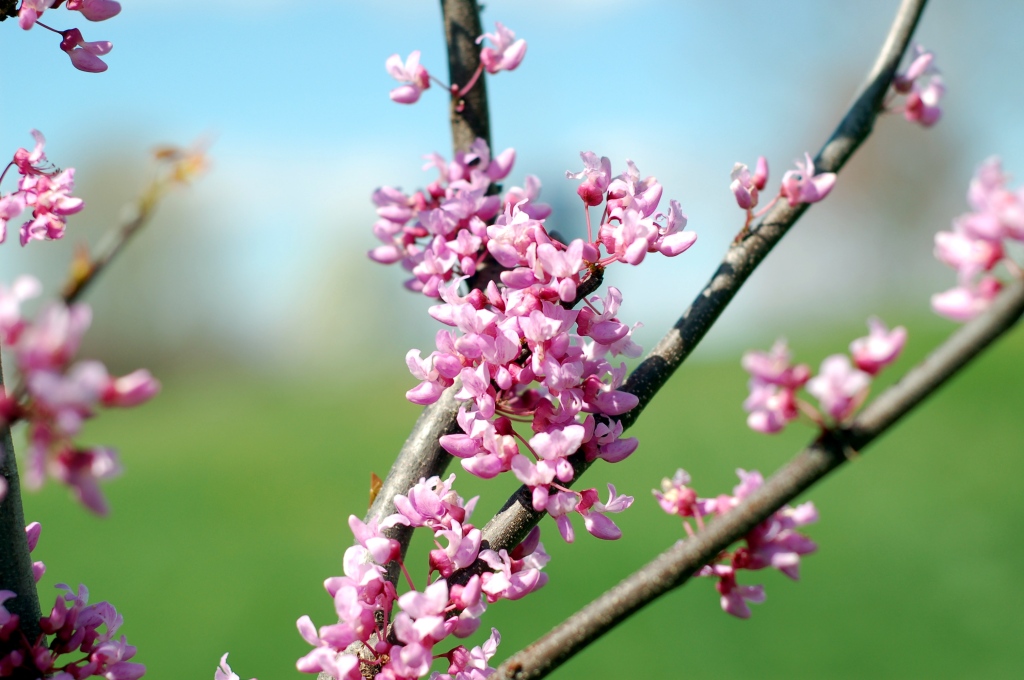
I can identify dogwood trees now, thanks to that joke, and ours is finally blooming. When the cherries, pears, and redbuds were blossoming, I couldn’t figure out why our dogwood wasn’t full of flowers too. Shouldn’t it come early with the other blooming trees?
In my home state of Georgia, I remember dogwoods being my favorite part of spring. They were the only flowering tree I knew, and when I was in college in Athens, where trees stripped bare in winter, dogwoods flowered before any green reappeared in the woods. I’d drive the three and a half hours from the foothills of the Appalachians to my home on the Georgia coast, and all through the forest, in the otherwise brown understory, I would see small trees dotted with white blossoms. Dogwoods.
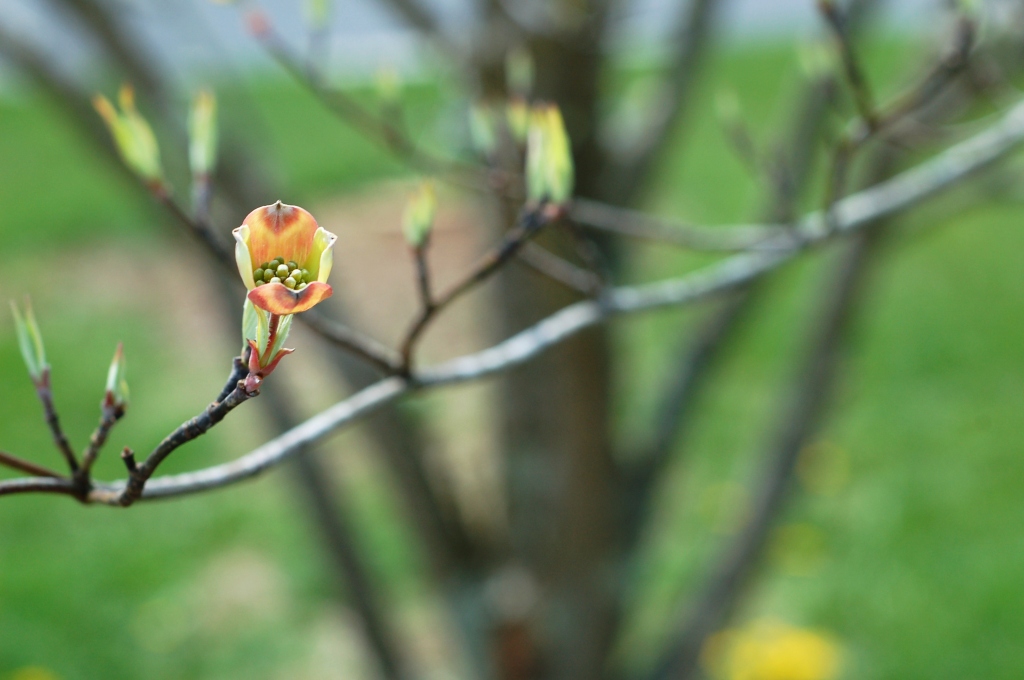
I photographed our dogwood here in Virginia during the time of the cherry, pear, and redbud blooms. The dogwood flowers were small and green.

I thought they’d be peaking the same time as the other flowering trees, so I wondered, Do we have a different kind of dogwood? I had never watched a dogwood flower up close before, so I didn’t know if that was all they’d do, or if the flowers would grow.

The flowers grew. They took their time. Over a period of three weeks, they slowly spread their celadon petals, and they deepened to a rich white.
Maybe I’m remembering wrong about the earliness of dogwoods in Georgia. Maybe they seemed first because they were only. Either way, I love that we have one in our garden. I’m sitting with it now, in fact.
Birds trill, a breeze moves the branches, white clouds drift in a blue sky, and we have a flowering dogwood tree.
My skin is pink and warm. I spent all weekend outdoors, in the garden and on the soccer pitch.
The fresh air, dirt, and blue-sky matches were totally worth the sunburn.
Our neighbor has a farm truck and told us these past weeks that he would soon fill it with a (literal) ton of mulch; he wouldn’t need it all, and would we like to split a truck load with him? He dumped the mulch Wednesday, and on Saturday, our daughter and I drove around town collecting cardboard and newspaper: we were going in for round two of killing the lawn so we can put in a flower bed.
Our first attempt at killing grass with garbage bags failed, so we pivoted. We did some research, and I think we have a better chance of succeeding this time with compostable materials that worms can eat instead of ugly black plastic.
In preparation, my husband lowered the mower blade as low as it would go, and cut a curved shape in the lawn where the flower and herb beds would soon go.

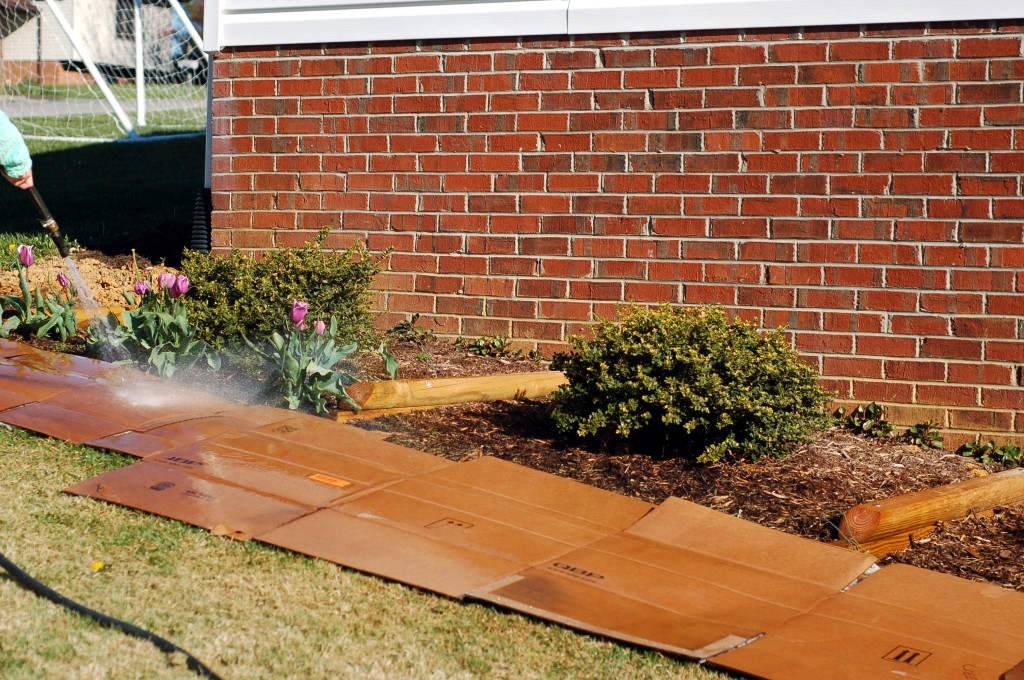
Our daughter has been as eager to get out in the garden as I am, and she helped me cover the soon-to-be-dead grass with cardboard and newspaper.

We watered the cardboard to soften it, then covered it with mulch. The mulch weighs it down and will also hold moisture, hopefully keeping the thick paperboard damp to help speed up the decomposition process. We covered gaps and filled out the shapes with layers of newspaper 4-6 sheets thick, then watered the mulch and papers again.

We ate through half the chipped bark and wood before our neighbor even touched the ton pile. Even though I hated to stop, we got through two rows of cardboard and newspaper before I reluctantly quit working so we didn’t use all the mulch.

Our neighbor has said he will gladly get another truckload to split with us, so I’m excited for next weekend, when I hope to get through another section of the soon-to-be flower bed.
I was so happy to be outside, I barely remembered to eat. I made a quick peanut butter and jelly sandwich and ate it on the front steps. I wanted to look out over the yard, what we’ve done, and what we’ve yet to do. Each time we drove up to the house — after soccer, after our daughter’s hair cut — I smiled and did a little dance for our house and garden.

Our daugher and I spent a lot of labor mulching our new plantings, laying biodegradable cardboard and newspaper over unwanted grass, and watering everything in. It’s going to be important that we stay on top of it — keeping everything wet to encourage both growth and decomposition.
I’ve been ignoring those mid-morning calendar reminders to “Water plants” every day for months. We didn’t have anything alive at the time I created the reminders, but I set them knowing this day would come, and I’d need to make sure I made time to nurture plants.
It is spring now, and the weather is beautiful. I’m ready to start taking a break each day to get outside and tend the garden.
I know this has been said a million times before, and is cliché, and everyone is already familiar with the concept of nourishing the appropriate areas of our lives that we want to grow, but I am still astonished by it when I garden: when we take time in our lives to pay attention to something, that thing will prosper.
This is true whether we cultivate our craft by carving out time to write or photograph or woodwork; our relationships by spending quality time with the people we love; or our worries, making them larger and more real in our lives for the care and feeding we give them.
But nowhere is it so clear to me, so real, as when I water plants. Perhaps this is because I see what neglect results in as well: withering. Decline. Death.
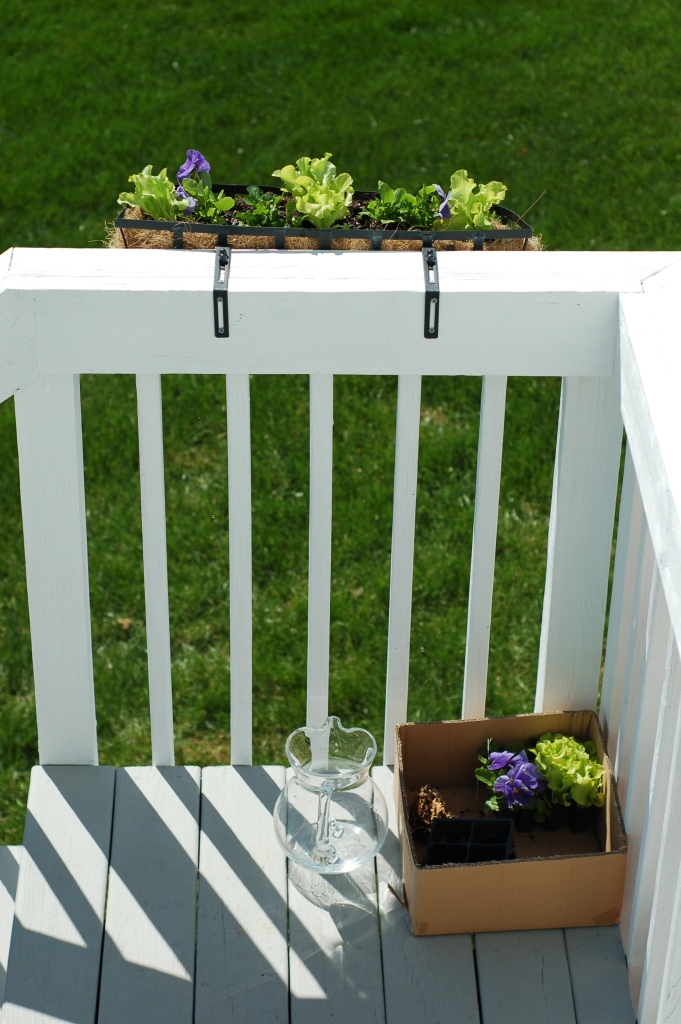
As I trickle clear water on pansies and lettuces, I see new flower buds that weren’t there when we bought the plants, new leaves that have sprouted since we planted them. It makes me kind of giddy.
It only takes a few minutes of my day. Each time I fill our lemonade pitcher with water and go out on the front steps to give the flowers a drink, I am struck that this simple act gives them life.
For the month of April, I will publish a 10-minute free write each day. Minimal editing. No story. Just thoughts spilling onto the page. Trying to get back into the writing habit.
Finally! We can play in the garden! Well, I guess we did some back-breaking labor a couple weekends ago, digging forsythia stumps out back, but that wasn’t playing. That was work.
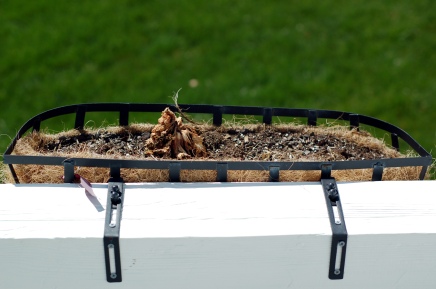
This weekend, though, I refilled our dead brown flower boxes with fresh new greens, and we put plants into the ground instead of taking them out.


As I suspected, research would have helped with my attempt to murder our grass convert lawn to garden. I spent a warm Saturday cutting black garbage bags open, hauling bricks and stone edgers, and fighting with crinkling sheets of plastic in the wind while I tried to anchor corners and smother grass.
Four days later, at least five corners had dislodged; sled-sized patches of bright green grass grew happily towards the sun. Growing grass bulged under the billowing bags while a friend overseas asked, “How’s the grass-killing going?”
When I told him I didn’t think it was working, he sent me an article on No-Dig Gardening. “The hippie way,” he said. Another friend said his dad used newspaper, then covered the newspaper with mulch, instead of using plastic.
This didn’t occur to me, to smother with materials that worms can eat, that will decompose, that will become a part of life instead of a blocker to it.
On Friday, it was warm and sunny, and I decided to undo all the work I did last weekend. I pulled up the plastic only to see how ineffectual it had been. The bricks and edgers succeeded in killing some grass, but the plastic did not.
I stacked the bricks, threw the plastic away, and started reading about happier ways to kill grass.