Have you ever noticed how when you focus your attention on something, that thing grows? It works for both bad and good: you focus on your fears, and you become paralyzed with terror, or you focus on your co-worker’s faults and those minor flaws balloon into defects of character. And the good? If you give attention to your garden – if you water, prune, prop up seedlings, talk to the flowers – your plants flourish; if you carve time for exercise, your body becomes stronger; and if you declare 2014 to be The Year of the Craft, if you put your head down and dedicate your writing year to craft-work, your writing life expands beyond the borders of your blog.
At least that’s what happened to me a couple of weeks ago when I received an email from Krista, an editor at WordPress.com, asking if I would be interested in writing a guest post for The Daily Post‘s Weekly Writing Challenge. The Weekly Writing Challenge, published every Monday, is a craft-focused prompt intended to spur the blogger into new writing territory. I’ve participated in previous challenges, and when I received Krista’s email asking if I’d like to write one (hello craft-work universe!), I wondered if I should mute my enthusiasm and act all professional by responding with a “Thank you for the invitation. I would be happy to consider writing an installment.” Instead I wrote something to the effect of “YES! YES! YES!”
This is why I don’t get paid.
Anyway, the challenge I wrote – Weekly Writing Challenge: Object – is live today, and I hope you will play along. It was inspired by dozens of prompt-based generative writing sessions with my writing group, in writing workshops, and at my desk at 6:00 am, rubbing sleep from my eyes, wondering what I’ll write about while I pull a slip of paper from a gold and white Chinese tea tin.
If you are looking for tips to get you started, try this post:
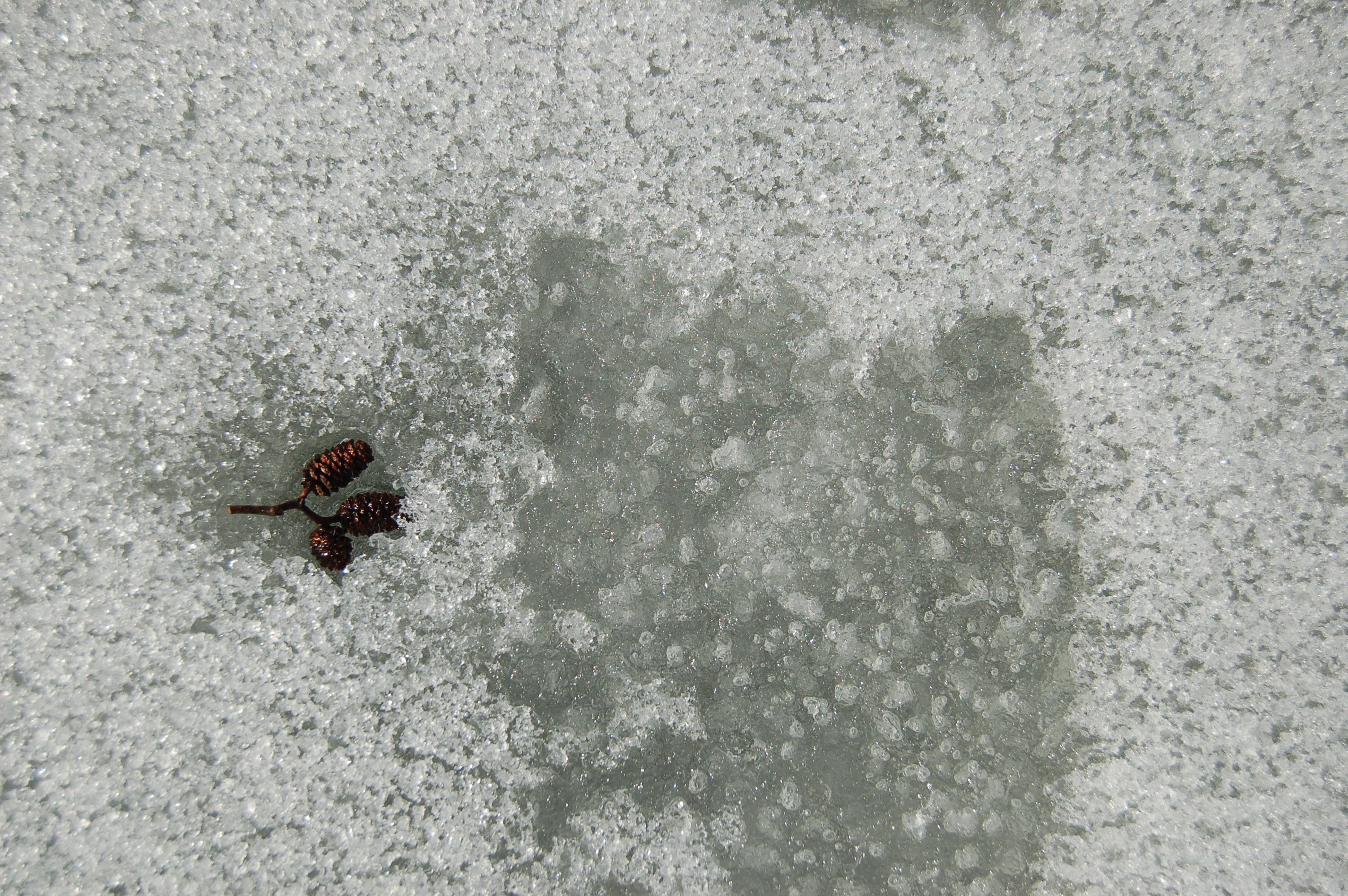
On February 1, 2014, my husband had an itch to hike the woods around Pandapas Pond. It was a sunny, 50 degree Saturday after two weeks of sub-freezing temperatures, and we had seen pictures in the paper of folks skating and ice fishing on the pond. I asked if the kids and I could ride along. When we arrived, he waved and disappeared into the forest, and our children and I wound our way down to the iced over water. College students walked across the pond’s hard shell – all the way across – and threw snowballs through sunlight. Our kids begged to go out on the ice, and all I could see was them crashing through. I was terrified. I told them to stay near the edges – the surface looked wide and treacherous, more of a lake than a pond, really, with all that shockingly cold, surely fathoms-deep water beneath a thinning sheet of cracking, melting ice. I white-knuckled my camera; I told myself, unclench your jaw. I reminded myself, Breathe, as they ran reckless, full speed, heads-back, mouths-open-in-laughter races on the sun-warmed ice; as I stepped onto pond’s slushy skin. I probably lost five years of my life that day, but our kids remember it as one of the best days of theirs.
Unknown plant, Pandapas Pond, Blacksburg, VA February 2014
Cracking? ice on Pandapas Pond, Blacksburg, VA February 2014
Walking on ice, Pandapas Pond, Blacksburg, VA February 2014
This is my entry for the weekly photo challenge: Threes
I avoided posting favorite quotes from each state’s literature on my Butterfly Mind blog, but I will be posting them on the Andrea Reads America site. Plus I just wanted to see how the reblog button works. Enjoy!
When I covered my around-the-US reading project on my Butterfly Mind blog, I was reluctant to publish posts of favorite quotes. I thought, “Those aren’t my words – they don’t fit here.” Now that Andrea Reads America has its own site, I am breaking that silence. The authors’ original words do their work more justice than any book review I write, and when grouped together, the quotes become atmospheric of the state they are set in. I hope you enjoy this new addition to my Andrea Reads America coverage.
From Harper Lee’s To Kill a Mockingbird
Scout:
“Pass the damn ham please.”
“North Alabama was full of Liquor Interests, Big Mules, steel companies, Republicans, professors, and other persons of no background.”
“The class was wriggling like a bucketful of catawba worms.”
“Looks like if Mr. Arthur was hankerin’ after heaven he’d come out on the porch at least.”
Henry Dumas: Arkansas-born poet and short story author
Arkansas was kicking my butt, y’all. It began well, with me devouring Charles Portis’s True Grit in two days, but when I finished the book, I realized a good half of it took place in the Oklahoma territory. Should I count it for Arkansas on my Andrea Reads America tour? (Andrea Reads America = three books set in each state, with works by men, women, and authors of color)
On top of the True Grit dilemma, Arkansas was the state that spawned my Where are the ethnic authors? post. After reaching out to faculty in the University of Arkansas English department, I still didn’t have any works of fiction set in the state of Arkansas and written by Arkansas authors of color. I considered relaxing my fiction rule to read the professor-recommended nonfiction titles; I considered reading an Arkansas-set novel written by a novelist who has lived her whole life in New York.
I took a break from Andrea Reads America to read The Goldfinch while I ruminated on what to do about the Arkansas dilemma(s).
When I finished The Goldfinch, I was doped on excellence. I drifted through life in that post-amazing-novel daze where you haven’t yet blinked back into reality; I knew whatever followed was going to suffer, like those poor ice skaters who crash when they follow a gold-medal performance.
And what followed was Maya Angelou’s I Know Why the Caged Bird Sings. I’ve read the book before, and I know it is good, but it did not satisfy me this time. I wanted fiction. I wanted landscape. Caged Bird is nonfiction; it is soulscape. I thought, well, maybe I need something funny, something totally different from the literariness of The Goldfinch; maybe I need something light, something totally different from the seriousness of I Know Why the Caged Bird Sings.
I found a murder mystery series set in Arkansas and written by Arkansas author Joan Hess (she satisfies my woman author criterion!), and I drove to our library to pick up one of the titles in the series, Misery Loves Maggody. I tried to like it, I really did. But the characters were caricatures – exaggerated and expected – and the settings, dialogue, and scenes were cliché after cliché after cliché. The murder didn’t even happen until more than 100 pages in. But more disappointing than any of that was that since I did not detect authenticity in the characters, I did not trust the setting either; the setting could have been a silly spoof of any Southern town – I didn’t get a feel for Arkansas from it.
In other words, Misery Loves Maggody didn’t work for me either.
I was a teensy bit frustrated at this point. Just a tinch. I still needed a non-Caucasian author, and I still needed a woman. One of the Arkansas professors suggested Janis Kearney, the Presidential Diarist for Bill Clinton. She is an African-American writer from Arkansas who wrote a biography of Daisy Bates, an Arkansas civil rights activist. She also wrote a memoir, Cotton Field of Dreams. Awesome, right? Woman and not white. Works set in Arkansas. Problems solved, right?
Neither were available at our county or University libraries. And as I’ve mentioned before, despite being an avid reader, I rarely buy books.
On the drive home after yet another trip to our county library, where I discussed the option of an interlibrary loan of Cotton Field of Dreams with the librarian ($3 fee, could be a few weeks before it shows up, maybe I should just order it), it occurred to me: why don’t I run a search for short stories? Surely there’s at least ONE short story out there by an ethnic author. That’s all I need. Just one.
So I searched.
I searched, and I found.
Henry Dumas. Born 1934 in Sweet Home, Arkansas. Called “an absolute genius” by Toni Morrison. Wrote poetry and – get this – short stories. Fiction! And? And! When I searched the University catalogue, his short story collection, Ark of Bones, with – praise the Lord – stories set in Arkansas, pinged “Available, 3rd Floor, Newman Library.”
The next day, after a trip to the 3rd Floor, Newman Library, I plopped down on our couch with Ark of Bones, and I nearly cried for joy. The stories are alive, and they are different from anything I’ve read in a very, very long time. If ever. They are dark and smoky, masculine and earthy, filled with mojo and magic; they read as if they come from a long line of souls buried deep in the earth. I imagine Henry Dumas was an intense man; he certainly had a reverence for the dignity of his race.
Most importantly, in what is surely the crowning accomplishment in his writing career, he rescued me from a post-Goldfinch spiral and an anti-Arkansas frustration. I am grateful to him for that. And I am grateful to the works that didn’t work: I would not have found Henry Dumas without them.
I decided to keep True Grit for Arkansas. It’s too great a book to leave out.
I am reading America: 3 books from each state in the US with the following authorships represented – women, men, and non-Caucasian writers. To follow along, please visit me at andreareadsamerica.com.
Holy cow, y’all. I’ve made it to California (in my reading project). After STRUGGLING to find suitable Arkansas-set novels written by Arkansas authors (it was a STRUGGLE. more on that in a future post.), I finally found three titles, and I finished reading my third last night. I woke this morning, ready to move on, ready to start my search for California-set novels written by California-based authors, and I am overwhelmed by the possibilities. Hollywood. San Francisco. California desert. Redwood forest.
Actually that last one, the redwood forest, is a setting I’d love to read, but I haven’t come across a title set there. Any ideas?
Anyway, I’ve got so many options I’m not sure what to do with myself. For the Asian-immigration experience alone I’m seeing four titles that all sound exciting (The Gangster We Are All Looking For, The Buddha in the Attic, Shanghai Girls, and of course, The Joy Luck Club). There’s an Indian-American title I want to read because I loved the movie (The Mistress of Spices). There’s a coming-of-age novel that I’ve already read and I’ve been looking for an excuse to reread (The Language of Flowers). There are recommendations from you (Ramona, Parable of the Talents), and recommendations from The Readers podcast (Tales of the City; A Way of Life, Like Any Other). There are a million light and fun and kitchy California-set titles, Hollywood and Malibu spoofs.
And then, of course, there is Steinbeck. I’m not sure I can read California without reading Steinbeck. I loved East of Eden and Grapes of Wrath, and maybe this is my chance to read Cannery Row, you know?
Sigh. I guess this is a good dilemma to have – to be presented with so many options I can choose whatever I want. If within 10 pages I don’t like a book, I’ve got a long list of backup titles and I can feel free to DNF. But where to begin?! Maybe I’ll start with whatever the library has in the format I want, right here, right now. It will be like closing my eyes and pointing, which from where I sit right now, is as good a way as any to pick my first book.
*A fat wave, according to Rippin H2O’s surf lingo, is “An enormous and sweet ride that comes along maybe once a day.” Reading that lingo list, with words like ducknweave (“on the bourbons”), grundle (“A totally ugly dude that thinks he’s really hot”), and party wave (“When more than one person takes a wave”) made me also want to read a California surfing book.
I am reading America: 3 books from each state in the US with the following authorships represented – women, men, and non-Caucasian writers. To follow along, please visit me at andreareadsamerica.com.
“Mom, are you taking me to soccer?” Our ten year old son stood in front of my reading chair. He was already dressed for his futsal game, shin guards and all.
I checked my watch. “Uh, yeah.” Fifteen minutes until we needed to leave. “Let me take a quick shower.”
I knew I was pushing it. Fifteen minutes to shower and dress would be crazy fast for me, especially in winter. I usually take 30, and that’s without makeup or blow drying my hair. I ran up the stairs, pep-talking myself. OK. No messing around. No getting lost in the shower. Gotta get to the game. I HAVE to move quickly, I HAVE to get in and get out.
I cranked the faucet to scald, stripped, and jumped in. Focus, Andrea. Wash hair. Wash face. Doing good.
Warm water streamed down my back. My skin turned pink from the heat, just the way I like it. I opened my eyes and watched steam fill the bathroom. Condensation dampened the back of the porcelain toilet, moistened the cardboard tissue box, crept over the mirror ’til I could have drawn a smiley face on the fogged silver glass.
I squirted conditioner on my hand and ran the smooth cream through my hair. I scrubbed my skin with a sudsy washcloth. I closed my eyes and listened. Clack clack, clackity clack as water spattered the plastic tub at my feet. I turned and faced the spray to massage my eyelids. The fan hummed, straining to exhaust the room of its fog, failing as I cranked the water hotter. So warm… The water tenderized my throat. I could stay here forever, especially if I didn’t have to stand up the whole time. Maybe I should take a bath. I could light some candles, relax with a book. I’ll have to wait a little while, though – I’ve probably almost drained the water heater.
I turned and reached for the conditioner bottle. I smiled to myself and thought about fairy forests, the ones you read about in books, where the hero enters the enchanted forest and time distorts. He dances and drinks and makes merry and could get lost in there forever, unaware anymore of the existence of an outside world, of the passing of time. Everything in the forest is the Now. The shower often feels like that to me.
I tipped my head back in the stream and then squeezed extra water from my hair before applying conditioner. My hair felt silky, slick. Wait. Did I already use the conditioner? I looked at the washcloth on its hook. It was wet, not dry. Did I already wash?
Oh shit! The soccer game!
I slammed the water off, ripped open the curtain, clawed through the fog for a towel, and swished it all over me while I ran, dripping, to the closet. Jeans, shirt, belt. Ran to the clock. What time is it? Two minutes. Two minutes left! I pulled wool socks over damp feet, threw on the clothes, dragged a comb through my hair, and checked the clock. One minute to spare!
I raced halfway down the stairs, then slowed to a walk. Pretended I had everything under control. I leaned over the railing and said, “Okay buddy, are you ready to go?”




 Butterfly Mind