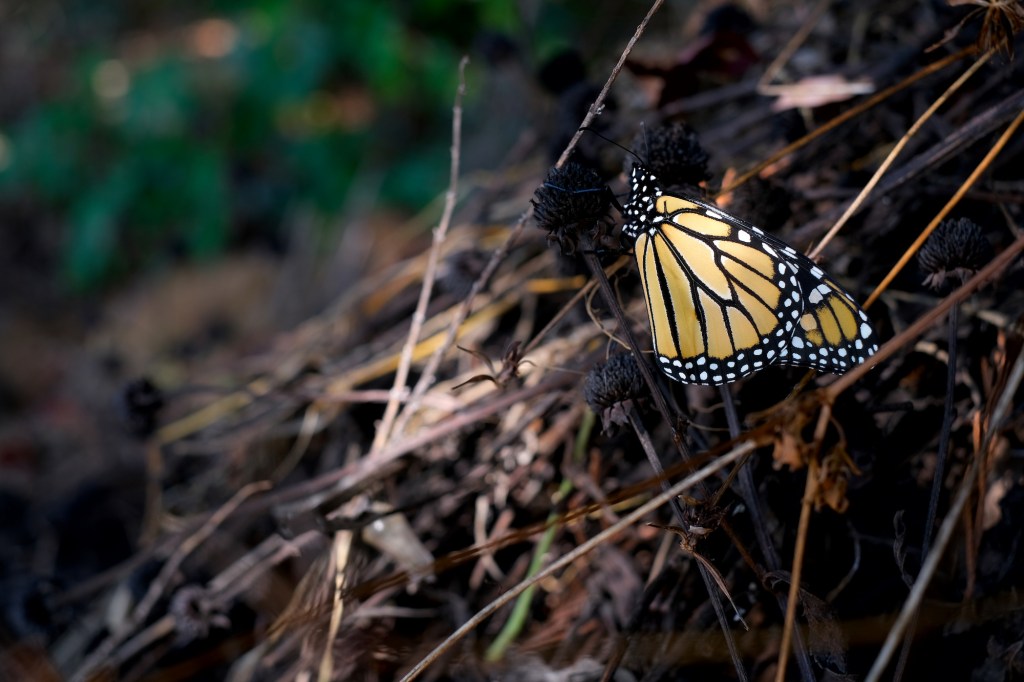
My garden has exploded in flowers. I sowed sunflower seeds for the first time in several years, and I feel joy every time I look out the window to see their lemony yellow petals and their happy faces turning toward the sun. As the sunflowers bloom, so do all of the coneflowers — black eyed Susans, echinacea, white coneflowers, and all the other colors we have in the garden.
I’ve been trying all week to get photos, but every time I’ve gone out, the sun was too harsh and all my photographs were too contrasty and glarey. I got one photo of the sunflowers and a blue sky, but most of the other photos weren’t great. Yesterday I took advantage of overcast skies to try to get some shots that show off the colors and profusion of blooms. July is hot, but the flowers are pretty.
Lemon queen sunflowersRudbeckia with calamint, white coneflowers, allium, and Russian sageMagenta coneflowersBack gardenFirst orange cosmo from seeds I sowed a while back. I’ve been waiting ages for them to finally bloom.White coneflowersGoldenrod beginning to bloomLemon petalsRudbeckiaCommon milkweedSunflowers and prairie flowersHydrangea and prairie flowersFrom the prairie gardenEchinaceaLemon queens and blue sky
I used be a recreational cyclist, and I used to be big into cycling in the early 2000s, the era of Lance Armstrong and Jan Ullrich. I loved watching the Tour de France. I loved listening to Phil Liggett and Paul Sherwin call the race. They’d sometimes hand the commentary over to Bob Roll, who was still young and rowdy in those days, and he was reliable for entertainment.
July was always an exciting month because the Tour was on. We’d watch the teamwork of professional cyclists in the dance of pulling and protecting their leader in a moving caravan of 150-200 men riding shoulder to shoulder at high speeds, with only a layer of lycra for protection against the pavement they often crash and slide along. We’d watch the chaos of bunch sprints where riders propel themselves at 40+ mph under the power of their own legs. We’d watch the brutality of climbing mountains for more than 10 miles at grades that average over 7.5%, and then attacking with huge bursts of power in the middle of those climbs. We’d watch time trials where the riders don’t get the help of their teammates, it’s just each cyclist alone with himself, riding against the clock. And we’d watch the team time trials that are just beautiful to behold in their fluidity.
When I was pregnant with our son 20 years ago, my husband and I were visiting a friend in Marseille on a year that the Tour happened to come through. We got to see the peloton come screaming into town. We saw the yellow jersey of Lance Armstrong streak by and heard the whir of 150 high performance bicycle chains turning over cogs.
Then all the ugliness started to come out. The doping. All the cycling heroes lying through their teeth about the doping. I wasn’t surprised but I was disappointed, and I lost interest. It was hard to find decent coverage of the Tour in the days before streaming services anyway, and I stopped watching. After a while, I didn’t know any of the riders anymore. Until this year, I hadn’t watched a Tour probably since 2005.
Last week, my sister-in-law visited. She’s also into cycling, and she used to race. She was on the UGA cycling team, and we used to ride together and work out together when we were in town at the same time. We also used to watch the Tour together. When she visited last week, she told us that the same people who produced the Formula One Drive to Survive show on Netflix did a Tour de France Unchained show for the 2022 Tour. She said that she had also lost touch with the Tour, and especially who all the riders are now, and the show caught her up on who’s who and what’s what now.
I felt a surge of excitement about the prospect of getting into the Tour again. I was surprised by how excited I got. My husband and I binged the whole Netflix show in three nights, starting on July 1, the day the Tour began. We signed up for Peacock to stream the Tour and have been watching every day. Paul Sherwin passed away a few years ago, but Phil Liggett and Bob Roll are still calling the race. The first time I heard Phil’s voice this week, I was struck by a deep nostalgia, and I remembered the joy that bicycle racing brings me.
I’m super excited about the Tour again, and about all these young fresh riders. I’m already attached to a few of them, like the current King of the Mountain, Neilson Powless, from the hot pink EF Education-Easy Post team of misfits, as they were described on the Unchained show. I’m attached also to team Jumbo-Visma’s Jonas Vingegaard who won last year’s Tour. I want to see Fabio Jakobsen do well, too, and you’ll see why if you watch the Netflix show.
I don’t love extreme heat — I don’t know how I survived however so many years living in Florida — but I do love summer for my flowers, for the abundance of fresh produce, and for the sports I like, which I realize now still include cycling.
Last week was rain, rain, every day. On Friday, the skies didn’t clear, but the rain did stop, and I was able to sneak in a mow before the rain began again. Saturday, it finally cleared. I spent the morning pulling weeds and clearing the jungle of rhubarb that grew between our wild, gangly forsythia and our neighbor’s fence. Then I got out my camera and snapped some shots. My new passionflower is blooming, and coneflowers are beginning to open up. The milkweed I planted from seed two years ago is brilliant orange and thriving. We’ve got bees galore right now. No caterpillars yet.
Passionflower.Lavender.Agastache.Milkweed and bee.Bee carrying pollen.Alium bud.Alium about to bloom.Bee on lavender.Hydrangea leaf.Blanketflower.Moonbeam coreopsisBirdbath with cosmos, coreopsis, and salvia; waiting for the liatris to bloom.Milkweed ready for caterpillars.
I finished another good book this week, watched some more Shakespeare, binged a podcast series about using AI to create a podcast episode, was inspired by open source, and listened to some new music I love.
Reads
I’m enjoying the anthology of American short stories I bought a few months ago. I like to pretend that one day I might write a short story, and as I read the anthology, I collect the first sentences to study and reflect on. Every stab I’ve taken at fiction sounds self-conscious in the opening sentence, and it’s a joy to read authors who craft a compelling first line. This week I read Katherine Anne Porter’s “Theft” from 1930, along with “Double Birthday” by Willa Cather and “Wild Plums” by Grace Stone Coates, both from 1929, and both about the confines of class distinction and the limitations they place on joy for all classes. I thought Coates’ first sentence was pretty great, and it certainly made me want to keep reading:
I knew about wild plums twice before I tasted any.
– Grace Stone Coates, “Wild Plums”
For longer fiction, I finished Brendan Slocumb’s novel Symphony of Secrets this week, and I loved it. Our trip to NYC jazz clubs catalyzed me to finally do a thing I keep saying I want to do but have never actually done: learn about music. As with everything I’m interested in learning about, I immersed myself in a novel. The setting is today and the 1920s music scene in New York. The characters are musicians and music publicists and music historians. They speak the language of music. They are moved by music. Their hearts and souls are in music. And the story was a page-turner. I recommend it.
In non-fiction, I’m still making my way through Prediction Machines: The Simple Economics of Artificial Intelligence. The crux of what I’ve gotten through so far is that, in economic terms, as the cost of prediction decreases due to machines being super fast and good at prediction compared to humans, the value of complements like judgment and decision-making — which require humans — will increase. In other words, our humanness doesn’t make us less valuable: our uniquely human capabilities become more valuable as machines make prediction easier and faster for us. Humans can harness AI to complement our own skill sets, and because AI lacks critical components of decision-making (judgment, action, outcome), an essential role of humans is that of machines’ supervisors.
Listens
This week, I fell in love with the title track from Jenny Lewis’s new album, Joy’All. I’m trying not to listen to it over and over again, even though I want to. I don’t want to wear it out too soon.
I’m fascinated by the implications of AI, what it’s capable of, and how people are reacting to it, so I listened to several podcasts this week, including a three part Planet Money series where the hosts had AI write an entire podcast episode, including creating an AI generated voice of one of the hosts. The result was both impressive in what it was able to do, and funny in how corny and wrong AI got some of the elements. The first two episodes are about how the hosts worked with AI to create the AI-written episode, and the third episode is the AI-written episode itself, along with the podcast team’s reaction to it. My coworker recommended the series, and I highly recommend it to anyone interested in AI’s implications for knowledge work and creative jobs (spoiler: we’re safe. See above for human judgment and decision-making).
Similarly, Fresh Air’s Could Artificial Intelligence Destroy Humanity? is a great listen to assuage fears and also explain today’s AI technology for folks who are hearing the buzz but aren’t familiar with exactly what ChatGPT is, how it works, what it’s shortcomings are, and whether it will kill us all (spoiler: unlikely, though given enough time, anything is presumably possible, assuming the infinite monkey theorem that given infinite time, a monkey typing random keys would eventually write the works of Shakespeare).
Watches
Speaking of Shakespeare, I watched Hamlet this week. I didn’t enjoy it as much as Macbeth; I found my attention wandering in several parts. I don’t know how much of that was that the production I watched stayed 100% true to every word Shakespeare wrote for Hamlet, and it was hard for me to follow at times, or how much was simply that I didn’t care for the story as much. As with Macbeth, though, my eyebrows shot up several times when words were spoken, I recognized them, and I had no idea they had come from Shakespeare. For example, the whole “What a Piece of Work Is Man” speech, which I know large sections of from Hair. All these years I’ve been singing that song, and I had no idea it was from Shakespeare. It seems fitting to include alongside all the AI stuff this week.
What a piece of work is man How noble in reason How infinite in faculties In form and moving How express and admirable In action how like an angel In apprehension how like a god The beauty of the world The paragon of animals
– Galt MacDermot via William Shakespeare
Finally, WordPress, the open source software that powers this blog and more than 40% of the web, turned 20 on May 27. In celebration of the anniversary, to talk about WordPress’s history, and to talk about the principles of open source and their implications for our future, WordPress’s co-founders, Matt Mullenweg and Mike Little, joined with Dries Buytaert, founder of Drupal open source project, for the first time ever. They talked about why and how open source — software that’s available to everyone for free to use, study, redistribute, and improve — is one of the most powerful ideas of our generation, is based on rights instead of restrictions, and enables software to evolve and improve because it has a world of contributors instead of a restricted group within a walled organization. I was once again inspired by and proud to work for a company whose mission is to make the web a better place through open source.
I started swimming laps again in April. When I slipped under and pushed off the wall, I remembered how much I love being in water. My habitual practice set came back to me immediately, despite it being over a year since I last swam.
I signed up for an annual pass, and swimming is now part of my daily routine.
After two months of swimming four days a week, though, I saw no improvement in my stroke or my lap times, which seems like it shouldn’t even be possible. After two months, I should see at least a little improvement, right?
Perhaps this is obvious, but it became clear at some point that things wouldn’t change without me changing something. I watched some technique videos and started incorporating new drills into my practice.
Over the past week, I made one small change that cut 2 seconds off of my lap time: I paid attention to finishing the stroke. One thing I like about swimming is that it’s very technique-driven. This anchors me to the present moment. I’m paying attention to almost every body part as I move through the stroke: what is my leading hand doing, where are my hips for the kick, are my feet just flopping around, is my recovering arm relaxed and actually recovering?
Before I watched the technique videos, when I swam, I primarily paid attention to my pulling hand as it entered the water, then my elbow to make sure it was at the best angle to get a good strong pull; as soon as that hand was under my body, my attention would shift to my kick or my recovering arm that was out of the water. What I neglected was the follow-through of my pulling hand, which needed to complete its cycle. That hand still had a lot of water it could push against to propel me forward.
As soon as I paid attention to the follow-through, my performance immediately improved.
Ours is a berry-loving family. Strawberries, blackberries, blueberries, raspberries: our son would live on these if he could. Now that he’s home from college, and I’ve started eating more berries because I’m trying to eat the rainbow (such deep, gem-like colors!), and my husband puts berries in his cereal and oats, and our daughter puts berries in her smoothie bowls, we go through quite a few pints of berries each week. This becomes expensive when those pints are $3.50 or $4.00 each.
During berry season, though, I get giddy when the label on the blackberries says $1.49 per 6 ounces. Blueberries $2.50 for the same. Raspberries $2.50 for double that volume. And when the strawberries come in, $2.50 for quadruple the volume.
The strawberries go a little slower in the house when there are blackberries, raspberries, and blueberries around. I think this is because the latter three are self-contained units: small enough to toss in stuff without having to slice them, no stems, no work. Just pop them in your mouth, on your yogurt, in your smoothie. You don’t even have to open the compost can to dispose of the green tops.
So when the strawberries come in, and I see those giant 32 ounce containers, I put one in my cart, then go to the baking aisle and buy Ghirardelli dark chocolate melting wafers. When I get home, everyone gets a surprise treat of chocolate-covered strawberries.