A lot has happened in the garden since my last update in May. Flowers have blossomed and gone to seed, and now that we’re in August, butterflies are everywhere.
Everything starts out so fresh and clean in June, and by August things are looking pretty raggedy. But August is when the butterflies are laying eggs. Soon it will be caterpillar season and I’ll have to be patient with the spent plants — I’ll want to rip them out, but you never know when butterflies might be pupating under leaves. In a few weeks I’ll find chrysalises dangling from porches and fences, and then the new butterflies will be out drying their wings before their first flight. That’s worth letting plants hang out in the garden past their prime.
Until then, here are some photos from the summer.
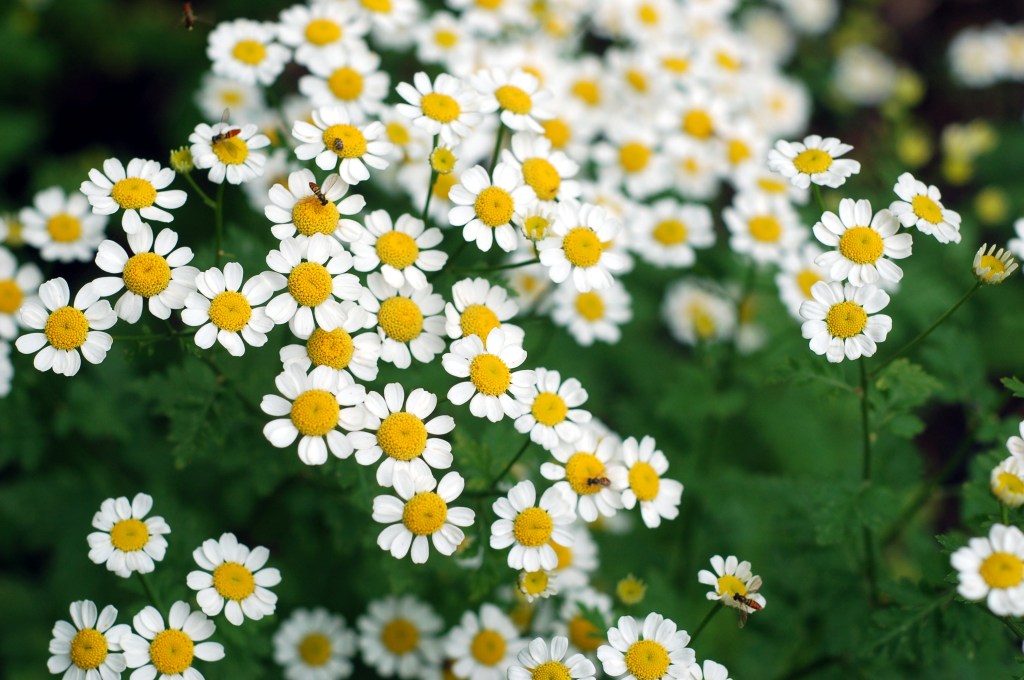
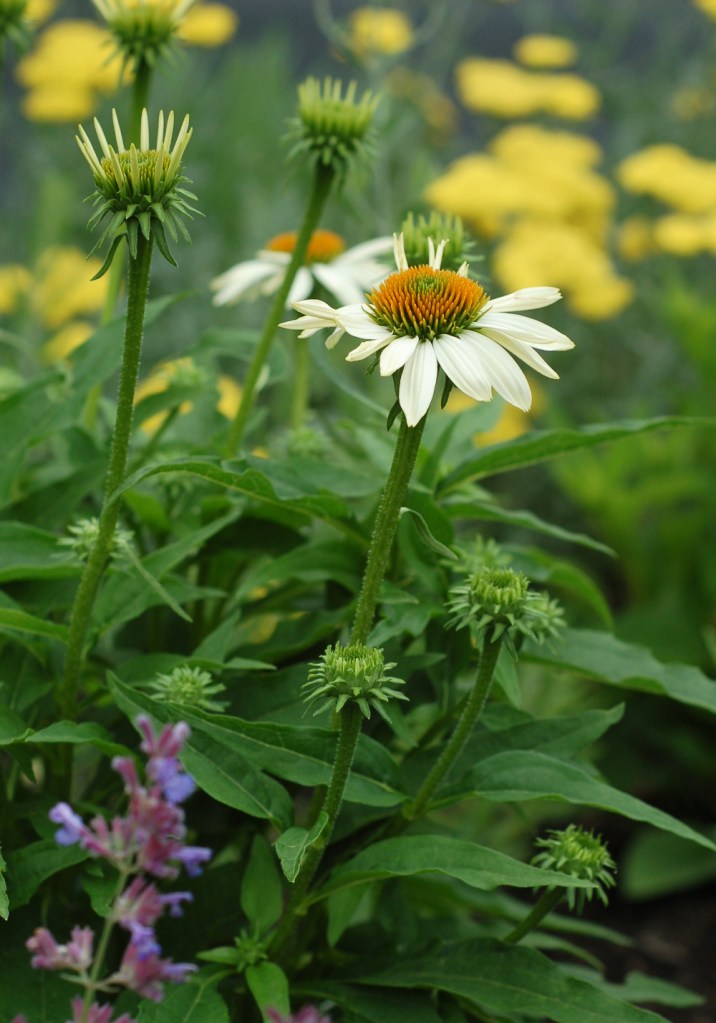
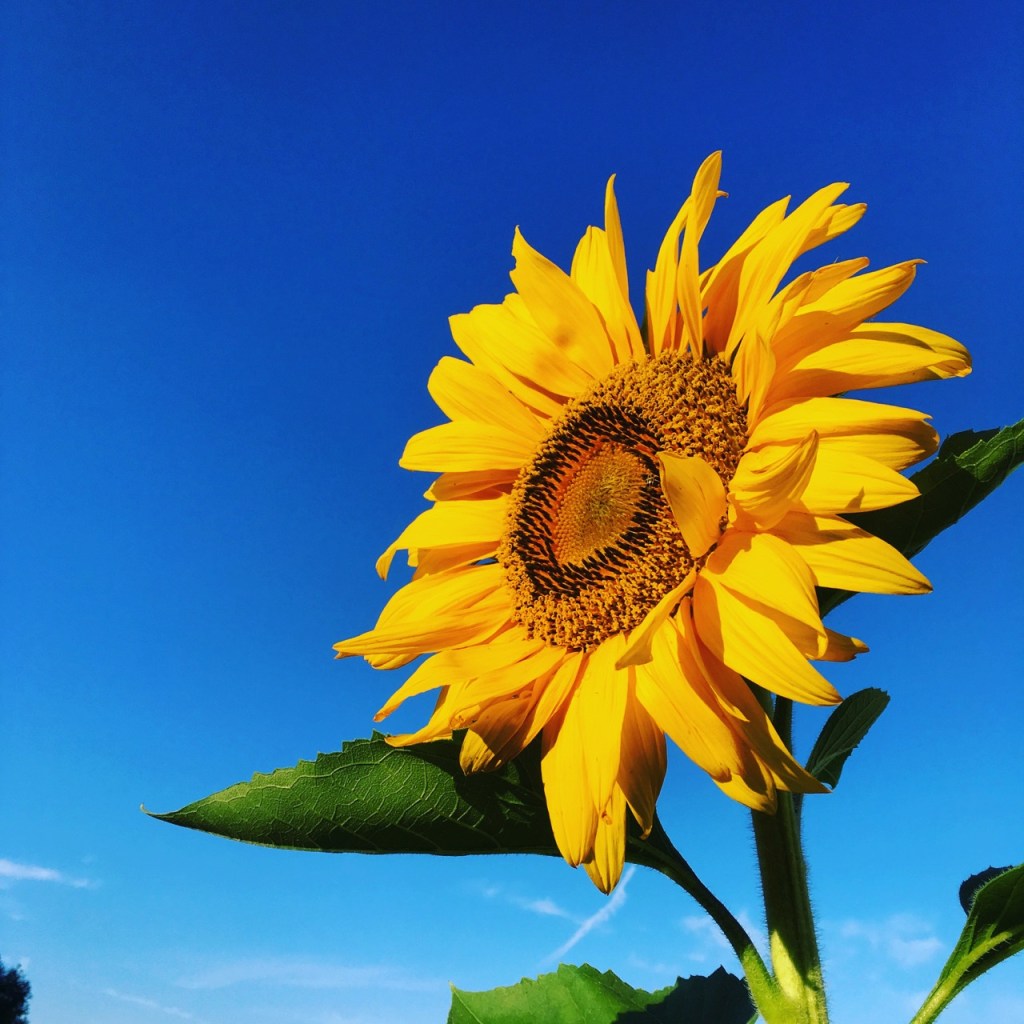
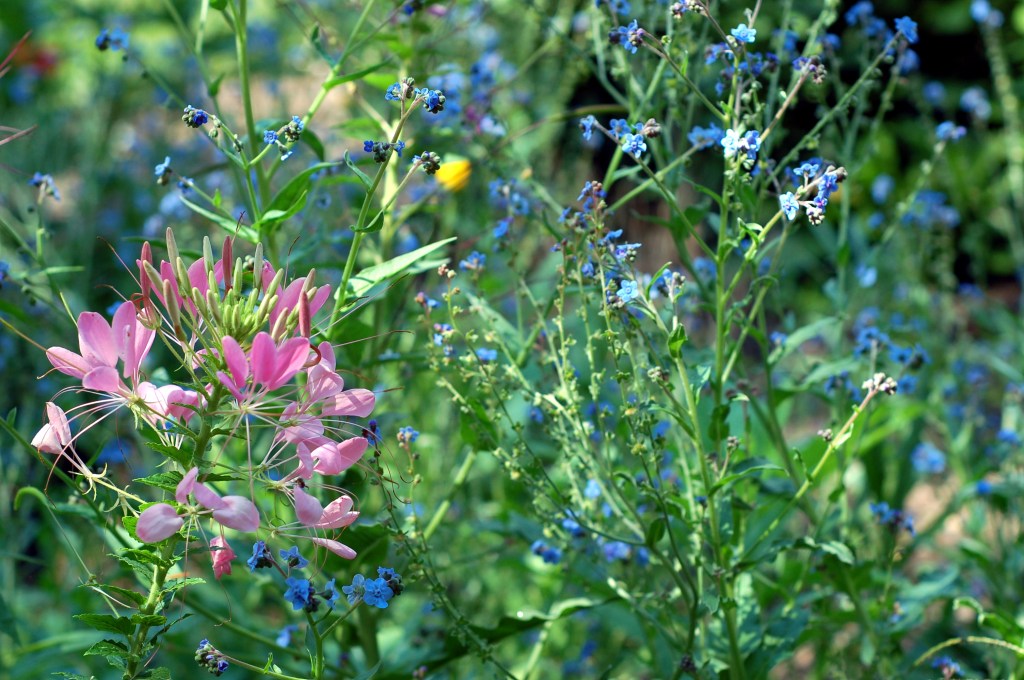
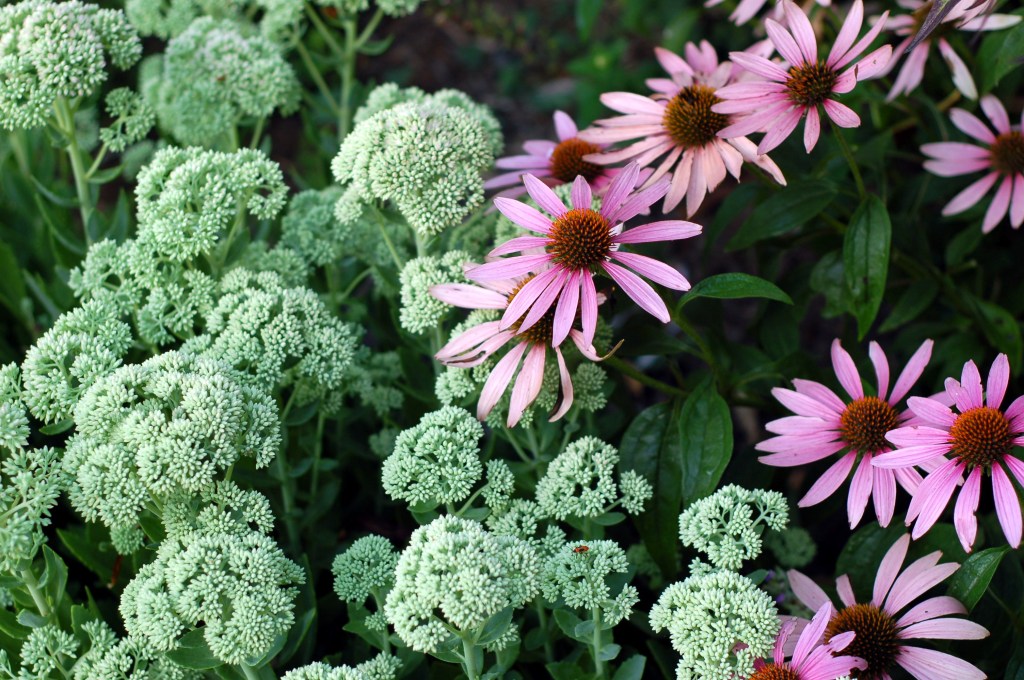
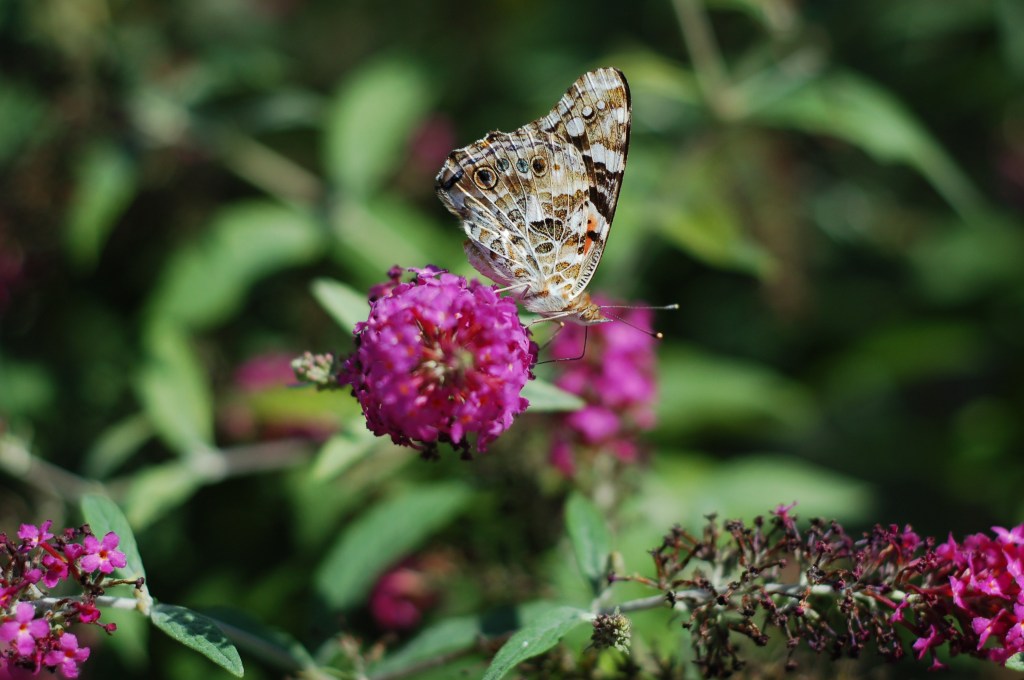
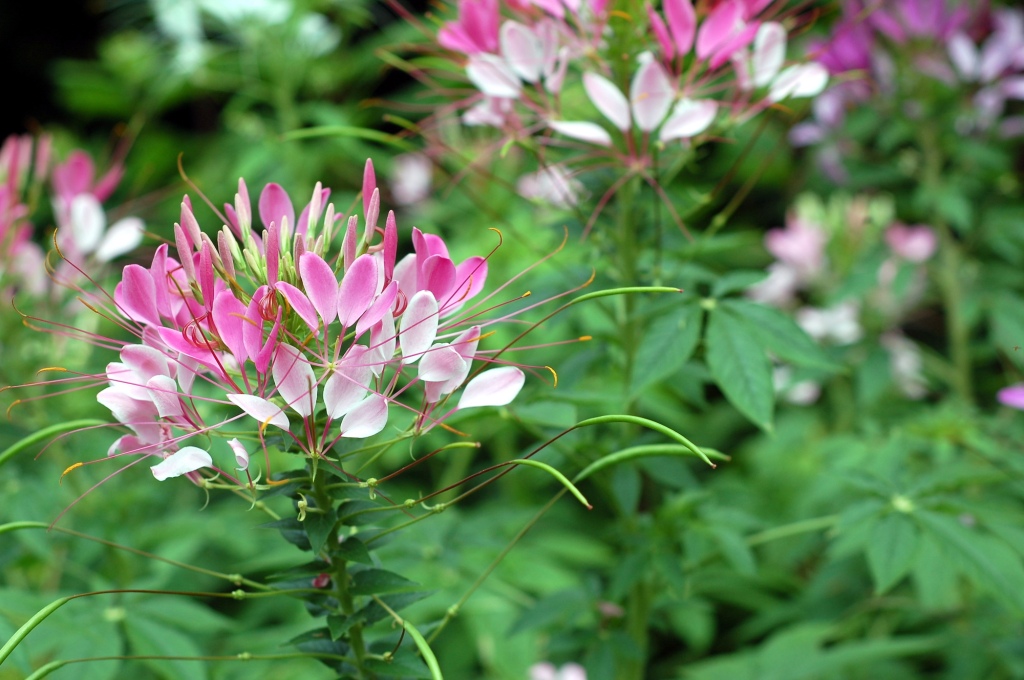
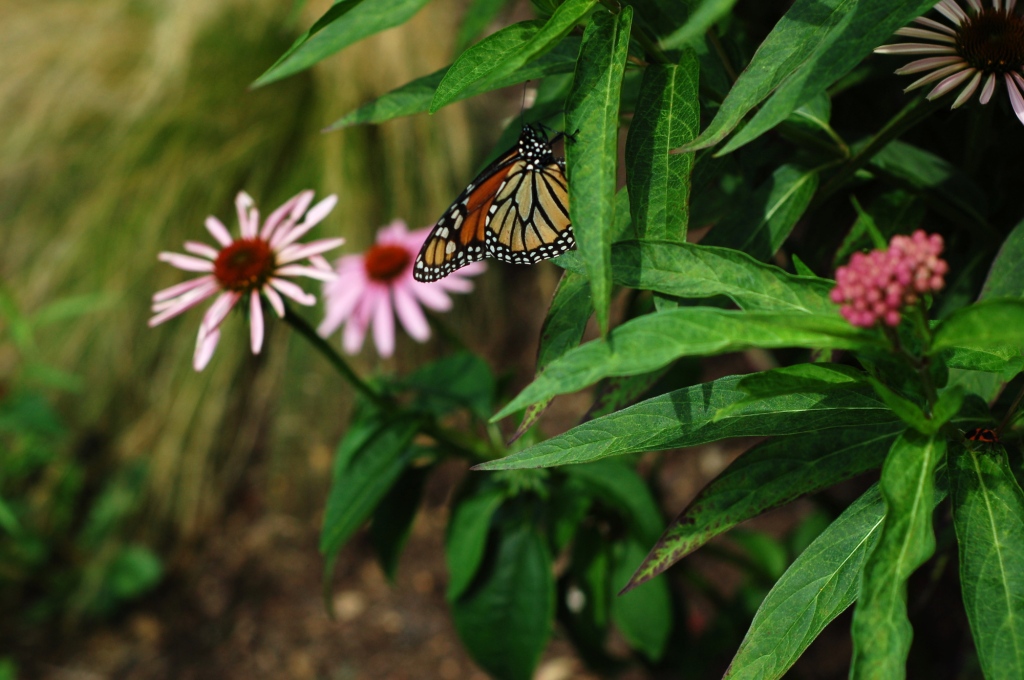
June: feverfewJune: fresh white coneflower in prairie bedJune: Great spangled fritillary on scabiosaJune: deer eating lunch on my lunch breakJune: red-spotted purple swallowtailJune: spicebush swallowtail caterpillarJuly: prairie bed in bloomJuly: sunflowerJuly: bee on cosmosJuly: monarch on milkweedJuly: tiger swallowtail on butterfly bushJuly: cleome and forget-me-notJuly: foggy morningJuly: Shasta daisiesJuly: female eastern tiger swallowtail (dark morph)July: echinaceaJuly: Giant swallowtail on zinniaJuly: spicebush swallowtail on milkweedAugust: sedum and echinaceaAugust: painted lady on butterfly bushAugust: swallowtail caterpillar on rueAug: new echinacea (Magnus)Aug: echinacea and wind dancer grassAugust: hummingbirdAugust: raggedy tiger swallowtail on butterfly bush
I post photos and butterfly updates more frequently on my gardening blog, if you’re into butterflies and gardening.
The garden is is peak bloom right now. Pollinators buzz busily, and the bigger butterflies are starting to find their way to the flowers I planted for them.
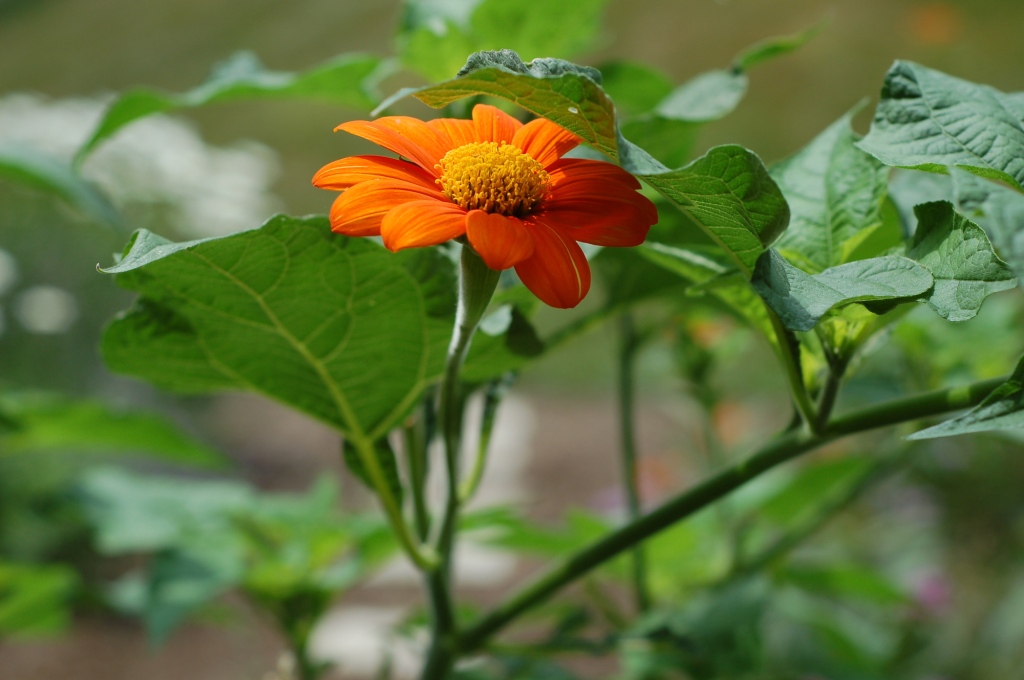
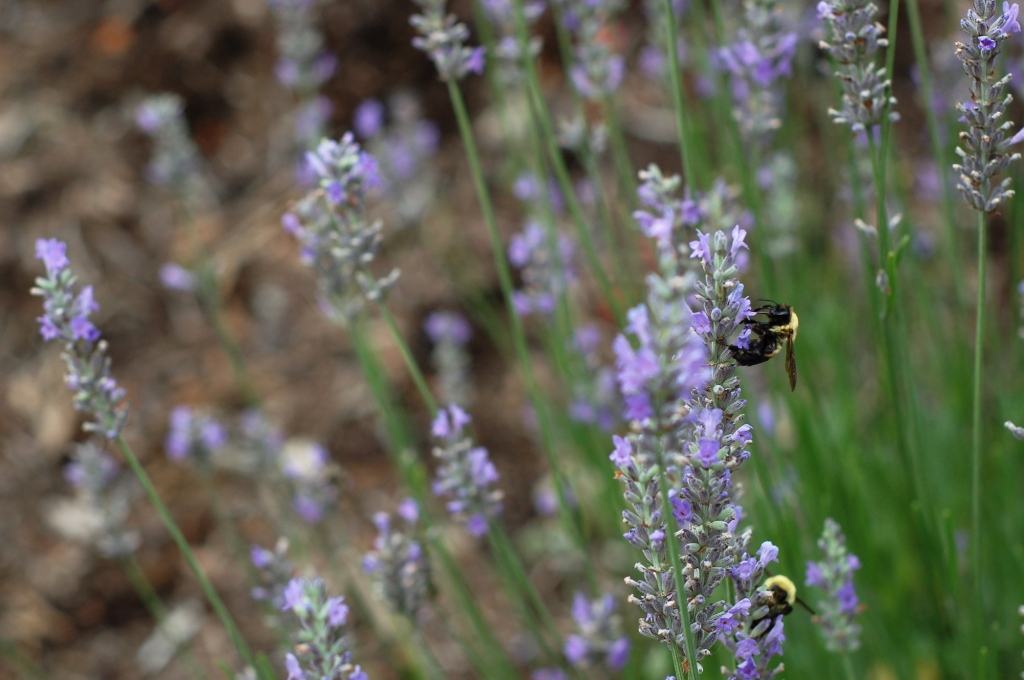
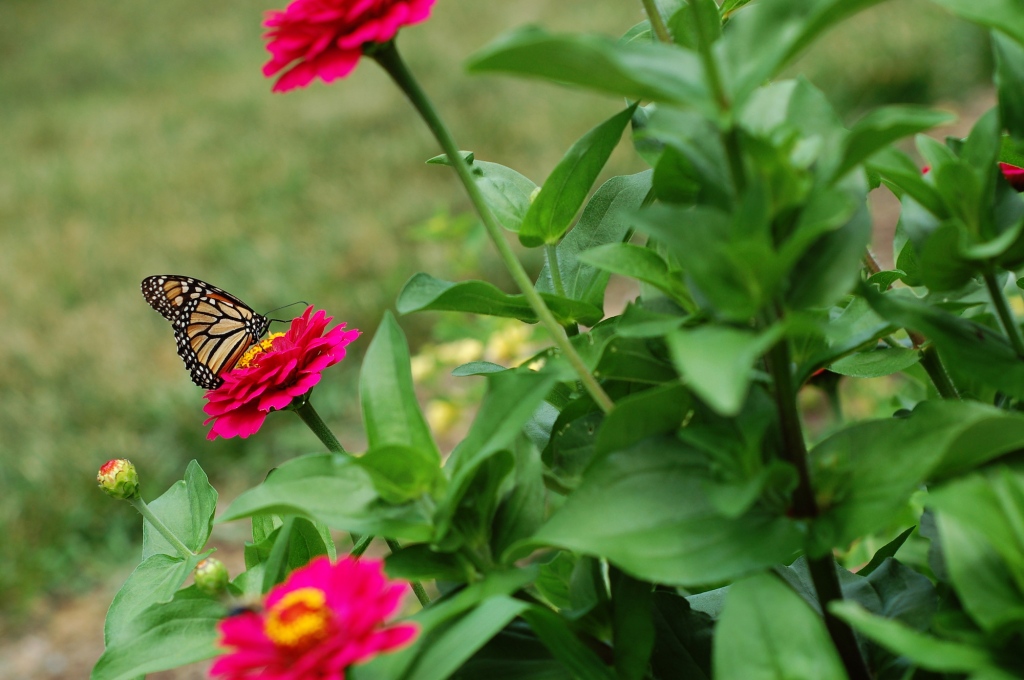
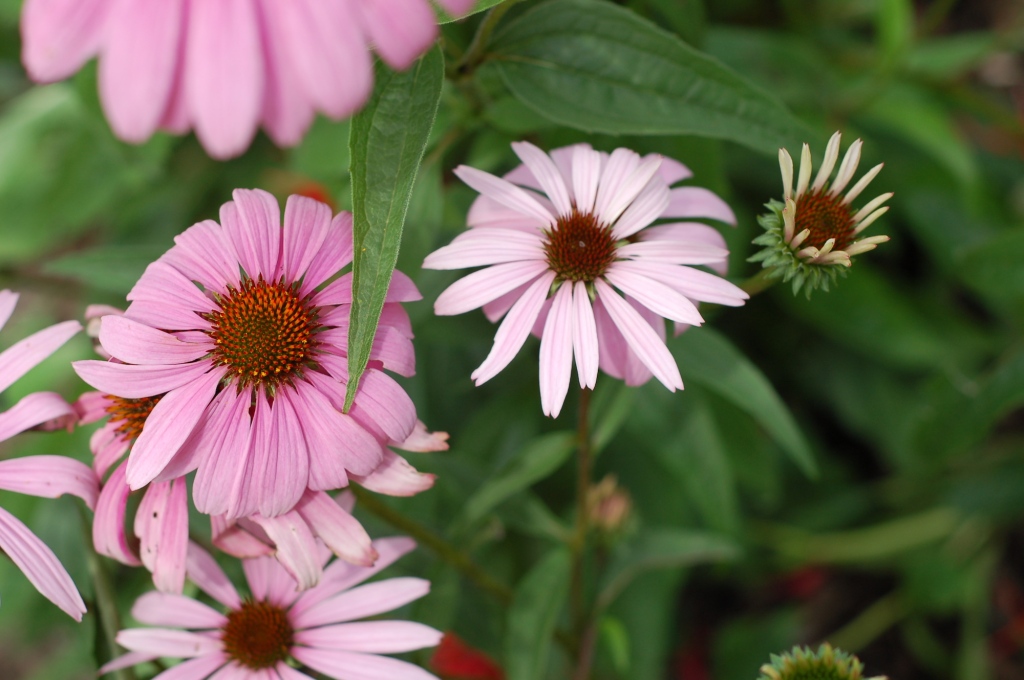
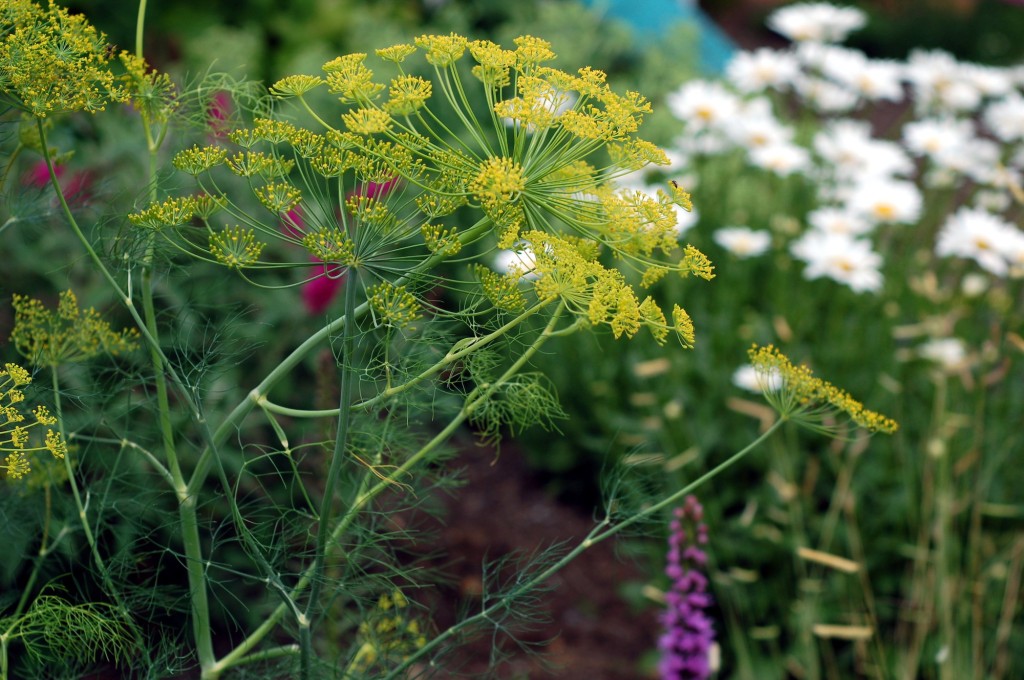
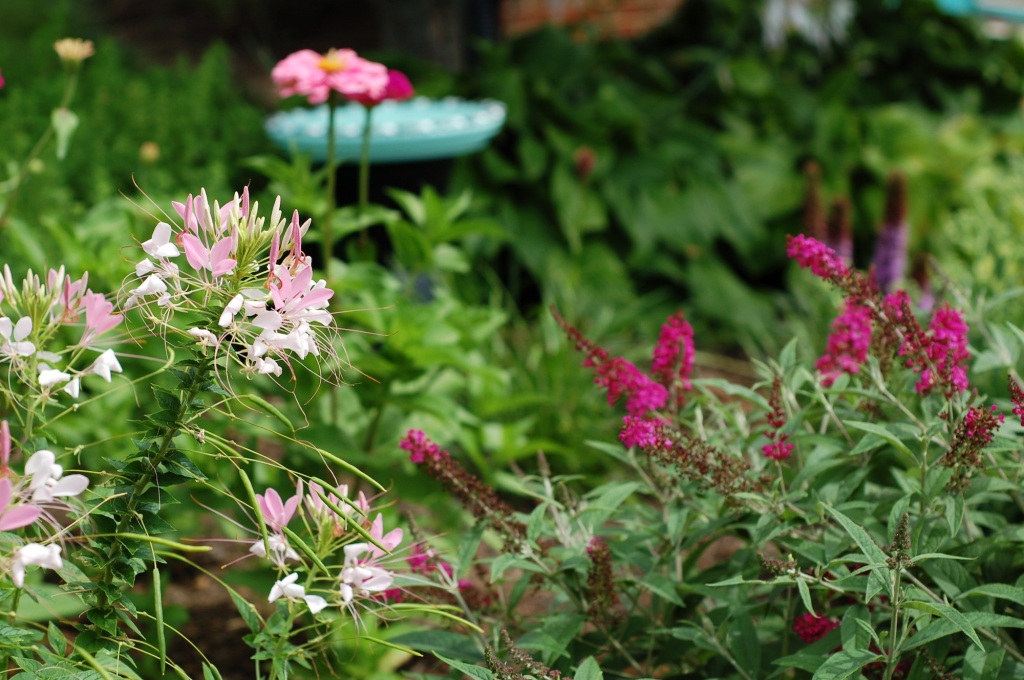
CleomeMonarch on milkweedBee coming in for the liatris (bottom center — I didn’t realize it was in the photo)Cabbage white on purple top verbenaMexican sunflowerBumblebee on lavenderShasta daisyMonarch on zinniaEchinaceaDillCleome and Miss Ruby butterfly bush
These are mostly just the close-ups. I published more photos on Andrea’s Gardening Blog if you like photographs of gardens and flowers.
A friend asked recently what it is about gardening that I love so much, and with such intensity. What is so compelling? What do I get out of it?
When we moved into our house, it was surrounded by nothing but mowed grass. A vast expanse of green blades, all the same height, all the same color. No flowers. No birds. No butterflies. It was uninteresting. When I’d go out on our back deck, there was nothing to watch except the clouds. Though the grass itself was living, the landscape didn’t feel alive.
What I love with intensity is life. Life is miraculous to me. I grew two human beings in my body who are now teenagers. Fifteen years ago they didn’t exist. They were nothing. Now, they walk and run and talk and laugh, they think, they create, they have ideas. They’re baking cakes and learning Spanish and riding bikes and swimming 3 miles a day. That’s amazing! It blows my mind.
What I love with intensity is beauty. When I look at a flower — the arrangement of petals, the colors, the shape of the flower to attract the right pollinators — I could get lost in it. When I look at a garden, or when I work in the garden, I do get lost in it. Digging a hole for a plant unearths a worm, which makes me think of the subterranean world, and all the underground activity happening to create the soil for my flowers. Filling in the hole, and knowing the soil is loose now, makes me think about the robin that will soon be along to take advantage of that loose earth to find the worm. And then I’ll think about how funny robins are, hopping around in the garden, with worms wiggling in their beaks. The next thing I know I’ve been in the garden digging holes for 4 hours.
That’s beautiful to me. The beauty of the connectedness of all life. That’s not the beauty I was originally talking about, though. I was really just talking about superficial beauty, of different flower colors, petal shapes, leaf shapes, leaf colors. The beauty of the curved contours of the flower bed, of the Chartreuse green of spring, of the red of the male cardinal, the yellow of the goldfinch, the deep blue of the indigo bunting, the black and white check of the woodpecker.
Which brings me to what is most compelling to me about gardening, and about why I continue to replace lawn with flower beds: I love with intensity is how diverse life is. An expanse of bright green, freshly mowed grass bores me if that’s the only thing there. An expanse of bright green, freshly mowed grass is lovely when it provides a clean backdrop for pink roses, purple Salvia, magenta butterfly bush, yellow sunflowers.
Those plants, when they’re growing in the spring, provide daily absorption for me: how much did they grow? How many leaves do they have? Are there any flower buds yet? I walk the garden every day inspecting for all of those things. When they start flowering, the insects come: fat fuzzy bumblebees; yellow, orange, white, and blue butterflies; honeybees and moths; caterpillars and ladybugs, aphids and aphid-eaters. And the hummingbirds! I’ve already seen a hummingbird this year. All those insects attract birds, and when the flowers go to seed, even more birds come. My favorites are the goldfinches that sit atop the dried seed heads of purple coneflowers in late summer. The long stems nod under the goldfinches weight, but remain upright.
What I get out of my garden is that it invites diversity to come back. It creates a space where I can continually be struck by the wonder and connectedness of life on earth. Not only did life once not exist at all on this planet, but it didn’t exist, and then it did, and then it turned into millions of species who are dependent on one another for survival.
I didn’t think about that or experience it on a daily basis when our lawn was just lawn. Now, as I sit and write this, I look at the pansies in our flower boxes and wonder at the arrangement of the petals, and what advantage that might create for the continued survival of that species. I think about the curly leaves of the purple kale and marvel at their water-funneling capability. I hear the calls of multiple bird species. I see bees buzzing. I eagerly await the warmth of the day, when the butterflies start arriving.
It’s that time of year again, when I get to sit under the dogwood tree and soak up the garden. I am amazed by how much is already happening out here from perennials we planted last year. They are thriving after having a year to get established, and many things are flowering that didn’t flower last year: all of the thymes — creeping, lemon, and regular old — , the rosemary, and the lavender is about to burst into bloom. Blueberries have formed, and the rue is already bushy, covered in yellow flowers, and crawling with caterpillars. It’s not even June.
Caterpillar on rue
Lavender buds
Blueberries forming
A breeze blows on the back of my neck and rustles the dogwood leaves above me. The morning sun is hot on my arm. I need to apply sunscreen. I’m on butterfly and bird watch.
It may be too windy for butterflies, or may be too early in the year, but we’ve got treats for them when their ready. I never appreciated the advantages of perennials, that they come back each year without me having to do anything. In Florida, we didn’t have winter to kill everything back. In Florida, gardening was a year round endeavor. I’m not sure perennial had meaning there.
I never knew how glorious they could be — a one time investment of work for a lifetime of beauty! The yarrow and indigo Salvia are already bonkers with blooms. The Echinacea and blanket flower have plump buds, the cat mint and Russian sage and Guara and columbine wave pink and purple flowers in the breeze.
Yarrow and bird bath
Blanket flower buds
Bee and indigo salvia
Guara
Echinacea
Columbine
I decided to put even more perennials in since they come back so full and vibrant each year — and because I can divide them and get free plants out of them — but I’ve also reserved a swath in front of my dogwood roost for annuals. I like to be able to try something new each year, and this year I went with yellows, reds, and oranges, with some white to break it all up. All butterfly flowers of course: scarlet sage, orange Cuphea, white Pentas, yellow, orange and pink zinnias, yellow Lantana.
The zinnias I planted from seed, and spent some time yesterday moving around to space the seedlings out. They’re doing well, but I am impatient for them to grow and bloom. That’s what money buys you in the gardening world: time. The more you spend, the less time you have to wait. I spent about $1.50 on a seed packet, and six weeks later I have about 50 zinnia seedlings 2-3 inches tall. I don’t know how much longer I’ll need to wait for them to blossom, but at blooming time I can guarantee I wouldn’t be able to buy even one flowering zinnia for $1.50.
I’m eager for the Lantana to fill out and cover the ground in front of the bird bath our daughter made me for Mother’s Day. I’ve put stones in it so butterflies can use it, too, and have a place to rest while they sip. So far I haven’t seen any birds or butterflies bathing or drinking, but I keep the water fresh anyway.
Bird bath, yarrow, and zinnia patch
Despite my impatience for things to grow and bloom, I think this is my favorite time of year in Appalachia: the time when I can sit in the garden and steep in the growth that’s happening all around. It still boggles my mind that a kernel as tiny as a sesame seed can become a knee-, or waist-, or chest-high organism with broad green leaves, bright flower petals, pistils and stamens and complex mechanisms for fertilization, and a renewable food source for other organisms. Life is miraculous to me. A kernal to a bush, an acorn to a tree.
Our yard is not a wilderness. A manicured garden is not the first thing that comes to mind when I think “nature.” But our garden is alive. And our intention with it is to attract more life. I want bees and butterflies, wasps and worms, spiders and sparrows, monarchs and moths. I can’t get enough of watching the world around me interact, of soaking it all in and wondering at the marvel of our existence.
This is my entry for the Daily Post prompt, Infuse.
I am counting down the days until the mulch truck arrives. Three days, and then I can scatter wildflower seeds on the slope out back: a moment I’ve waited for for weeks.
I can’t stop thinking about the garden. Our back yard is a steep hill that makes me pant when I mow it. When we moved in, the top corner was overgrown with forsythia, brambles, poison ivy, and I don’t know what all else. Whatever was back there, it wasn’t pretty. It was a tangled, impenetrable mess I thought we’d never be able to clean up.
Slowly, over the past two years, we dug out stumps, pulled out vines, and eventually got the patch down to bare dirt. My husband and son got it to that point a few weeks ago, on a warm day in winter.
When confronted with a bare expanse of earth on our property, I want to fill it with flowers.
Since that day several weeks ago, I have consulted garden books, garden magazines, butterfly books, seed catalogs. I’ve been to our local nursery, Home Depot, Lowe’s, Pike nursery in Charlotte, NC, while we were there for our son’s soccer tournament. I’ve started a gardening notebook, an online gardening log, and added a Garden category to my blog menu so I can easily access posts that tell me when I did what in the garden in years past (we were killing lawn this time last year).
I’m ready. And now the time is almost here. Three days until the mulch arrives. Three days until I can sow seeds.
We have a back deck I never sit on because there’s nothing to look at but grass. Instead, when I want to sit outside, I take a folding camp chair to the front garden and pop it open under the dogwood tree so I can be among hummingbirds and butterflies. Now, we have a bird feeder out back. It has lured goldfinches and woodpeckers to our back yard, so sitting out back is more appealing now. But there are still no flowers. Soon, though. Soon we will have a wildflower patch for butterflies and hummingbirds.
Starting Thursday, our kids’ spring break begins and so does mine. I’m taking several days off from work to play in the dirt. In my research I’ve found several species I must have out back for the butterflies — parsley, dill, cleome, zinnia, globe amaranth. I bought seed packets for those. I also have seeds gifted from my friend Dorothy‘s garden — milkweed, blazing star (Liatris), and blanket flower (Gaillardia). And to fill in the rest of the area, I bought a 1.5 pound bag of Pennington wildflower seeds to attract hummingbirds and butterflies. Surely from all of those sources, something will come up.
I’ve already got my first day off planned out. The day is forecast to be sunny, with a low of 41° F the night before, and a high of 71 during the day. I’ll have a lie-in, as my British friend calls it, to let the temperature come up a bit before heading outside. After my smoothie breakfast, I’ll pull a bowl from the cupboard and stir seeds from my store-bought packets and seeds from my friend into the wildflower mix from Pennington. I’ll huff up the hill with a hoe and a heavy rake to break up and smooth the soil, then I’ll sprinkle seeds over the entire area. I’ll rake again to cover them.
And when I hear the rumble of the mulch truck coming down the street, and the screech and clang of the metal dumper spilling 6 cubic yards of shredded hardwood bark onto our driveway, I’ll wheel my barrow down the hill and start shoveling.
The only thing I’m still trying to figure out is whether to distribute the seeds randomly, or to create a few patches within the plot — a milkweed clump, for example, or a dill clump. I still can’t decide.
I’ve got time. Three more days until the fun begins.
When I returned home after a weeklong trip to Whistler, I was giddy to walk around the garden and find not one monarch butterfly emerging from its chrysalis, but two.
Newly emerged monarch on rueAfter finding those, I of course crawled around in the mulch and dirt to inspect the undersides of leaves. I found three more monarch chrysalises plus a bunch of fat swallowtail caterpillars who will soon be crawling off to metamorphasize as well.
This is SO EXCITING Y’ALL. Here’s a full caterpillar catalog of what I’ve found so far:
Some friends at work are also interested in butterfly gardening, and are looking for host plant ideas. Since we work for a company that makes, ahem, blogging software, my friend naturally asked “Did you do a blog post on what all you planted?” Nudge nudge.
Shockingly, I have not. So here it is! Kris and Liz, this is for you.
The plants
For Mother’s Day, our son gave me Christopher Kline’s book, Butterfly Gardening with Native Plants: How to Attract and Identify Butterflies. Combined with a bunch of online research, experimentation with a butterfly garden in Florida, and talking to bunches of people who garden for butterflies and caterpillars, this book helped me plan a garden that includes both host plants (that caterpillars eat) and nectar plants (that adult butterflies drink from). The most successful plants in our garden are the following:
Host plants
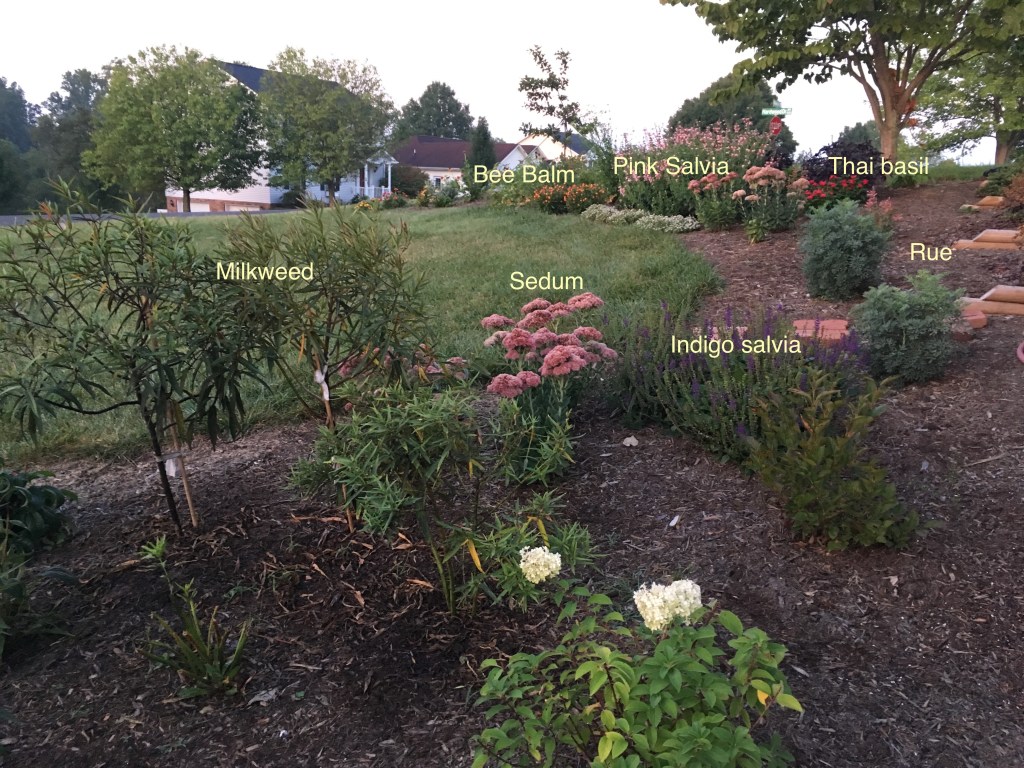
Milkweed (Asclepias): We planted both common milkweed and swamp milkweed. These are by far the most insect-loved plants in the garden. They are constantly covered in various species, including aphids, beetles, and, late in the summer, monarch caterpillars. Milkweed is both a nectar plant and a host plant. We’ve seen adult giant swallowtails and monarchs drinking from its flowers, and have found at least a dozen monarch caterpillars on it. Word of warning: milkweed will get covered in aphids. The caterpillars will still come even when every surface is crawling with aphids, so we kept our milkweed intact even though it’s not very attractive once it has stopped flowering and it’s coated in tiny orange insects.
Rue (Ruta graveolens): This is possibly my favorite addition to the garden. The leaves are a silvery blue-green, the plant stays neat and tidy (it doesn’t get leggy or messy), it can take the heat (and drought) and still look healthy, and the swallowtail caterpillars adore it. As an unexpected bonus, the monarch caterpillars love it for building chrysalises. We’ve found at least 3 chrysalises in the small, shin-high plants.
Butterfly host and nectar plants
Nectar plants
Milkweed: all the butterflies big and small love milkweed.
Indigo salvia: Aside from the milkweed, these purple flower spikes are the most popular in the garden for butterflies to drink from. Bees also love these flowers.
Pink salvia: Okay, maybe these are tied with the indigo salvia for nectar popularity, at least for hummingbirds. I see hummingbirds drinking from these almost every time I sit in the garden.
Bee balm (Monarda): Butterflies and hummingbirds love this as well. Hummingbirds dart between the pink salvia and the bee balm.
Thai basil: I’ve seen some small butterflies and moths (and caterpillars) on these flowers.
Butterfly host and nectar plantsCone flowers: Butterflies always visit these.
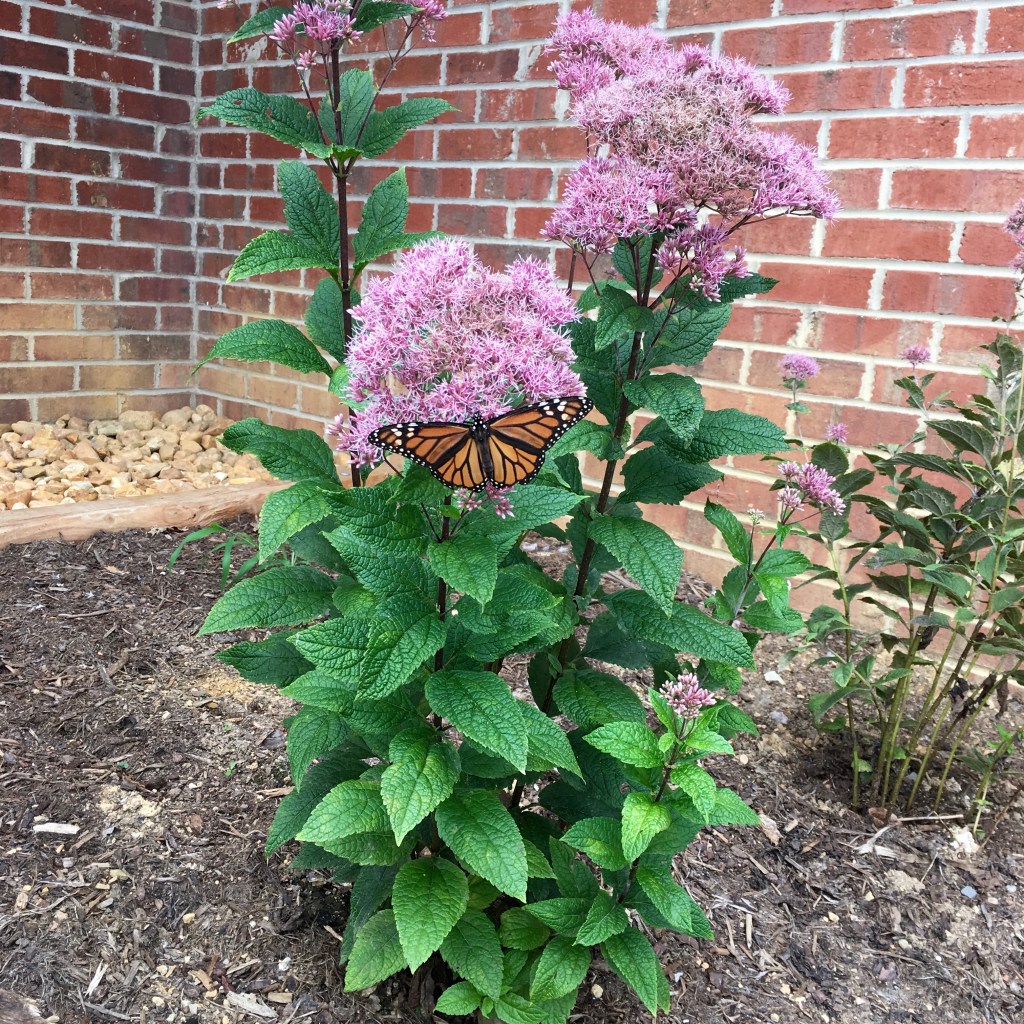
Joe Pye weed: Butterflies love to drink from Joe Pye flowers. Joe Pye weed gets really tall and floppy unless you get the dwarf varieties.
Monarch on Joe Pye weedWe planted some other things that weren’t as awesome as we expected:
Parsley: parsley is a host plant for swallowtails, but the swallowtail caterpillars definitely opted for the rue over the parsley, at least this year. I didn’t find any caterpillars on the parsley, and found at least a dozen on the rue.
I guess the parsley is the only one :-). We have lots of other nectar flowers — brown-eyed Susans, Mexican blanket flowers, some other stuff I can’t remember the names of — but the ones I listed above were definitely the most successful.
If you can identify any of the caterpillars in the catalog, please let me know! I think most of them are probably moths, but I don’t have a good ID book.














 Butterfly Mind