Usually, swallowtail caterpillars spend all summer munching the rue in the garden, along with any dill or parsley I’ve planted. This year, I’ve checked the rue nearly every day since May. Until yesterday, I didn’t find a single one of these fat little stripey guys.
This has been a strange insect year for us. No swallowtail caterpillars. Tons of wasps. A yellow jacket nest under the stairs. Mosquitos in the house. At least we had the monarch caterpillars and chrysalises, and the butterflies and bumblebees have been a constant.
I’ve got the garden in a better place than it was a couple of weeks ago. I just remembered I need to water all the plants I planted last weekend. I hope I haven’t already failed them, less than a week in. Cool weather makes me forget the watering step.
And thank god it’s finally cool. The weather has been spectacular the past few days. With the garden in a tamer state, but still filled with plenty of seeds and shelter for the critters, I can enjoy the cool air, changing colors, and dying back, and know that our one little swallowtail caterpillar will have a safe place to overwinter in its chrysalis.
We have all the windows open, and the world outside is cool and wet. We’ll get a lot of rain tonight. I’m glad — it’ll water in my mums. I’m wearing a flannel shirt, jeans, and socks, and I considered pulling on my slippers. We’re not quite to slipper season yet, though. We’ve got freshly stacked firewood for when that day comes, and judging by the current weather and the flowers in bloom in the garden, that day may be soon.
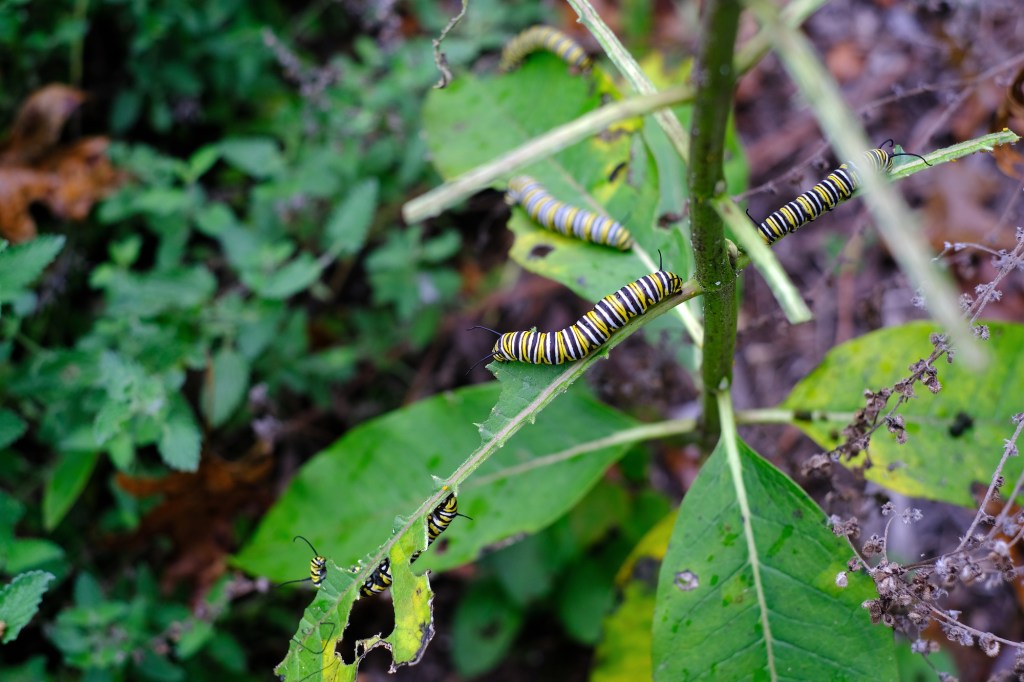
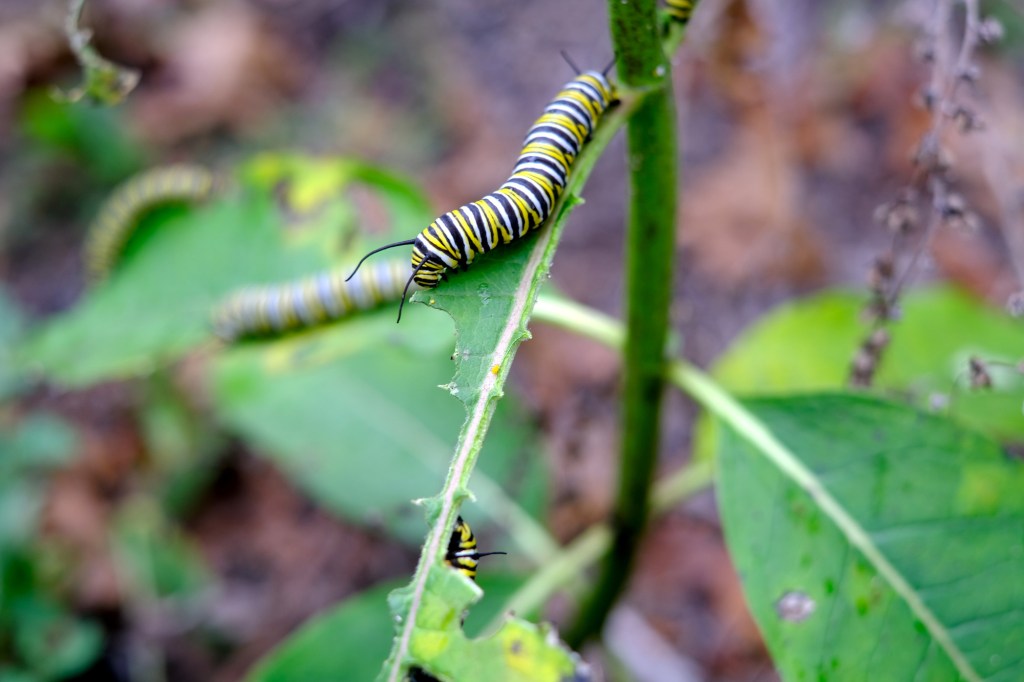
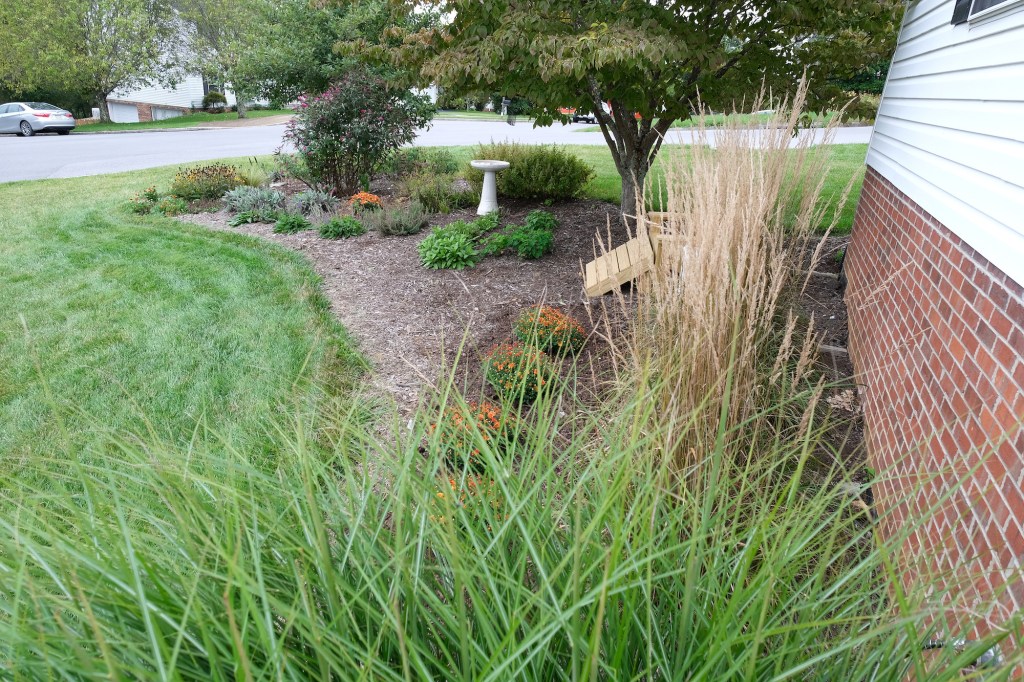
I took my camera for a walk around the flower beds this morning before the rain began. We are in full on caterpillar season. I need to cut back some of the dead stuff but I don’t have the energy for that right now. So let’s just pretend it’s not there.
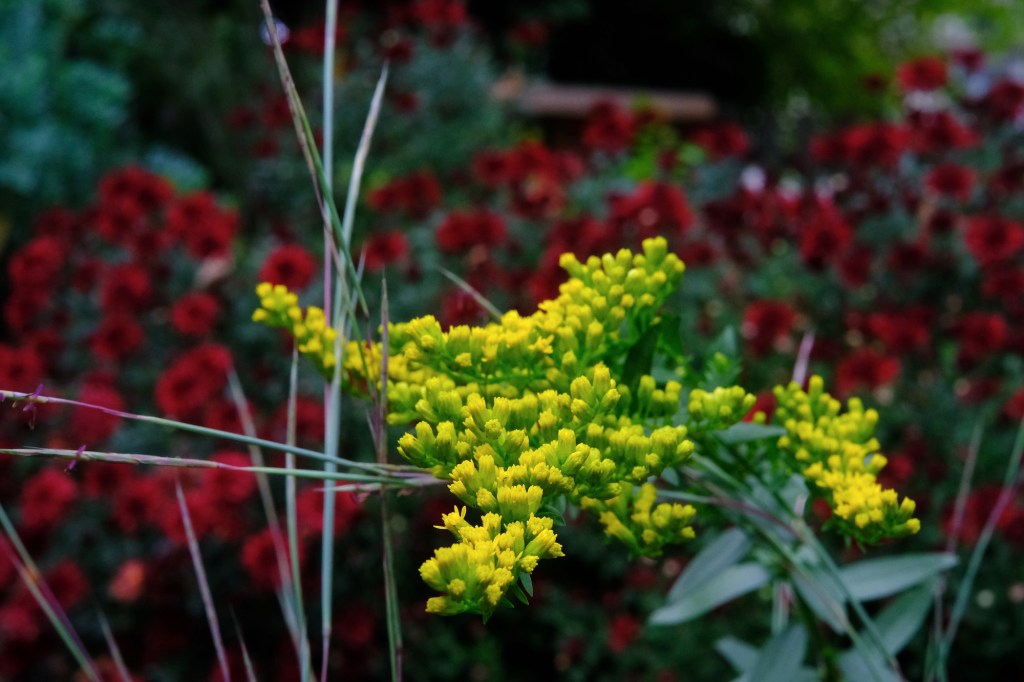
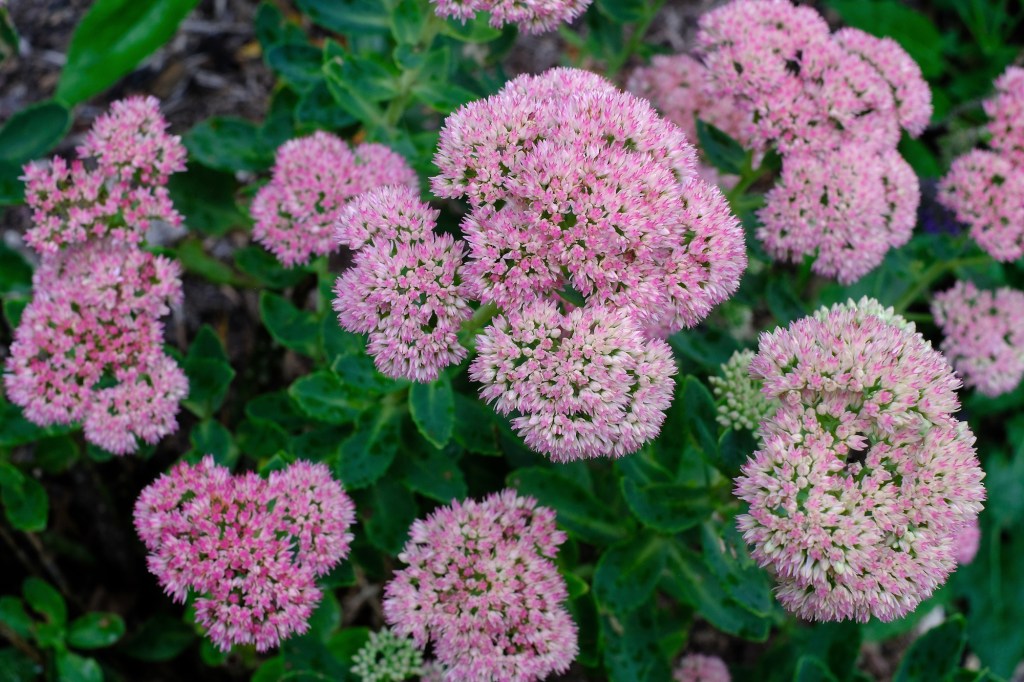
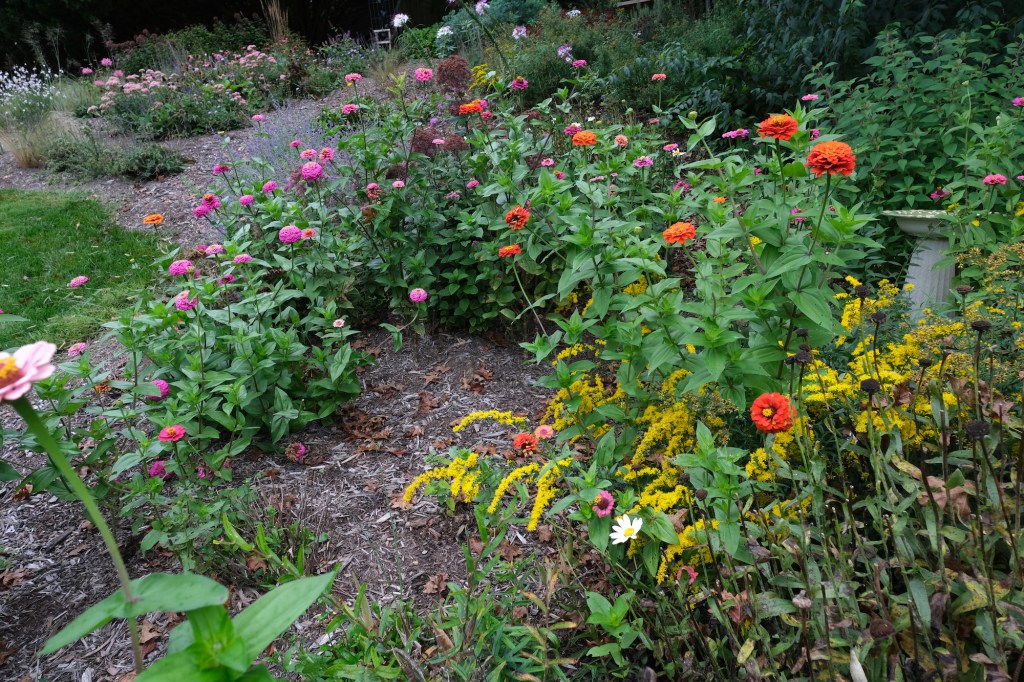
Goldenrod and mumsLantana and goldenrodMonarch caterpillar on nepetaAutumn joy sedumSwallowtail caterpillar on ruePink cleomeFront bedsZinnias taking overMonarch caterpillars out back, grasses and mums out front
I stepped onto the back porch with my coffee this morning to enjoy the cool air. The past two days, the sun blazed hot, and the muted gray morning was a welcome reprieve from the heat.
As it usually does, looking out over the garden led to walking down the stairs to be in the garden. We’re in the time of year now where everything green is bursting forth. Early summer flowers are starting to bloom, bunnies nibble on tender shoots, ornamental grasses are coming in, slender and graceful, and even though it’s not even June yet, I saw my first caterpillar of the season this morning. Things are starting to get good in the garden.
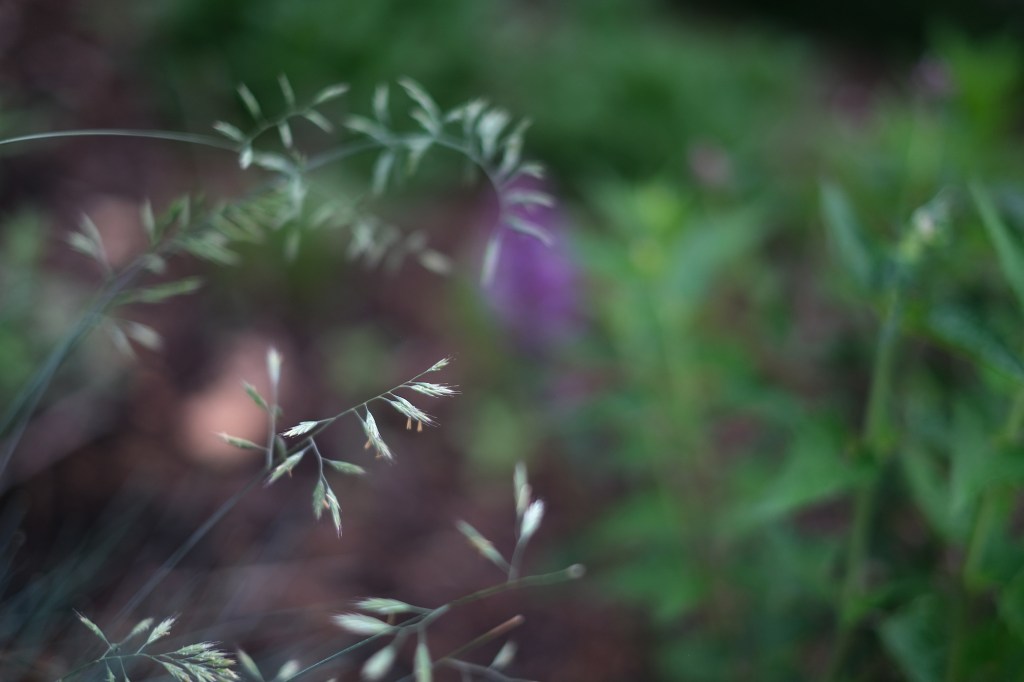
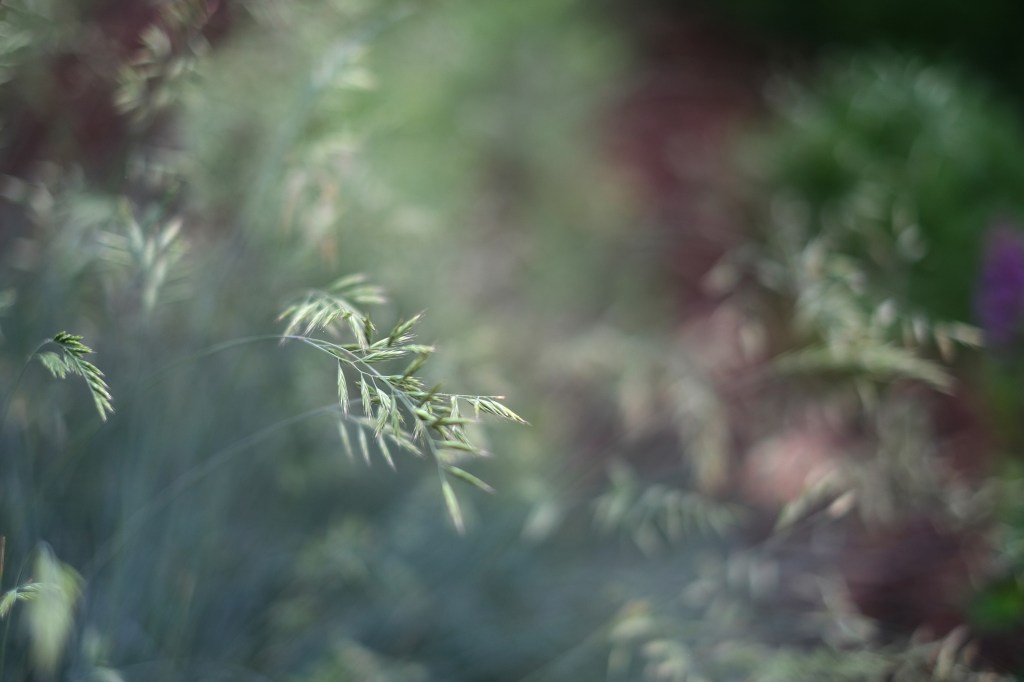
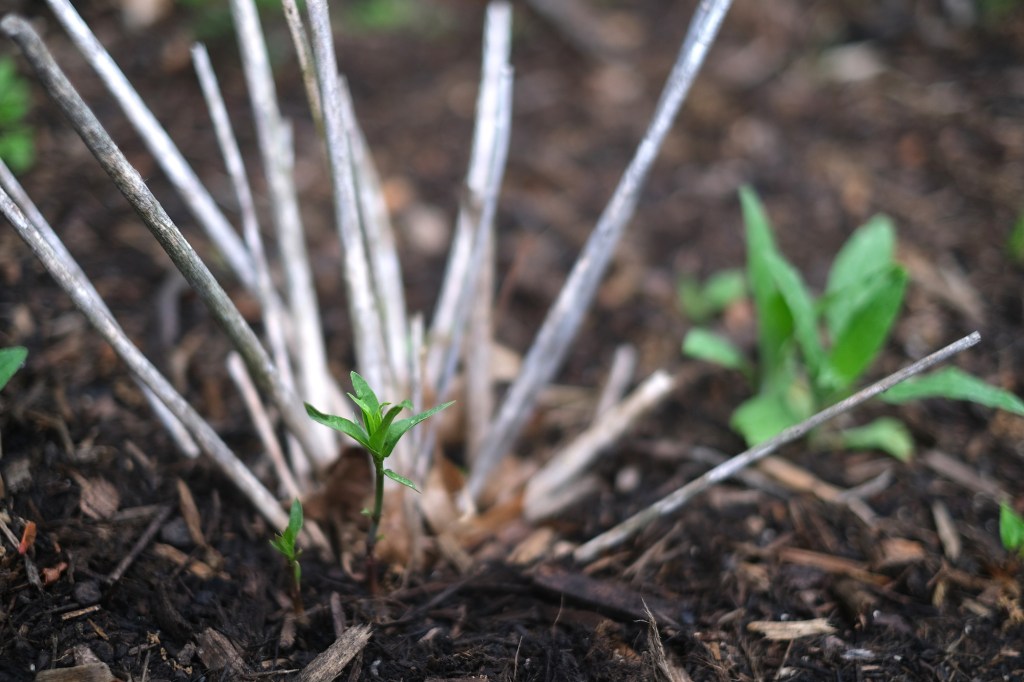
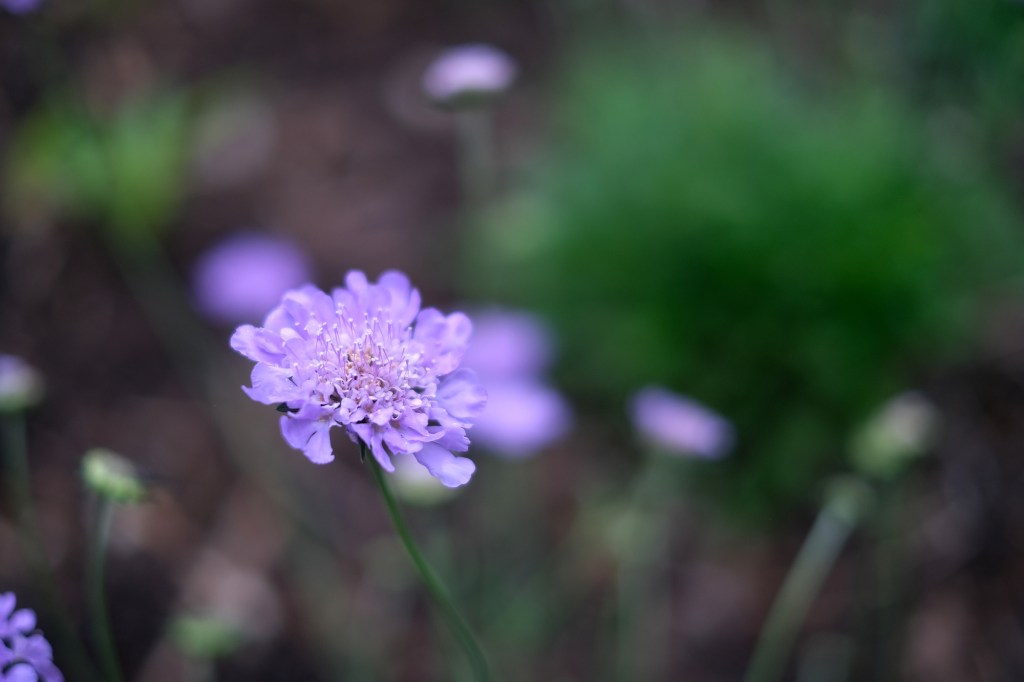
Hello bunny!Blue fescue grass in bloomFirst caterpillar of the season: swallowtail caterpillar on rueBlue fescue in bloomMilkweed 1 returningMilkweed 2 returningMilkweed 3 returningI’ve been waiting for the swamp milkweeds to re-emerge; only 3 of 5 came backScabiosa flowerJethro Tull coreopsis flowerYarrow and salvias in bloom
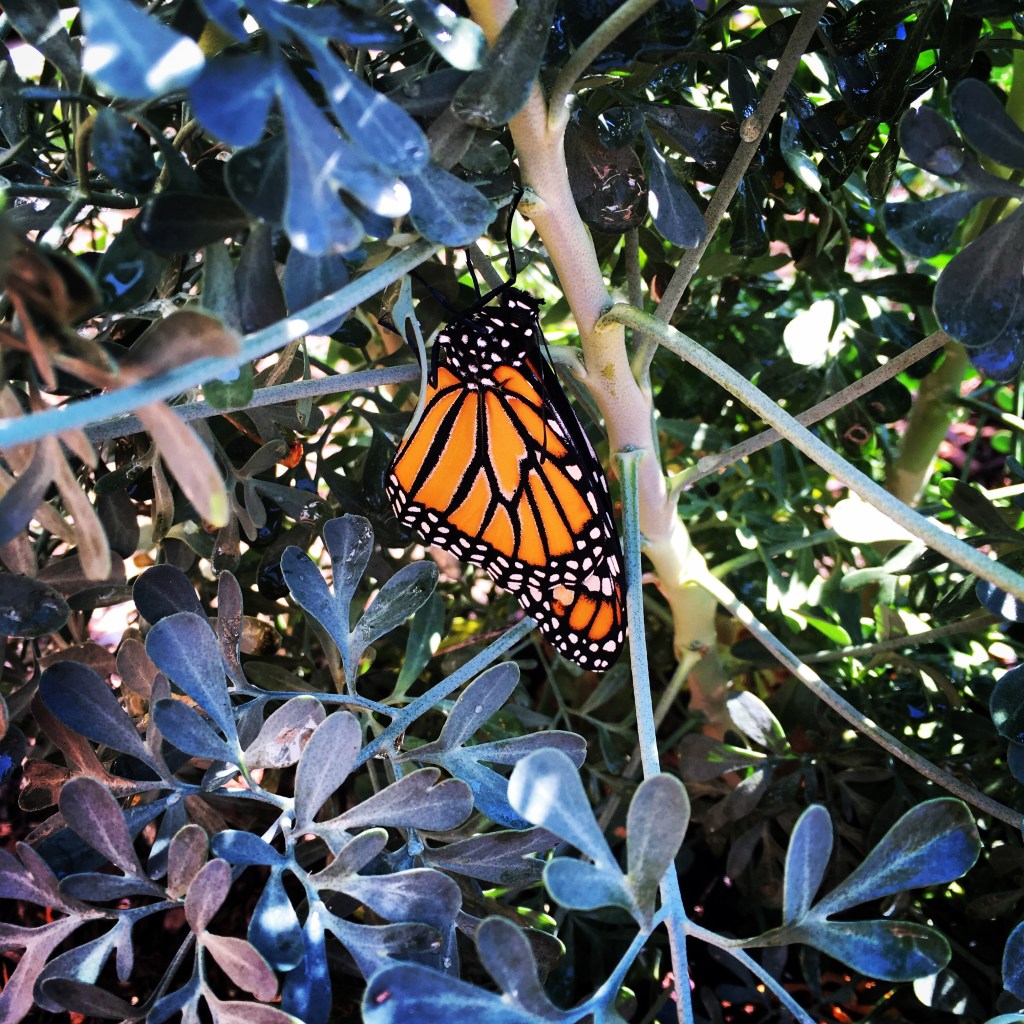
When I returned home after a weeklong trip to Whistler, I was giddy to walk around the garden and find not one monarch butterfly emerging from its chrysalis, but two.
Newly emerged monarch on rueAfter finding those, I of course crawled around in the mulch and dirt to inspect the undersides of leaves. I found three more monarch chrysalises plus a bunch of fat swallowtail caterpillars who will soon be crawling off to metamorphasize as well.
This is SO EXCITING Y’ALL. Here’s a full caterpillar catalog of what I’ve found so far:
Some friends at work are also interested in butterfly gardening, and are looking for host plant ideas. Since we work for a company that makes, ahem, blogging software, my friend naturally asked “Did you do a blog post on what all you planted?” Nudge nudge.
Shockingly, I have not. So here it is! Kris and Liz, this is for you.
The plants
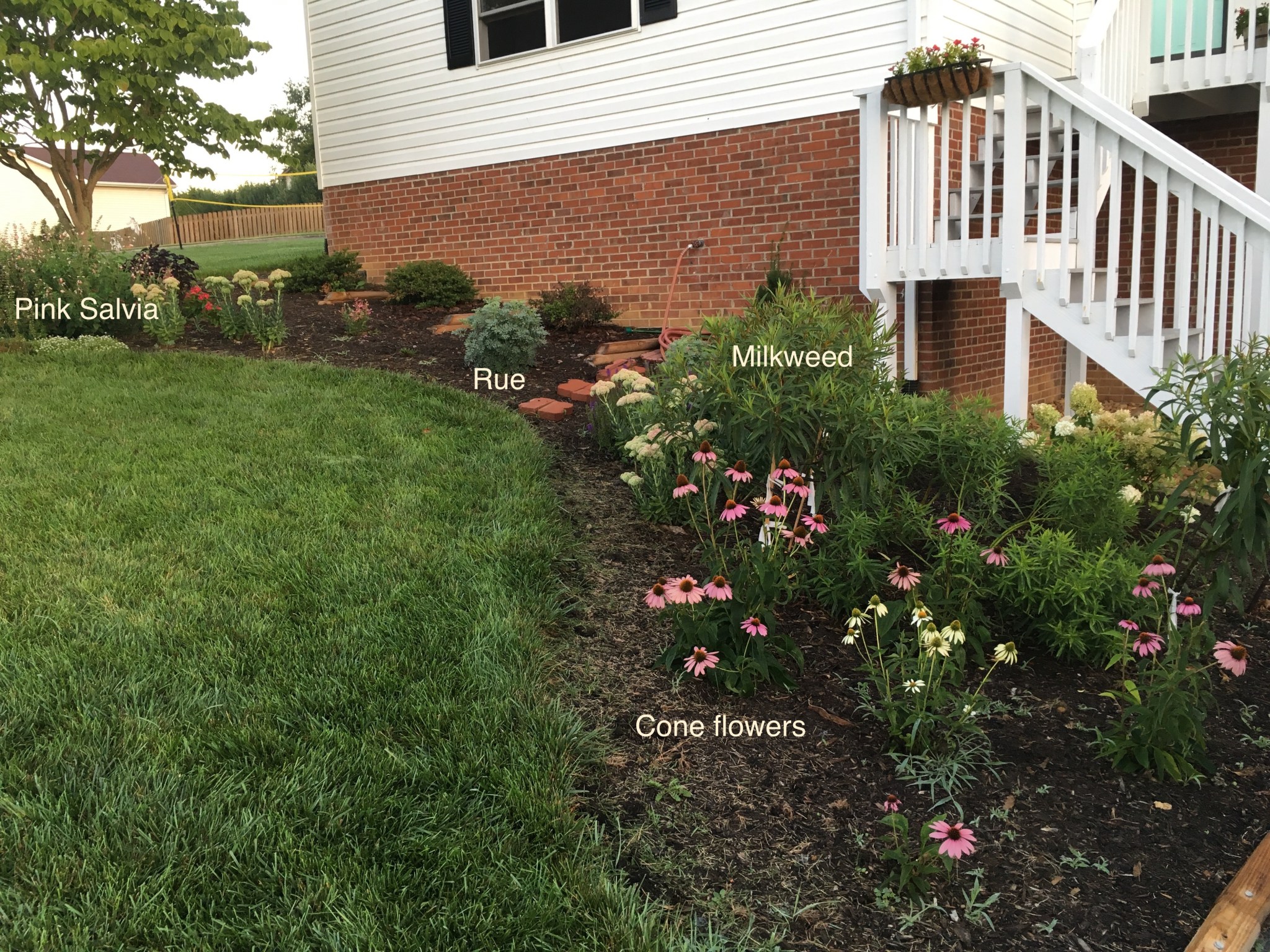
For Mother’s Day, our son gave me Christopher Kline’s book, Butterfly Gardening with Native Plants: How to Attract and Identify Butterflies. Combined with a bunch of online research, experimentation with a butterfly garden in Florida, and talking to bunches of people who garden for butterflies and caterpillars, this book helped me plan a garden that includes both host plants (that caterpillars eat) and nectar plants (that adult butterflies drink from). The most successful plants in our garden are the following:
Host plants
Milkweed (Asclepias): We planted both common milkweed and swamp milkweed. These are by far the most insect-loved plants in the garden. They are constantly covered in various species, including aphids, beetles, and, late in the summer, monarch caterpillars. Milkweed is both a nectar plant and a host plant. We’ve seen adult giant swallowtails and monarchs drinking from its flowers, and have found at least a dozen monarch caterpillars on it. Word of warning: milkweed will get covered in aphids. The caterpillars will still come even when every surface is crawling with aphids, so we kept our milkweed intact even though it’s not very attractive once it has stopped flowering and it’s coated in tiny orange insects.
Rue (Ruta graveolens): This is possibly my favorite addition to the garden. The leaves are a silvery blue-green, the plant stays neat and tidy (it doesn’t get leggy or messy), it can take the heat (and drought) and still look healthy, and the swallowtail caterpillars adore it. As an unexpected bonus, the monarch caterpillars love it for building chrysalises. We’ve found at least 3 chrysalises in the small, shin-high plants.
Butterfly host and nectar plants
Nectar plants
Milkweed: all the butterflies big and small love milkweed.
Indigo salvia: Aside from the milkweed, these purple flower spikes are the most popular in the garden for butterflies to drink from. Bees also love these flowers.
Pink salvia: Okay, maybe these are tied with the indigo salvia for nectar popularity, at least for hummingbirds. I see hummingbirds drinking from these almost every time I sit in the garden.
Bee balm (Monarda): Butterflies and hummingbirds love this as well. Hummingbirds dart between the pink salvia and the bee balm.
Thai basil: I’ve seen some small butterflies and moths (and caterpillars) on these flowers.
Butterfly host and nectar plantsCone flowers: Butterflies always visit these.
Joe Pye weed: Butterflies love to drink from Joe Pye flowers. Joe Pye weed gets really tall and floppy unless you get the dwarf varieties.
Monarch on Joe Pye weedWe planted some other things that weren’t as awesome as we expected:
Parsley: parsley is a host plant for swallowtails, but the swallowtail caterpillars definitely opted for the rue over the parsley, at least this year. I didn’t find any caterpillars on the parsley, and found at least a dozen on the rue.
I guess the parsley is the only one :-). We have lots of other nectar flowers — brown-eyed Susans, Mexican blanket flowers, some other stuff I can’t remember the names of — but the ones I listed above were definitely the most successful.
If you can identify any of the caterpillars in the catalog, please let me know! I think most of them are probably moths, but I don’t have a good ID book.














 Butterfly Mind