Temperatures have stayed below freezing for multiple weeks. Most nights last week were in the single digits, with highs in the teens when the sun was up. My husband texted during the week, do you want to hike the Cascades Saturday morning? I want to see it after all this cold.
When we pulled up to the trailhead at 10 am, the thermometer still below freezing but at least in the 20s instead of the teens, the parking lot was full of cars. Everyone in town wants to see the frozen Cascades.
It snowed and sleeted here a couple of weeks ago, and plenty of people have hiked to the falls since. The trail was slippery and treacherous as a result. The snow was packed tight from all the footsteps, and we had to use hands, feet, and butts to make our way without breaking any bones or falling into the frigid stream. On several short descents, we got down to the ground and used the path like a slide. About a hundred times, I thought, I wish I had a hiking stick. That, and hand warmers.
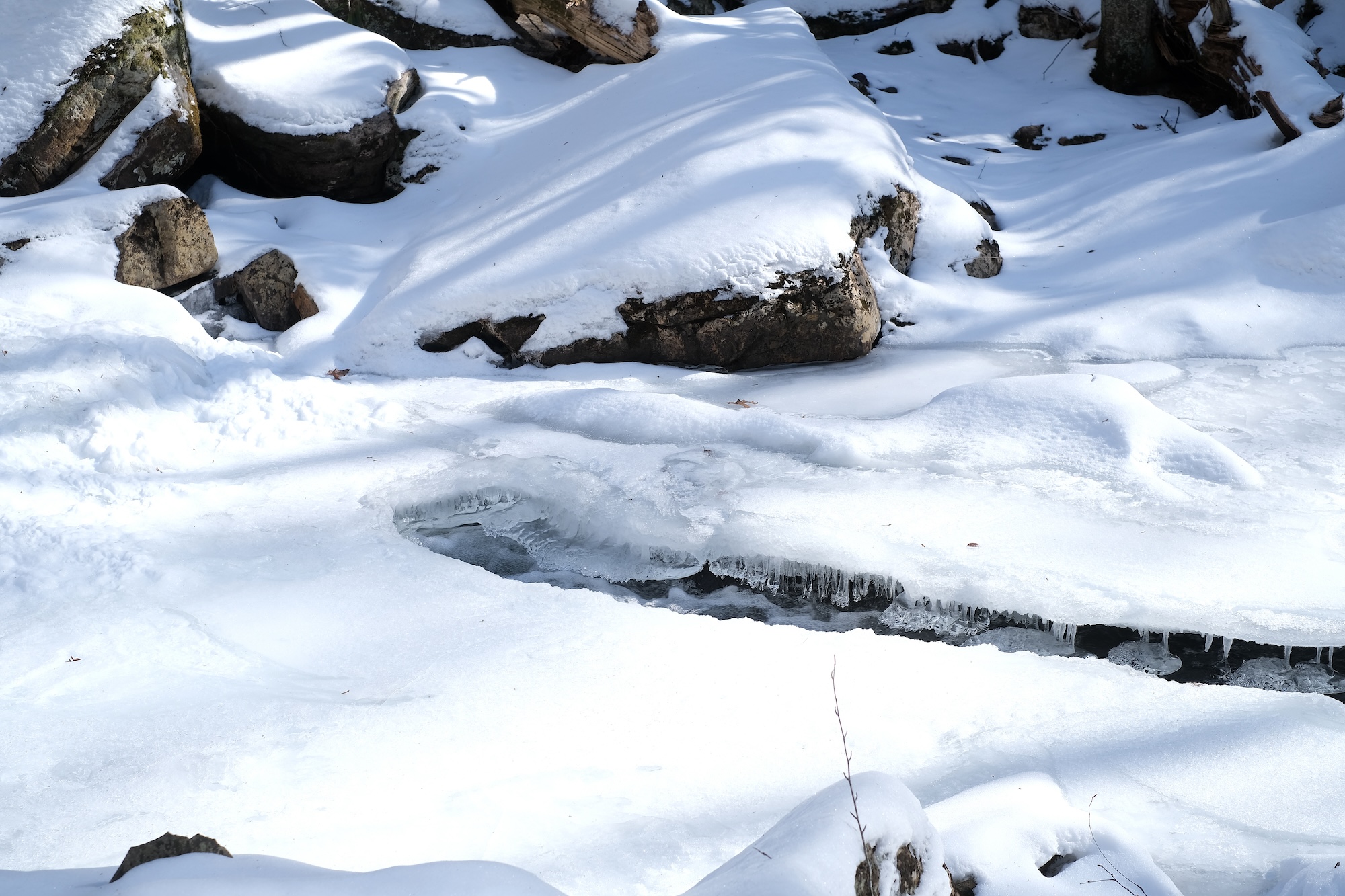
But oh my God, was it worth it. I really struggle photographing snow, and I could barely manage my camera because my hands were ice cubes, so my photos don’t do it justice. And of course, pictures don’t capture the hollow percussive sound of the stream glooping against the crust of ice above it, or the glitter of sunlight on the snow when the trail broke out of the shadows. They don’t capture the sounds of the college kids’ laughter as they slid on sneakered feet and bowled icicles on the frozen pool at the base of the waterfall, or the smell of cold forest air along an icy mountain stream. But they do capture some of the pretty shapes created by shadows, water, ice, and snow.
Stream from above on a trail bridgeSo smooth!The first hint of sunlightStream under iceI love this rock and its shadowCool blueIce palaceOn the waterfall pool
Fall has arrived, and I am happy. We went south to North Carolina yesterday; the leaves are almost done here in Blacksburg, and we hadn’t gone for a single hike yet. We didn’t want to miss our chance to soak up the warm glow of a jewel toned forest.
We arrived at noon, which is much later than we typically hike, and the parking lot at Hanging Rock State Park was full. Cars circled at a crawl, rolling down windows to ask anyone on foot and near a parked car, “Are you leaving?” We joined the circling line, eventually found a spot, then got in another line to use the bathroom before heading to the trails.
Once we were in the forest, leaves crunched underfoot. My chest swelled with contentment as I listened to them scrape and scuttle. In a sunny spot near the lake, the air bloomed with the aroma of warm pine straw. I inhaled deeply to take in the scent. Here, the trail felt soft with the fallen needles of evergreens, now golden brown.
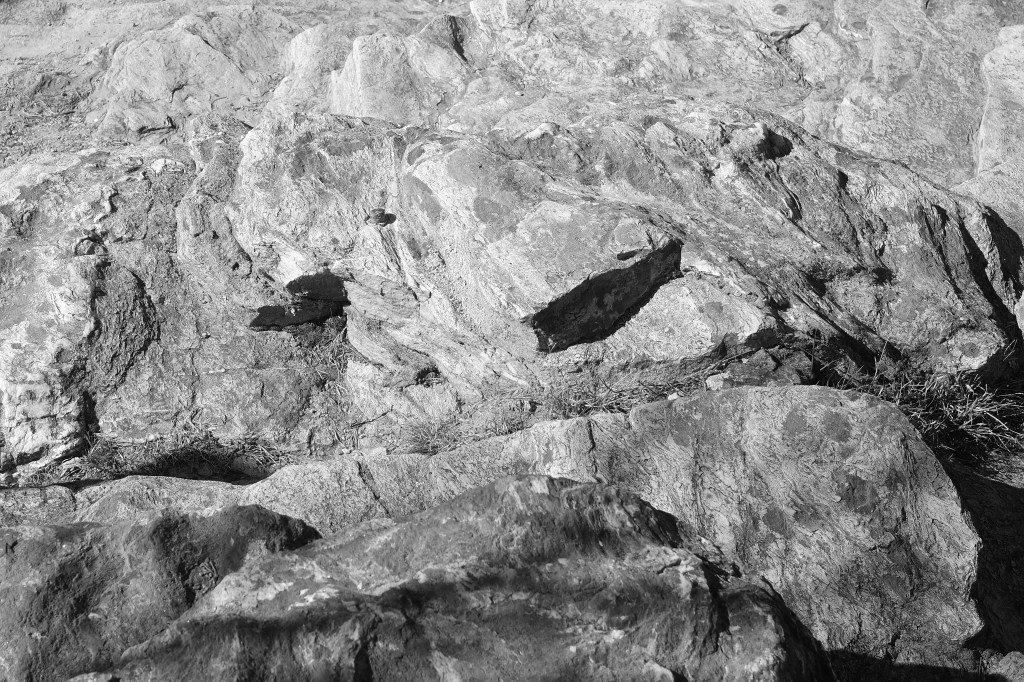
The light was strong and contrasty, and I wasn’t confident I’d be able to get any good photographs. It occurred to me that maybe black and white would work well in these conditions, so I had fun breaking out of my regular habits to try to look for light rather than color. Instead of looking for red maple leaves or golden beeches, I found myself examining stone instead, and how pretty it looked in the light.
The stone looked pretty in color, too, especially covered in lichen, coppery leaves, and golden November sun, or set against the colorful autumn treetops beneath it.
On our way down from one of the peaks, two outdoorsy college-aged women with braids down their backs passed us on their way up. They looked happy and healthy, one with her knee taped from athletic strain. In their wake, I smelled coconut, like summer at the beach. Like our daughter’s favorite sunscreen. My heart swelled again as I thought of her away in college in Florida, having fun with her friends, even if their activities are swimming and river-tubing instead of hiking.
The trails were more crowded than we’re used to — we forgot it’d be crowded midday, we’re so used to hiking right after the sun comes up and nobody is around — but I liked to see so many people out enjoying nature. I think I’ll go for another walk now while the sky is blue and a few remaining trees gleam ruby.
Unlike the praline catastrophe, where I was able to save the candy, my attempt at a campfire blueberry crisp was a spectacular failure from which there was no recovery. Two weeks and a dozen rounds of soaking, scraping, and scrubbing later, there is still blackened blueberry cemented to the bottom of our cast iron Dutch oven.
After years of camping together, my husband and I are sick of the same old outdoor meals we always make – mac n cheese, chili, hot dogs, s’mores – so on our most recent trip, we thought we’d branch out and try to cook a new dessert, not on a stick, over the campfire. Most of our cookware at home is cast iron, which is ideal for campfire cooking, so I went crazy online researching Dutch oven recipes, looking at pictures of coals piled on cast iron lids, and generally feeling excited and adventuresome. In my zeal, I neglected to dig deep and learn, step by step, how to cook over an open fire with a Dutch oven. It wasn’t until we started our campfire that I began to realize all of the things I didn’t know.
Mistake #1: Underprepare for firebuilding
Our trouble began at the beginning, with the campfire itself. Dutch oven cooking assumes you can build a decent campfire. We don’t generally build campfires that need time to mature, as we usually just need enough heat to toast a marshmallow or brown a hot dog on a stick, so we didn’t take the fire seriously. In other words, I forgot to pack any fat lighter. My husband spent at least an hour with his face in smoke, blowing on tiny twigs, dried leaves, and other campsite kindling trying to build a fire up.
Mistake #2: Use expensive ingredients on your first attempt
Since it was going to be our first time cooking with coals, I thought I’d be smart and minimize our variables. Rather than trying a new recipe and a new method of cooking, I went with at least one known quantity – our son’s favorite blueberry crisp. We picked fresh blueberries the week before our trip, so as soon as we got them home, I measured out five cups of fresh blueberries (5 cups!) for the crisp and poured them into a gallon freezer bag with sugar and flour so that all I’d have to do was pour them into the Dutch oven at the campsite. Our daughter and I prepared the crumble topping ahead of time as well, and at camp, I sprinkled the brown sugar and oat mixture over the blueberries.
Pre-prepped ingredients for campfire blueberry crisp
Assembled blueberry crisp in cast iron Dutch oven for campfire dessert
Mistake #3: Neglect to research how to work with coals
As my husband worked with getting the fire to catch, I fretted over the gaps in my knowledge. I had never worked with charcoal briquettes on a campfire, and my husband is the one who works the charcoal grill at home. I wondered, assuming we ever get the fire going, how long do we need to let it burn before we put briquettes on? Where in the fire do I put them to heat them? If they actually catch and burn, where do we then put the oven – in the fire, next to the fire, on the grill grate? Do we set it directly on hot coals, or prop it on rocks since it doesn’t have feet? I had no answers to these questions, and no cell service to look them up.
Mistake #4: Underestimate the strength of your fire
By the time we finally got the fire going, it was late, and we didn’t feel like waiting for it to burn forever to build embers. When we decided to start coals for the crisp, we had little faith in our fire’s heat or its staying power. We reluctantly separated the wood pieces, assumed we were killing our hard-earned heat, and threw a bunch of charcoal briquettes on the small pile of embers.
Pile of charcoal briquettes on campfire
Mistake #5: Neglect to measure your Dutch oven
Before our trip, I emailed my uncle Joe, who has been cooking over a campfire with a Dutch oven for a long time now. I asked for general advice and any recipe recommendations, and his take-to-camp advice was this:
The most important thing is to put coals on top & bottom while cooking. Not knowing the size of your oven, here’s a guide from the World Championship book:
Dutch Oven size # Coals on top # Coals on bottom
8″ 6-8 4-6
10″ 8-10 6-8
12″ 10-12 8-10
14″ 12-16 10-12
16″ 16-18 12-16
I assumed our oven was a 12″ and went with those numbers, for a total of 22 coals, plus a couple extras, just in case.
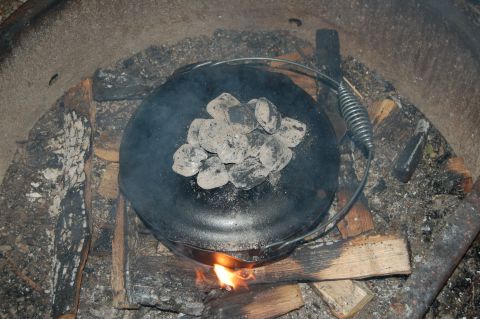
Dutch oven with campfire coals
(A week later, as I researched this post, I still am not sure what size our oven is – the base is 8″ in diameter, the top is 12″, and the lid has “10” stamped in it, which indicates a 10″ diameter. I’m thinking its a 10″ which means we used more than 5 extra briquettes. At 25 degrees per briquette, an interesting factoid which I also learned after burning the crisp, that means we added more than 125 degrees. Oops.)
Mistake #6: Disregard advice on number of coals to use
I followed Uncle Joe’s advice on placing the correct number of coals on top of the Dutch oven (for a 12″oven, which ours may or may not be), but since we did not have faith in our fire’s power, and I was not sure where exactly to put the oven, we blew off the 8-10 coals on bottom rule and just set the oven directly on the remains of the fire – charcoal briquettes (plus the extras), campfire embers, and all.
Mistake #7: Do not check progress
I am told that if you know your oven’s size and are using the correct number of coals, you can effectively create a 350 degree oven using your Dutch oven and charcoal briquettes. If you are doing it correctly, your recipe should cook for the same amount of time it would at 350 degrees at home. I know our crisp usually takes 30 – 35 minutes, so once we situated the oven and coals, I checked the time on the car clock, sat down at the picnic table, and waited. Since our fire seemed young and wimpy (see mistake #4), we feared lifting the lid and letting all the heat escape. Plus it seemed like such a pain to remove all those coals on top, especially since I had also forgotten tongs and we were using two wooden spoons to move hot coals around.
We really should have taken our chances and checked the crisp’s progress.
Because we underestimated our fire’s heat, overestimated our oven’s size (resulting in too many briquettes), and disregarded the instructions to place a certain number of coals under the oven, when we finally pulled the oven off the coals after 35 minutes and opened the lid, it looked like this:
Burned campfire blueberry crisp (note the ash on left)
I admit, I cried. Especially when I realized I hadn’t brushed off all the ash from the lid coals and I dumped a huge pile onto the crisp. Not that the crisp was edible, even before the ash, though believe me, I ate some. I downed a big smoky bowlful, even after everyone else took one bite and then asked for S’mores.
Which, thank God, I had the makings for.
Up next: Campfire pizza! Stay tuned for awesomeness…
I always get creeped out the first night of camping. After weeks of living inside walls, shielded from the outside world, and then traveling at high speed in a humming metal box to get to our campsite, I lie down in our tent after kissing the kids goodnight and smile at the shhh of wind in the trees.
But then, as distant soughing builds like a wave – sshhHHH – and treetops carry wind towards us til it sounds like the roar of a flash flood against the narrow walls of a canyon, then? I freak out. I am reminded of the wildness of nature, and that a nylon sheath is scant protection from out there. Our shelter, one of the basic necessities to sustain life, is barely a membrane. It does not insulate me from the sounds, scents, and temperatures on the other side of it, and with every snapped twig, with every gust of wild mountain air, I am reminded that we are outside. It is powerful out there, and we are small and squishy. My heart thumps hard in my chest. In our tent, we are without thick, protective walls that keep us safe from the elements, that help us pretend nature isn’t there.
—–
I always smile the first morning of camping. Soft dawn light shines through the thin membrane that separates us from out there, and it is beautiful. My sleeping bag rustles as I turn onto my back and pull snarls of hair out of my mouth. I watch a daddy longlegs crawl on the screen roof of our tent and reminisce about my brother and I letting those crawl on our hands when we camped as kids. We were amazed that they looked like spiders but didn’t bite. Inside, above my head on the ceiling, a crane fly rubs its back legs together. It looks like a giant mosquito, with spindly legs two inches long, and I wonder how many people mistake them for “mosquitoes so big they’ll carry you away.”
The scent of old campfires clings to the walls of our tent. I breathe it in like I breathe in the salt marsh when I go home to Tybee, deeply, and with pleasure. I close my eyes, my hands behind my head, and savor the sounds of morning. Green leaves sigh in a gentle breeze, and small birds twitter. My husband motivates before I do, and I hear the beloved sound of a tent zipper as he steps out into the morning. Crisp mountain air wafts into the tent before he zips the door closed. He clinks pots on the picnic table. I hear the tinny stream of water into a metal pan, then the hiss of the camp stove. He unscrews the lid of a Ball jar and scoops coffee into my French press for me.
The crane fly rubs its legs. The daddy longlegs explores. My heart beats softly in a peace without refrigerator hums, without electric lights, without dishes and dusters and the complexities of walled life. I listen to the world wake up in the soft light of morning, and I am glad to be out there, outside the protective walls that let us pretend that nature isn’t there.







 Butterfly Mind