
Clouds are my favorite thing about Florida. They are the part I miss most after living there, and the part I love most when we visit. I thought I’d share some with you here. Enjoy.
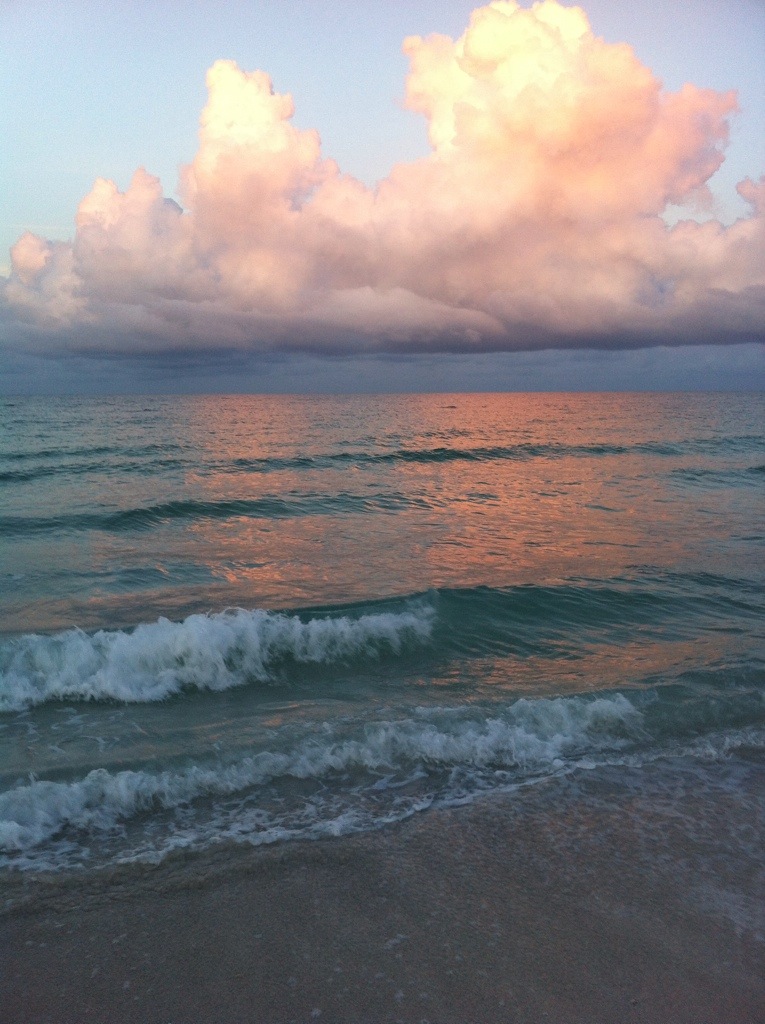


Clouds are my favorite thing about Florida. They are the part I miss most after living there, and the part I love most when we visit. I thought I’d share some with you here. Enjoy.
Wet socks
Wet toes
Tangled hair
Muddy shoes
Bad coffee
Drizzle
Rain
Gritty eyes
Happy son.
First of all, let me just say that teachers are saints. If you have a child, or even if you don’t, I’d like you to please take a moment to silently applaud the teachers who are taking care of our nation’s children: teaching them history, encouraging manners, spending entire days with rooms full of children who aren’t their own, smiling, clapping, telling our kids they are awesome, dispensing hugs and band aids, and cleaning up barf on charter busses to Jamestown. Every time I am around our children’s teachers, I am in awe of what they do, and I am deeply grateful for them.
This past Monday and Tuesday I chaperoned our son’s fourth grade spring field trip to Jamestown, Colonial Williamsburg, and Yorktown, Virginia. Our son has been excited about this trip since the first week of school when they found out they’d be going. Fourth grade Virginia curriculum includes Virginia history, and in our school and many others, that means a field trip to the places where the United States as we know it began. Our son raised money selling Virginia Diner peanuts, and after many long months of preparing and waiting (and a five-hour bus ride in the rain) we donned ponchos and foul weather gear and stepped out into the drizzle.


The thing I love most about my job as Mom is doing things like this. Even though I bitch and complain about having to be around all these kids, and how loud it’s going to be, how it’s going to be like herding cats, how we have to be vigilant about keeping the kids away from the river, and constantly counting heads, and looking for the ever-shifting red hood, blue poncho (distinguishable from the other blue ponchos only by the pink soles of the shoes that peek out from the bottom), clear poncho with a blue hoodie underneath, and green raincoat – even though I complain about all of this, the thing is, the kids are actually awesome, and I secretly love every second of it.


I love volunteering in the classroom, I love chaperoning, I love watching our children in their non-home habitats because I learn so much about them when I’m present but not in charge, when I’m standing quietly on the sidelines. In sports I get to see how motivated our kids are, how they interact as a team player, whether they respect and respond to their coaches, how they react to winning or losing. In the classroom I get to observe while our children’s attention is focused on something else; I get to observe the other kids in their class – who are the attentive kids, the class clowns, the sweet ones, the troublemakers?; I get to experience the teacher’s style; I get to see when my son laughs, which lessons engage him, which kids he gravitates towards. I get to see what his days are like so that when I ask him at the end of a school day, “How was your day?” and he says, “Fine,” I am able to accept his introversion with grace because I will have an idea of his experience, will be able to picture his classroom, will know something of his day beyond the one-word answer he gives me.
On field trips I get to experience what they experience, I get to learn what they learn, and most fun of all, I get to witness their unfettered joy at being out in the real world, learning real stuff – stuff that they learned from books and in the classroom but that is so much more exciting when you experience it in real life. In Jamestown I got to see our son’s interest in the Powhatan canoe, the way he scanned it from stern to bow with his eyes, held his hand over the still-warm coals reenactors used to burn a hollow in the tree trunk. In Colonial Williamsburg I got to gently prod him because he was lagging behind, too busy taking pictures in his awe. I got to hear him giggle at the slapstick 18th-Century Grand Medley of Entertainment – the type of theater production Thomas Jefferson might have attended – at the Kimball Theatre. I got to watch him touch the plaque that marked General George Washington’s church pew, I experienced the pride of hearing him explain the Virginia House of Burgesses – the first assembly of elected representatives in our country – to our tour guide, and to seeing him sit on a jury in the Capitol building’s courtroom.


The following day, with aching muscles from the cabin’s hard mattress, with no real coffee in my system, with puffy eyes and ratted hair, I got to experience with our son the feel of the Yorktown encampment on a cold, wet, muddy, raw day. I could not imagine being a soldier there, wet and dripping and sleeping on the mucky ground, and I think the day gave the kids a tiny feel of what it might have been like for our Revolutionary War ancestors. Despite the cold and wet, the kids loved the musket demonstration, where the reenactor explained the difference between the match-lit musket of Jamestown and the flintlock musket of Yorktown, and where she showed them how to load and fire the weapon. They gagged and squealed “GROSS!” when our guide demonstrated the surgeon’s tools on volunteer musket-maimed kids, and they grinned as they squeezed into tiny solider tents.


The kids were pretty worn out by the time we stopped at the battlefield, the real Yorktown battlefield, and stood where George Washington stood, on the same ground that General Washington paced and strategized and gave orders from, but their exhaustion did not stop them from shouting out answers when their teacher stood atop a bench with a semi-circle of cannons around her and asked, “What happened here?!”
“The Siege at Yorktown!”
“Who won?”
“We did!”
“Who surrendered?”
“General Cornwallis!”
“Where is Surrender Hill?”
“Redoubts 9 and 10!”
“Well let’s go look at them!”
And she jumped down from the bench and all the kids ran for the hills. We oohed and aahed and paused to take in the panorama, and then the kids were running again, towards the busses and their potato chips, their DSes and their pillows, as we, the parents, dragged our tired feet from the battlefield. We basked in memories from the trip on the long, dry drive home, where our work was done and where our little ones munched candy and worked quietly on their trip journals, watched videos and giggled, and slept the beautiful sleep of children.

Portraiture is possibly my favorite form of photography. Faces show character in every laugh line, every weathered wrinkle, in tan lines left by always-worn sunglasses, in the trickle of sweat through trail dust. In the scraggly beards of men who have walked the woods for weeks.
On our drive through Catawba valley, my husband said, “It’s getting close to peak thru-hiker season.” We were headed to Sawtooth Ridge, a portion of the Appalachian Trail between McAfee Knob and Dragon’s Tooth, near our home in Blacksburg, Virginia.
“It is?” I asked, my wheels turning. I had just checked my email and seen a photography challenge regarding culture, and I thought, oooh, maybe I can cover AT culture. Shoot portraits of rugged hikers.
“Yeah, if they left Springer Mountain [Georgia] on March 1, they’d start getting here near the end of April and in May.”
A local friend of ours said she gives away her chocolate snacks when she encounters thru-hikers on the trail. I thought of when my husband was thru-hiking, back when we were boyfriend and girlfriend, and how he would put an entire stick of butter in his ramen noodles at night. “I wish I would have brought more food,” I said.
In the McAfee Knob parking lot, I fingered my camera as large groups of day-hikers clustered around car trunks and tailgates, stuffing water bottles in daypacks, eating pre-hike sandwiches from Subway, mixing formula in bottles for the baby a dad would carry on his back. I wasn’t brave enough to ask to take their pictures. On the trail, I told myself. I’ll ask hikers on the trail.
We headed south while the crowds headed north towards McAfee Knob. For twenty minutes, we saw no-one. No day hikers. No thru-hikers. The only evidence of humans we found, besides the trail, was a “Home Sweet Home” sign nailed above a squirrel hole. “Kids! Look at this!” I crouched down and snapped shots.

“Do you think a squirrel made that?” Our son asked.
“Or maybe fairies?” said our daughter.
I wondered about whoever had made this miniature sign, who had brought a screwdriver onto the trail to attach it to this little spot. A local day hiker? A Virginia Tech student? Whoever it was, they made me smile with this little surprise in the woods.
We rounded a bend and met a young man and his dog headed north on the trail. The man carried a full pack, with a pair of dusty gray Crocs tied on the side. His hands were red and raw as he gave his dog a treat for sitting obediently as our kids approached.
“Hey, how’s it going?” we said.
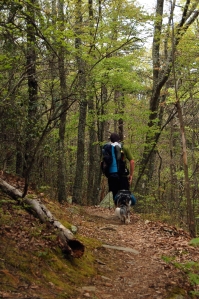
“Good, good. I just picked this guy up in Pearisburg,” and he pointed at his dog. “I’m trying to train him.” The black and white mottled dog carried his own saddlebag pack and was calm and sweet as he sniffed my hand. His nose was speckled pink and black. The man gave him another treat.
“Well, y’all have a good day!” And he continued north as we continued south. I’m not sure if he was hiking from Georgia to Maine, or if he was just out for a weekend backpacking trip. I did not ask his story, and I did not take his picture, except from the back.
The next hikers we encountered were obviously thru-hikers. My husband and kids and I sat on fallen trees in a clearing, munching trail mix and baby carrots, when two women powered through the glade. They carried full packs, wore quick-dry nylon hiking pants in olive green and pewter grey, and their strides were long and purposeful. I wondered where they were from, when they had started, how many miles they were doing that day. Had they mailed boxes to themselves, filled with fresh food supplies, and cash, and lightweight spring clothing? Were they in a hurry to get to a post office and bury their faces in fresh tee-shirts? Clean socks? They said a quick “Hello,” which we returned, and then they were gone. I did not photograph them, or ask them their story. “The next one,” I told myself. “I’ll talk to the next one.”
On our way back to the car, we passed a scruffy young man smoking a cigarette on a slab of rock by the side of the trail. He sat atop a bulging backpack, stuffed full like a giant army-green sausage. He was backpacking, not day hiking. Carrying cigarettes and wearing New Balance sneakers, he didn’t fit the profile for a thru-hiker, but he could have been. I’m sure he had a story. He was lounging, I could have easily asked for his portrait. But he wore headphones, and I didn’t want to intrude, so I hiked by with a nod and a smile.
By the time we arrived at our car, where five dusty, bearded, twenty-something men lay draped over their backpacks, or sat on them as chairs, or propped their backs against them in the white gravel parking lot, I knew that I would not talk to these hikers either, nor photograph their faces. I am fascinated by journalists – by their grit, by their ability to shove in and get the story, by their speed in turning stories out – but I realized on the trail that that is not the stuff I’m made of.
Instead of shooting photographs of “the next one,” or of those prone hikers reclining not 20 yards from our car, I knew I’d bring their images home in my mind, and l’d write their portraits with words. I’d hole up at home, in retreat like many hikers seek, contemplating solitude, and the Appalachian Trail, and a culture that includes power-hikers, dog-rescuers, smokers, families of four, and those who would nail a tiny sign over a tiny hole, in the wilderness, for smiles they’ll never see, but that they’ll know, quietly.


(R) Repost – I am away, chaperoning the fourth grade trip to Jamestown, VA. I’ll be on a bus with, corralling, and sleeping in cabins with 60 ten-year olds for 48 straight hours, and am prohibited from drinking alcohol during that time. I know you’re jealous. Anyway, I was rummaging through my archives and saw this post from a year ago today and I thought I’d repost it to herald thru-hiking season in Virginia.

One of my favorite things about winter in the Appalachians is the juxtaposition of green against white.


Whether moss, lichen, rhododendron, or fern, there is something hopeful about green vegetation pushed up against a fresh white snow. It reminds me of the persistence of life, despite harsh conditions.


I also love winter in Appalachia for the ice. The fluidity of water is frozen in still form, in crystal sculptures that capture movement, that suspend the liquid nature of water in a solid form that we can walk around and marvel over and contemplate for hours without it moving.


Finally, I love winter in the Appalachians for the steaming shower after a January hike. The steaming shower that turns your skin pink, and the fuzzy sweatpants you put on afterwards, and the hot dinner you sit down to, famished after hiking, with your family and friends.
Sunday was a beautiful day for a hike at the Cascades in Blacksburg, Virginia: high in the upper 30s after a fresh snow the night before. The kids packed snow balls along the way, threw them into the creek, and watched the slush drift downstream, taking it’s time to melt in the frigid water. We try to hike the Cascades during every season to witness its changes. For other photo essays from the Cascades waterfall, please see Waiting for Winter and Cascades of Green in Winter.


Amongst our Southern literature, children’s books, fantasy and sci fi, essays on world religions, and art books, we have a single magazine on our shelves: the Tenth Anniversary issue of Rolling Stone magazine from December 15, 1977. My parents saved it for me through the years because they know I love Annie Leibovitz, and the issue features a fifty page spread of photographs from her first ten years shooting for Rolling Stone. My husband and I have moved the large format issue from Florida to Minnesota to Virginia – for more than seven years, it sat on our shelf – and the time never felt right to open it.
And then came Mad Men. My husband and I are binging on the show right now. (warning: spoilers below!)

We’re in season five, when Roger Sterling eats acid with Timothy Leary,
the firm tries (unsuccessfully) to sign the Rolling Stones for a campaign,

and the gap between Don Draper and the emerging generation widens as the Beatles grow in popularity, and the youth of the 1960s follow dreams of purpose and fulfillment rather than dreams of indoor plumbing. Last week, we watched an episode that had one of the most powerful uses of music I have ever experienced in a television show (besides the “final five” sequence of Battlestar Gallactica when they played “All Along the Watchtower.” Awesome.). It was a pivotal episode, in which Don was portrayed as no longer a young, hot-shot creative ad exec, but a middle aged man who was losing touch with what is going on with his wife and staff’s generation. His young wife perceived this disconnect, and so on her way to acting lessons, to fulfill her dreams of becoming an actress, she left him with the Beatles Revolver album to help bring him up to speed. He placed it on the turntable, put needle to vinyl, and our living room filled with the entrancing final song of Revolver, “Tomorrow Never Knows.”
The montage was potent as it proceeded through a series of scenes of the younger generation in Don’s life as they followed their bliss – Peggy and Stan smoked weed while they worked, Pete watched a lover slip away, and Megan meditated in her acting class – until Don, disinterested, scratched the needle off the record, our den went silent, and Don walked out of the room to go to bed. To me, It was one of the most brilliant sequences of the show to date, and as listening to (good) music from that era often does, it made me ache with nostalgia for a time I never knew.
The following morning, after I dug through our CDs to find the Revolver album, I saw the Rolling Stone issue on our shelf, and the time finally felt right to look at it. Before I even got to the Annie Leibovitz spread, I was struck by the letters to the editor. Especially the one from angry parents who wrote, “My 14 year old boy subscribes to your magazine, Rolling Stone. On the front cover and inside the magazine were nude pictures of that Lennon man (?) and his ugly girlfriend.”


I got a chuckle out of that one, but there were also letters from John and Yoko, Timothy Leary, George Bush, Joseph Heller (author of Catch-22), Dan Rather, Woody Allen, and Joan Didion. What blew my mind was not just that they had written letters to a magazine (does that still happen – celebrities writing letters to the editors of rock and roll magazines?), but that they were current at the time the magazine I held in my hand was printed. They were current when “that Lennon man” was alive, and George Bush was director of the CIA, and Joan Didion was pioneering New Journalism, or what we now call creative nonfiction. This physical magazine I pulled off our shelf after watching Mad Men, this printed material, the yellowed pages of which I turned as I sat on the carpet of our finished basement in 2013, it was there in 1977. It was exposed to 1977 air, printed with 1977 ink on 1977 paper, when Jimmy Carter was president, and I was three years old.
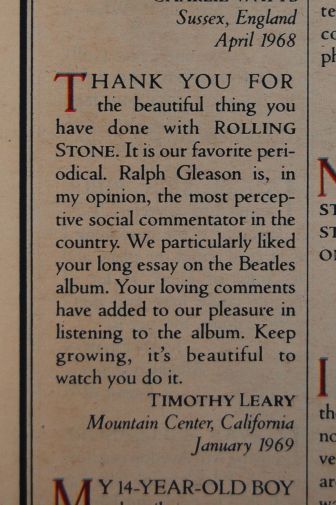
What struck me most about the issue, aside from the fact that I was holding a piece of history, was that Rolling Stone was once young. Timothy Leary wrote to the nascent magazine in 1969, “Thank you for the beautiful thing you have done with Rolling Stone… Keep growing, it’s beautiful to watch you do it.” I’ve never known a time when Rolling Stone didn’t exist, and here, this issue of RS on its tenth birthday, was proof that it was once a child. That it was just a baby during the period portrayed by Mad Men. When I read Timothy Leary’s words of encouragement to the young magazine, it hit me that Rolling Stone, at one time, was an emerging journal, like the ones I might submit my writing to today.
I leafed through the Leibovitz spread, with shots we’ve seen a million times of Jerry Garcia lying on his back on a beach; Keith Richards passed out; OJ Simpson in his Buffalo Bills uniform; Salvador Dali ear to ear with Alice Cooper; Mick Jagger and Keith Richards, shirtless and stoned; Brian Wilson in a blue bathrobe, his surfboard under his arm. I thought, this all really happened, and these photos were fresh when this magazine came out.


I loved reading commentary from Annie herself about “playing” with her subjects in order to get shots, like when she bought Linda Ronstadt $60 red underwear for a shoot and was scared about how Ronstadt might react, or when she shared her experiences of a subject, like that “Brian [Wilson] seems to be on acid all the time.” You don’t see those notes when one of her iconic photos is used in a nostalgia piece on Jerry Garcia, or you find her portrait of Dali and Alice Cooper on a poster in a head shop.
But my favorite part of the magazine, and not just because we’re watching Mad Men, was the advertising.


There are a couple of cigarette ads (including Vantage and the Marlboro man), a few car ads (Volkswagen rabbit, Toyota Celica, Le Car from Renault), liquor ads (Seagrams 7, Two Finger Tequila, Southern Comfort, and Gordons Gin, complete with 51 gin cocktail recipes), and my favorites, full page pieces for albums that were new at the time, like “‘Boston 2.’ On Epic Records and Tapes,” David Bowie’s “Heroes,” and Queen’s “News of the World,” all new releases in 1977, when this copy of Rolling Stone went to press. The remainder of the issue is full of ads for turntables, cassette players, speakers, headphones, and reel to reel recorders. Even better than the merchandise, though, are the sales pitches, like this one: “Now you can have something in common with FM stations. This Technics turntable.” Because radio stations once played vinyl records. !. I also loved Sharp Eye’s line, “It ends the hit and miss method of finding songs on tape.” Remember those days? When we listened to cassettes and there was no easy way to advance to the next song?
And that final ad, the yellow page with the checklist? We had that record cleaner. I remember when I was young, a 1980s adolescent exploring the music of the 60s and 70s, I’d squirt a drop from that tiny red bottle onto my parents’ vinyl records (Mom had every Beatles album, Dad had all the Rolling Stones) and using the discwasher with the velvety pad and the wooden grip, I’d run with the grain of the records’ grooves, wiping “microdust” with each swipe. The vinyl would shine black when I was done. I’d pluck a dust ball off the turntable’s needle, place the record on the spindle, turn it up loud with the big silver knob, and lie back with my eyes closed, my hands behind my head, to listen to Pink Floyd, or Queen, or any one of the surprises contained inside those mysterious album covers.
On Mad Men, there’s scorn towards the advertising world from the counterculture who consider themselves enlightened, and superior, and anti-establishment. They look down their noses on consumerism and the shallow jingles that ad agencies churn out, favoring the high culture of theater or beat poetry. But I have to say, as I leafed through this Rolling Stone, the ads are what gave me a real glimpse into 1977. Unlike iconic photographs by Annie Leibovitz, or fiction by Hunter S. Thompson, advertising is fleeting. The ads were the details that showed what daily life was like for regular people – what they wore, how they combed their hair, what they were buying that year (discwashers!). Because they are ephemeral (and, we like to think, culturally unimportant), we forget about advertisements as they update to the newest product, the latest campaign. But more than anything else about the issue, when I saw those reel to reel recorders, and all those record players, it was the ads – those snapshots in time – that brought back memories. They are what dated the magazine. It was not only the letters from John and Yoko, or the timeless photographs of ’60s and ’70s rock and roll icons, but also the ads, penned by Mad Men era creative teams, with shallow one-liners and feathered hair, that revealed the culture of 1977.
The town was “between mountains so steep and irrational, they must have blocked most of the sun most of the day.” – Dennis Covington, Salvation on Sand Mountain
I know exactly the types of places Covington means. In our explorations of the Appalachians, my husband and I have been in those steep mountains that obliterate the horizon. You’re stuck down low, in a narrow crack between peaks, where you can’t see over, you can’s see around, and you feel penned in and claustrophobic. The sun seems to set at 2 in the afternoon because the horizon is so high.
The place we hiked this weekend was decidedly not like that.


The views we saw on our hike to Mt. Rogers were not from the top of the mountain, they were from all but the top of the mountain. About 7 miles of the 9 mile round trip hike, from the trailhead at Massie Gap to the summit of Mt. Rogers, the trail climbs gently through wide, open meadows, offering spectacular vistas of mountaintop grasslands, marshmallow cloudscapes, stark rock outcrops, and panoramic views of the Appalachians. I felt like we were on the western frontier, that life was full of possibility.


We originally thought the hike was going to be 11 miles round trip. Though our kids (7 and 9) had hiked Old Rag, a 9 mile hike with lots of technical bouldering, we thought 11 miles might be a little much. We bought them real hiking shoes, just in case, but I was prepared to turn back early with either or both of them so that their Dad could climb to the top of Mt. Rogers. At 5729 feet, it is the highest natural point in the state of Virginia, and I knew he wanted to see it.
When we realized the hike was only 9 miles, I got excited that maybe I’d be able to see it, too. “Hey guys, it’s actually only 9 miles, not 11,” my husband told the kids. “Do you think you’ll want to go to the top, to climb the highest mountain in Virginia?”
“I do!” our son said. Our daughter was less enthusiastic.
“There are ponies along the way…” my husband told her. “And the top is in a forest. A forest filled with Christmas trees…”
That got her. Within ten minutes, his first promise paid off. And continued to pay off. For nearly three miles, we shared the trail and the mountainsides with wild highland ponies.


We stopped so much along the way to take in the views from rocky tops, and to hang out with the ponies, that we made slow progress. The day was perfect – partly cloudy and only 73 degrees – but the sun was hot on our necks, and our son wanted forest. We were surprised when we got to a mile marker and saw we had only hiked 2 miles, so we picked up the pace to get to the top. We passed through Rhododendron gap, a tunnel of rhododendrons that had just bloomed and dropped their petals, and that provided brief shelter in cool, damp shade. Then we were out in the meadows again before turning off onto the Mt. Rogers spur trail to finish the final half mile of climbing.
We ascended in dense forest as we neared the summit, where it was dark and wet and felt like rain forest. The air chilled our skin, and every rotting log, every mound of earth, every tree trunk was covered in emerald moss and peridot ferns. Our arms brushed red spruces and Fraser firs and released the scent of Christmas trees. Our daughter sang Jingle Bells.


Nobody turned back, and before we knew it, we were at the top of Virginia. We had hiked a trail unlike any we had ever traveled – wide open to the sky, above the world, sharing the trail with wild ponies – and we all made it. All four of us, hiking companions til the end.
This is my entry for the WordPress weekly photo challenge: Companionable.
 Butterfly Mind