When I travel to cities, my favorite things to do are to walk, explore art museums, and visit independent book stores. My souvenirs are often books that have nothing to do with the place I’m in, except maybe a John Cheever novel from a shop in Greenwich Village with my mom, but that bring back fond memories of the place I bought them: Mary Oliver’s poems from Shakespeare & Company in Paris with my son, Zadie Smith’s Dead and Alive from Books Upstairs in Dublin, Little Women from E. Shaver in Savannah, Georgia with all my family. Holding the books, thinking of the books, smelling the books: these all conjure the light in the shop, the coziness of it, the sidewalk and scene outside its doors.
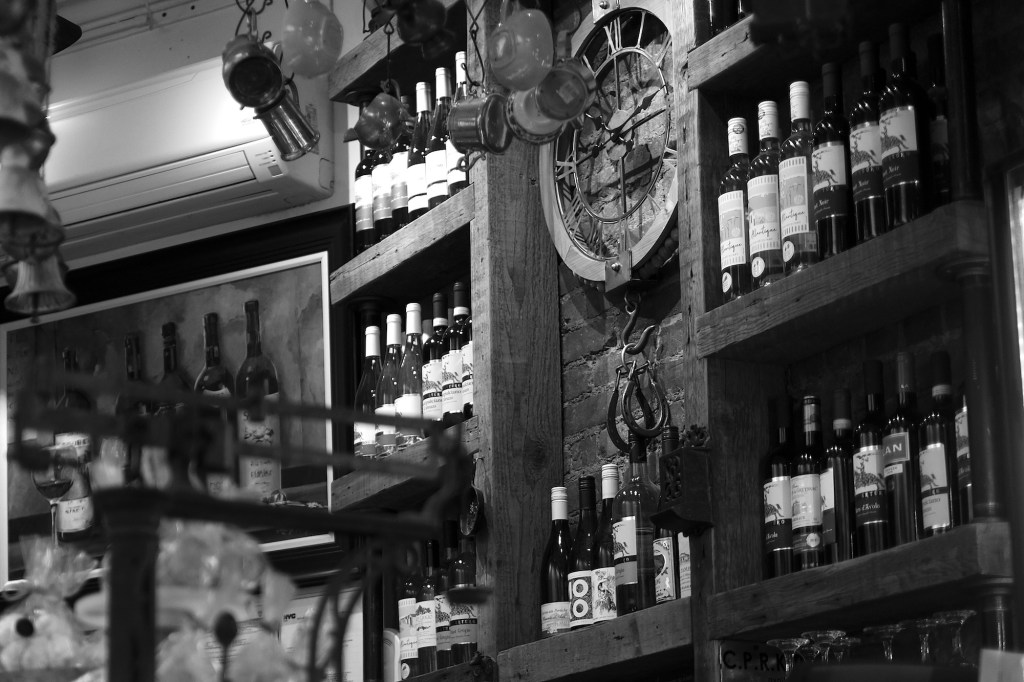
Earlier this year, my husband and I visited our daughter in Gainesville, Florida. We stayed in a downtown hotel so that we could walk to restaurants, coffee shops, Bo Diddley plaza, and past street murals and whatever else might be interesting. We found a cool art store and an even cooler book store, The Lynx.
The book store was off the beaten path on a quiet street, was wooden-floored and tall-shelved, and had a compelling staff picks section that convinced my husband to buy Virginia Woolf’s To the Lighthouse. Every time I see it on the shelf I think of the pleasure of buying it. The staff member who recommended it happened to check us out, and he told us how much of an impact the book had had on him. It was a human and personal experience.
A few weeks later, I read Florida, a book of short stories by Lauren Groff, one of my favorite authors. She wrote Fates and Furies which knocked my socks off the first time I read it. The Vaster Wilds is stunning. In one of the Florida short stories, the character walks through Bo Diddley plaza, and I thought, hang on. Is Lauren Groff in Gainesville?
Yes. She is.
My son loves to visit book stores when he travels, too. This past weekend, when my husband, son, and I traveled to Gainesville to see our daughter, we told him about The Lynx. I remembered that Groff lived in Gainesville and thought, wouldn’t that be funny if we saw her at the book store? I wonder what she looks like. In my googling for photos, I saw this sentence: She lives in Gainesville, Florida, where she and her husband own the independent bookstore The Lynx.
!
When we visited, I was delighted to see a display of the books featured on A Great Book with Barack Obama. In the final episode, Groff talks with him about Cormac McCarthy’s All the Pretty Horses, which I read specifically to hear them dig into. It’s gorgeous and a little bit devastating.
We didn’t see Lauren Groff when we visited The Lynx, but we walked off with a memorable haul. Our son bought 2666 from her staff picks, my husband bought a signed copy of Colson Whitehead’s Nickel Boys, and I bought myself a signed copy of Groff’s newest book of short stories, Brawler. It’s a rainy day today and I’m going to disappear into them.
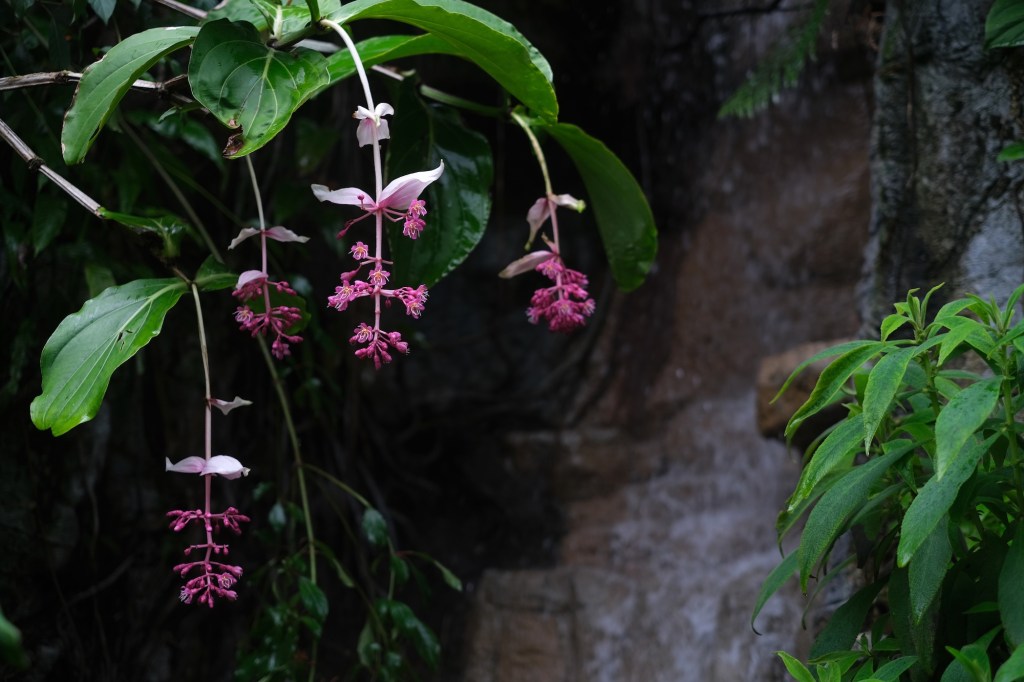
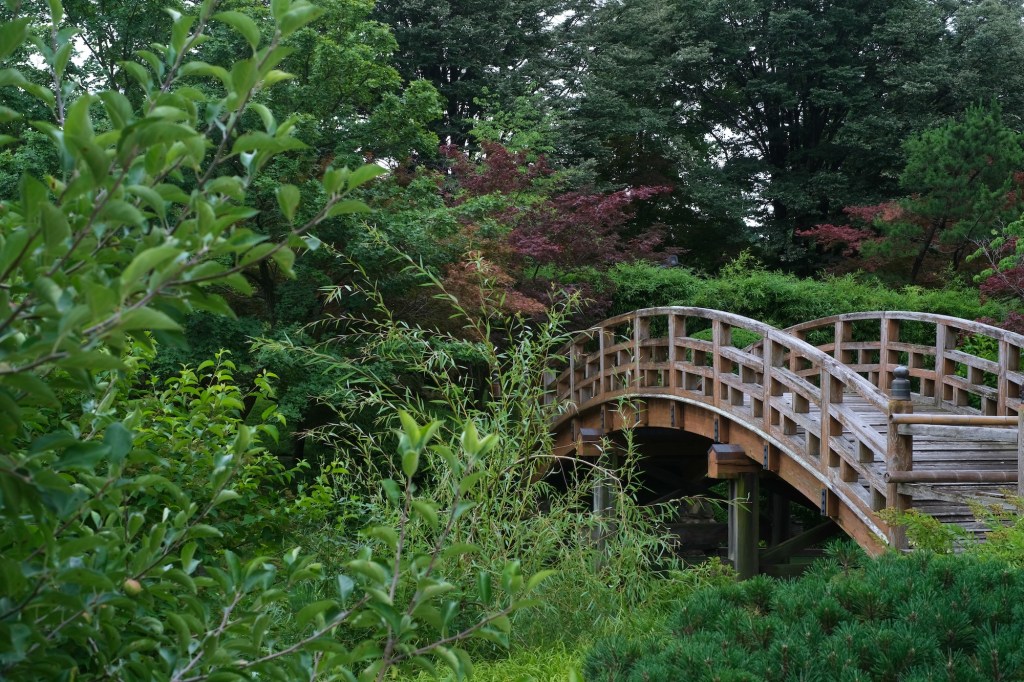
We stopped in St. Louis on our way home from a family wedding this weekend and spent an overcast afternoon at the Missouri Botanical Garden. If you are into plants and ever find yourself in St. Louis, go. Go to the botanical garden.
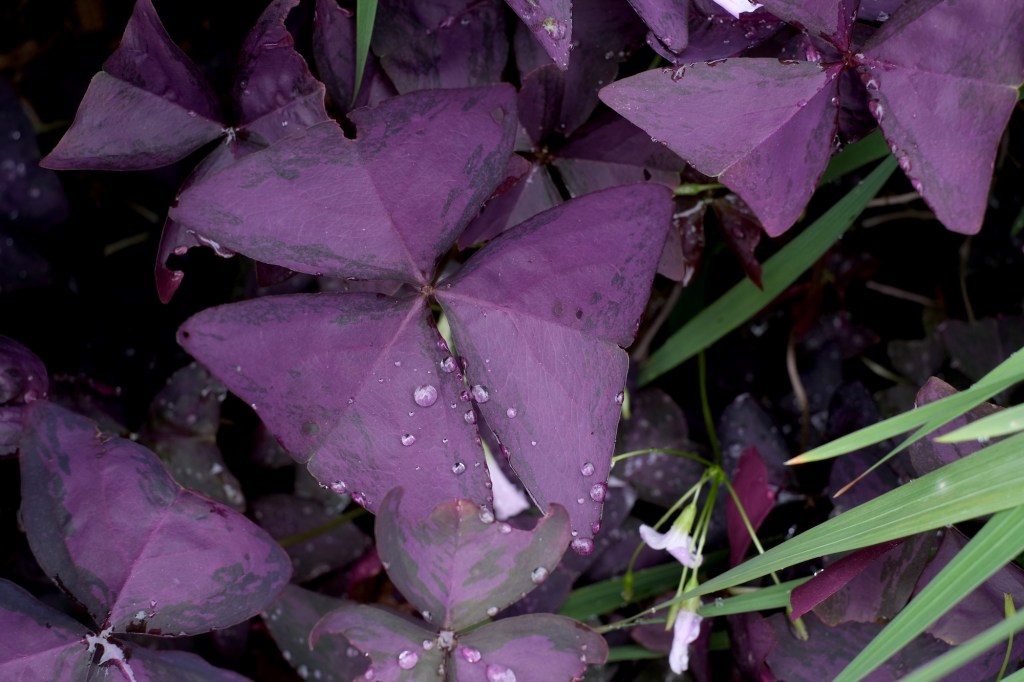
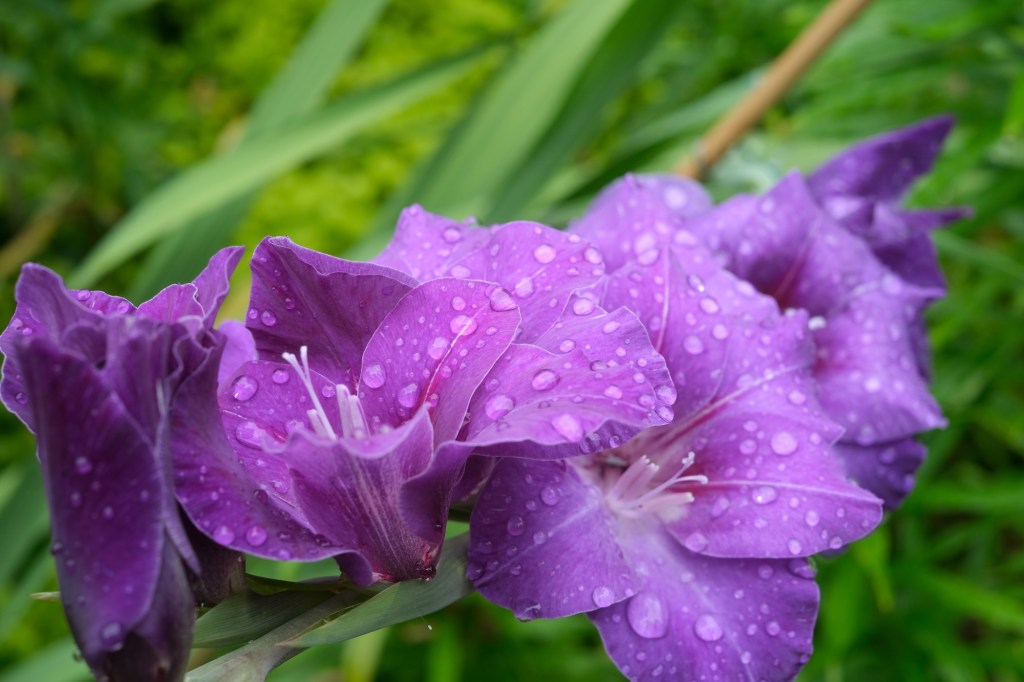
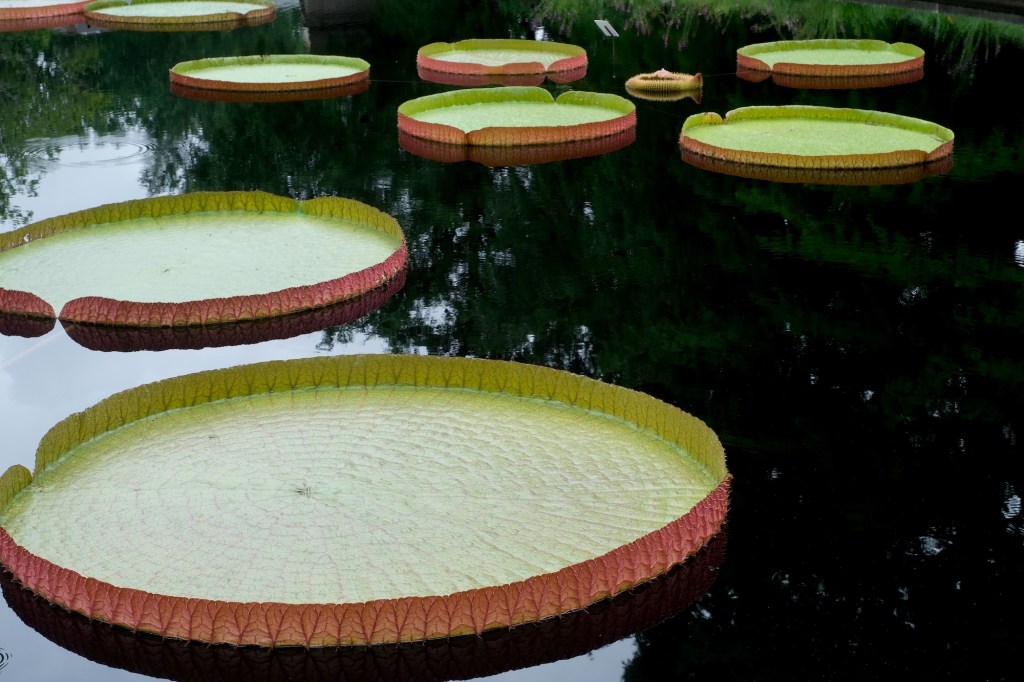
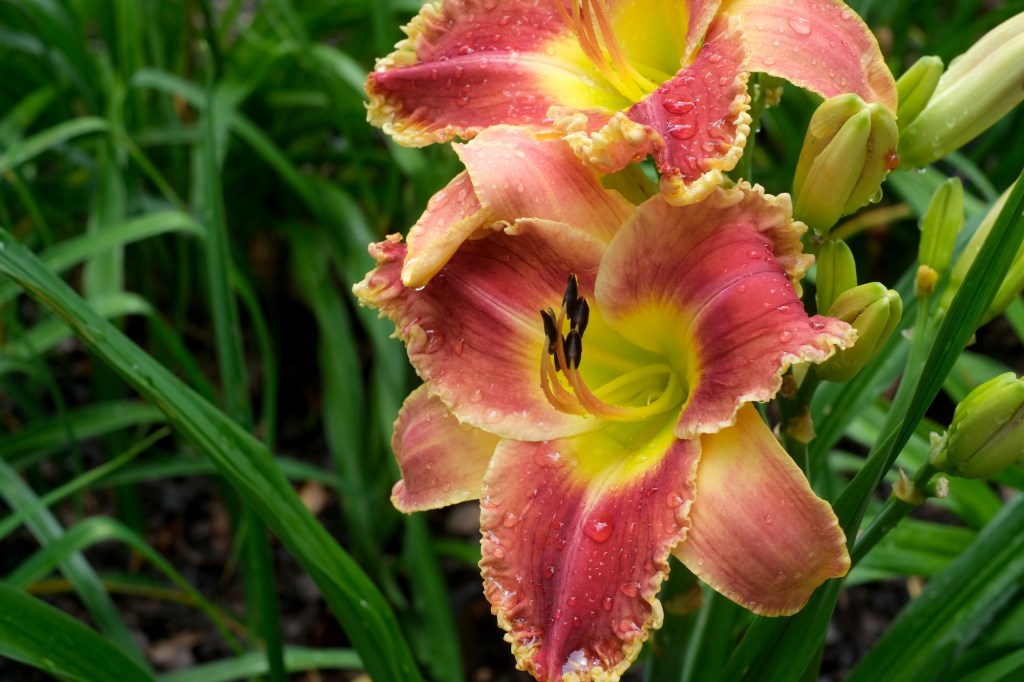
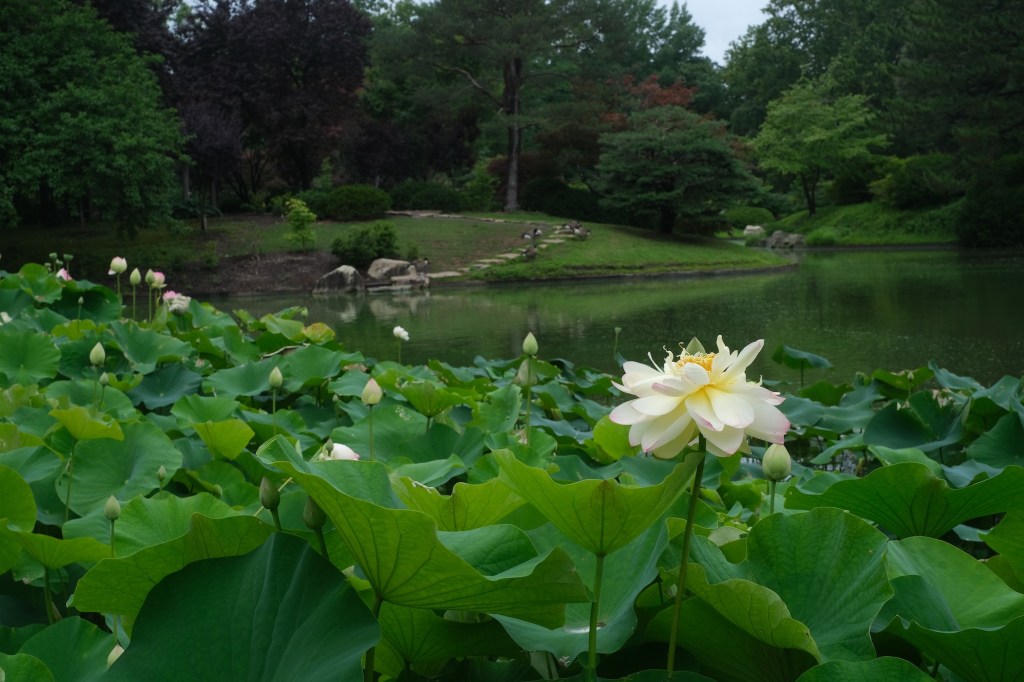
The beds burst with blooms and lush foliage. There are prairie beds, an orangery, lily pads so large you could lay down on them. There are lilies galore – large swaths of them in brilliant colors and frilly edges — and roses to bury your nose. The entire grounds are a work of art. I stopped every few steps to take photographs.
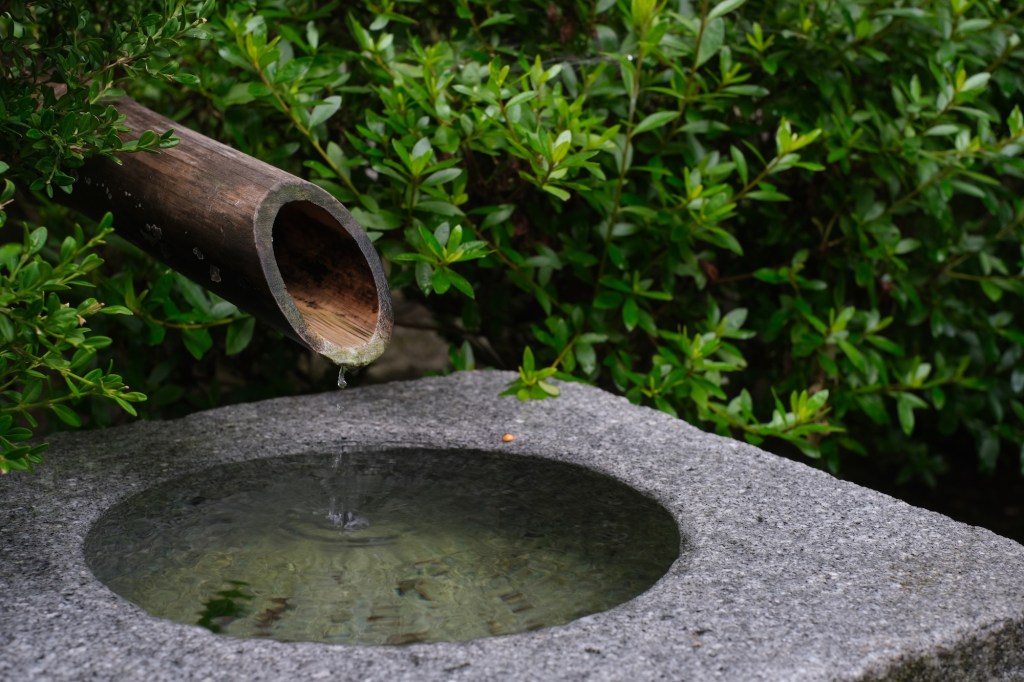
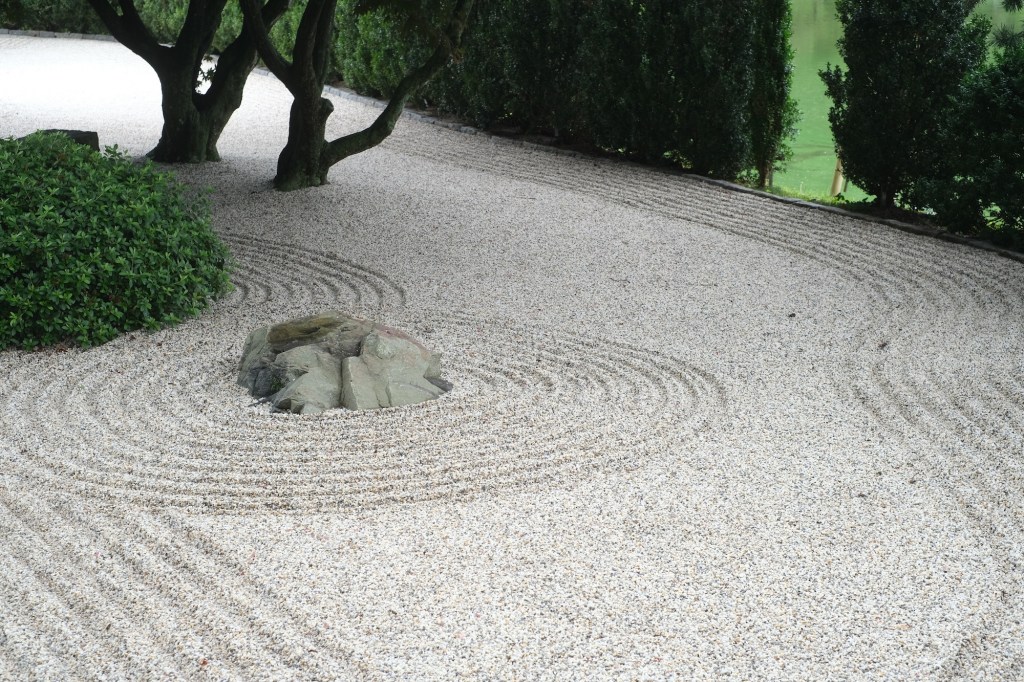
I am tempted to say the Japanese garden was my favorite. There were lotuses! And they were blooming! And the stroll around the pond was so peaceful, with the bamboo drip fountains and the raked gravel and an artful beach of smooth black stones. But then I remember the prairie beds at the entrance, filled with coneflowers, sages, and brown-eyed Susans, or I think of the bulb garden with more than 1200 varieties of bulbs: the fuschia-throated trumpets of lilies, the spires of gladiolas. Or I remember the bonkers lily pads that look like they’re from an alien planet, or the humidity-loving orchids in the orangery and the conservatory. It’s all amazing. All of it.
The first time I went to Spain was 22 years ago. It was July and sweltering, and I was pregnant with our son. We went to Barcelona with a friend who grew up there. We stayed with his Dad. We ate late-night gazpacho and fresh sardines from La Rambla on his terrace. Visiting a friend who was from Barcelona, who shared with us his favorite childhood pastries and his everyday meals and who welcomed us into his home, was one of the most magical travel experiences we’ve had.
Last week, I got to experience something similar, this time in cities I never knew I wanted to visit. My team at work traveled to Spain to meet up with a colleague who lives north of Madrid, and who couldn’t get away to travel. We had originally planned to meet up in Madrid, and he said, You should go to Segovia instead. It’s smaller and cheaper but has everything you want. Plus there’s an aqueduct! I can take you to good restaurants there. And you can come visit my city on your activity day and I’ll show you around!
So we went to Segovia. And his home town of Aranda de Duero. This time we were bundled up, and there were Christmas lights, and I drank all the Spanish wine my heart desired.
Segovia Aqueduct
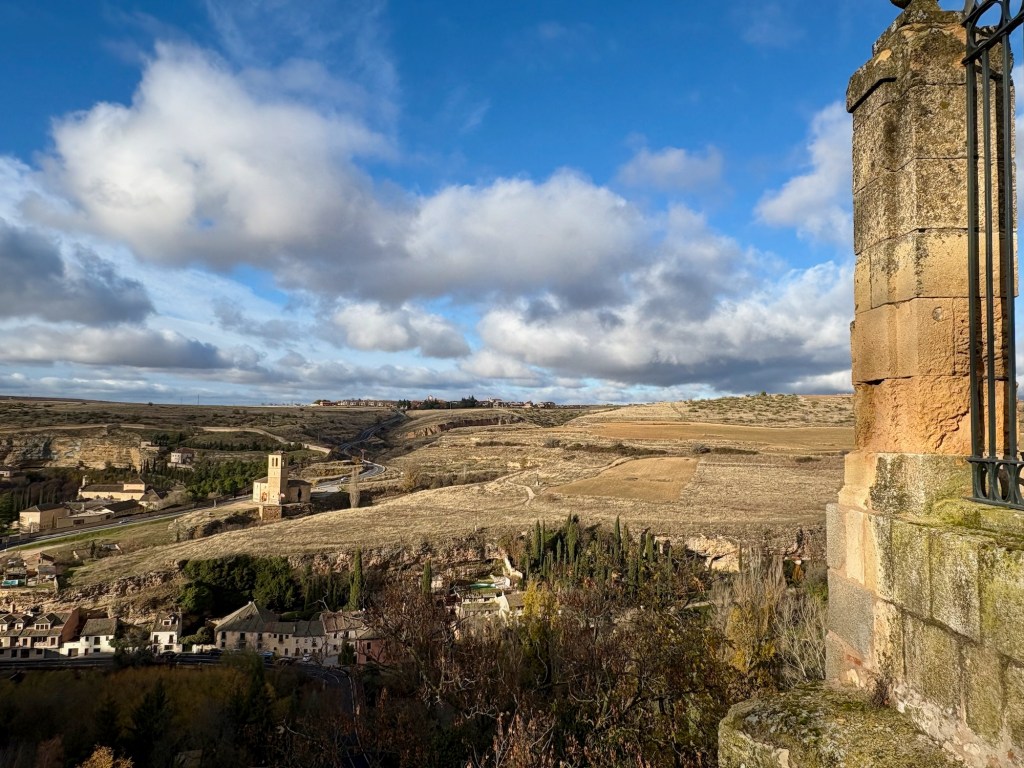
From the airbnb where we worked, we walked a block to get to the aqueduct, then we followed the aqueduct for 5 minutes or so to the heart of the city. On our first day, after working for a few hours, we took a stroll around Segovia under a crisp November sky. The ochre colors and earthy textures of the buildings and the landscape soothed my soul. I really loved it there.
Architectural textures in SegoviaI can’t get enough of the patterns and the earthy colorsLook at that light!Patterned exteriors of buildings. So many cool patterns.
As promised, Raúl took us to his home city of Aranda de Duero, the capital of the Ribera del Duero wine region, on our activity day. Raúl drove us from Segovia in his minivan, and as we approached the city, we saw miles and miles of browned grape vines propped in neat rows above the rocky soil.
Beneath the city of Aranda de Duero is a vast network of wine cellars, or bodegas, 10-13 meters under the ground. They are everywhere. Associations called peñas, which seemed similar to Elks lodges in the US, have their own bodegas where they meet, hang out, celebrate. We visited three. The first was an underground escape room, Ribiértete, which we managed to escape after copious wine. I won’t tell you any more in case you ever decide to go.
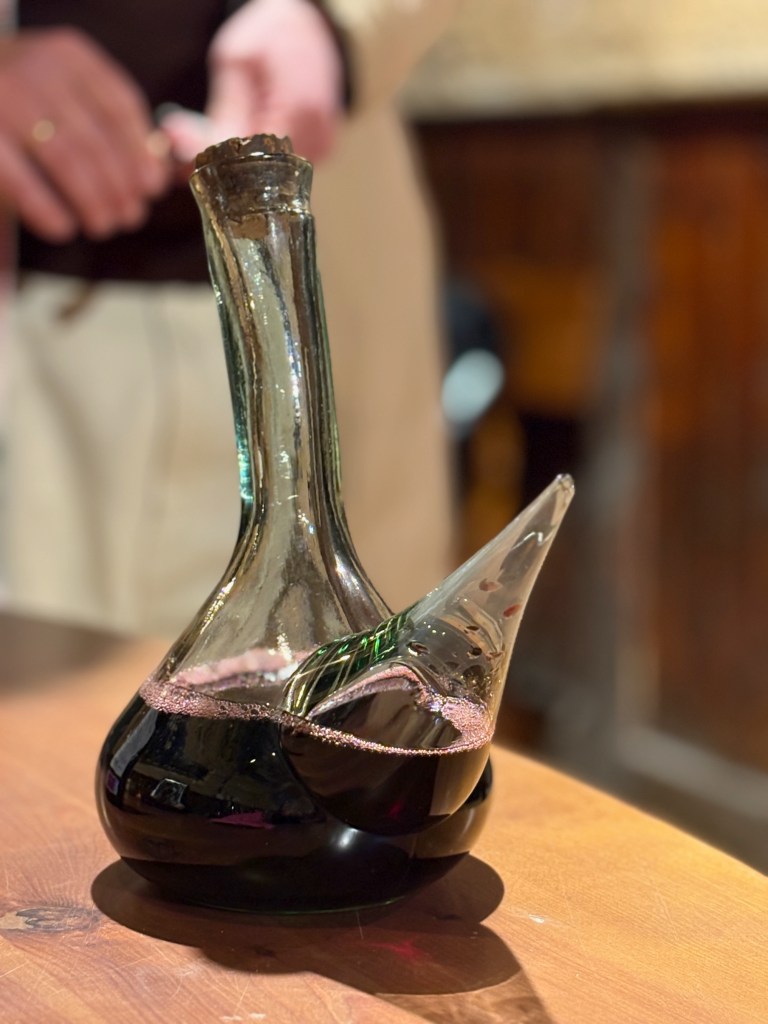
Our escape room host, Sonia, and a porron, which folks drink from in bodegas.
The second belonged to a friend of Raúl’s who was kind enough to show us around his bodega. He swiped a key card across the panel of a large wooden door, and it opened into a stone staircase underground.
Raúl had stuffed our pockets with bottles of wine from his own house, and I carried his porron in my backpack. Once we were underground and his friend had shown us around his bodega, Raúl pulled out a bottle, filled a porron, and he and his friend demonstrated how to drink out of it. You pour the wine in an arc into your mouth without touching the spout. It is not as easy as it would seem to do this without pouring wine in your nose or dribbling it all over your clothes. Luckily I wore black. I asked why this way? As soon as I said it, I realized, ahh! When done correctly, nobody’s mouth touches the porron. This makes for easy cleanup: no wine glasses to wash.
It took a lot of practice to get the technique right, but after 3 or 4 bottles throughout the day, we all mostly got there in the end.
After the escape room and the Bodega la Navarra, we went in search of tapas. Raúl’s favorite place was packed, so we walked around the block to another, where we got tortilla de patatas, the Spanish omelette with potatoes that I can’t get enough of, and some sort of small salty fish. I don’t know what it was but it was delicious. Probably anchovies. We were six people, and there was enough for each of us to have one or two bites of each, and then we headed back to the first tapas place to see if any people had cleared out.
We managed to find a standing table and ordered a larger assortment of tapas. The one I still dream about was a toast with warm goat cheese and caramelized onions. Oh my god. It was one of the best things I’ve ever eaten. There was something else with small pickles sandwiching anchovies and an olive on a toothpick. Google tells me that tapas that are skewered like this are called pintxos, and this particular one was possibly a Gilda. They are described online as “piquant”. I agree. It was briny and vinegary and crunchy and delicious. And everywhere had olives de anchoa (anchovies). I couldn’t get enough of these either. Raúl took us to his favorite olive shop at the end of our day and I bought a giant can to bring home.
After tapas, as we walked along the streets of the town’s center, Raúl pointed out doors everywhere — “That goes to a bodega. And that one. That one, too, and that one.” As he neared his peña’s bodega, he pointed across the square, “That’s my wife’s association.” He waved his card over the door, and we descended another set of stone stairs.
Raúl’s porron
We filled the porron and carried it with us as Raúl took us on a tour of his association’s bodega. One room was full of pictures of the members of the peña, lined up like in class photos at school, different events they’d hosted, and big life events, like new babies. I kept saying, “I can’t believe this is your life Raúl.” It was one of the neatest things I’ve ever experienced.
1503 map of Aranda de Duero, which is Spain’s oldest city plan and map in perspective. It is everywhere around the city, including on the label of the first bottle of wine we drank while there, the Tierra Aranda Tempranillo
I never knew I wanted to go to Segovia or Aranda de Duero, and now that I’ve been, I’m so grateful I got the chance. It would not have been the same without our friend and coworker as a guide. It was magical. Thank you, Raúl!
My husband and I went to New York over the weekend, just for fun. We stayed at the SoHo 54 and walked miles for 3 days straight. I’ve had a hankering lately to get back into black and white photography, so I carried my real camera with me in a shoulderbag I bought for our summer trip to Europe. I don’t always want to carry a backpack everywhere.
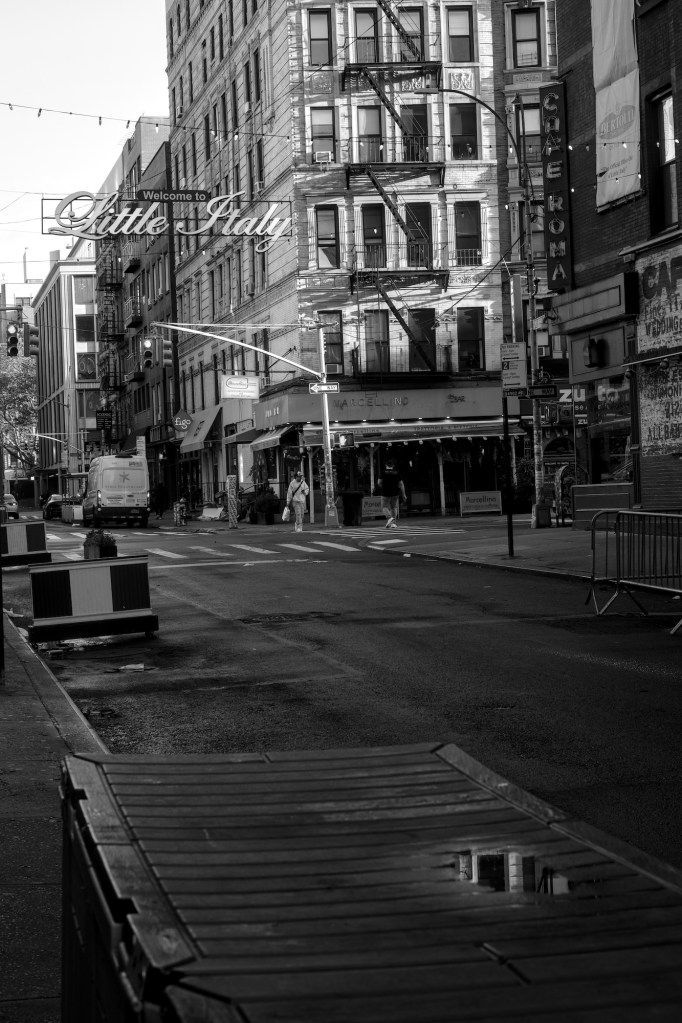
Spongies Cafe in Chinatown, where we got 3 spongies — basically angel food cake muffins — and 2 teas for $6Sunday morning in Little Italy
City photography is hard. There’s so much going on, all the time, everywhere. Cars to dodge, signs and streetlights and wires obscuring some part of what you want to photograph, being at street level, which throws off all the lines and perspective if you’re shooting upward. So I mostly stuck to other subjects.
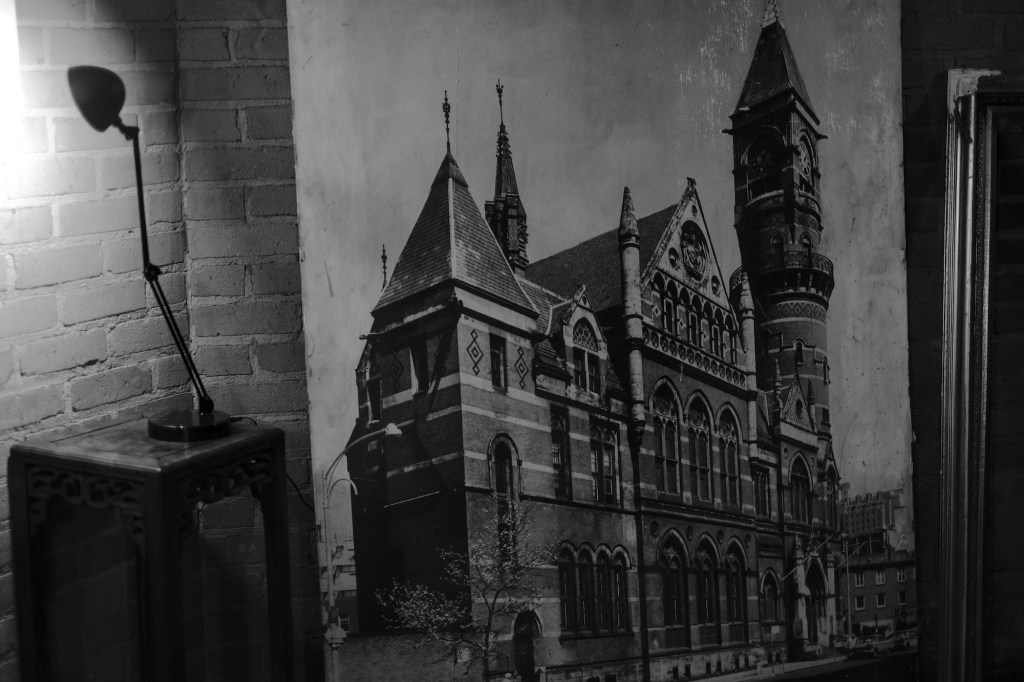
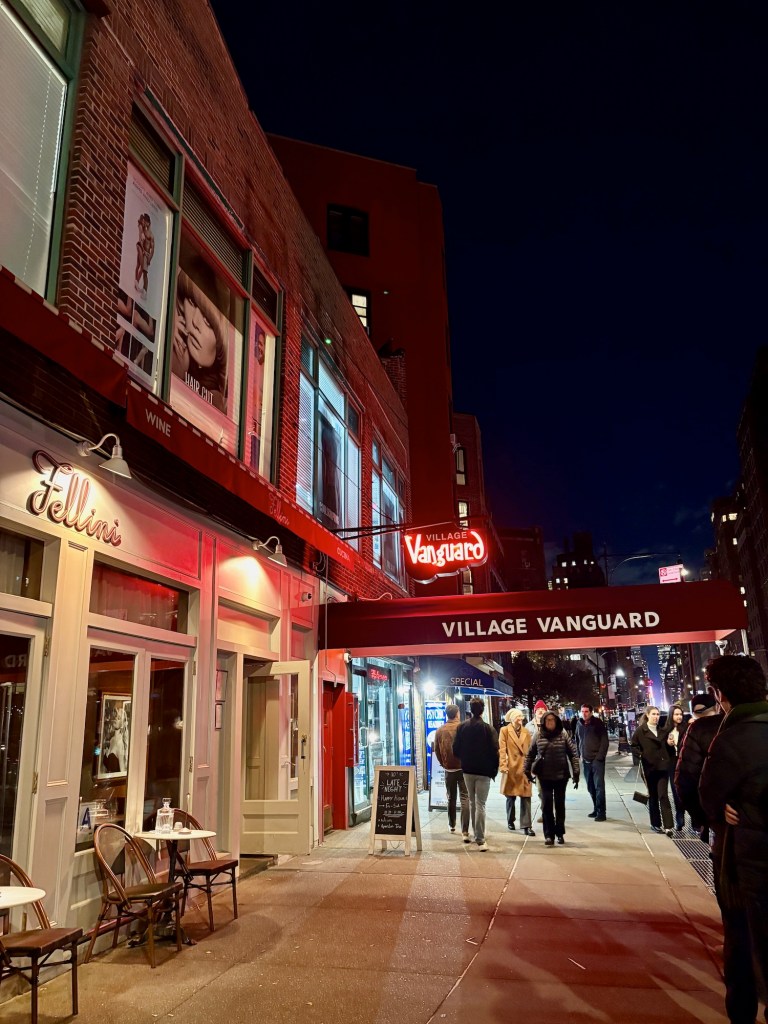
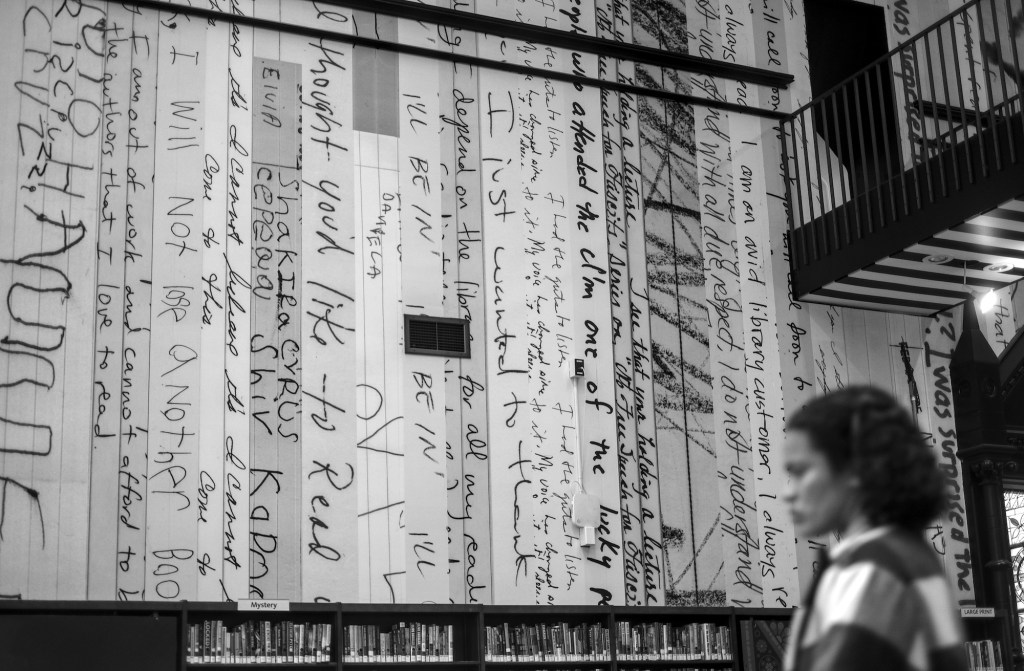
Teapot and timer at Little Hen in Greenwich VillageJefferson Market Library in Greenwich VillageVillage Vanguard
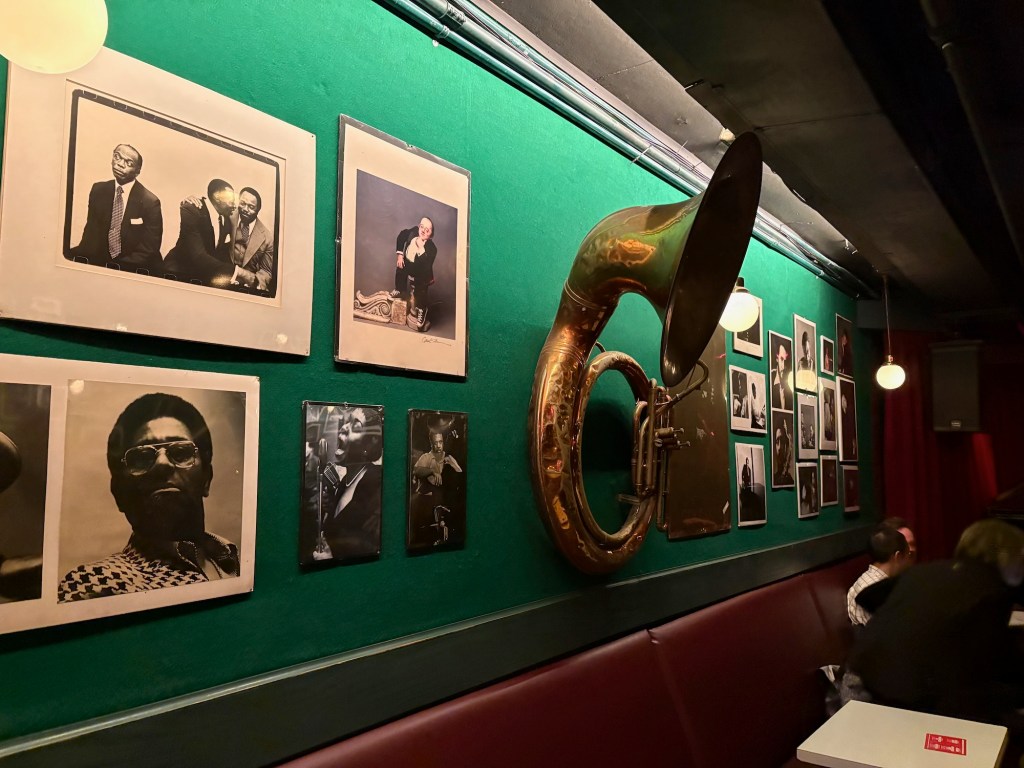
We made it to the Village Vanguard on this trip. We saw the Tyshawn Sorey Trio, who played without stopping, weaving one song into another, for over an hour. We, and all of the audience, were rapt. Witnessing creation, how the musicians interacted with one another, and listening as the music emerged felt like being inside an artist’s mind.
Flowers galore! Inside Little Hen teahouseUpstairs reading room at Jefferson Market Library in Greenwich VillageDictionary in basement reading room of Jefferson Market LibraryUpstairs reading room at libraryInterior Senza GlutenRainbow Liberty around the corner from our hotel
If you ever find yourself lucky enough to procure a pastry that is so delicate you can barely breathe on it without flakes flying everywhere, and you question, “How on earth do I eat this without it falling apart in a million golden pieces onto the table, my shirt, and the floor beneath me?”, I am with you.
It’s rare to find such a perfect pastry where I live, so I haven’t had much occasion to practice. When we were in Paris, though, we ate pastries daily. This is a thing you can do when you walk miles and miles every day. It brought me joy every time. I went to bed excited to get up in the morning to walk to a café in the cool air, order a croissant at the counter, and sit outside to sip coffee and try to figure out how to eat this crisp golden delicacy without looking like a savage. Pigeons feasted on the flakes that drifted to the ground beneath me.
Early in our trip, we found a boulangerie a five minute walk from our apartment that made the most exquisite croissant I’ve ever tasted. Just looking at it, airy and light and devastatingly delicate, I wondered, how am I going to eat this gracefully? If I bite into it whole, flakes will explode in my face. They’ll stick to my chin and fly into my eye and sprinkle my shirt. If I tear it into bite sized pieces, flakes will explode beyond the rim of my plate and stick like leaves to my fingers, and I’ll crush the crescent’s beautiful airy dome.
I tried both methods — biting and pinching — and got the results I expected. Flakes everywhere. An embarrassment to myself and a picnic for the pigeons. I sheepishly brushed the pile of amber leaf off the table into my hand to at least collect the crumbs on the plate.
I Googled “how to eat a croissant” and didn’t get much help. Google gave the the same options: bite or break into bite size pieces.
The next day, when we went to the same boulangerie, the boulangerie that now that we’re home, I dream about and wish I had access to, I ordered my croissant but sat for a few minutes to watch how other people ate theirs. We were in the natural habitat of croissant eaters, surely there was a way. And in fewer than five minutes, I had an answer.
Two tables down sat a man in a fine summer suit. The tips of his perfect croissant hung off the edges of the tiny plate the boulangerie served them on. He picked up the croissant and held it close to the center of the plate, the fingers of both hands close to one tip. He pinched off a small piece, leaned over his plate to put it in his mouth, set the croissant down, and then sat back and chewed. The flake fallout was mostly contained since he held the pastry low to the plate, and he hadn’t crushed the air out of the croissant since he’d held it near where he pinched a piece off. Once he finished chewing, he dabbed all the loose flakes from his plate with his fingers and thumb and ate them, effectively keeping his area clean between bites. He did this with each bite until the croissant was gone.
Genius.
I mimicked him, and though my technique was not perfect, I felt much more couth. I can maybe get there one day. Now that we’re back home, I’ve been searching for the perfect pastry to practice with. I haven’t found one yet, but I’ll keep looking. The next step will be to figure out how to add jam and still eat with grace.
This is my final week on sabbatical. Over these past months, I’ve gotten a taste of what it’s like to be in complete control of my time, and wow, it was glorious.
Before sabbatical, I wondered if I’d feel unmoored without work. I wondered if I’d feel like I lost my identity. I wondered if I’d not know what to do with myself. I worried I might try to do too much, and it’d rush by too fast as a result, and I’d go back to work feeling like I still needed a break. I worried I might do too little, and I’d become sloth and useless. I worried I’d feel like I needed to be productive with the time off because I felt guilty for having it.
What happened was that I learned to enjoy life, with gratitude instead of guilt. I learned to allow myself more time to do things that add richness to my life: I lengthened my pool time so I wasn’t rushing through my swim workouts, I watched wildlife in our garden for long stretches instead of quick glances, I spent a week with friends in Utah instead of squeezing a visit in on a weekend (or not visiting at all), I stayed in France after my husband and son went home. At home, I visited every coffee shop in town and sipped from stoneware instead of paper cups. I walked to shops instead of driving to them. I napped.
I learned to pay attention to my motivation for doing a thing — am I doing it because I want to do it, or because I feel like I should do it? I did the things I truly wanted to do, and eliminated the things I didn’t. I cooked only when I felt inspired and wanted to cook. I gravitated to swimming and walking, not to bicycling, and that is okay.
I’m in my 50s, and therefore in the second half of life. Retirement is likely on the horizon in the next dozen years. Sabbatical was a test run for what life feels like without work to occupy every day: will I feel empty? Will I be bored? Restless? Or will retirement be wonderful?
It will be wonderful. I can’t wait.
In this final week off, I’m going to soak up this time as much as I can. I’m going to read on the couch during the day and not feel bad about it. I’m going to nap if I feel sleepy. I’m going to hang out in coffee shops and watch the world go by. If I feel moved to, I might think about what I can take with me from my sabbatical life into my working life. It would be a shame to wait for sabbaticals and retirement to live and enjoy. I’ve got my health and energy now, I don’t want to squander it.