For those of you who missed it live, the video of my WordCamp US presentation, “Publish in 10 Minutes Per Day,” is now available. The transcript of the talk is here. Enjoy!
Tag: WCUS
-
I did it. I spoke at WordCamp US. All those rehearsals, all that planning — they paid off. When I got up on stage, I saw my teammates’ faces in the front row and in the way back, and then I looked around the rest of the room, to the faces of all these WordPress enthusiasts, and knew I was among friends. It wasn’t as scary anymore. In fact — dare I say it — I had fun.
I think I am hooked.
WordCamp US was an incredible experience. The halls of the Philadelphia Convention Center buzzed with the babble of nearly 2000 WordPress contributors and users. The energy was electric. The best part, though, was not just the excited energy — it was the happiness. Up and down the halls, people smiled and laughed. I spoke with a colleague’s mom who visited the first day, and she was in awe. “Everyone is smiling and kind and helpful, and everyone is so happy to be here.”
It’s true. I saw teeth everywhere as people told jokes, as eyes met across corridors, as friends from around the world hugged when they saw each other again for the first time in months. I experienced my own joy in all those instances, when my coworkers cheered as I took the stage, and when I finished my presentation without fainting or making a fool of myself.
But as proud as I was of my first presentation at a WordCamp, I have to say that my most joyous times came when I was staffing the Happiness Bar.
The Happiness Bar at a WordCamp is a place where attendees can bring their laptops (or legal pads) and get help with their WordPress questions. This is what I do every day over live chat in my job as a Happiness Engineer at Automattic — help people with WordPress.com questions — and sitting at a table where I could see a user’s smile, look at their site with them, point at things on my screen to illustrate what I’m explaining, and have a real life conversation was incredibly rewarding.
I was nervous at first because while I know WordPress.com, I am not as familiar with self-hosted installations of the WordPress software, and I feared I wouldn’t be able to help. But the Happiness Bar was so well-staffed, there was always someone nearby to help. And just like at work, and just like Open Source software, helping at the Happiness Bar was a team effort. If one of us didn’t know an answer, there was always someone close by to ask.
Most impactful, though, was that everyone was not just available to ask questions of, they were excited to jump in and help. Nobody gave dirty looks if you didn’t know an answer — instead they took it as an “Oooh, I get to teach about something I know!” moment.
I loved WordCamp. I loved speaking. I loved helping at the Happiness Bar. And I was honored to feel and contribute to the energy of the WordPress community — a community that has built the free, Open Source software that now powers 25% of the Web.
-
I presented the following at WordCamp US 2015. Enjoy!
You’re an awesome blogger, right? You never run out of ideas, you work your full time job, exercise daily, manage your household, and still publish regularly on your blog. You post exciting content every day and can sustain your level of blogging forever and ever, amiright?
Yeah. Me neither.

Sad blogger. Days go by, and then weeks. You think about how good posting would feel: to write, to publish, to get those likes and comments. But you don’t actually do anything about it. The longer your blog sits untouched, the more pressure you feel to make your next post AWESOME to make up for being a slacker. Which of course means you now have writer’s block, because really, who can write under the pressure of having to write something amazing? So you don’t post. Your visitors leave. Your views trickle down to zero. You feel like a terrible blogger and you go cry in a corner.
It doesn’t have to be this way.
I found a way to make time for your blog so that you can not only fit it into your life, but so that you have something to write about every time you put fingers to keyboard.
My name is Andrea Badgley and I’ve been blogging for four years on my personal site here at andreabadgley.com. When I first started my blog, I was a stay-at-home mom and published multiple times a week. I had a decent following, and was gaining more online friends every day.
But when I started working full time, I no longer had time or focus for my blog. I stopped publishing regularly. My views and followers dwindled. I felt bad about myself for neglecting the blog that I had not only grown to love, but that helped me find my career path with WordPress.com.
Blockers
Abandoning my blog was not okay with me. So I tried to figure out what was keeping me from blogging. I determined that I had two blockers:
- Time
- Topics
During my blogging drought, I’d think, I don’t have time for my blog anymore, or if I made time, I’d sit down with my pen and paper only to be blocked by, I don’t have anything interesting to say. So I came up with a way to make time, and I devised a tool that ensured I’d never run out of topics.
First, let’s talk about time.
Carve out 10 minutes per day
I was once a member of a group who met weekly to write together. We often did what’s called a free-write: we’d set a timer, write for 10 minutes without lifting our pens from the page, and when the timer dinged, we put our pens down and read what we wrote.
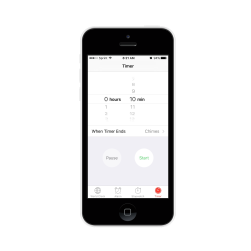
Timer To make time in my life for blogging, I iterated on the idea of the free-write and decided to carve 10 minutes out of my day, every day, to write.
Ten minutes is so little. You can do it after a 6AM workout, when an early morning run has gotten your creative juices flowing. Or you can do it as soon as you wake, when you’re still in a dream state. Or you can do it on lunch, or with a cocktail. Or in bed when you realize, oh crap, I haven’t written yet today.
The main thing to remember is that ten minutes can be squeezed in anywhere in the day.
Pro-tip

Use an alarm to remind yourself to write To really make this work, here’s a pro-tip: Create a trigger. Carve out a specific time of day and create a cue for your writing time so that you will make a habit of it. Set an alarm for when you want to write, and give yourself a reward for following through: a peaceful house in the early morning, or an afternoon cup of coffee to go with your writing time. Pairing a trigger, like an alarm, with a reward, like coffee, will help you build a habit of writing every day.
Keep topics on hand
The ten-minute write takes care of the time issue, but what about topics?

Prompt box Again, I’ll turn to a writing group strategy. At our gatherings, we placed a silver engraved box filled with folded slips of paper in the middle of the table. At the beginning of each free write, one of us would pull a piece of paper from the box and read the words written on it aloud. We’d then write for ten minutes about whatever the prompt was.
This same strategy works for blogging. To create a prompt box, snip a sheet of paper into about 30 slips. On each slip, write a word or phrase that has meaning to you. Examples of some of mine are thunderstorms, rolling pins, and salt marshes. If you’re writing for a business site, you could seed your box with employee names, materials you use, or anything unique to your business or the way it operates.
Once you’ve written your prompts, fold the slips and place them in a box or some other vessel. Whenever you sit down to write, if you have nothing to say, pull a prompt out and start writing.
Timer + Prompt Box = Writing
To overcome writer’s block and start publishing again, pair the ten-minute free write with the prompt box. During the time you’ve carved out for your writing, grab your timer and your box. Pull a prompt, write for ten minutes, and when the timer dings, stop writing. That’s it.
Does this really work? What about editing?
Case study

The 10-minute write motto In April 2015, I dedicated to publishing a 10-minute write every day for 30 days. Each morning, beginning March 31, I poured a cup of coffee before my work day started, pulled a slip of paper from my prompt box, started a timer, and wrote until the timer dinged. I did a quick scan for spelling and punctuation errors, tagged the post AprilDaily, then scheduled the post to publish the following morning.
The scheduling delay allowed me to do additional editing if I wanted to, but I rarely did. Why didn’t I edit? Because during that month, I learned to live by this creed:
Perfect is the enemy of Done.
Publishing this way is liberating. Some posts will bomb, but some posts will take off more than you can anticipate. It’s like shooting 100 frames to get the right photograph: every shot isn’t going to be brilliant, but each click of the shutter helps you improve and sets you up for when a prime moment arrives for you to capture it; because you’ve been practicing, and because you’re ready, you’ll capture it beautifully.
Results

Views increased 45% during #AprilDaily experiment Using the prompt box and the timer, I published every day in the month of April. My blog no longer sat empty and neglected. Visitor climbed 26%, and views increased 45% over the previous month, from 3700 in March to 5400 views in April. My blog was active again, and readers loved the spontaneity of it. In fact, they got involved by sending me prompts. When I wrote from a reader’s prompt, I gave credit and linked back to their site, helping build community.
Giving yourself meaningful topics to write about and then carving out the time to write will get you not only practicing, but will get you publishing again. It will make your blog active and will bring visitors to your site.
Starting is the hardest part. Once you start, the writer’s block wall will begin to crumble. By making a habit of writing, and by making sure you always have topics on hand, you’ll be able to reduce that wall to a pile of rubble that you can easily kick out of your way.
Get writing
So how do you get started? Create a prompt box. Make a list of 20 things you love: moss, mountains, bacon, brioche. When you are out in the world, whether eavesdropping in a coffee shop or watching an acorn roll across the sidewalk, make notes of objects or scenes that strike you. Record a voice memo on your phone or ink these ideas on your hand if you have to so you can remember them. When you return home, add those mementos to your prompt box.
Then? Write.
Pro-tips
- If you’re really worried about editing, set your timer for 7 minutes to give yourself 3 minutes for edits.
- Write every day, but publish every other day. This will allow you to stockpile posts for when you are on vacation or for those days when you don’t want to share what you’ve written.
- To mix it up for your readers, keep a handful of photos on hand. A compelling photograph with a well-written caption doesn’t require a long blog post and can take only minutes to craft.
Additional Resources
- Getting Started with a Prompt Box on The Daily Post: The Art and Craft of Blogging
- AprilDaily posts, where I published a 10-minute write every day during the month of April
- NovemberDaily posts, where I replicated the AprilDaily experiment and had similar results with increases in visitors and and views
If you have questions or decide to try publishing in 10 minutes per day, I’d love to hear about it. Let’s keep the conversation going with the hashtag #10minwri. Have fun!
Special thanks to my writing partners at The Joyful Quill for introducing me to the 10-minute-write, and to Luca Sartoni and GetSpeak.in for the tremendous support helping me prepare for this presentation.
-
This Friday, day after tomorrow, I will be among WordPress enthusiasts from around the world at the Philadelphia Convention Center, and I will deliver a lightning talk — a 10-minute presentation — titled Publish in 10 Minutes Per Day.
I am speaking at the inaugural WordCamp US, and it is my first WordCamp talk. To use a word coined by my friend and colleague Krista Stevens when she dove into live chat for the first time, I am terricited.
Earlier this week, thanks to a local webmaster and blogger who I met through my blog, I rehearsed in an auditorium on the Virginia Tech campus. Gloria Schoenholtz, photoblogger at Virginia Wildflowers, left a comment on my Trying not to freak out blog post (where I was freaking out about my talk) and she invited me to practice in the auditorium downstairs from her office. I took her up on the offer on Monday. I invited my local friend Dorothy, of Birch Nature, Gloria invited a Communications professor, and before you know it, I was in the zone, with an audience, presenting.
Gloria, Dorothy, and Lindsey provided valuable feedback that I wouldn’t have gotten from practicing alone in my office (come out from behind the podium, be myself, smile 🙂 ). After rehearsing with them, I am still terricited, but the scale has tipped so that I am now a tiny bit more excited than terrified.
If you are attending WordCamp US and are interested in building a regular publishing habit, I will be in the Kite & Key room of the Philadelphia Convention Center at 5:50 PM on Friday, December 4. There are still a handful of WordCamp US tickets available ($40 for both days), or if Philly is too far for you to travel to, Live Stream tickets are also available.
On Friday, I’ll post my talk here on Butterfly Mind. I invite you to use the hashtag #10minwri on social media to ask questions or to share your own adventures in publishing in 10-minutes per day. I can’t wait to see what you write.
-
I speak at WordCamp US in Philadelphia on December 4: in 19 days. That’s not as many days from now as I thought.
I have written my script. I have submitted my slides. I have practiced aloud at least a dozen times. But I’m still reading my words from a page — I do not yet know the talk by heart. I need notes.
I feel good about my talk when I preview my slides. I feel good about my talk when I practice aloud with my script in front of me.
But the room I’m speaking in. I saw a picture of it. There are a great many seats in there. Like, more than 300. I’m a little nervous. Maybe a lot nervous.
I think I’ll bump my rehearsals to twice a day.
I’m trying not to psych myself out by thinking about how big this event is. By thinking about how many people will be looking at me.
Instead, I’m trying to remind myself I have something valuable to contribute. Instead of freaking out, I am preparing. I stand when I rehearse, like I learned from speaking coach Luca Sartoni. I practice aloud, feeling for places where I stumble so I can tweak the wording. I record my rehearsals on audio so I can listen for redundancies. I take comfort in the the tips I learned in the Get Speaking! workshop I attended.
I know I can do this. I will be ready. I will rock this thing.
But still, that room is scary.
For the month of November, I will be participating in NaBloPoMo and plan to publish every day of the month. Usually, I will publish a 10-minute free write, initiated by a prompt from my prompt box. Minimal editing. No story. Just thoughts spilling onto the page. Follow along with the tag #NovemberDaily.
-
I’ve been waiting like what feels like an eternity to share this publicly, and the time has finally come. I am thrilled to announce that I will be speaking at the inaugural WordCamp US to be held in Philadelphia, Pennsylvania, December 4-6 this year. Look, my picture is even on the website:

I’m somebody now! A WordCamp is a conference that focuses on all things WordPress: from developing and designing WordPress to using the software as a blogger. I am honored to be a part of this event, and I cannot wait to spend time with and learn from the stellar lineup of speakers. My talk is “Publish in 10 Minutes Per Day.” Look for details here on Butterfly Mind when WCUS arrives, or better yet, get yourself a ticket and join us in Philly.
 Butterfly Mind