We were occupied with sports and travel every weekend this autumn, and as a result, did not go on a single camping trip during the most beautiful season in Appalachia. So when it was warm and sunny on the day after Christmas, we took advantage of it and hiked for the first time in months.
Our kids were disappointed that we didn’t have a white Christmas this year, but when the temperature hit 54 degrees (12° C) on December 26 , I didn’t complain.
I was excited to finally bring my new lens on a hometown hike, and was thrilled at how well it worked in the low light of the forest.
Water falling
Riffles, Cascades hike
Froth in a sunbeam
Heart rock
Hiking hand in hand
Water over stone
In December the stream can easily be dripping with icicles. This year, there was no ice – only liquid. And our daughter stepped into it fording the stream.
Fording the stream, Cascades
Cascades waterfall
Waterfall froth
Cascades stream
Slipped in the stream
Luckily the sun shone on us – and her cold wet jeans – for the return hike to the car.
The Cascades
This is my entry for the Daily Post: Warmth photo challenge.
Stand of firs from Wilburn Ridge on Appalachian Trail, hike to Mt. Rogers from Massie Gap, VA
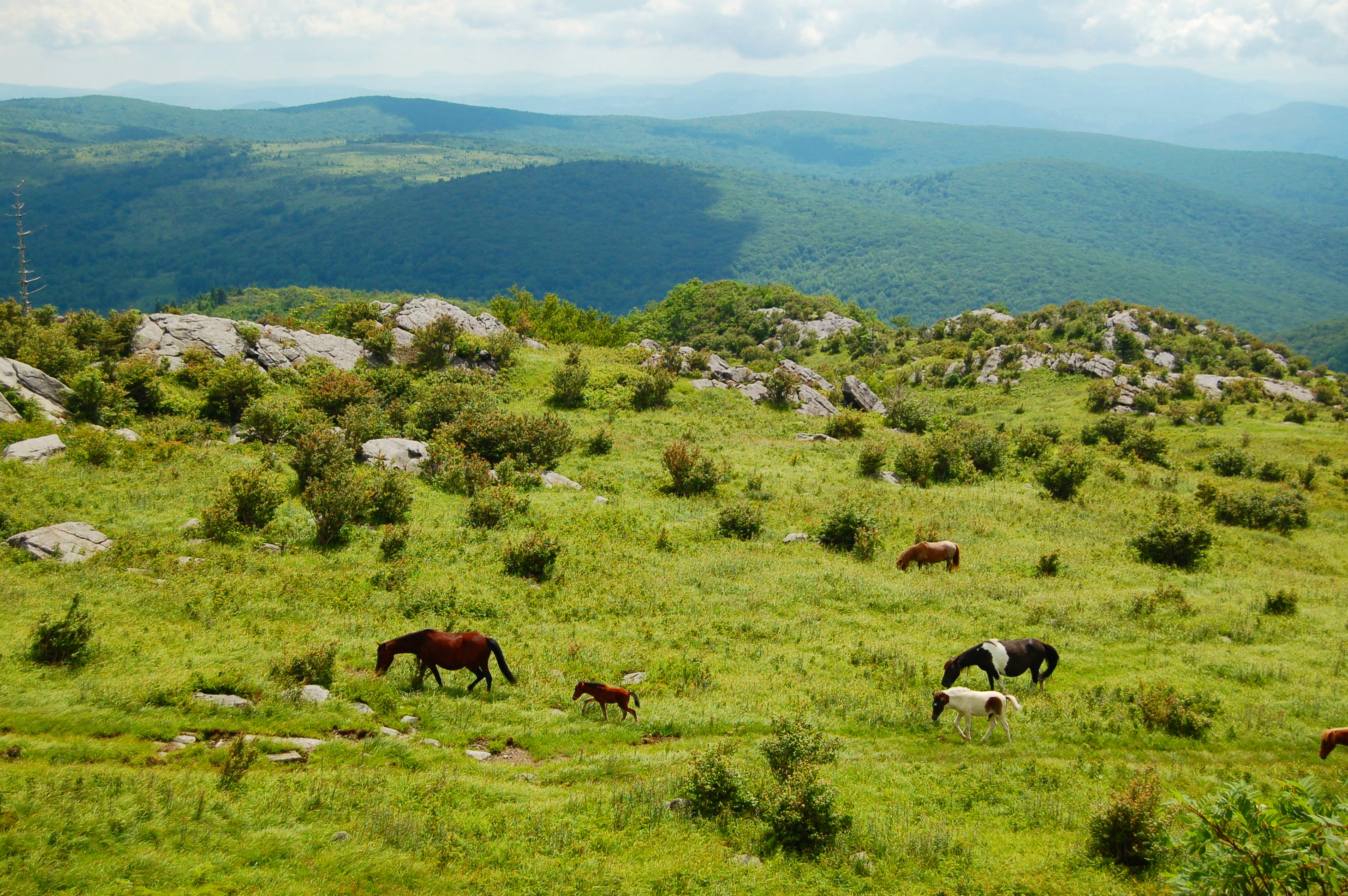
We hiked Mt. Rogers last year with our kids. Mt. Rogers is the highest peak in the state of Virginia (5729 ft), and the entire hike is in the open like this, with nearly 360 degree views of the Appalachians. This is possibly my favorite hike that I’ve ever done. Unfortunately my theme does not do landscape photos justice – click the images for a larger view.
Wild ponies, colt, and view of Appalachians, Mt. Rogers, VAWild pony in sunlight along Appalachian Trail on Wilburn Ridge, Mt. Rogers, VA
My husband and I courted in the hills of Appalachia. We backpacked in the southern Smokies when I was still a student at the University of Georgia. We took weekend trips to Panthertown Creek in North Carolina, or Chattanooga, Tennessee, and when he and his hiking partner trekked 500 miles from Georgia to Virginia on the Appalachian Trail, I sent him care packages of homemade trail mix, and met him at little towns on the weekends, where we’d stay in B&Bs and eat breakfasts of hot biscuits.
As we got married and grew up, we moved further and further from the green hills and soft forests of our courtship. We moved to the D.C. metro area, where we sat in traffic on the beltway. In four years we never made it to Shenandoah despite a thousand proclamations, “We should head to the mountains this weekend.”
Then we moved to coastal Florida where we sweated it out in the flatlands for eight years. We bought our first house there, and bore our children there. We learned out how to be parents there, and with a seven hour drive just to get out of the state, we lost touch with the mountains, and our younger lives, completely.
When we moved to Minnesota, where we shivered and shoveled through three winters, we had no idea where our lives were taking us, or where we would end up next.
And then.
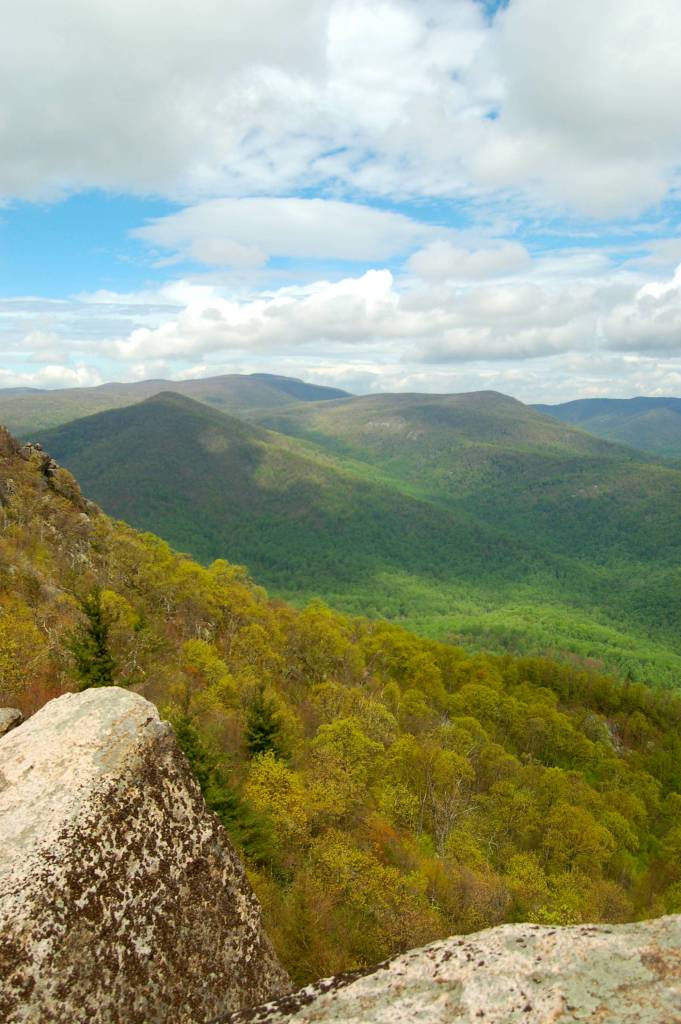
Then, as my husband’s postdoc drew to an end, and he began applying for faculty positions in Arizona, Mississippi, Missouri, Texas, and Arkansas, he applied, and interviewed, for a position at Virginia Tech in Blacksburg. Back in the Appalachians, in the green hills where we met, in the soft forests where we fell in love. Back in the Appalachians where it’s not too hot and it’s not too cold, where it’s emerald green in the summer, blazing copper in the fall; where the world turns bleak in winter, and bursts into blossom in spring.
Back in the Appalachians where we’re raising our children – where we now live. Back in the Appalachians where we’re home.
This is my kickoff post for Photography 101: Home. My ambition is to post a photo a day as part of the course – I’ve got my fingers crossed that I can do it.
I always think of spring as being the beautiful season, with its bright pink flowers, its new green leaves, and the reawakening to life after the cold hardness of winter. But the deep tones of fall – the mustards, the rubies – remind me that there is as exquisite a beauty in going to sleep as there is in waking up.
This photograph was taken on a rainy October day in our townhouse parking lot. The mundane scene was beautiful to me, and this photo is my entry to the Daily Post’s Dreamy photo challenge.
Rain rattled the tent last night and pinged on an overturned cook pot. The past few times we camped it stormed the first night and I felt panicky as I lay down to sleep, breathing deep to calm myself then feeling like I couldn’t get enough air, even though we were outside where there is all the air in the world. Generally I’m so tired and the outdoor sounds are so primal and repetitive – rain rattling, frogs croaking, thunder rumbling – that drowsiness trumps anxiety and I fall asleep before a true panic attack sets in.
This morning everything is damp. The thin nylon of my sticky sleeping bag clings to my skin; strands of hair cling to my neck. My camp sandals – a pair of Crocs and a pair of Rainbows – are cold and clammy. Outside the world drips. The poison ivy leaves that surround our campsite glisten with rain and their mocking oils. The charred wood in the fire pit shines a glossy black.
I used the backpacking stove by myself this morning. It was already assembled, but still. I used my notes from last night to boil water for oatmeal and coffee while B___ finally got a chance to sleep in. He lounged in the tent while I shooed a daddy long legs off the stove, pumped the fuel, lit the burner, listened to the hiss of a Whisperlite stove in the stillness of the campground morning.
It’s weird wearing glasses on a camping trip. They seem like an indoor thing not an outdoor one. They make me feel vulnerable to the elements – they get raindrops on them and get caught on my sweatshirt as I pull it over my head. When I take them off I hurt. My eyes work hard to focus and they blur and feel like I need to rub them to make them see the world crisply, but rubbing them does not help. My head begins to ache inside, behind my eyes, and at my temples, and so I put the glasses back on again.
The kids caught fireflies in the field across from our campsite last night. I sat under the trees in a nylon camp chair and watched them in the distance, reaching up with hands poised to cup around a lightning bug, like they were preparing to catch a kickball coming down from the sky. Or leaning down, knees bent, crouched and sneaking up on fireflies in the grass. The fireflies lit and darkened all around the grassy edges under the trees where the evening deepened sooner. Our children’s laughter drifted across the field to me till we heard thunder and called bed time.
In the quiet morning, my pen scratching paper while the campground sleeps, the sun not high enough yet to pierce the fog, all of us alive and the world gently dripping, the panic of the first night has gone.





 Butterfly Mind