Grit scratches. It roughs the surface. It scrapes knees, breaks seed coats. It is unyielding. It changes things.
Grit is tiny shards of glass, slicing through surfaces, glittering, sharp and bright. Grit disrupts.
Grit is one of my favorite words. In the same way physical grit scrapes and scratches, internal grit has the power to transform. Last week, when I prepped my Texas blue bonnet seeds for planting, they required all sorts of torture: I nicked them with knives, scraped them with the gritty fabric of emery boards, and soaked them in boiling water to increase their chances of germination. Without these treatments, the plants might stay locked in their hard seed coats forever. Never reaching their potential.
Internal grit, that power to clench your teeth and scrape your way through frightening, uncomfortable, demanding situations is like those sandpaper emery boards. Grit helps you break the protective shell that would otherwise keep you locked in: cozy, comfortable, safe, but less likely to grow.
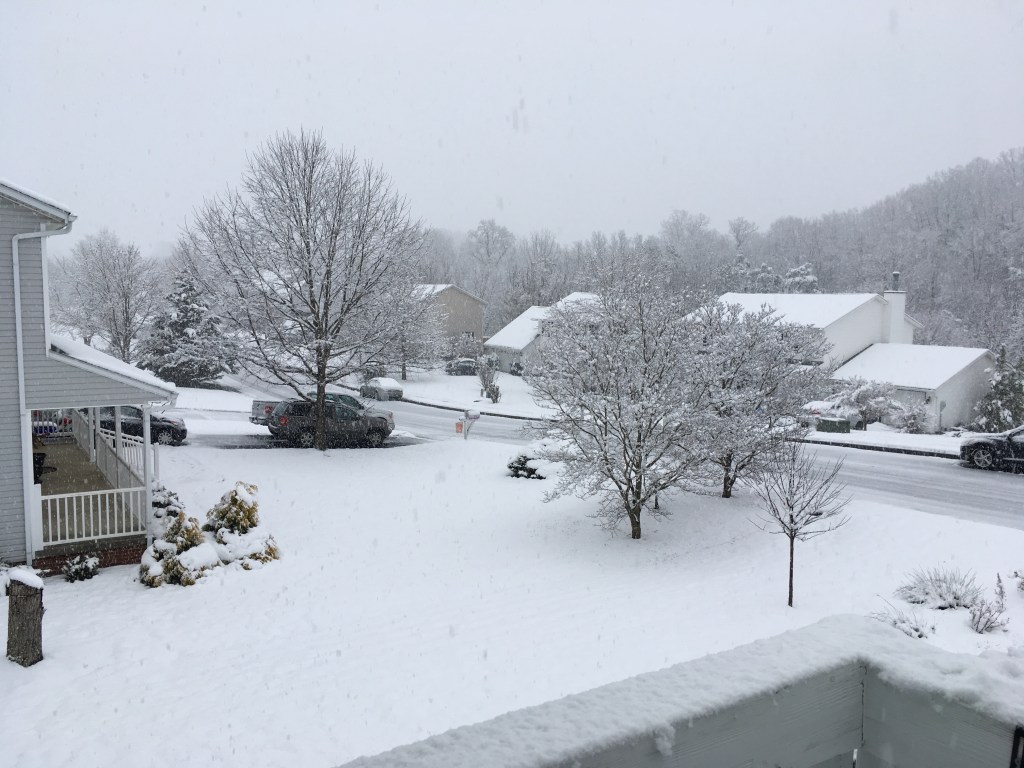
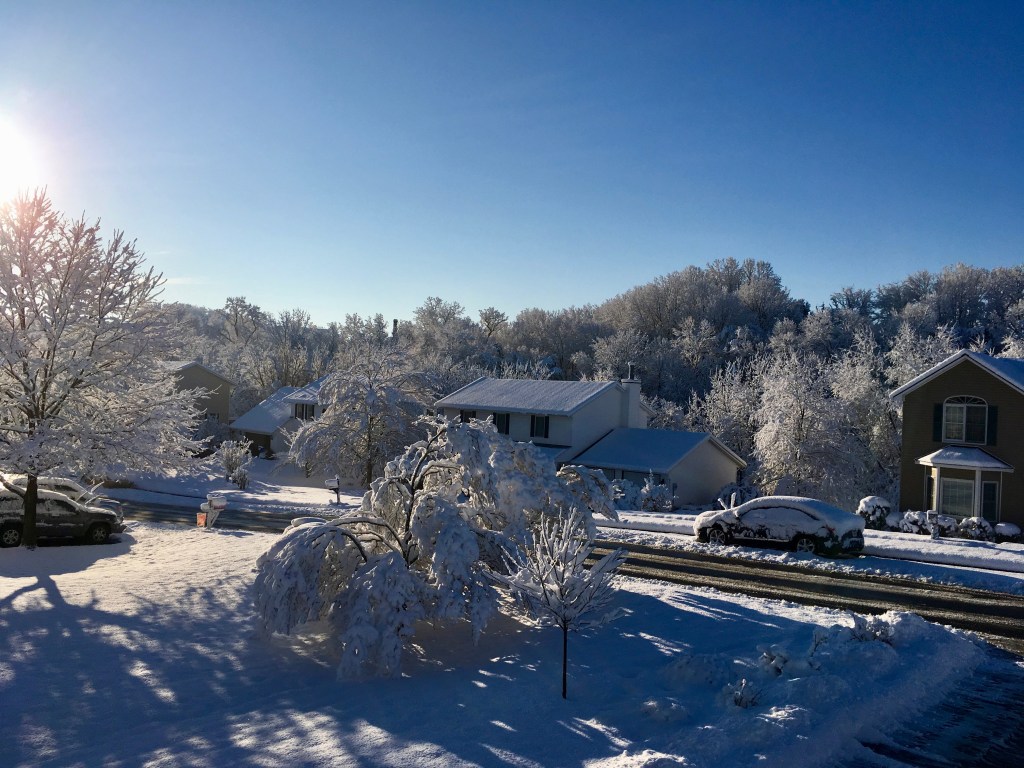
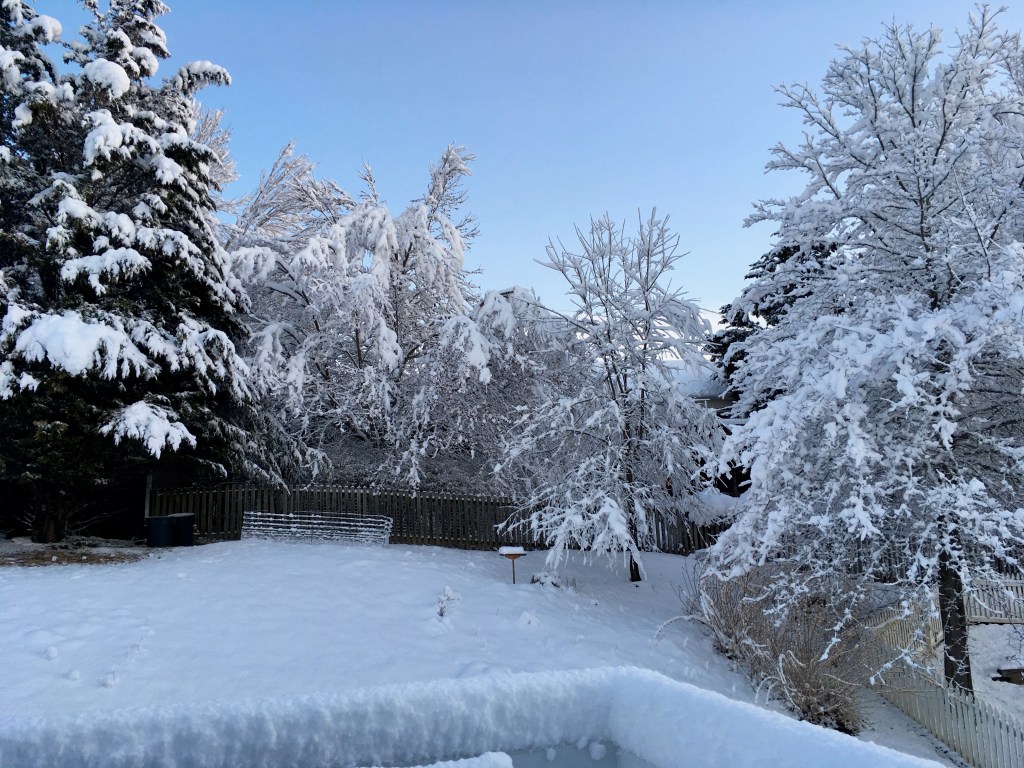
March is lioning. Wind howled through the night on March 1st. It shook the house, rattled the windows, scoured the lawn of leftover leaf detritus from winter.
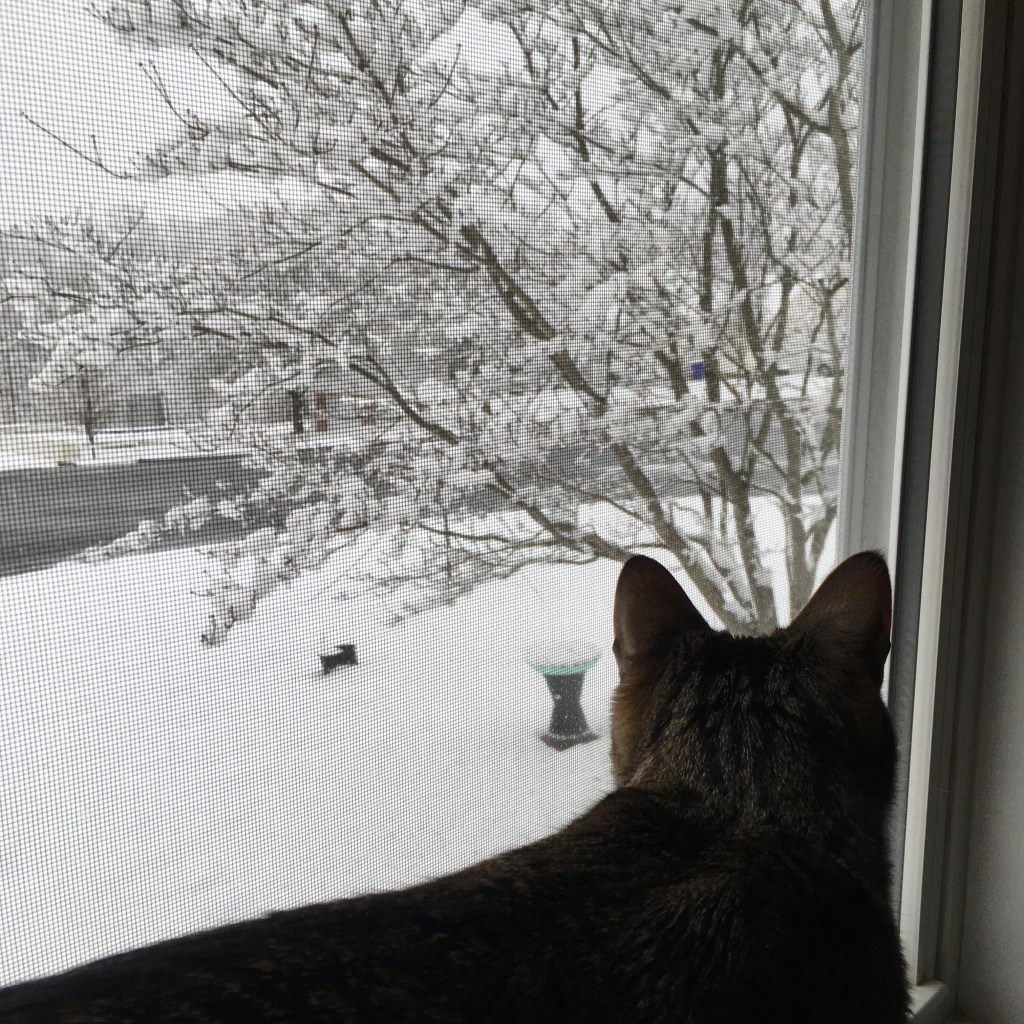
Now, Saturday morning, with a cat on my writing arm, I look out the window and see a red cardinal and tiny house finches perched on the bare branches of the oak, in the slant of morning sun, looking for the feeder we took down so it wouldn’t become a missile in the 60 mph wind gusts. Soft grey doves bob their heads searching for seeds on the ground. The birds twitter and chirp, awaiting their breakfast. It looks warm out there, but it’s not.
A couple of weeks ago, spring teased. For more than a week in February, highs were in the 60s and 70s. I took advantage of the weather. On lunch breaks and between swim meet sessions, I put on my garden gloves and hat, dragged the hose from out front to out back, and grabbed a shovel to dig holes in the new beds I cleared at the top of the hill.
As hopeful as I was that winter was finished, I reluctantly allowed myself the possibility that it was not. I wanted to start transplanting everything I knew I wanted to move: bee balm, Shasta daisies, Rudbeckia; hydrangea, Echinacea, lilac. I really didn’t want any of those to die at my hands because I had moved them too early. So instead I moved a few testers — plants that might not survive anyway (rosemary), and a few that if they did survive, great!, but if not, that’s fine too (mums). I sowed some seeds as well — chamomile, feverfew, Texas bluebonnets I bought on my trip to Arizona with my girlfriends. The packets said to sow when the ground was workable (not frozen) in spring.
I hope the seeds didn’t blow away.
Even though I knew it could get cold again, and the work I did could be destroyed, I’m bummed by the setback. Highs are not in the 70s anymore, and more depressingly, lows are in the 20s for the next week. The wind still gusts as I write, and this is the first weekend in ages that I have free time and had hopes for finally getting into the garden. It’s March! The month I’ve been waiting for! Spring!
It’s supposed to get into the 40s today. I can at least walk the garden looking for frost damage on emerging leaves and flower buds. Tomorrow it will get into the 50s, then drop into the 20s at night. I’m tempted to move the blueberry bushes and maybe a couple other things I want to move around. I’m just not sure if it’s smart to do that when I know temperatures will drop at night (I’m guessing it’s not).
This feels like the longest winter. I have no idea how we survived Minnesota. I’m done with the lion. I’m ready for the lamb.
I am out of control. Once Christmas ended, and the holiday decorations were all stored and put away in the cubby hole under the stairs, and winter became plain old winter with nothing left to look forward to in it, my mind switched gears to gardening.
Yep. Gardening. In January.
Two years ago, I embarked on a grass-killing spree in our front yard. I converted about 1000 square feet of lawn into flower beds. This past year, I set my eyes on the giant hill out back, the one that makes me feel like I’m going to have a heart attack every time I mow it. I determined to convert that to flower beds as well, and every time I pushed the mower up the hill, or along the hill, or tried to keep the mower from pulling me down the hill, I cursed the grass and dreamed of the day we would never have to mow it again.
Dead grass out back. No more mowing. Yes more butterflies… if winter would ever end.
In November, I killed it. I killed it dead. Seeing all that dry yellow that we’ll no longer have to mow makes me ridiculously happy. In fact, I’m going to expand it because I don’t like the shape, and I messed up the curve down there at the bottom, and what the hell, I just spent $50 on seeds, and an expanded swath of dead grass means less to mow and more room for flowers.
This is where the crazy comes in. Since the beginning of January, when I’m not at work, I think of nothing but gardening. I scour Pinterest for planting combinations. I measured all the beds on a day last week when the temperatures finally broke freezing. I scribble notes in my gardening-specific composition book. I check my gardening-specific blog for when things happened last year, jot notes down in my gardening-specific calendar, and draw plans in my gardening-specific graph-paper notebook. I even created a spreadsheet with all of our current plants, the seeds I ordered, and when to plant and where.
In my sweaters and fuzzy slippers, sipping coffee, I walk from window to window, staring out, studying the spaces, thinking about what we already have that I can transplant to another part of the garden, thinking about what new plants I want to buy, considering color and height, reminding myself of the budget, moving another choice from the “buy at the nursery” to the “start from seed” column, checking to see if my on-paper plans will scale to the real landscape, visualizing. Dreaming about what it’s going to look like when everything fills in. I’ve probably worn the paint off the gardening section of the bookshelf, pulling Essential Perennials for Every Garden and Gardening for Birds, Butterflies, & Bees nearly every day to check, “What was that purple plant I liked?”, “What were those native grasses?”, “What will look good with the bee balm? The yarrow?”
I. Just. Can’t. Stop.
I thought I had gotten to a stopping point yesterday. On Friday I spent about 6 hours, and on Saturday about 10 hours, sketching real-deal, true to scale, plans for both the front and the back: about 2000 square feet of butterfly and bird garden.
Once the plans were set, I ordered seeds and made month-by-month purchase lists in Trello so we’ll make sure to budget the right amount each month.
And I was SO PLEASED! I thought maybe I’d stop thinking about it all. I thought my brain would be free to consider other things, like blogging or our children. And it kind of was, for a minute.
Now I want to just finish this post so I can look up shrubs that might do well on the side of the house where they get blasted by wind, and I want to think about the mailbox bed which I neglected to think about in all the thinking about the bigger gardens. Even though the plans are finally made, I keep doing all the same things I was before, only this time with plans in hand. I hold the back hill plan up against the sliding glass door while I look out at the bird feeder and think, hmmm, will that plant actually work where I think it will? (No.) Then I want to redraw everything, or note alternative plants in case the nursery doesn’t have the one I want.
The good news is that I’ve transitioned from “The amount of space to plant is overwhelming there’s no way I can do this!” to an actual plan, with dates of when to do what. I’ve already put in vacation time for my annual gardening week.
I’m very antsy to get started. I want to clean out all the old brush. I want to kill more grass. I want to learn when and how to prune the roses, how much to cut back the rue, what to do with the forsythia when it blooms. I want to start seeds, and move perennials, and see if I can successfully transplant the milkweed. But it’s only January 14! Only 3 weeks past the winter solstice! I can’t believe I have to wait a whole two months to start doing anything.
I don’t want to wish my life away. But I am. Just these two months. I wish winter were almost over so I could stop thinking and start doing.
This is my contribution to the daily challenge, entertain, as the garden seems to entertain me no matter what time of year it is, even if it also makes me crazy.
It’s Christmas Eve morning. Brahms plays quietly on the record player, our cat Tubbles rubs her face on my pen, smudging my words, and coffee steams on the end table next to me. The sky is blueing after the black of night. My husband is in the kitchen making dough for a braided cranberry walnut bread. I hear the crinkle of the craisins bag. The living room is fresh with the scent of orange zest.
When he moves out of the kitchen, I’ll move in. I’ve got four pie crusts to make: top and bottom for a cherry pie and top and bottom for a strawberry-rhubarb. After those are converted from dough to crispy pies, golden on top with sweet ruby fruit bubbling through the slits, our daughter will make buttery rolls to go with Christmas Eve dinner. The rolls and strawberry-rhubarb pie were the two biggest hits at Thanksgiving, and the kids begged to have them again today.
After the pies and the cranberry walnut bread and the dinner rolls, I’ll prep cinnamon rolls to bake on Christmas morning. These are are possibly our longest standing Christmas food tradition. I flatten the dough into a rectangle on Christmas Eve after dinner, pour melted butter over it, heap brown sugar and cinnamon all over, roll the rectangle into a log, and slice into 1 inch rolls. The unbaked swirls will rest in the fridge tonight, and whoever gets up first tomorrow will need to preheat the oven.
The oven is clicking and groaning now for the first pie. The baking stone is on the top rack in preparation for the braided bread. I smell the warmth of stone and cornmeal dust.
It is black outside at 6:36am. The Christmas tree lights reflect in the dark windows like stars on the ground. Our kids do the holiday decorating, and they selected the glittery white, gold, and red ornaments this year, plus some family favorites like our son’s cheeseburger ornament, our daughter’s sparkling seashell, and my Santa sitting on a crescent moon with stars dangling overhead.
For the first time ever, I am happy with our Christmas decorations. In years past they’ve been random and mismatched, and we always stuck them on the coffee table and end tables where all they did was get in the way. They were annoying rather than joyous. This year we tried to keep the useful surfaces clutter-free. We need the coffee table for solitaire and Sushi Go Party!, and we need the end tables for coffee mugs and martini glasses.
We focused on the mantle instead, and with our daughter’s help, we kept it minimal: a red vase with some red berries added to our rest-of-the-year arrangement, two red candles with sugared cranberry candle rings, and my three cone trees — the viney green one, the silver and white dotted one, and the new red one that looks like rose petals, the one our daughter and I couldn’t live without this year. Beneath all of that we laid spruce boughs from the Christmas tree we cut at a nearby farm. It makes me happy to take it all in. It’s especially nice when flames dance in the fire place
The kids have a full day of school today, a half day tomorrow, and then they’re on winter break for who knows how many weeks. They are bouncing off the walls, as is to be expected. I’m sure once they are home for good, our daughter will start baking out of boredom. She’s already made snowball cookies, rum balls, sugar-spice nuts, a carrot cake, and toffee. Our figures will not survive her being home and having free rein in the kitchen.
I’m restless. I don’t know why I’m restless, whether it’s Christmas coming, anticipating the new year, staying home for the holidays, watching the kids pace and bounce. I’ve been devouring books lately. I’m working hard. I’m writing. And still, I’m restless. Whatever it is, I hope it eases soon.
One week ago, on Tuesday, I started reading William Faulkner’s The Sound and the Fury. Within two pages I was texting friends who had read it, asking, “What the hell is going on here?” I read the first chapter — 50 pages narrated by a 33-year-old character at the development stage of a child, who loves his sister Caddy and says she smells like trees — and when I got to the end of the chapter, I started it over again.
After I read that chapter twice, I finished the book. I still didn’t know what was going on, but instead of being frustrated and wanting to throw the book across the room, which is what I would have expected, I was in it. I wanted to know, I wanted to understand the jumble, I wanted to follow the breadcrumbs Faulkner dropped.
I read the 200 page novel in four days, including the re-reading of the first chapter. When I turned the final page of the book, I turned back to the beginning and started again. The second reading took one and a half days. I read the book twice in less than a week. And then I read the first chapter a fourth time.
I’ve never read a book twice in one week.
The Sound and the Fury is a work of genius. It is 200 pages, told in four chapters, each of which is titled with a date and riddled with jumps back and forth in time, and each narrating the same events but through a different character’s eyes and in a different character’s voice. Most of the the characters are mentally unstable and are unreliable narrators. The time jumps are not marked by anything in the text except occasionally italics, but mainly by context clues of names and seasons. In the first chapter, the one I read four times, there may be as many as a dozen timestamps: the current time (Benjy’s 33rd birthday), his grandmother’s death when he was five, his sister Caddy’s wedding when he was 15, visiting his father and brothers graves at times I haven’t deciphered, and various other incidents I still haven’t figured out, like his castration, for one, some incident with a statue in the square, his renaming, and something with a neighbor that involved a letter. And fire, and cows jumping out of a barn.
This book is like a 1000 piece jigsaw puzzle in white. All the clues are there to piece it together, but you have to keep looking, and it hurts your head after a while, but you are driven by the challenge of it.
In my second reading, I wrote questions I have: why is Quentin sometimes a he and sometimes a she? Why are there two Maurys? Are there two Jasons? I created a timeline: Benjy’s birth, Quentin’s death, the other Quentin’s birth. I wrote the significant events I want to figure out: Benjy’s renaming, the scene in the bathroom when Caddy’s arm is over her face, whatever happens in the barn with the cows and Benjy in the trough.
Despite the books’ difficulty, I am still consumed by it. Just writing this makes me want to read it again. I read that someone asked Faulkner what he thinks about his work being so difficult that people can read it three times and still not understand it, and he said maybe they need to read it a fourth. So I’m thinking, maybe I just need two more times. I’ve read books before that at the end I felt, “Oh my God! That thing at the beginning that I didn’t understand — I wonder if I’d understand it now.” But until The Sound and the Fury, I never actually went back upon finishing a book and started again. In the same day.
I just can’t get over it. I don’t understand how he did this. Did Faulkner write a 700 page manuscript so he had the full story with all the words, and then go through and remove 100,000 of them, leaving the barest minimum to be able to piece it all together? Or did he write it like this — bare and jumbled — and knew the story well enough in his mind to only include what is needed to piece it together? How did he do that and make me want to keep reading despite the mess of it? How did he make it so compelling I’d be willing to read it four times to understand?
I don’t know, but somehow he did. I’m so impressed. In this book, every word is a clue. In this book, every word matters. After one reading, I knew nothing except that I wanted to know more. After two readings I was satisfied that I understood enough to be able to put it down. I want to get to a place of full understanding, though, and I know the clues are there for me to get there.
Maybe I’ll read it again when I finish my current book.