When the garden first begins to return in March, I might find something new to get excited about once per week: a snowdrop, a sprout emerging from the cold earth. Now, dozens of new things happen every day. I can sit outside and admire the garden for hours.
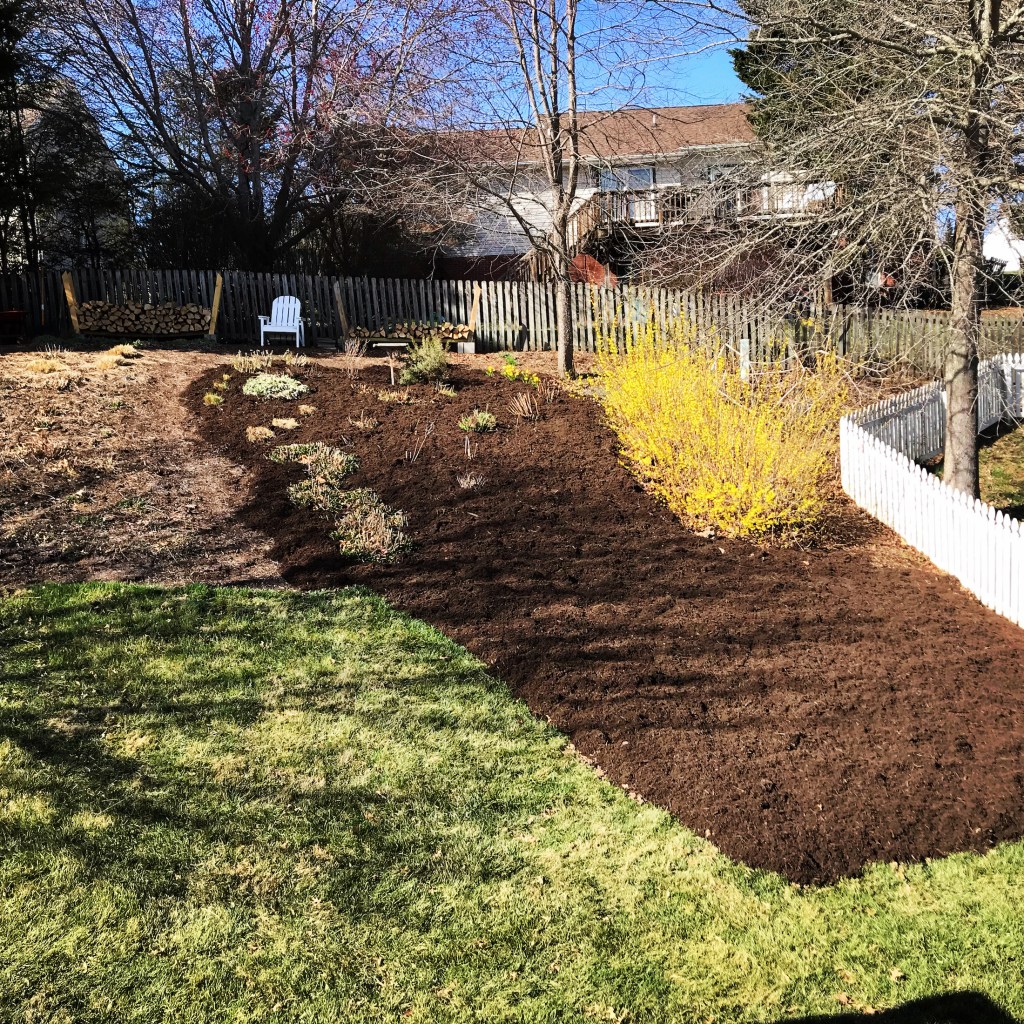
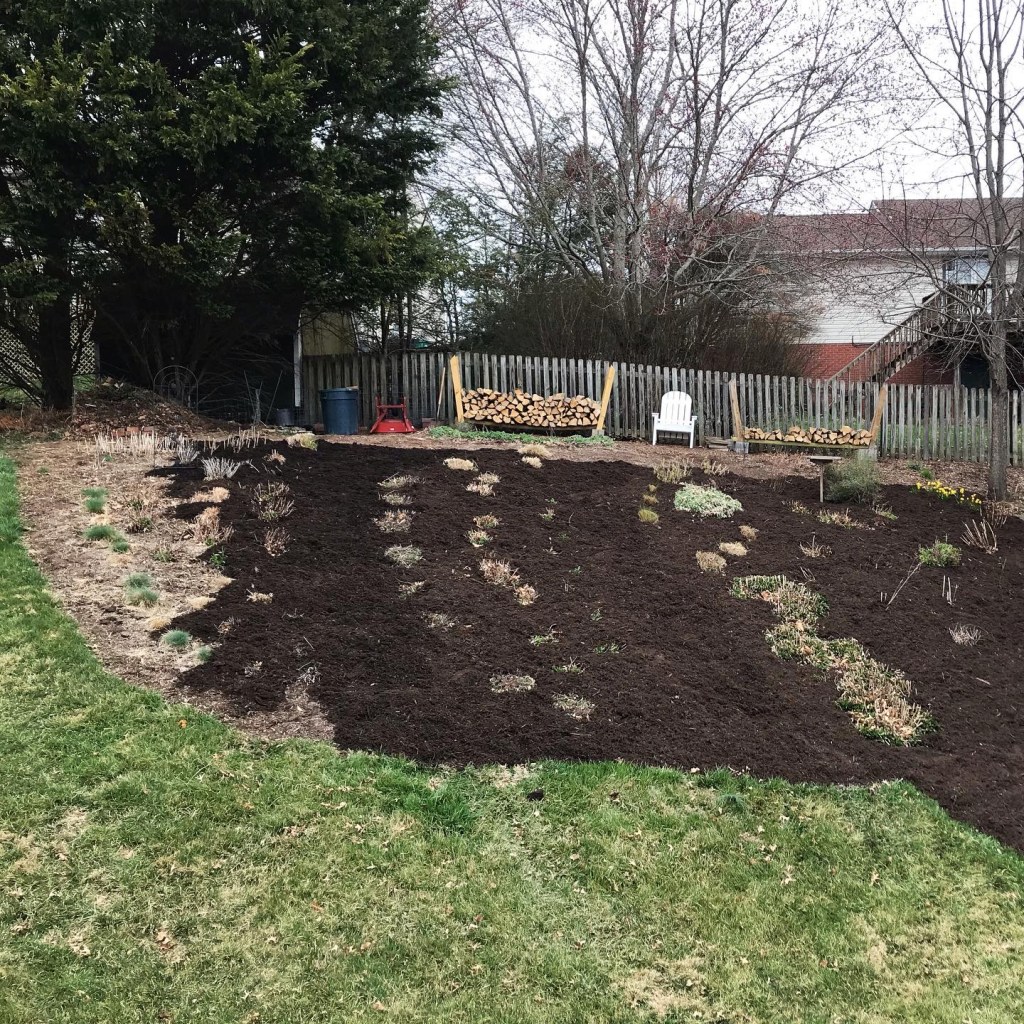
Today I wandered around with my camera, then looked back at photos from when I mulched on my gardening vacation in March. It’s so different now, and it’s only May!
Dwarf lilac
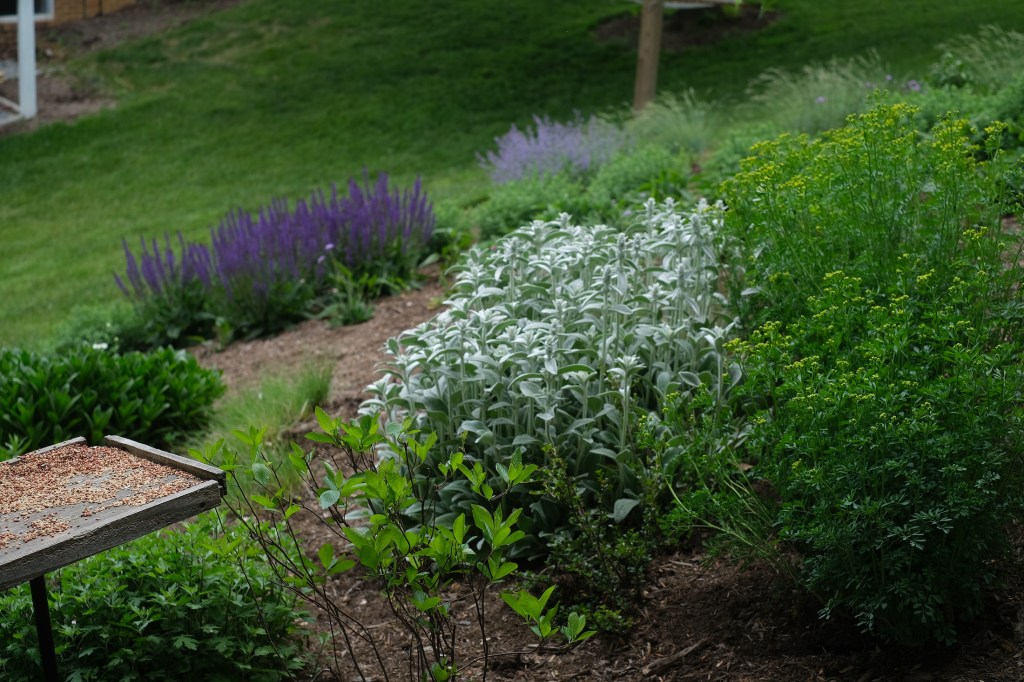
Back bed from the foot of the hill: marjoram and purple salvia in foreground, lambs ears and rue in front of the chair, shasta daisies to the right
The sugar snap peas are flowering
View from the top of the hill
My new passionflower ♥️
Lambs ears, penstemon, Walker’s Low nepeta
Yarrow
Penstemon
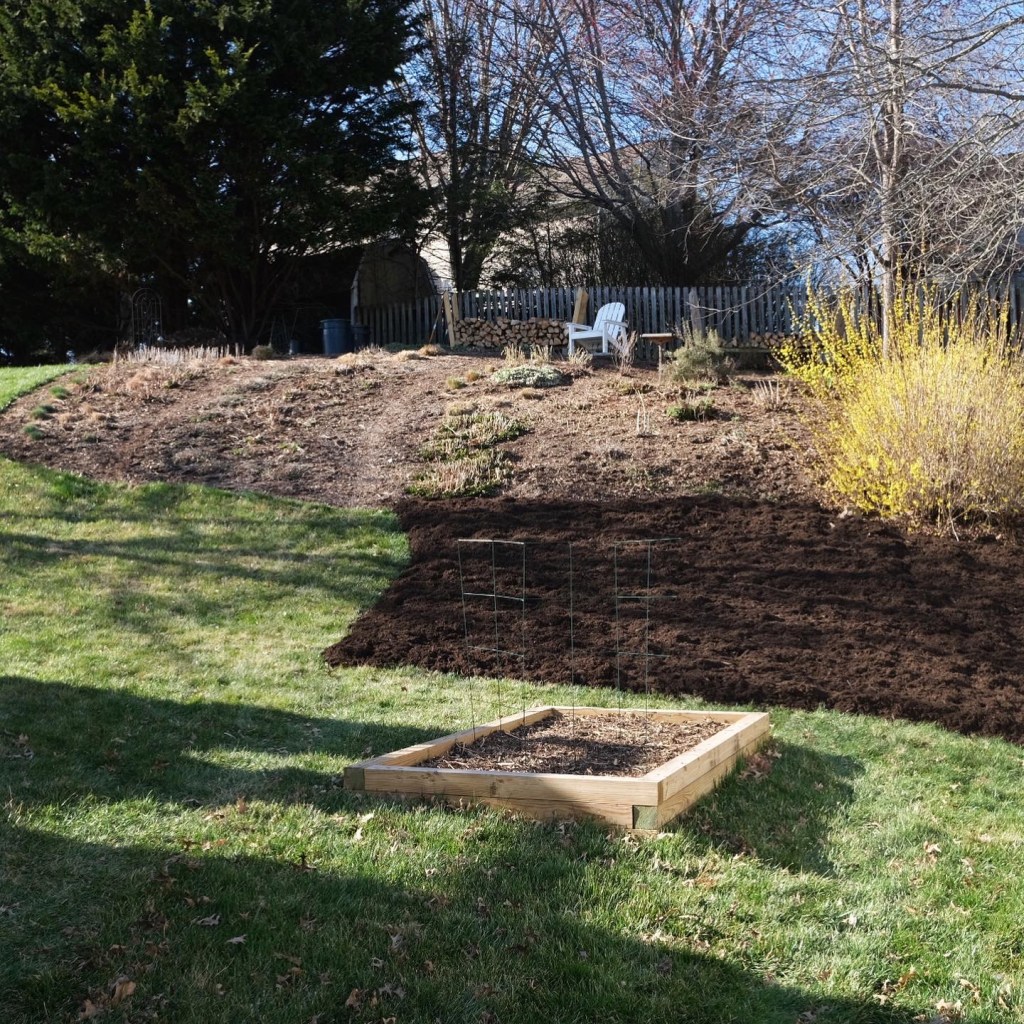
I planted the new bed (background) last weekend. The zinnia seeds have started to emerge, and the milkweed seedlings have survived so far. I put in some red salvia annuals so there’d be at least something there while everything fills in.
The Mexican feather grass isn’t coming in very thick this year 😦
Each spring, I take a week off of work to tend to the garden. Mostly this means spreading mulch over all the beds I killed grass for so I can grow butterfly-friendly plants. I’ve lucked out with weather each year, including this one. My vacation began on the spring equinox, and I had five days of sunshine and warm enough temperatures to work in short sleeves.
In previous years, I ordered 12 cubic yards of mulch to be delivered on the first day of my vacation. This year, thanks to the new bed I carved out in winter, I ordered 14 yards.
And it wasn’t enough. I called my mulch guy mid-week, and luckily he was able to deliver two more yards for me while I still had time to spread it. I finished on Friday, just before the rains of the weekend. Now, I’m back to work today, but the garden is ready for April rains, lengthening days, and sunshine. My chairs are out there, ready for me to sit in them as soon as it’s warm enough.
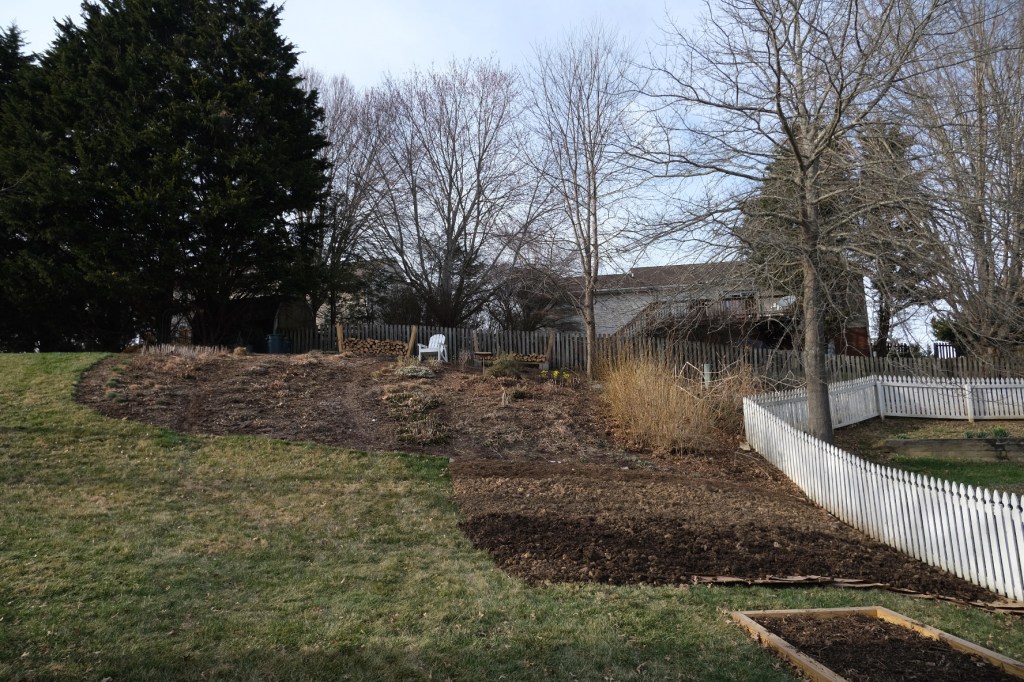
Back bed before mulch
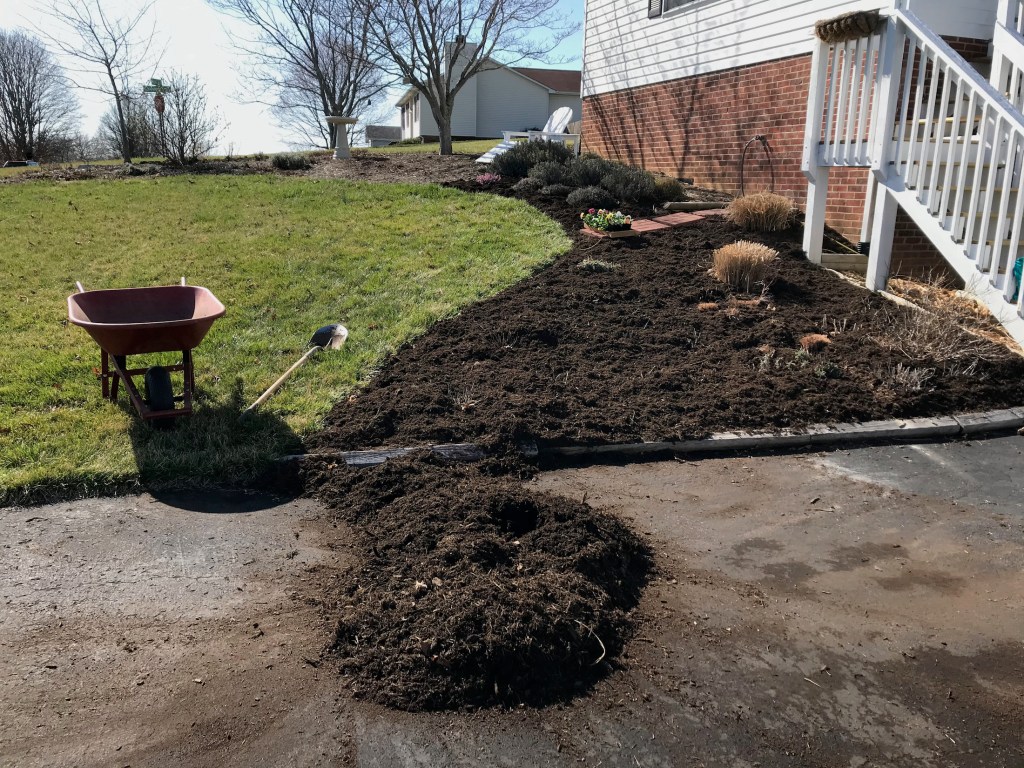
Front pile in progress
Almost done with front pile
This is where most of the front pile went
Making progress with the second pile of mulch
Gah! Ran out of mulch
I couldn’t make it stretch; I needed at least 2 more yards
Once I decided to kill more grass, I called my mulch guy to ask if they delivered top soil. He said yes. I got excited, and I asked him for three cubic yards, as soon as possible. That was two weeks ago. A snow storm was on its way at the time, and his dirt was still wet from the last snow. “I’ll call you when the weather is okay to deliver,” he told me.
Thursday afternoon, I was on a run on our second consecutive warm, sunny day — the first sunny days in what seemed like weeks. My phone rang when I was about 10 minutes from home. It was my mulch guy, so I stopped to walk, and panting, I answered the phone. Maybe he could deliver that day!
“Hi! I’m calling about your top soil, the weather finally is clear – ” he said.
“YES!” pant pant. Very excited. Grinning.
“We’re about to get another six days of rain -“
“Can you deliver it today?!” I said. In my excitement, I kept interrupting him.
“Yes. Today is the only day. I’ll be there in 30 minutes. You want it at the top of the hill, yes? I’ll meet you there.”
He delivered it in the late afternoon. I covered it with a tarp as the sky clouded over. With six more days of rain on the way, I wondered when I’d get a chance to spread it. If only I could get the cardboard down and the dirt on top of it, the rainy days would be perfect to water it in and get the cardboard good and soggy so that it will start breaking down at least a little bit before I want to start planting. With potted seedlings, I can dig through the cardboard for their roots to get into the earth. I’m worried about sowing seeds though; if the cardboard is still too stiff and new, and I sow seeds in the dirt on top of the cardboard, their new roots won’t be able to penetrate it. The sooner I can get the cardboard over the grass to kill it, and under the dirt and rain to start breaking down, the better chance my seeds will have.
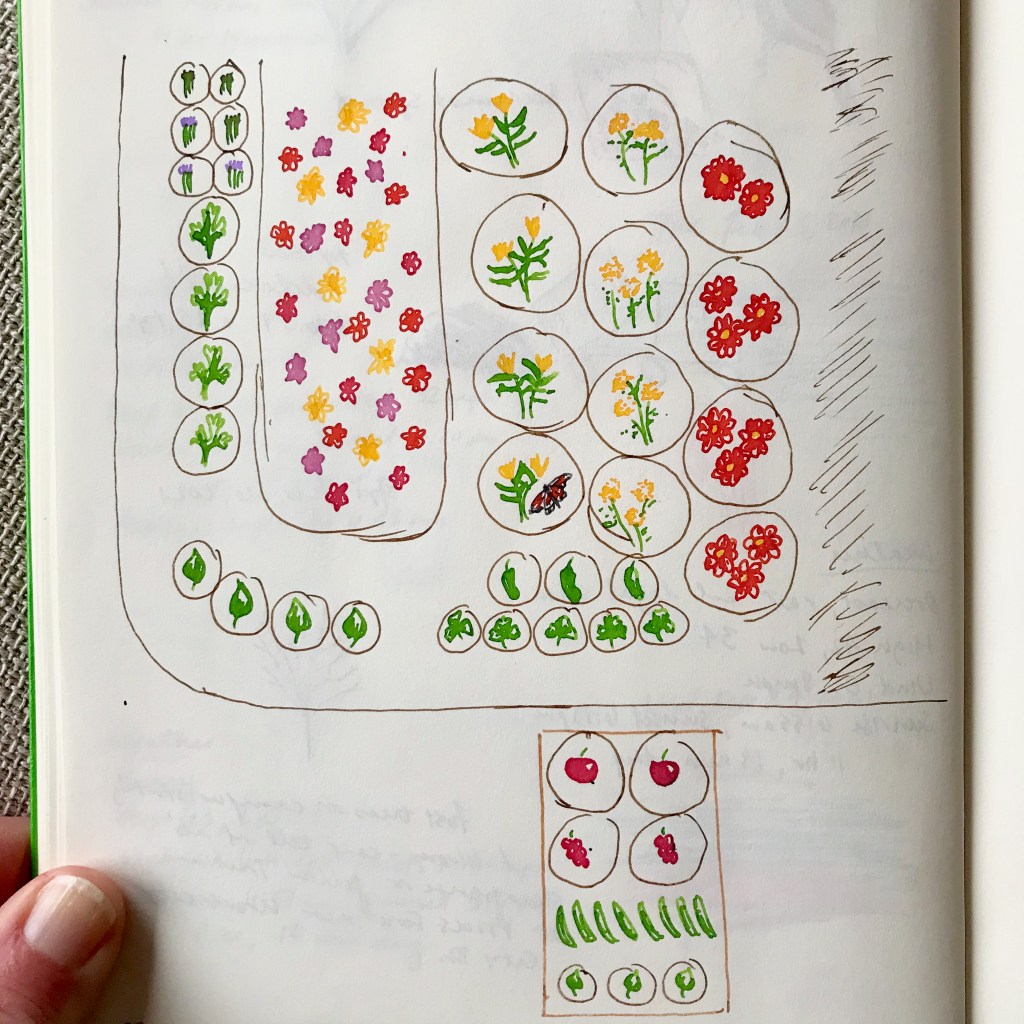
Planting plans: flat-leaf parsley, basil, milkweed, Mexican sunflower, and jalapeños I can start indoors then transplant the seedlings. Zinnias, chives, cilantro, and dill I will want to sow directly in the bed.
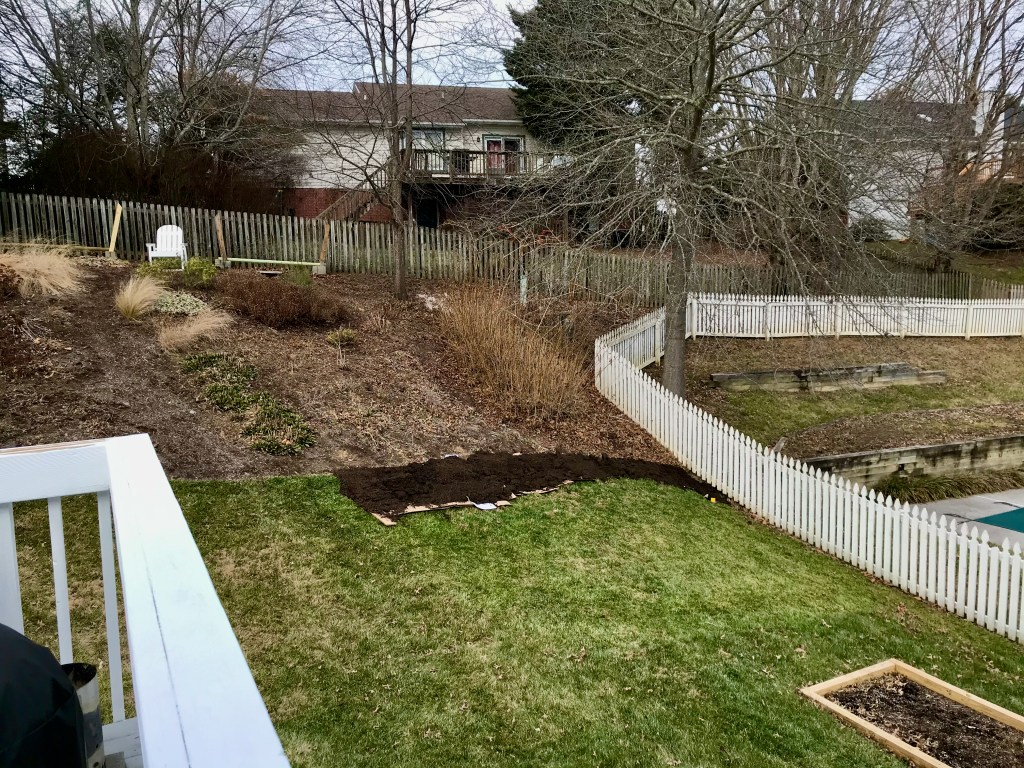
Yesterday, I couldn’t stand not taking advantage of the coming wet weather. So despite gross gray skies, rain, and a constant drizzle, I decided to go ahead and lay down the load of cardboard I’d collected from a nearby recycling dropoff. The soil was sodden and heavy, and I’m lucky I didn’t throw my back out as I shoveled, wheeled, dumped, and spread. It was pretty grueling work, and I was glad when I was done. Today, I sip coffee at the window and watch with glee as rain soaks my work.
I need maybe one more load of cardboard to finish off the area for my bed. Hopefully by the time I get to that final load, the soil will be drier. And spring will be that much closer by then!
Cardboard over the grass I want to kill
My wet dirt
Halfway there
The deck on the right is where I sit in spring, summer, and fall to watch the garden
Done! For today. This took about 2.5 hours. One more session should do it. Except I need more cardboard.
At the end of every summer, I think, cool, the garden is good. It looks great. I will leave it as it is; I won’t obsess during winter or move a bunch of stuff around in the spring.
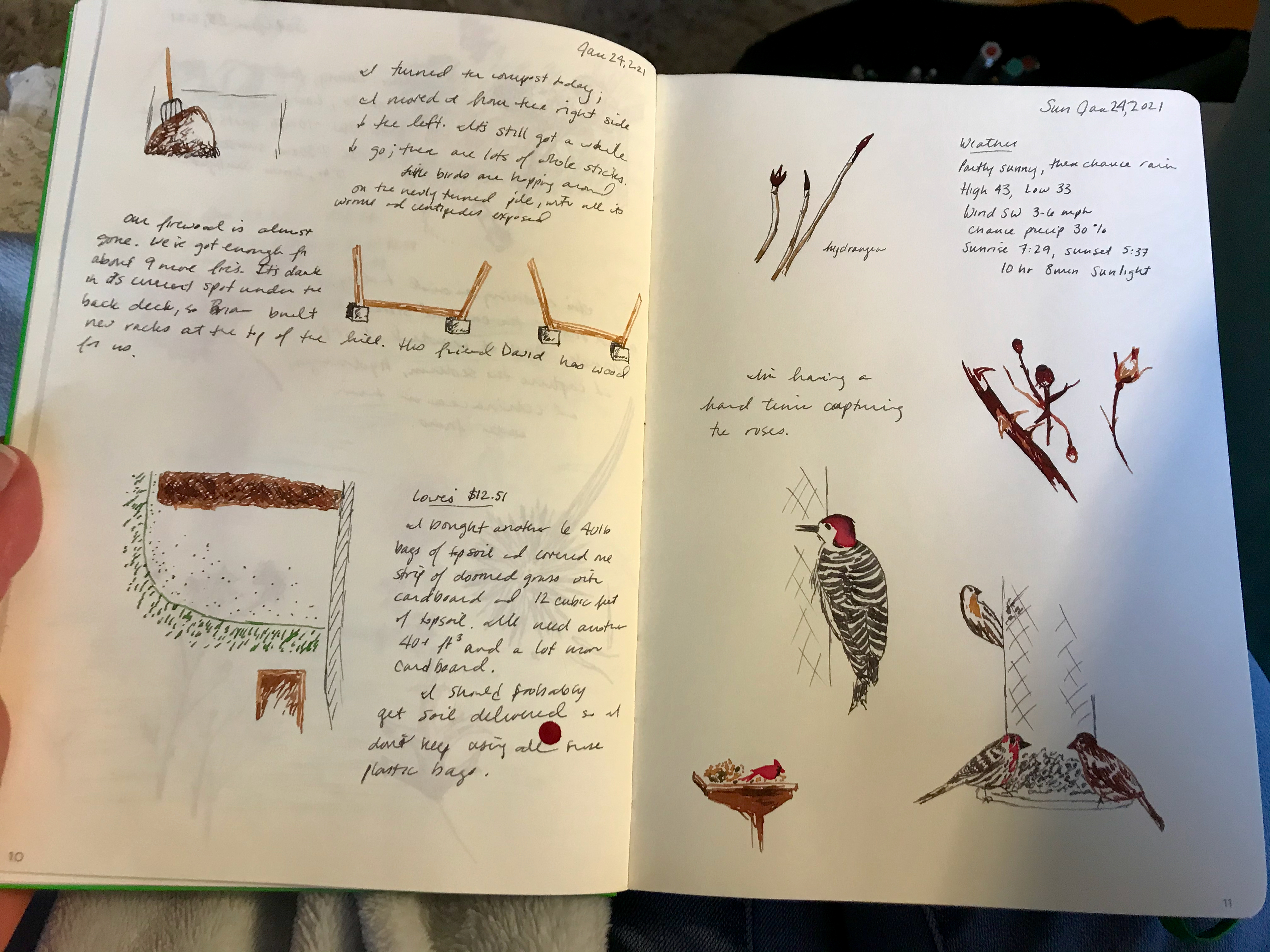
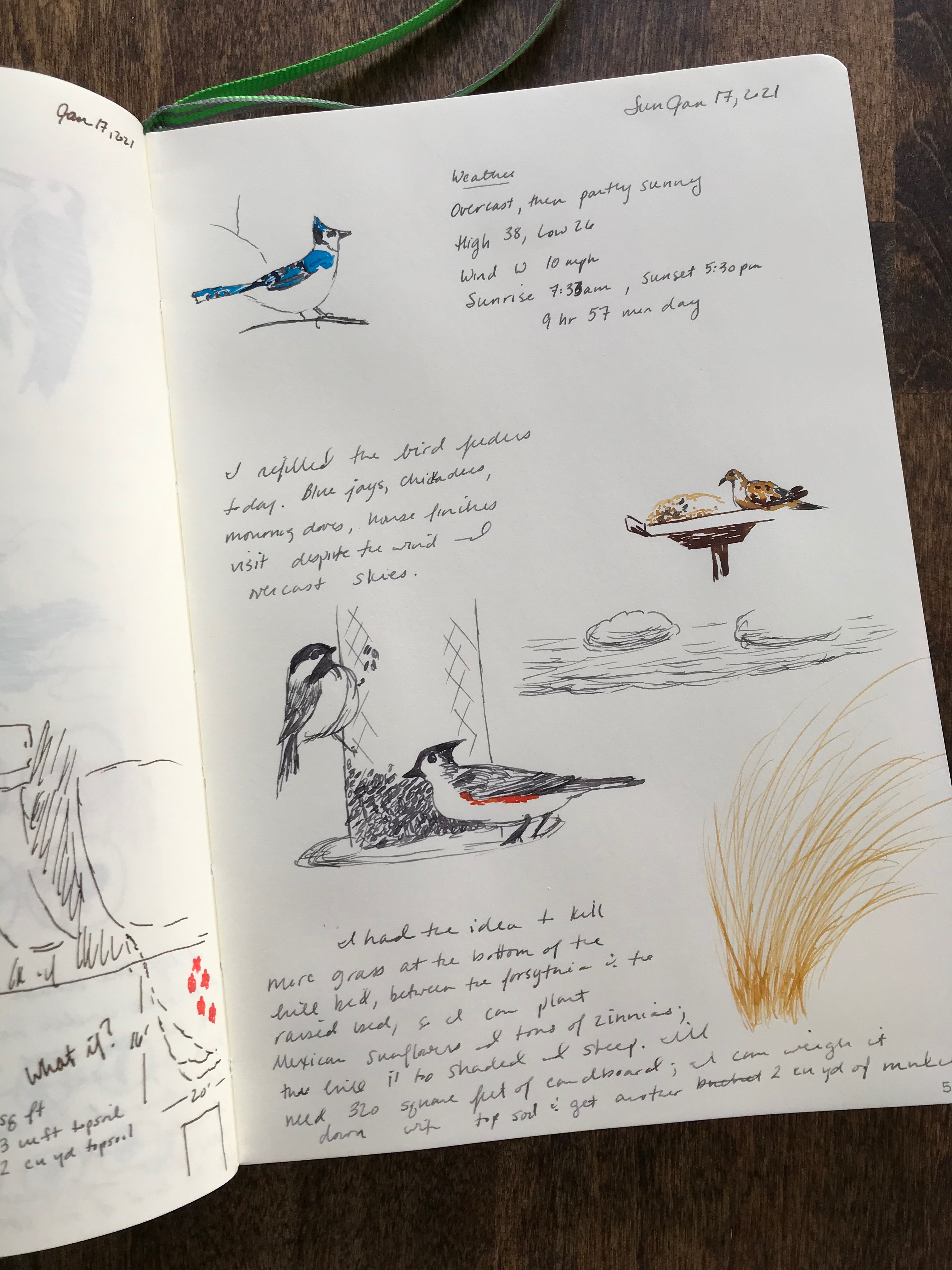
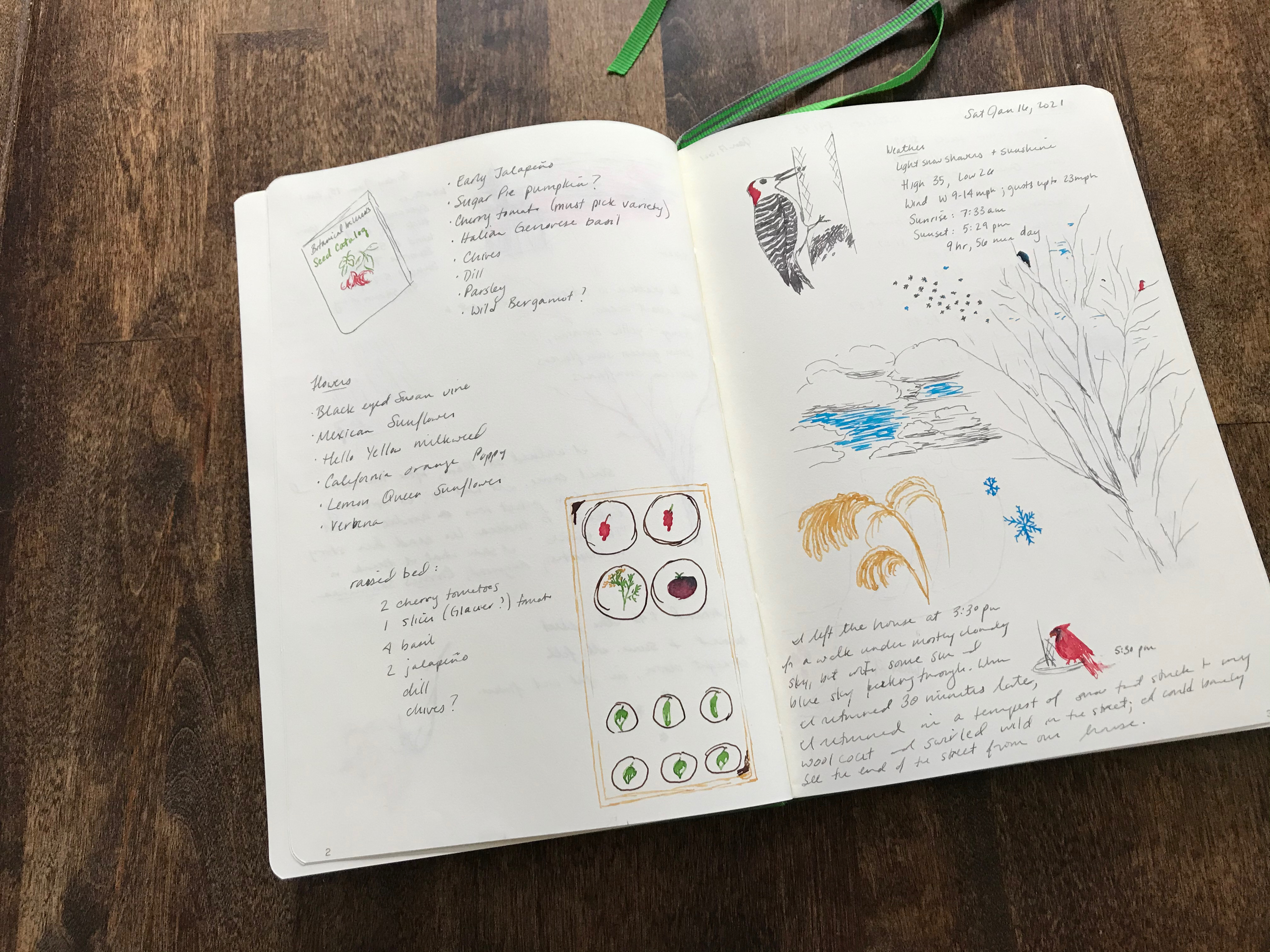
Then January comes. I order seed catalogs. I pace. I look out the windows. This year, I started a journal — with drawings! — to help me see the garden’s beauty even when the colors are just a dozen shades of brown.
Jan 23 garden journal
Jan 24 garden journal
Jan 31 garden journal
As I looked at seed catalogs and paced and looked out the windows, I thought, you know, I really want a big swath of Mexican sunflowers. And a giant patch of zinnias for the butterflies. And I really want more milkweed, too, and dill.
But all the beds are already full.
So I paced and looked out the windows more. I looked for a place a bed could go. A place with sun and that I could reach with the hose and that was somewhat level so the tall Mexican sunflowers wouldn’t flop down the hill when they could no longer bear up under their own weight.
There’s a big section of one flower bed that gets too much shade in summer for me to grow the things I want in it, but I realized if I pull it down a bit, I can create some space that gets more sun, is less steep, and would be a perfect place for a big flower patch.
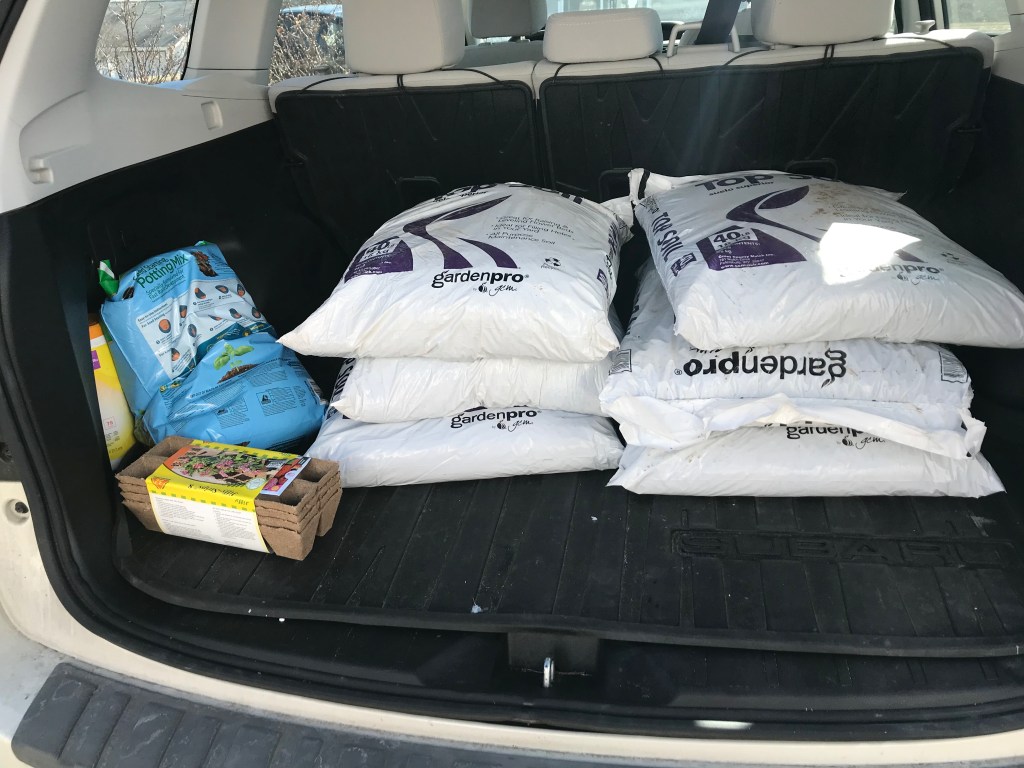
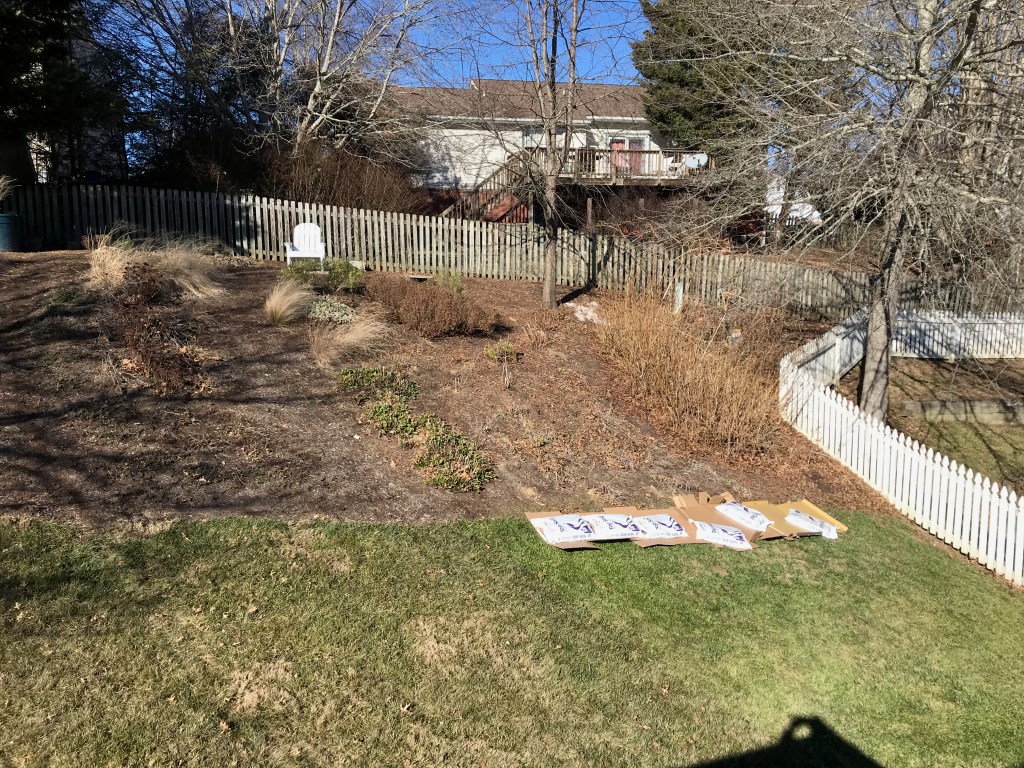
We still had a bunch of cardboard boxes left over from Christmas, so on a warmish day (for January — it was maybe 45 ℉), I set the lawn mower on its lowest setting to shear the grass close to the ground in the area I want to transform into a bed. I broke down the cardboard boxes, spread them out, and weighed them down with bags of topsoil.
Topsoil
Super sheared grass to kill – Jan 23
Cardboard layer – Jan 23
My idea is that if I start now, I can create a physical barrier between the grass and the sun to kill it. Meanwhile, I’ll cover the cardboard with topsoil to weigh it down. The topsoil will also provide dirt to scatter seeds directly into come May when it’s time to sow zinnia seeds. I’m hopeful the next three months of snow and rain will soften the cardboard enough that by the time June gets here and the zinnias are sending down roots, they won’t hit an impenetrable barrier.
First row of cardboard and dirt – Jan 24
This is all very much a fly by the seat of my pants idea, by the way. I’m pretty sure it will work.
However, I fear it will only work if I get started, like, now. As soon I exhausted our cardboard supply, I plotted when I could put more down. I had time off scheduled today, and I thought, awesome, I’ll do it then!
And then this happened.
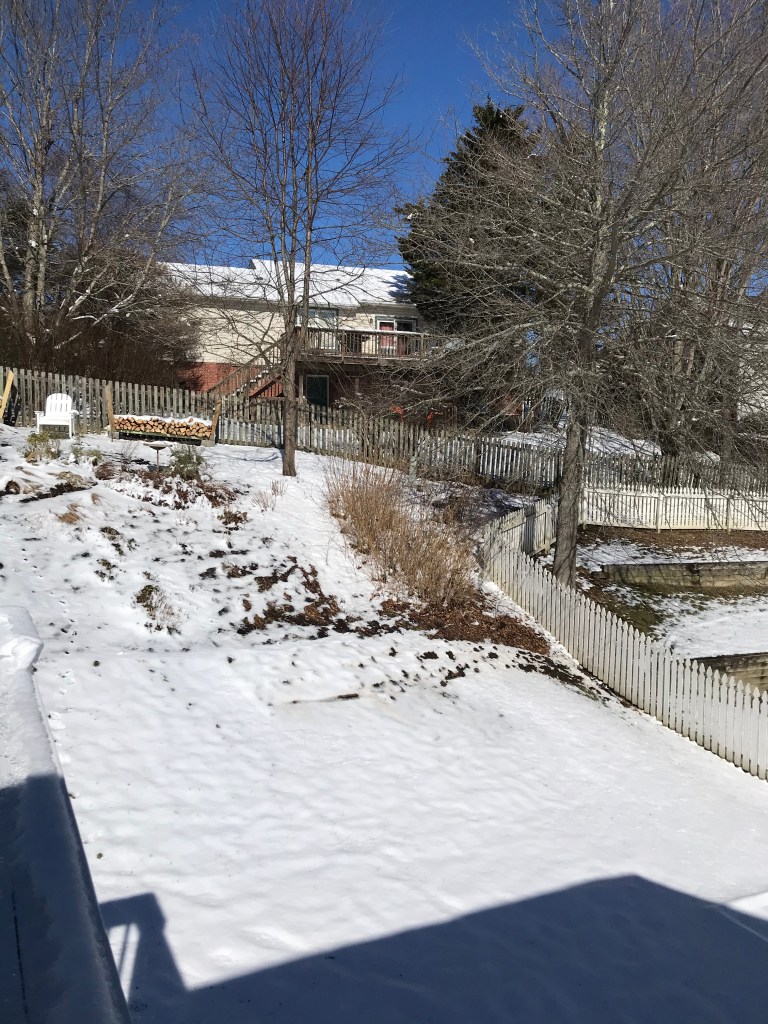
Hello snow. Jan 31.
Which means the area I wanted to work in today looks like this.
Guess I won’t be working in the garden.
Now, instead of laying more cardboard down, I’ve decided I should extend the bed even further, all the way around the raised bed, because why not? I can put in some sugar snap peas.
I couldn’t work out there today, but after a coworker inspired me with his compost delivery, I did put in an order with my mulch supplier for dirt to be delivered next week or the week after, depending on the weather. That gives me two weeks to scrounge up more cardboard, and hopefully not come up with more ideas of where to kill lawn. I don’t know how my back will handle shoveling this much more mulch in spring.
After the holidays, when the fun part of winter has ended but there are still at least three months of bare trees, no flowers, and cold that keeps us indoors, I start getting antsy about the garden. I stand at the windows and stare out, plotting, planning, making mental lists of seeds and plants to buy, wondering, “should I kill more grass for another flower bed?”
Usually I make lots of notes in pencil in a composition book, in words, never easy to find again when it’s time to actually do something in the garden. Those notes are always planning for a future rather than enjoying the present moment, which, like it or not, I must live through to get to the spring and summer where green will sprout from the ground, flowers will bloom, butterflies will flit and flutter, and I can sit on the back deck in short sleeves and bare feet to soak it all in.
This year I wanted to try something different. Every January, I have to consult old calendars to see when I did what for the garden: when did I start seeds indoors? When did I order mulch? When did the forsythia bloom? This year, I want to create a visual journal of these winter months. I want to be able to flip through it and see what was going on and when. I also want to acknowledge the beauty of winter so that I can better bear these dormant, cold months.
And, let’s be honest, I wanted another excuse to use my fountain pens. I’ve filled multiple lined journals with inked words. What if I use all these colors to make pictures, too?
When I organized my ink samples on Friday, I changed the inks in almost all of my fountain pens. I loaded pens with the colors I see outside in January — Honey Bee (golden), Walnut (brown), Moon Dust (gray), Cardinal Kestrel (red), and Coral (ok, I don’t see this one as much, except at sunrise). I switched out the turquoise blue in one pen for more of a sky blue.
Then, I took inspiration from my friends who draw, and I drew little pictures. I drew birds at the feeder, a bloodtwig dogwood I saw on a walk, the dry golden grasses that are still beautiful, even in winter.
The very first picture I drew, of the salmon sky at sunrise on Friday, is pretty terrible. Drawing is hard! You really have to look (and translate what you see through your body and into a correctly-proportioned rendering on the page). As I attempt to draw, I realize that when writing, it’s easy to leave gaps. I can write “cardinal” and that will conjure a mental image of a red bird, with a few distinguishing characteristics filled in, depending on how familiar the reader (or writer) is with cardinals. But when I’m trying to draw a cardinal — what color is its beak? And what shape? And how long? What’s the shape of its head? Its body? What color are its legs? You can’t really continue with your drawing without knowing those things. You can’t leave an empty space where a beak would be.
Those details force me to pay attention in a way I haven’t in the past. Drawing demands me to see more fully. I like that. Plus, paying attention really does make me appreciate the beauty of winter, even if I’d much rather the world outside to be green and warm.
I took Friday off last week and thought I might do some garden cleanup — cut back perennials, turn the compost — but I didn’t. I read instead. I finished The Weird Sisters and started Jane Eyre, and really, that’s all I wanted on a cold windy weekend. To lay under blankets and read novels.
Maybe over the Thankgsiving break I’ll take care of the garden. For now I’m publishing photos of the garden in November so that come spring I’ll be able to show the vivid contrast of new life.
Back hill Nov 2. I’ve done nothing.
The oak’s lost half of its leaves. Rake now or wait until they’re all down? Mostly I just wanted to capture the tassles of the miscanthus grass out front because I love them so much.














 Butterfly Mind