Stand of firs from Wilburn Ridge on Appalachian Trail, hike to Mt. Rogers from Massie Gap, VA
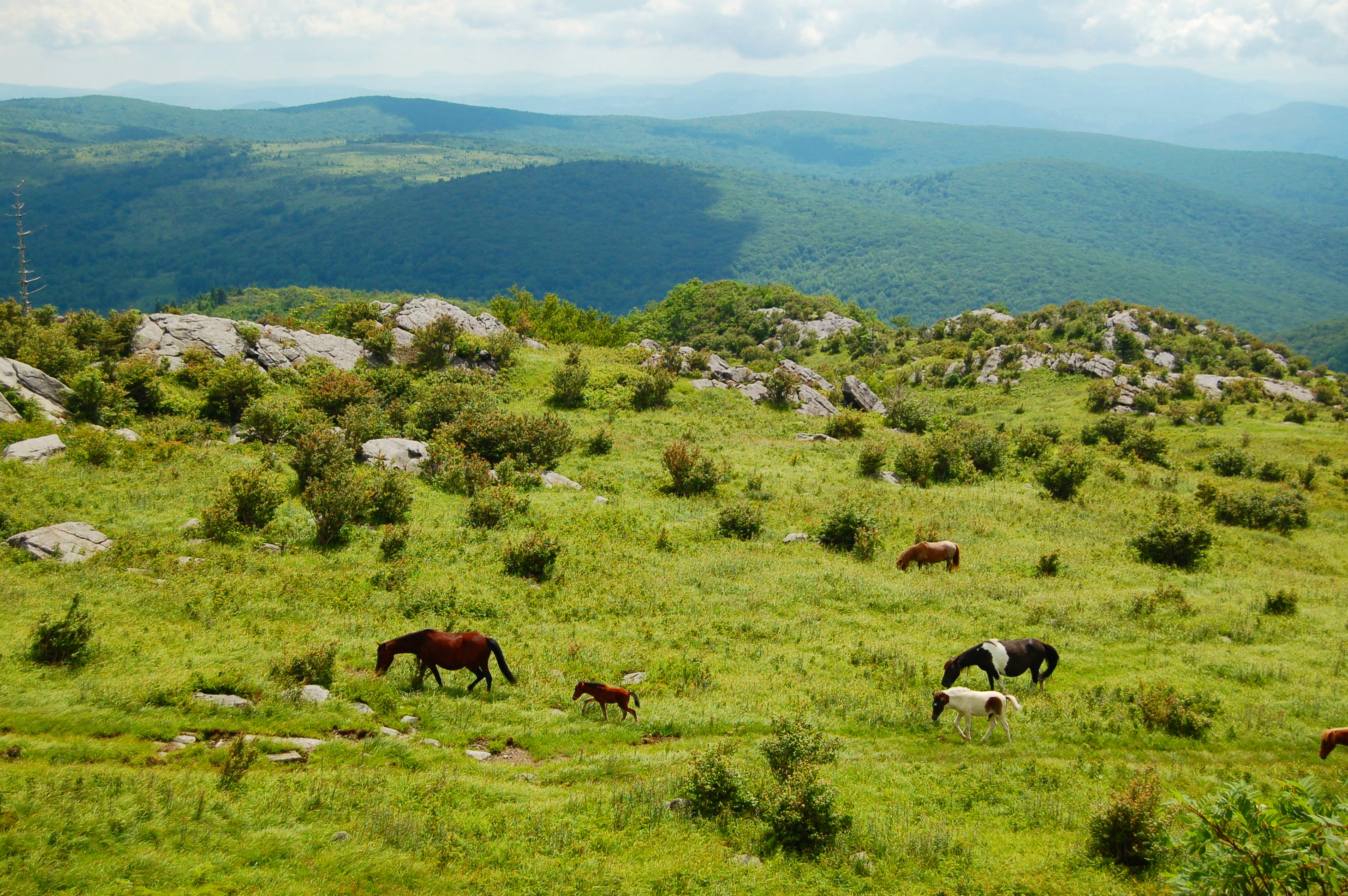
We hiked Mt. Rogers last year with our kids. Mt. Rogers is the highest peak in the state of Virginia (5729 ft), and the entire hike is in the open like this, with nearly 360 degree views of the Appalachians. This is possibly my favorite hike that I’ve ever done. Unfortunately my theme does not do landscape photos justice – click the images for a larger view.
Wild ponies, colt, and view of Appalachians, Mt. Rogers, VAWild pony in sunlight along Appalachian Trail on Wilburn Ridge, Mt. Rogers, VA
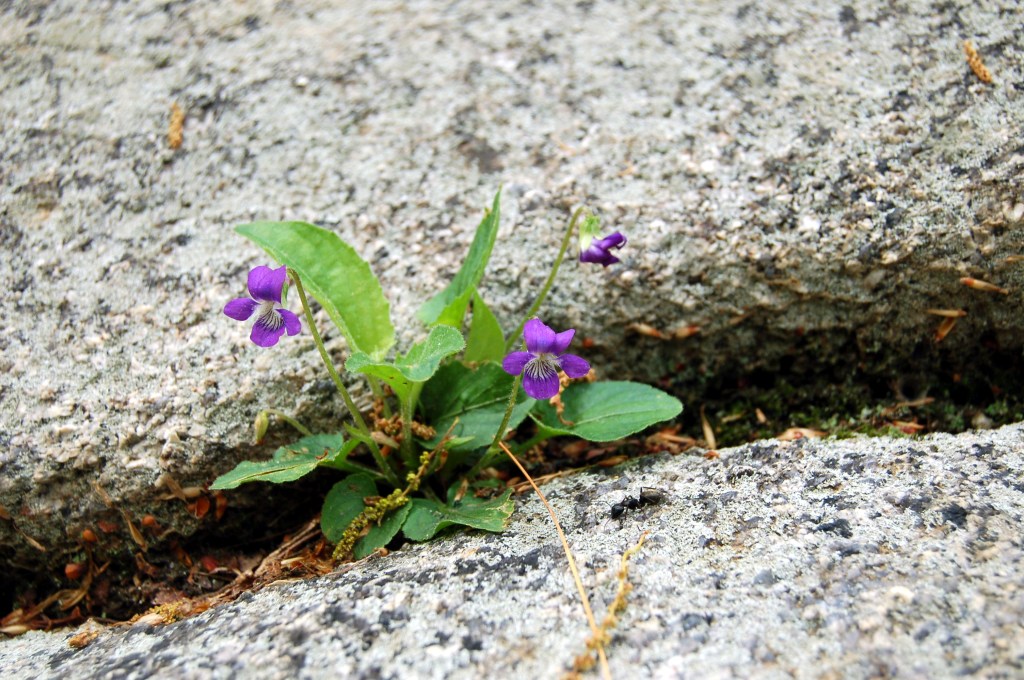
I can’t resist greenery growing from the fissures of stones. Rocks seem an unlikely place for plants to take root. Granite is unyielding. It says: keep out, you cannot penetrate me.
And yet. There are little flowers that do. Every time I see green growing from stone, I am reminded of the persistence of life. And I am glad.
We are a family of hikers. The four of us pile into the car and drive off into the hills to hang out with each other and explore nature.
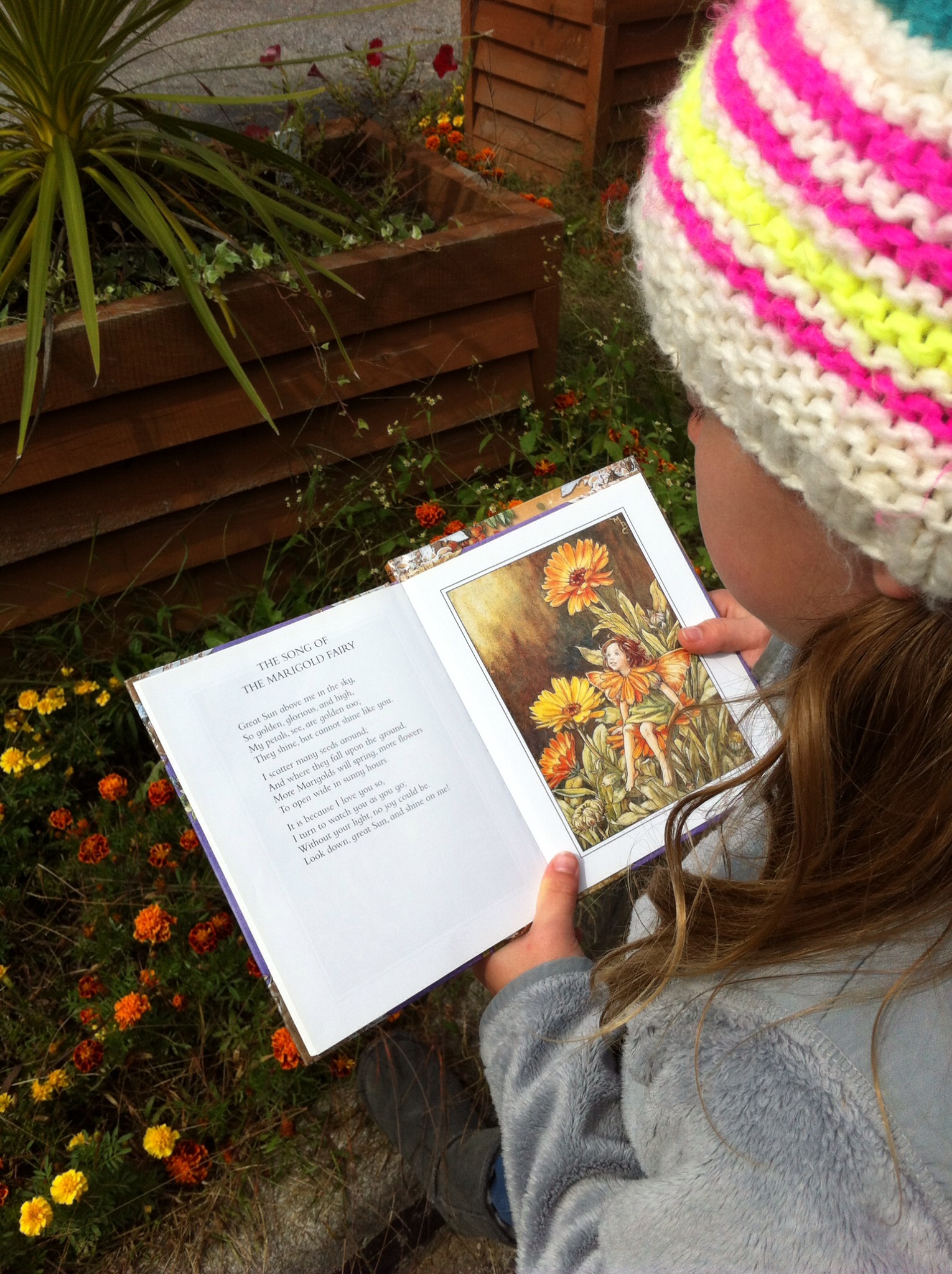
When we don’t have time for a full blown hike in the mountains, our kids and I like to connect with each other and with nature in walks through our neighborhood. We pull our Flower Fairies books off the shelves and go out into the world, equipped with poetry.
The photograph shows our daughter on a chilly autumn day bidding farewell to summer with “The Song of the Marigold Fairy.”
I thought I’d take this Photo101: Connect challenge all the way: this is my first post ever that was shot, written, edited, and published entirely from my phone.
I am a fan of contrast: of rough against smooth, of blur against sharp, of dark against light. When I saw that this week’s Daily Post photo challenge is to share a shot that captures a contrast, I knew I would want to participate, and I knew I would want to share photos from our trip to my childhood home in Georgia.
When I started looking through my photographs from the marshes, though, I realized the contrasts I was trying to tease out in the photos I selected – land against sea, wet against dry – were forced. Those things are not the true contrast I feel here. The contrast I feel here on the marshes is the wide expanse of flatness that is so different from our mountain home.
Morning light on salt marsh near Tybee Island, Georgia
In our Appalachian home water is surrounded by land, is fresh, and falls from the sky. In my Georgia home land is surrounded by water, the water is salty, and it rises from the sea.
High tide at sunset, Spanish Hammock, GA
In our Appalachian home the horizon undulates. The sky shrinks and expands as you move through the mountains. On the coast of Georgia the horizon is flat and the sky is one size: big.
Morning sky
As a person who seeks out a strong sense of place, I thrive on the contrasts between my two homes: the one where we are raising our kids, and the one I was raised in. I am grateful that by growing up in the mountains of Virginia and visiting their grandparents on the coast of Georgia, our children will have the chance to experience both.
Rain rattled the tent last night and pinged on an overturned cook pot. The past few times we camped it stormed the first night and I felt panicky as I lay down to sleep, breathing deep to calm myself then feeling like I couldn’t get enough air, even though we were outside where there is all the air in the world. Generally I’m so tired and the outdoor sounds are so primal and repetitive – rain rattling, frogs croaking, thunder rumbling – that drowsiness trumps anxiety and I fall asleep before a true panic attack sets in.
This morning everything is damp. The thin nylon of my sticky sleeping bag clings to my skin; strands of hair cling to my neck. My camp sandals – a pair of Crocs and a pair of Rainbows – are cold and clammy. Outside the world drips. The poison ivy leaves that surround our campsite glisten with rain and their mocking oils. The charred wood in the fire pit shines a glossy black.
I used the backpacking stove by myself this morning. It was already assembled, but still. I used my notes from last night to boil water for oatmeal and coffee while B___ finally got a chance to sleep in. He lounged in the tent while I shooed a daddy long legs off the stove, pumped the fuel, lit the burner, listened to the hiss of a Whisperlite stove in the stillness of the campground morning.
It’s weird wearing glasses on a camping trip. They seem like an indoor thing not an outdoor one. They make me feel vulnerable to the elements – they get raindrops on them and get caught on my sweatshirt as I pull it over my head. When I take them off I hurt. My eyes work hard to focus and they blur and feel like I need to rub them to make them see the world crisply, but rubbing them does not help. My head begins to ache inside, behind my eyes, and at my temples, and so I put the glasses back on again.
The kids caught fireflies in the field across from our campsite last night. I sat under the trees in a nylon camp chair and watched them in the distance, reaching up with hands poised to cup around a lightning bug, like they were preparing to catch a kickball coming down from the sky. Or leaning down, knees bent, crouched and sneaking up on fireflies in the grass. The fireflies lit and darkened all around the grassy edges under the trees where the evening deepened sooner. Our children’s laughter drifted across the field to me till we heard thunder and called bed time.
In the quiet morning, my pen scratching paper while the campground sleeps, the sun not high enough yet to pierce the fog, all of us alive and the world gently dripping, the panic of the first night has gone.
View of river gorge from Towers overlook, Breaks Interstate Park, Virginia.
Sunlight shines
on evergreens browning. River
rushes on below.
This entry for the Between photo challenge is in honor of my husband’s favorite tree, the eastern hemlock, which is suffering widespread death in the Appalachians due to an exotic insect, the Hemlock woolly adelgid (HWA). Where 20 years ago we ran our hands over hemlocks’ feathery branches on every Appalachian hike, all the hemlocks we see now are brittle and brown, denuded of their soft needles, or if they do still have leaves, they are encrusted with the egg sacs of the insects that are killing them (the skeletal trees in the foreground of the picture are hemlocks). If you have hemlocks on your property, please see this Nature Conservancy article for information on how to treat the infestation.