Each spring, I take a week off of work to tend to the garden. Mostly this means spreading mulch over all the beds I killed grass for so I can grow butterfly-friendly plants. I’ve lucked out with weather each year, including this one. My vacation began on the spring equinox, and I had five days of sunshine and warm enough temperatures to work in short sleeves.
In previous years, I ordered 12 cubic yards of mulch to be delivered on the first day of my vacation. This year, thanks to the new bed I carved out in winter, I ordered 14 yards.
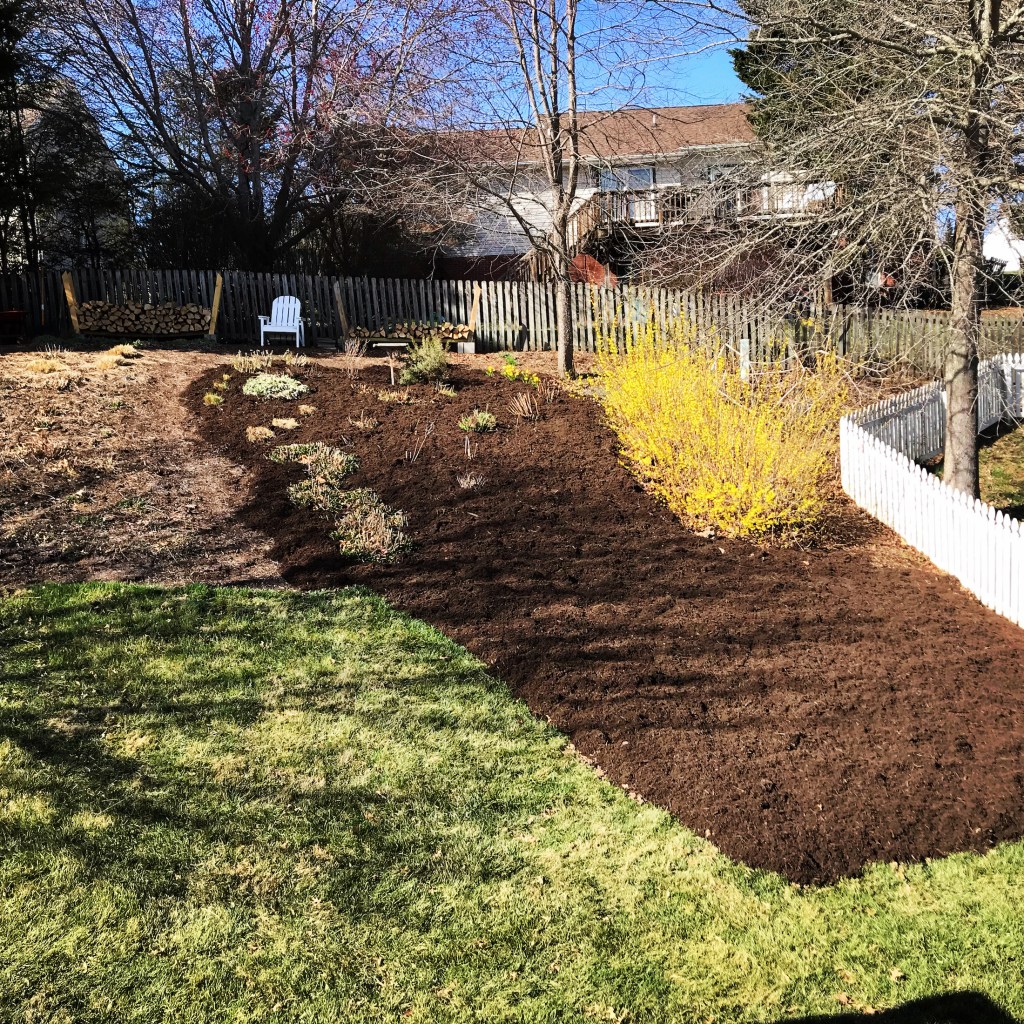
And it wasn’t enough. I called my mulch guy mid-week, and luckily he was able to deliver two more yards for me while I still had time to spread it. I finished on Friday, just before the rains of the weekend. Now, I’m back to work today, but the garden is ready for April rains, lengthening days, and sunshine. My chairs are out there, ready for me to sit in them as soon as it’s warm enough.
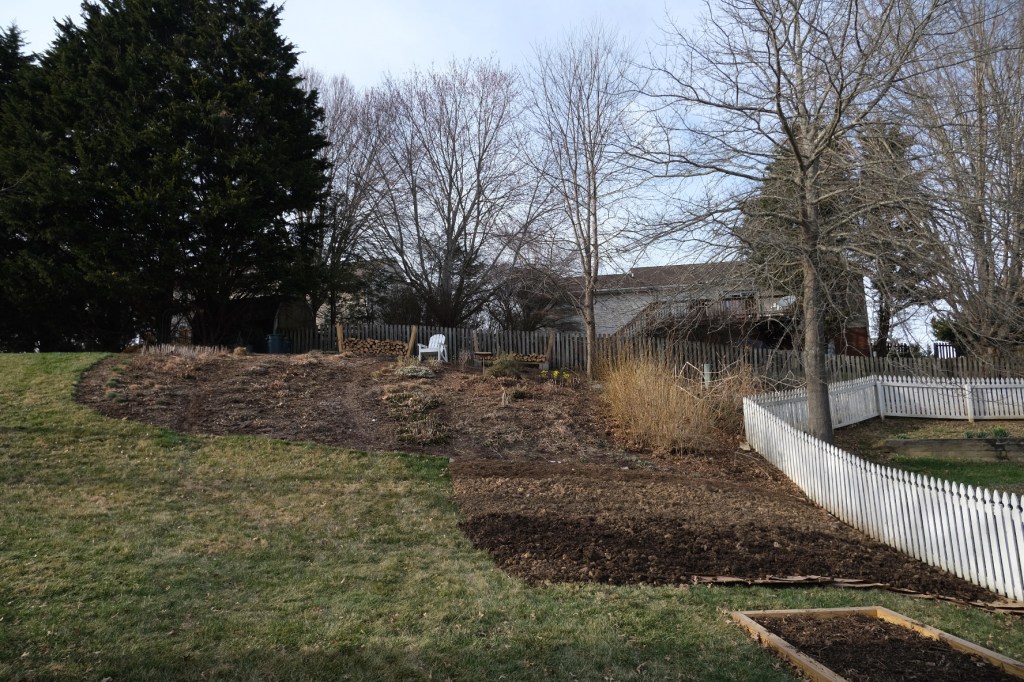
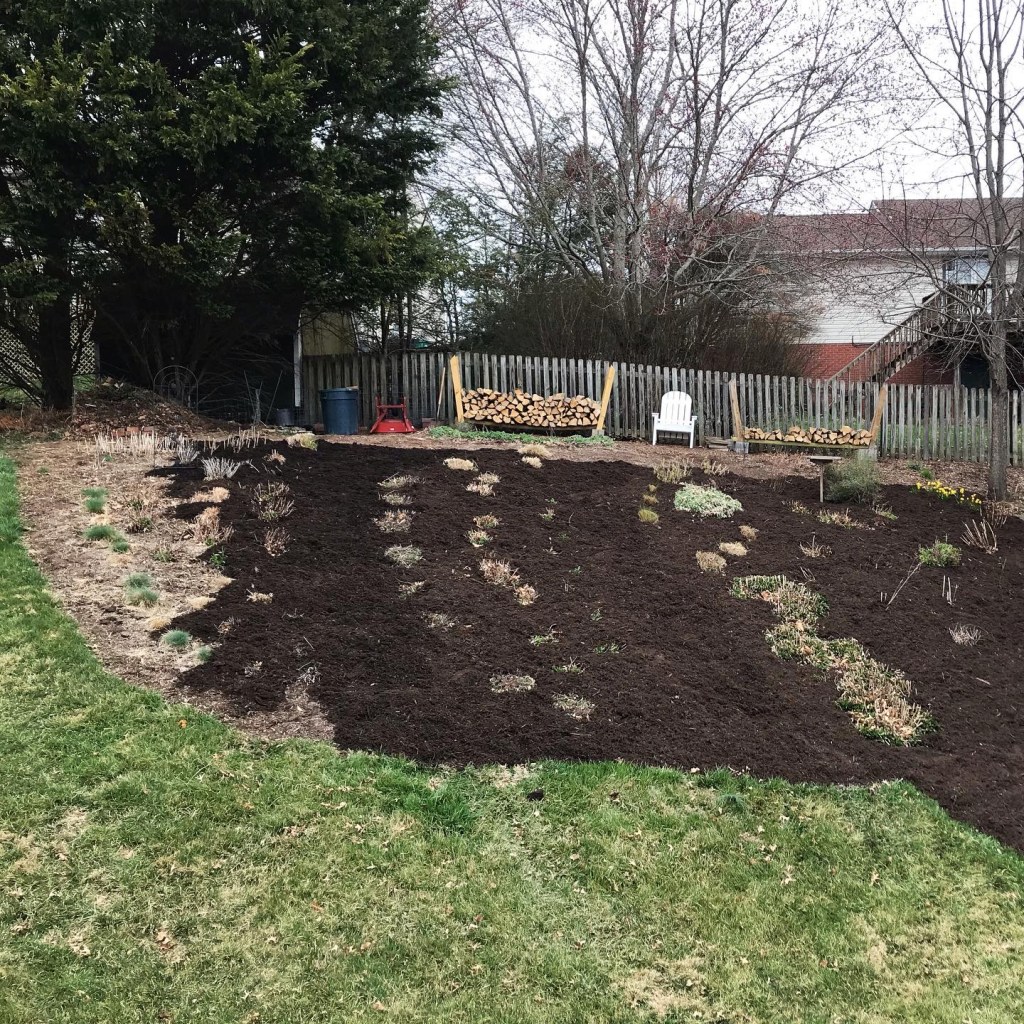
Back bed before mulch
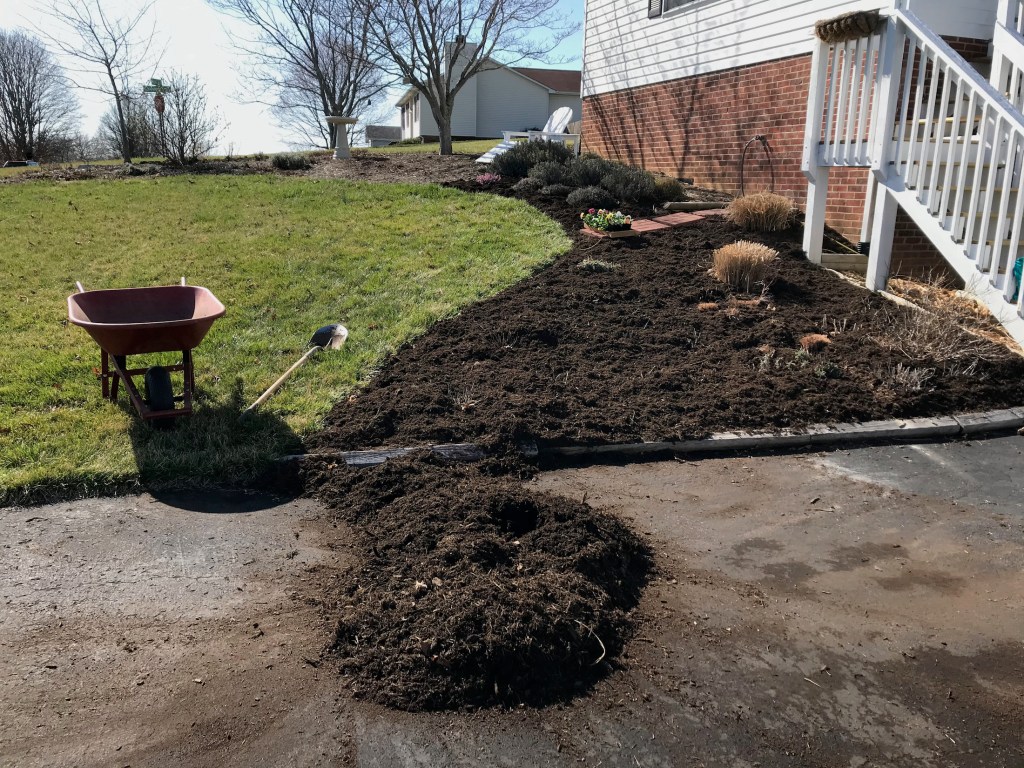
Front pile in progress
Almost done with front pile
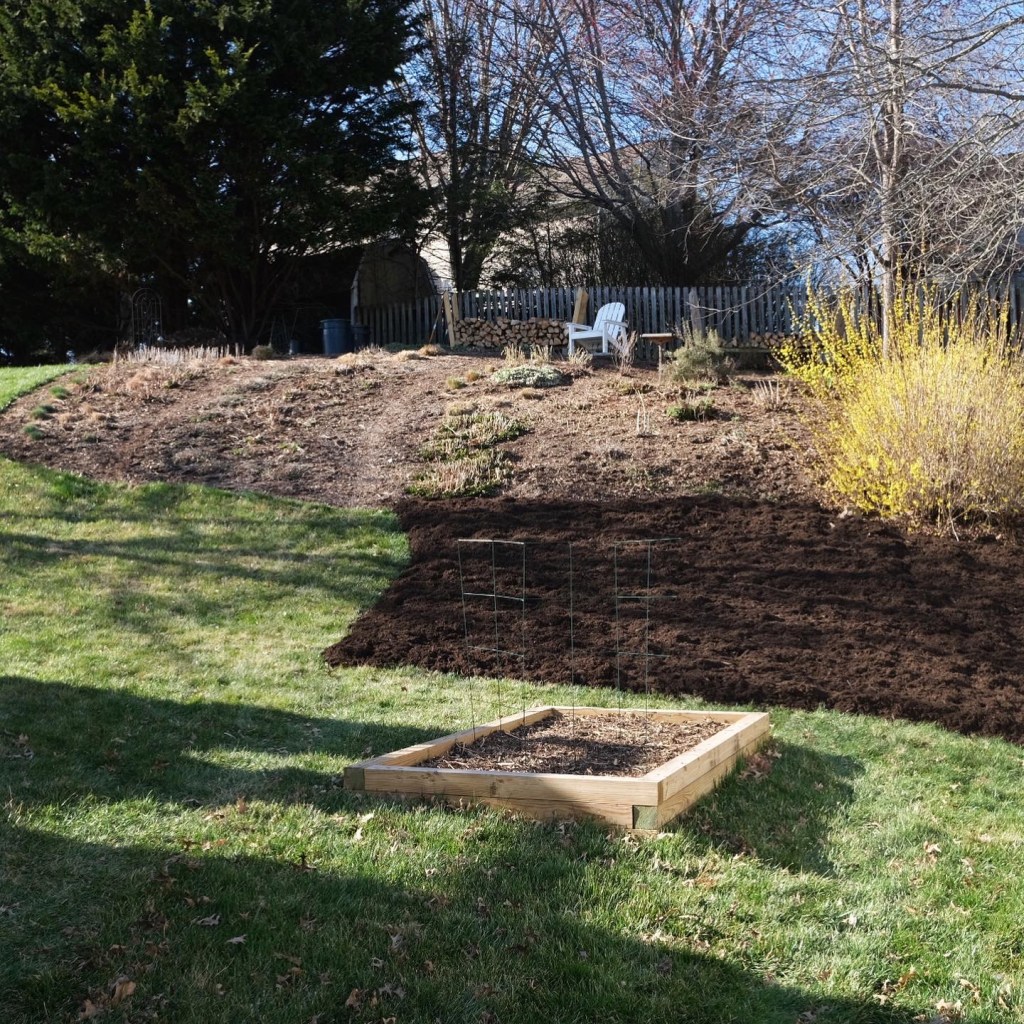
This is where most of the front pile went
Making progress with the second pile of mulch
Gah! Ran out of mulch
I couldn’t make it stretch; I needed at least 2 more yards
Tuesday, August 4, 2020, 7:54 am The morning after Tropical Storm Isaias Atlantic Beach, NC Weather: sunny, windy
During the day yesterday, I was happy we came on vacation, despite Tropical Storm Isaias. This morning, I’m glad we came. But last night, as the storm passed through in the dark of night, I was scared. When the wind first gusted and rammed itself against this tall skinny condo, barely better than 3 Lego bricks stacked one on the other with no stabilizing base, I thought my husband was tossing and turning in the bed because the bed kept shaking. But my husband slept soundly, without movement; the bed shook each time a gust buffeted the house.
And that was just when the storm began to make itself known, around 10pm. The full force wasn’t predicted to arrive until 2am.
The sounds of the storm filled me with anxiety. The rain on the windows sounded like gravel thrown at glass. The slap and rattle of wet palm fronds outside was constant, and wind swooshed as it pressed against the house and around its hard corners. The storm filled my ears, as did mechanical sounds inside the house, like the whir of the air conditioner and the hum of the dishwasher. The sounds all seemed thunderous, and they blended together so that I couldn’t tell one from the other as the bed shook in the dark. The maelstrom of noise built until it sounded like a train chugging towards us, and I imagined a tornado slamming into this matchstick condo, ripping the roof (and maybe even the sides!) off the building, and sucking our kids out from their third floor rooms into its funnel of wind and garbage cans and palm fronds and timber from houses it had already torn apart. But it was dark out, and I couldn’t see, and this was only a tropical storm, right?
To stave off a panic attack, I named US cities in alphabetical order in my head: Anchorage, Baltimore, Chicago, Denver… I must have gone through the alphabet six or seven times during the night. Around 11 or so, I smelled something burning, as did my husband, as did our son. We smelled it all over the house, top to bottom, after the air had cut on. We could not locate the smell’s origin. My husband went outside to check the heat pump, and while he was out there in the dark of the stormy night, a neighbor raced to their car with their luggage. He and I both wondered, where would you go? There’s nowhere to escape to. You’re going to drive in this? Drive over a bridge in this?
We turned off the air, the smell went away, and we all tried to go back to sleep, us on the ground floor, our son back up on the third floor. At some point my husband got out of bed because he couldn’t sleep. I must have drifted off because soon I was startled awake by someone in the room: our daughter. My husband was moving them down from the third floor. It was about 12:30am and the house was really rocking at this point. If I could feel it flexing with the wind on the bottom floor, I can’t imagine what it must have felt like on the third. Our daughter climbed in bed with me and I started again with the cities because at this point, everything was shaking and slamming, and I expected some sort of projectile to come through the window at any moment, shatter glass everywhere, and I needed to be strong for our kids. In the night I wished for home and wished for the storm to be over and wondered if we had made a stupid decision, and I thought, we’ve weathered plenty of tropical storms, and none of them felt like this. This isn’t even a hurricane. Imagine adding 20, 30, or 60 mph of wind! It probably feels worse than it is because these places are built to flex in storms; they’re built so that we’ll feel the wind. Lord have mercy.
I finally fell asleep. I remember looking at the clock around 3am and thinking, uggh, it hasn’t abated; I thought it would be better by now. But I woke later and it was better; the house wasn’t shaking as much, and I could still hear the whistling onslaught of wind, but it no longer sounded like it was trying to push the house over.
I woke around 7am and came up to the middle floor where the living room and kitchen are to look out the window and assess the damage. There was none. Not even a twisted stop sign. Not even a palm frond down. A bunch of sand had blown into areas it hadn’t been yesterday, and a few garbage cans were on their sides, but I didn’t see so much as a missing shingle from a roof.
My husband was asleep on the chair with the ottoman stretched out before him for his legs, and our son was asleep on the couch. The tall floor lamp lay on the carpet, and the Dutch ceramic jars that had been displayed on little shelves above the couch were also on their sides on the carpet, deliberately placed there. The lamp and the jars had rattled and swayed so much on their perches, my husband and son feared they’d crash to the floor, so they preemptively laid them down.
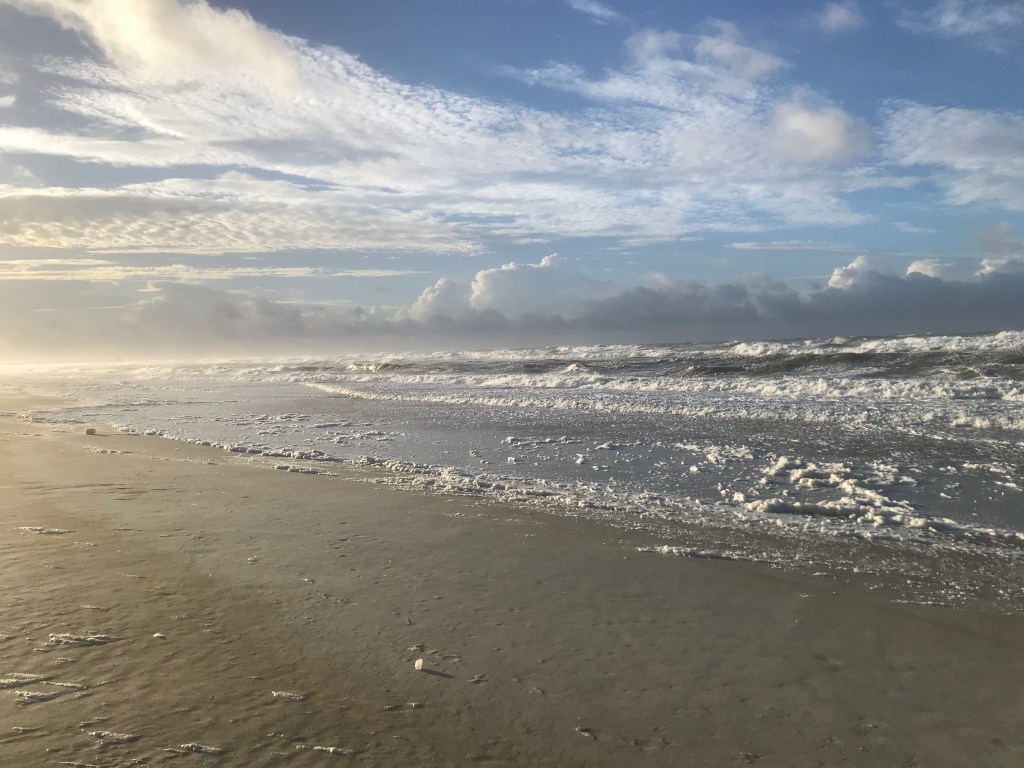
I walked out to the beach and the Atlantic Ocean was white breaking surf as far out as I could see. The early sun shone bright on the white froth, and mounds of sea foam scudded across the beach in wind that pressed my clothes against my body and threatened to blow my hat from my head. The lenses of my my glasses were coated with sea spray in minutes, and my heart thrummed with joy at the sight of the stormy sea. The rest of our trip was glorious.
The day before Tropical Storm Isaias
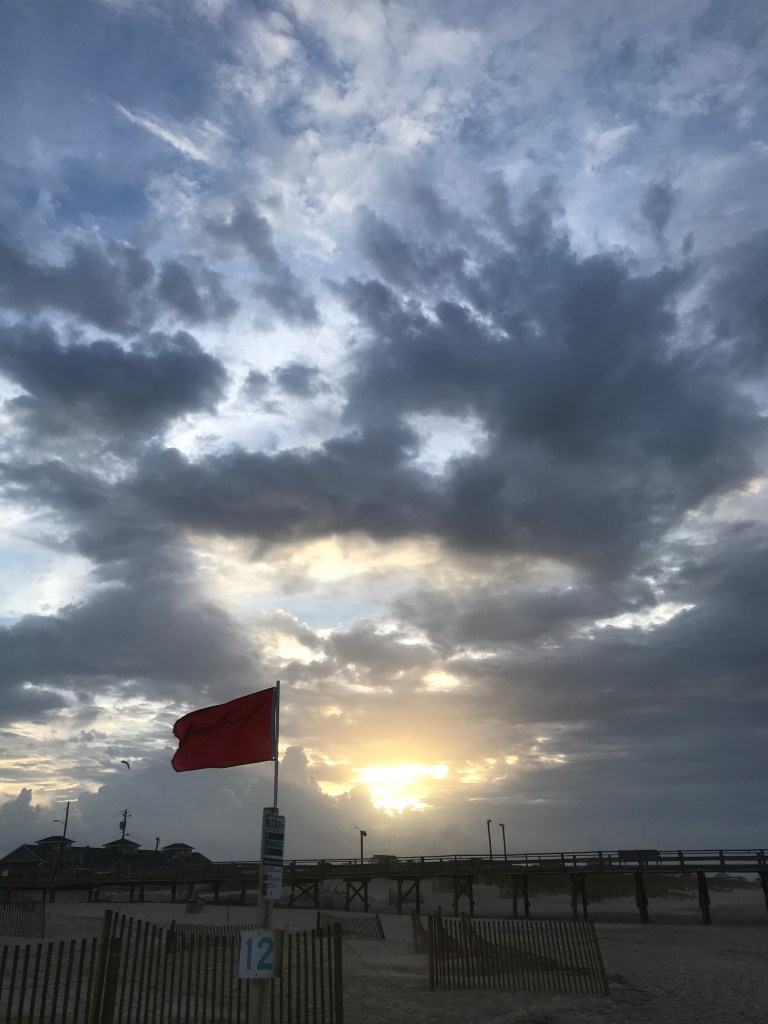
Sunrise before Isaias: single red flag
Morning before Isaias: pier and surf
Life guard stand in the morning before the storm
Calm before Tropical Storm Isaias
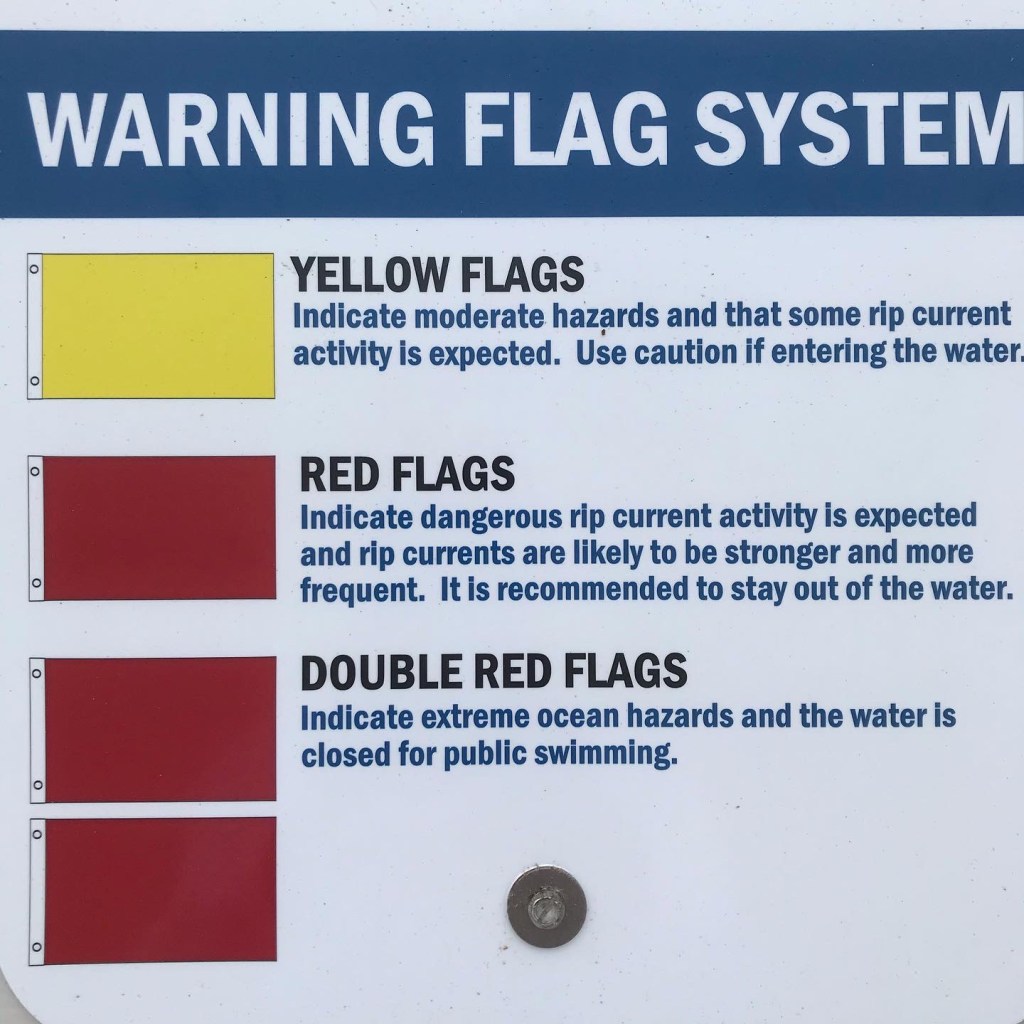
Beach warning flag system
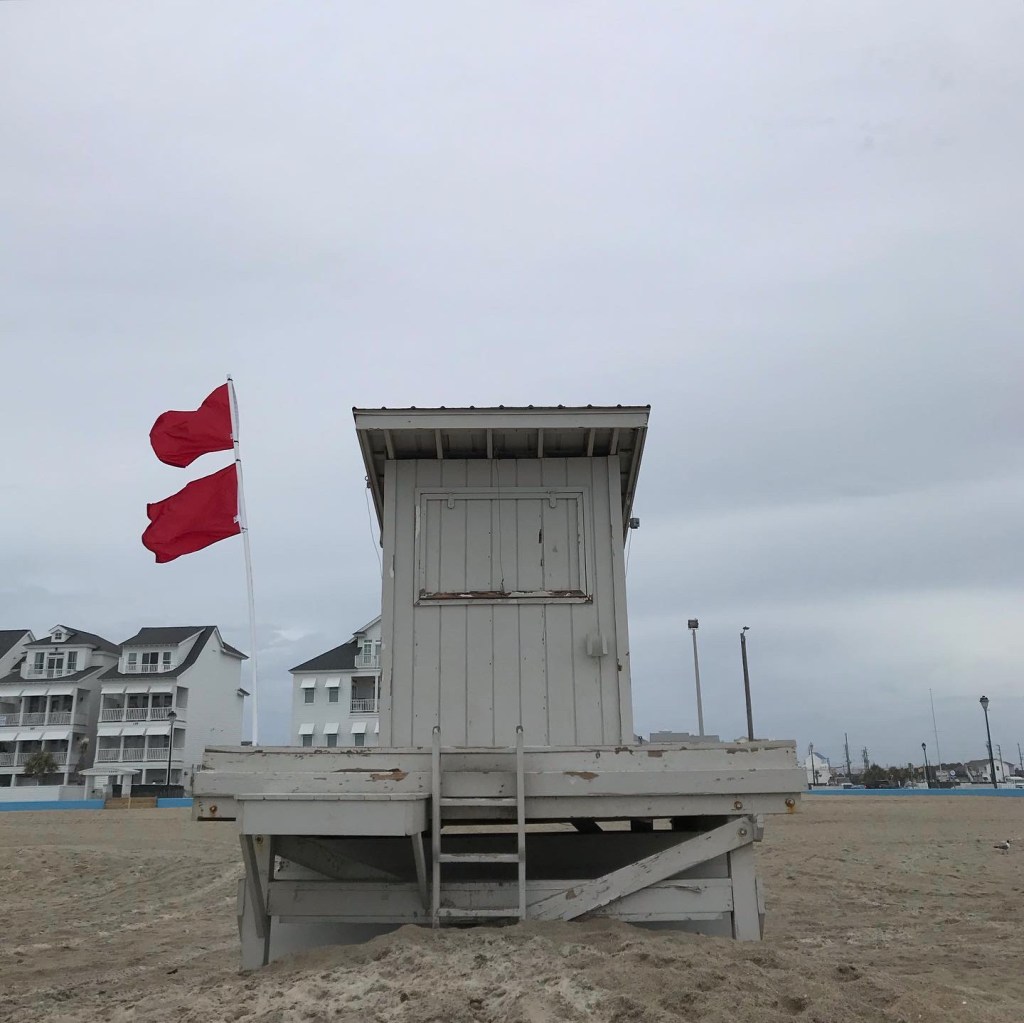
Afternoon: warning increased to double red flag and life guard stand closed
The surf in front of me, just 50 feet away, curls gently into white froth. It crashes, swishes, sighs, then effervesces in iridescent foam bubbles. The wind is from the southwest, from the sea. I feel it on my right collarbone; it dries the sweat from my run. Seagulls cry. Beachcombers in straw hats pick their way through the swash zone, heads down, scanning for shells. I sit at the edge of the tide line, with my butt in dry soft sand and my bare feet on the smooth wet pack. My coffee steams next to me, and dark clouds build in the southwest over the ocean. The sun rises over my left shoulder and pinks the surface of the Atlantic.
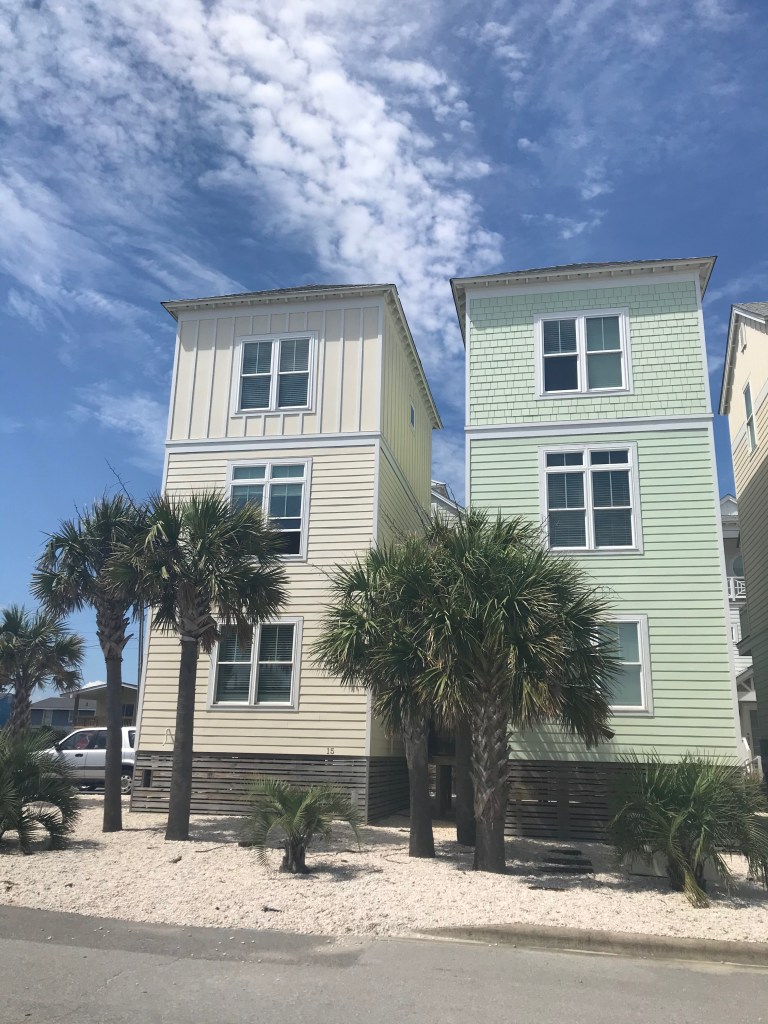
Brightly colored houses
Up and down the beach are boxy houses painted in cheerful yellows, turquoises, peaches, seafoam greens — Caribbean colors — all with fresh white trim. They are bright and happy and beachy against the blue morning sky, white clouds, and light sand.
Skimmers fly into the wind
Just above the break point of the waves, three compact white birds with angular, black-rimmed wings fly into the wind. They rise and dip with the wind currents, headed toward the darkening storm. Waves rise under them then fall forward. The skimmers make steady progress down the beach and out of sight.
Sandpipers run from water
Our daughter and I giggle when we see fat sandpipers on their tiny little legs run quickly from incoming ripples, desperate to avoid letting the water touch their feet. It’s as if they don’t realize — despite being sea birds who feed in the wet sand of the swash zone — where they are, and that waves wash in and out where they eat. They’re tiny and hyper. They constantly stick their bills into the sand to nose around for crustaceans and worms, probe, probe, probing. They get lost in it, dashing from spot to spot on their short little legs, then an inch-high wavelet washes towards them, and when it’s a centimeter from touching them, they panic and flee. Their little stick legs are a blur, like cartoon character legs, under the pipers’ fat little bodies.
Shadows on the sand
The morning light is slanted and golden. It makes my seated shadow long on soft, caramel sand. The beach is full of footprints, each with its own shadow from the leading ledge of the indentation. Dark clouds in the distance, billows of grey clouds with ran falling beneath them, cast shadows I can’t see on the ocean beneath them. A cloud has moved over the sun; the breeze is fresh and cool, waves curl and splash, and shadows have disappeared until the sun emerges again.
The Atlantic Ocean
Under a blue sky nearly covered with loose cottonball clouds, the Atlantic Ocean is greenish brown before me. I see two boats far off on the horizon, and cloud towers even farther out. Their tops shine white in the sunlight they catch. The sea is choppy from the breeze, but the waves are small and gentle. From my left shoulder all the way in front of me to my right shoulder, the Atlantic arcs to the horizon, an unfathomable basin of salt and water.
Written from the beach on our vacation to Atlantic Beach, North Carolina, in August of 2020.The featured image is not from the day I wrote; it is from the day after Tropical Storm Isaias blew through and the wind and sea were still wild.
I must have taken 100 photographs yesterday for the transient photo challenge: everything about the beach is impermanent. Waves roll in, crash, spend out, and they are gone. Shells clack together and crumble in the pounding surf. Sea grass clumps wash ashore, then lift and move as waves wash over the flat sand. Surfers follow the swells: they appear when there are waves, and vanish when the sea is flat. Shore birds follow the tides, follow the fish, follow the tiny coquina clams that surface in the swash zone, then burrow back into the sand when the water recedes.
I photographed waves, shells, surfers, turtle nests. I photographed froth as it moved over the sand, sand as it moved over my toes, my toes as they were washed clean in fizzy bubble water.
Standing in the swash zone, where sand shifts under my feet
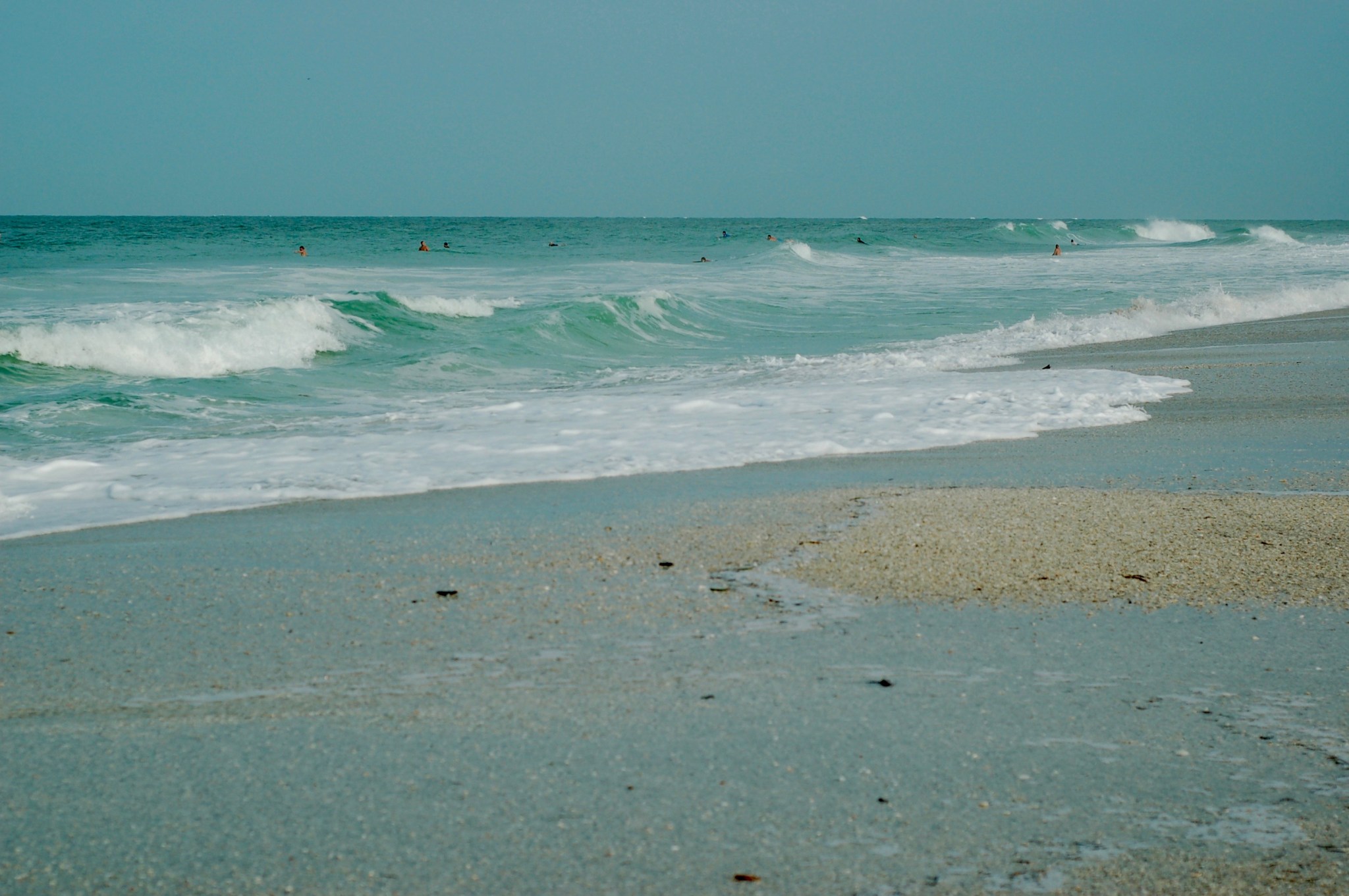
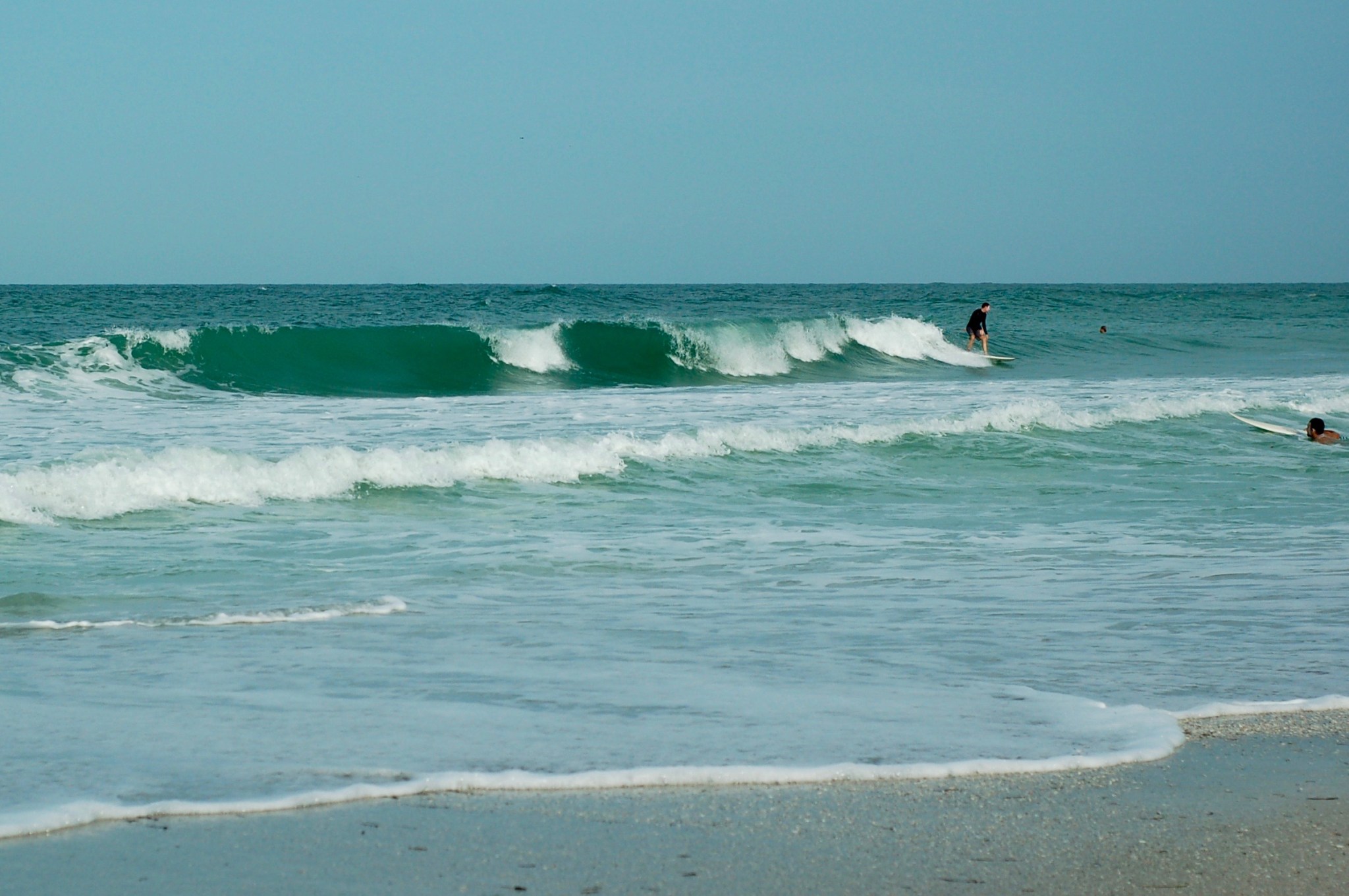
I photographed surfers bobbing, dozens of them clustered in the same tiny strip of shallows, where the sand under the surface is just right to break waves for surfing. I photographed surfers standing on the shore, boards under their arms, pointing at sets coming in. I photographed surfers standing up on waves.
Bobbing in the surf
A pretty wave
What is most transient of all, though, most impermanent to me and my family right now, is the family condo we are staying in. This is our final vacation here before the condo is sold. My husband came here for the first time the year he was born, and has come nearly every summer in the 44 years since that first visit. Our children have grown up with this condo and this beach, too, and I wanted to capture as much as I could before it’s gone from us.
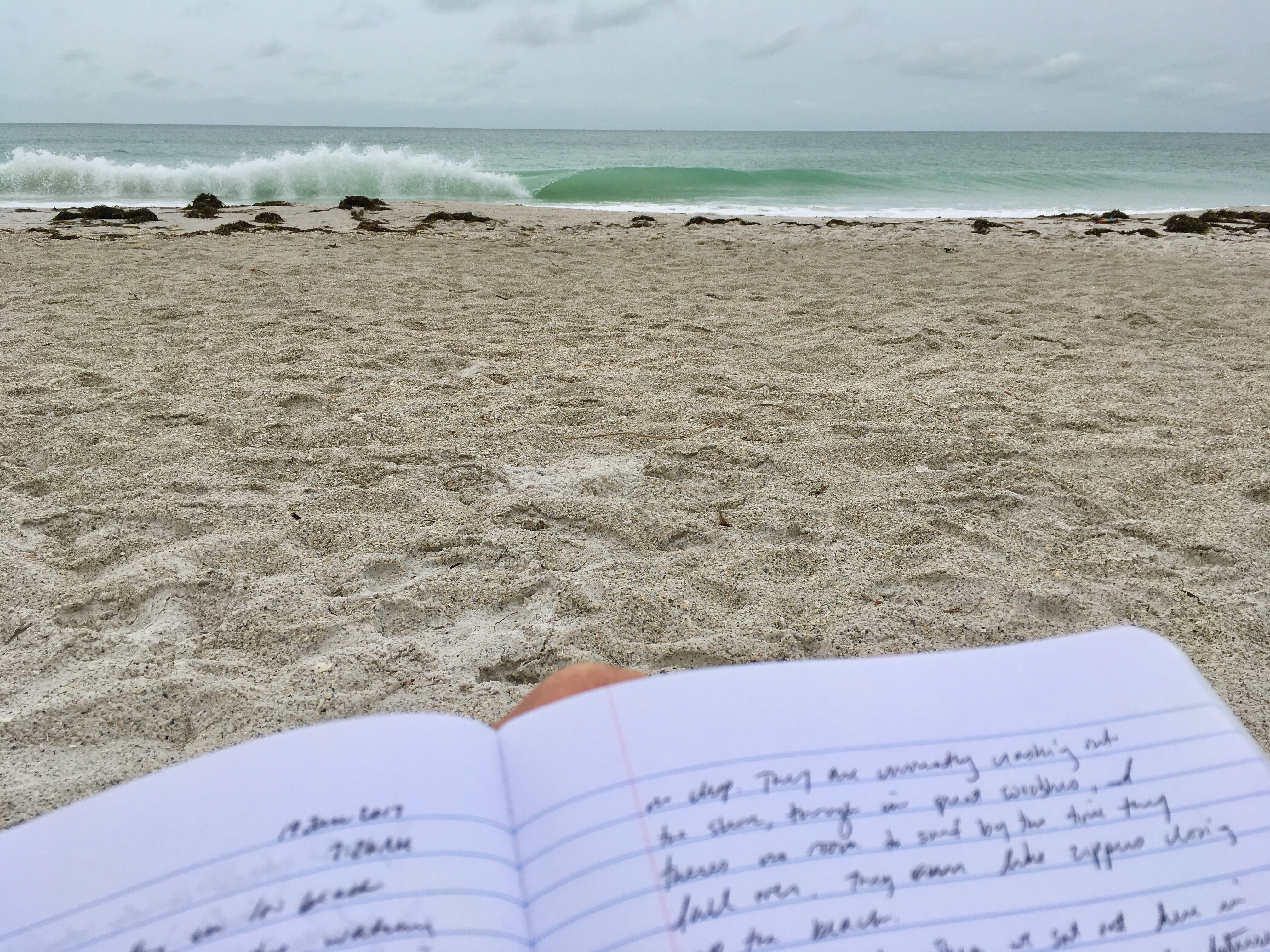
Writing in the morningI’m sitting in a beach chair 4 inches off the ground, a cup of coffee in the soft white sand by my right hand, watching perfect tubes of waves run up the beach like zippers closing. I’ve written another pen out of ink, am talking with my husband about sailboats and the physics of ocean waves, and I am happy. I love vacation.
Boating life revolves around weather, and here on the coast of Georgia, it also revolves around tides. We spent all day yesterday waiting for 2pm to come so we could catch the sandbar — our ultimate destination for the day — at a time where the tide was high enough to get the boat out of the creek, but low enough that there would still be a sandbar left. At high tide, which was around 4pm yesterday, there wouldn’t be much island to land on.
To kill time we wandered around Tybee for goggles, lemons, and sugar. Vacation necessities. My mom and daughter also passed the morning making a caramel cake: a three layer cake with a frosting that requires two caramel pots — one with cream and one without — that must arrive at the correct temperature and color simultaneously, and then must be beaten together at exactly the right time and then rapidly spread on all three layers of the cake before it gets too thick to work it anymore. The frosting was complex and required two (and sometimes three) people to do everything as quickly as the process demanded. It also took two attempts (one pot of caramel burned) but boy was it worth it. The final result taste likes pralines.
Throughout the morning, the weather darkened. Rain, rain, more rain. For several hours we watched the radar. We watched the sky. We ate lunch while it poured. We talked about a Plan B. I rooted around in my parents’ game closet and found a Young Players expansion pack of cards for Trivial Pursuit. The kids had never played Trivial Pursuit, and I got a bee in my bonnet to play that, but then I couldn’t find the original Trivial Pursuit box with the board and the pie pieces. We killed another hour searching the entire house for the missing board, which led to Mom cleaning out the guest room closet where we did find Boggle and Scrabble, but by that point the kids and I really really wanted Trivial Pursuit.
We were about to get in the car to make the trek over to Savannah to buy the board when my dad said he saw blue sky and the radar was clear. Five minutes later, we were in our swimsuits, slathering sunscreen on ourselves at the end of the dock, ready to go.
On the way out of the creek, we saw a neighbor’s dock, destroyed by last year’s Hurricane Matthew. About halfway from land to the river, the dock falls away into the marsh like an exploded train bridge in a movie. The owners can’t get out to their floating dock, which has a second layer of collapsed walkways: the ramp from the raised deck at the end of the dock to the floating platform on the river is now dangling in the water. The floating dock and the grounded dock are no longer connected.
We saw another hurricane casualty on our approach to the sandbar. A 25-30 foot black-hulled sailboat lay on its side, about 100 yards into the marsh, behind a hammock of land, its mast at a 30° angle to the ground. There’s no way to get to the boat. There’s no waterway and no path over dry land. It is stranded, lifted by the high water of a hurricane and deposited in a place a boat cannot get to.
When we arrived at the sandbar, the sky was still gray. We were the only boat on the water, and we had the sandbar to ourselves. Our daughter jumped off the bow with the anchor, and as soon as she stuffed it into the sand, she and our son were off running as fast as they could, free on an empty beach.
We went to the sandbar a couple of years ago, and the excitement that summer was the cannonball jellies washed up on the sand. This year it was horseshoe crabs.
“Mom! I saved a horseshoe crab!” Our daughter ran across the beach to fetch me so I could see. “I flipped it over — it was on its back — and now it can get back to water.”
Rescued horseshoe crab
We watched as it made its slow, prehistoric trek across the sand. Then the kids were off again, splashing first through ankle-deep shallows that quickly deepened as the tide came in, then swimming in the steeper drop-off over by the boat on the river side of the sandbar, then finally moving to their favorite spot: the ocean side, where the waves are. I watched ships come and go at the mouth of the Savannah River. The tide was right for them, too, to enter and exit the port.
Ship coming into port
My favorite part of the trip to the sandbar, besides the kids’ joy, the warm sand, and the isolation, besides views in every direction of islands and water, the clearing sky, and the sound of the waves, my favorite part of the trip was watching the tide rise over the sandbar.
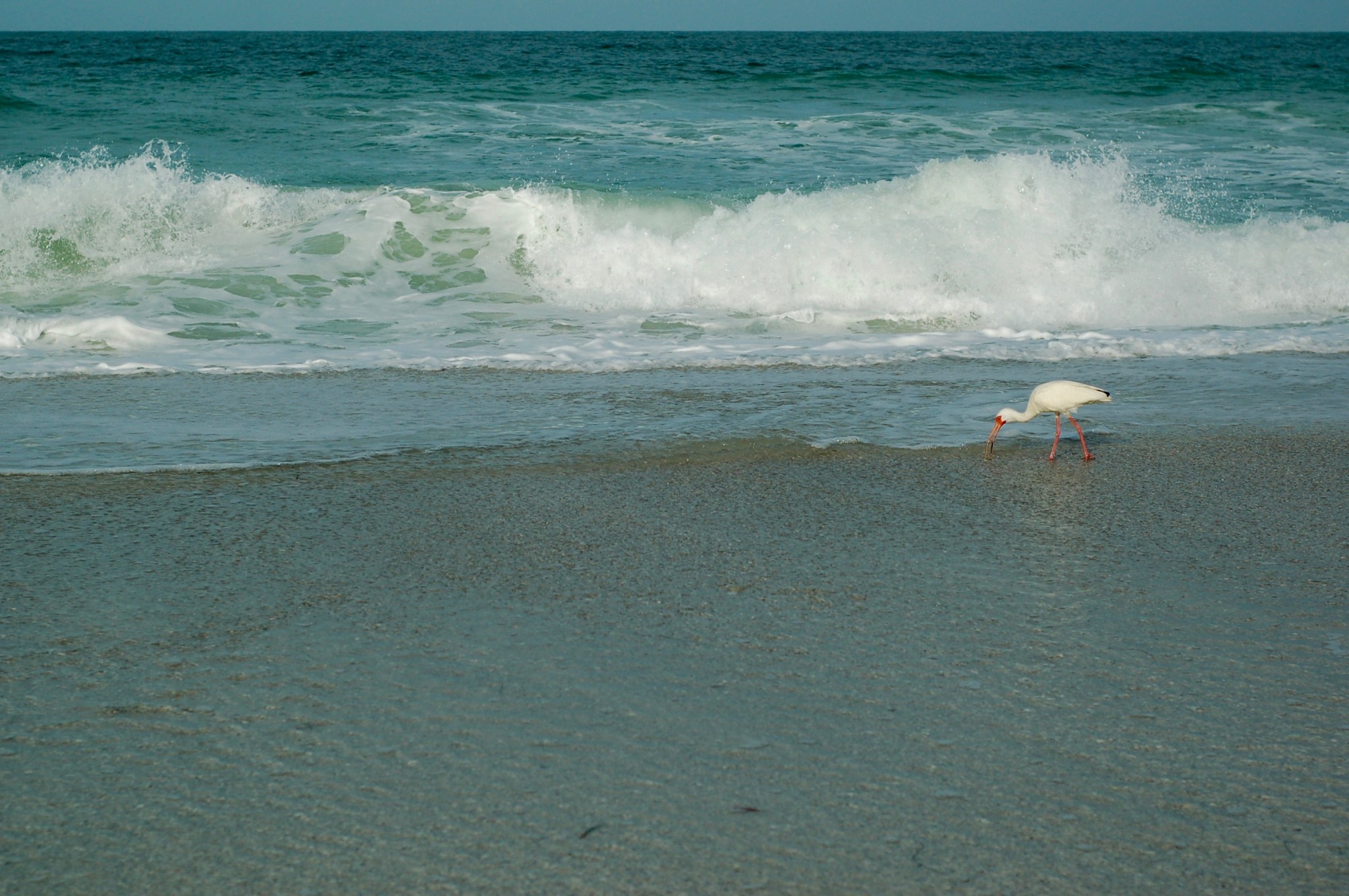
On the eastern edge of the bar, the part facing no island, only the open ocean, was a spit of land drenched in shore birds: pelicans on the oceanfront reach, their feet in the water; sand pipers in the splash zone facing north, towards Tybee and the shipping channel, chasing receding waves to dip their bills in the wet sand and catch coquinas, being chased by incoming waves back up onto the shore; seagulls on the dry land of the isthmus, all facing south, towards uninhabited Little Tybee; terns flying, black skimmers mingling with seagulls, willets hanging around the sand pipers.
Water coming over the spit
Sandpipers catching coquinas
Water is getting higher
During the couple of hours we were on the sandbar, I watched the dry spit gradually become submerged by the incoming tide. Where the birds were spread over a large amount of land when we first arrived, the gradually clumped closer together as the land beneath their feet disappeared.
Spit and sky
We left at high tide. There was still plenty of sandbar left, but my parent’s dog had worn herself out, and it was time to get her back home. We left the sandbar as empty as we found it, and we headed home for a dinner of blackened fish, dessert of caramel cake, and after-dinner entertainment of board games thanks to a post-boat-trip quest in Savannah for Trivial Pursuit.