
The streets were quiet when we arrived around 9 or 9:30, and we walked through a green city park with tall trees and butterfly beds at its entrances. The sky was gloomy and grey, but we brought our hats and umbrellas, so we were prepared. I carried my tote and didn’t bring my camera. I didn’t want to spend all my time photographing and I didn’t want to hurt my back carrying my camera and two lenses. I carried my notebook, Boox, hat, and umbrella instead. And I have no regrets. Not now anyway. I might when I look at my phone’s photos of the castle and wish they were higher quality.
-Saturday June 7, 2025
I do have regrets. Sort of. I wish my photos from Ghent were better. At the same time, I do remember how much I loved just being present in the moment while we were there, feeling the mist on my skin, gazing out over the ramparts, feeling the solidity of the castle stone, taking care in the slickness of the castle walkways, thinking about the puddles and the chill dampness of the castle’s interior, and how miserable it would be to live there, except for the glorious fireplace that was big enough for me to walk into. I wouldn’t mind scooting a chair next to a blazing fire in that with a book and a glass of port. Pulling out an iPhone to snap pictures requires less concentration than a real camera with settings and lenses and whatnot, so a phone makes it easier to be present (and is much lighter to carry), but the photos definitely are inferior, especially since I never remember to clean my lens. Oh well.
After our son left our Brussels Airbnb to go back home to the States, my husband and I took the train to Ghent. Several trains run the 30 minute route each day. When we disembarked at Ghent-Sint-Pieters, we went outside the station and gaped at a vast bicycle parking lot we’d seen from the train. Then we passed through the station to walk towards the historic part of town where the castle is, and we saw even more bicycles. The circular park outside the station was filled with bikes packed frame to frame to frame. The medians of the streets that ran out from the circle like spokes on a wheel were packed frame to frame with bicycles.


Ghent’s outer portions, other than the medieval city center, look like any city, really. Roads, sidewalks, square-edged buildings not made from ancient stone. We noticed a big difference at street level, though, especially on the larger boulevards. In Ghent and various other places we visited, there is not only a cobbled sidewalk, but a side…bike? as well. A bike lane, I guess we’d call it in the US, except these were part of the raised sidewalk rather than on the street itself. Being raised makes a big difference because bike lanes in the US are often full of broken glass and litter of the road. In Ghent, raised off the road and of equal width to the grey-white paver sidewalk, is a brick-red paver thoroughfare for cyclists. So the dedicated space for walking and cycling takes up as much or more surface area as the space dedicated to motor vehicles. And most of the motor vehicles we saw were busses or taxis rather than individually owned cars.
It was refreshing to experience infrastructure that showed a clear value for non-motorized transportation. The hardest part as a pedestrian was to remember that the red-bricked portion of the sidewalk was specifically for bicycles. We frequently heard the polite ding of a bicycle bell trying to make its way through.
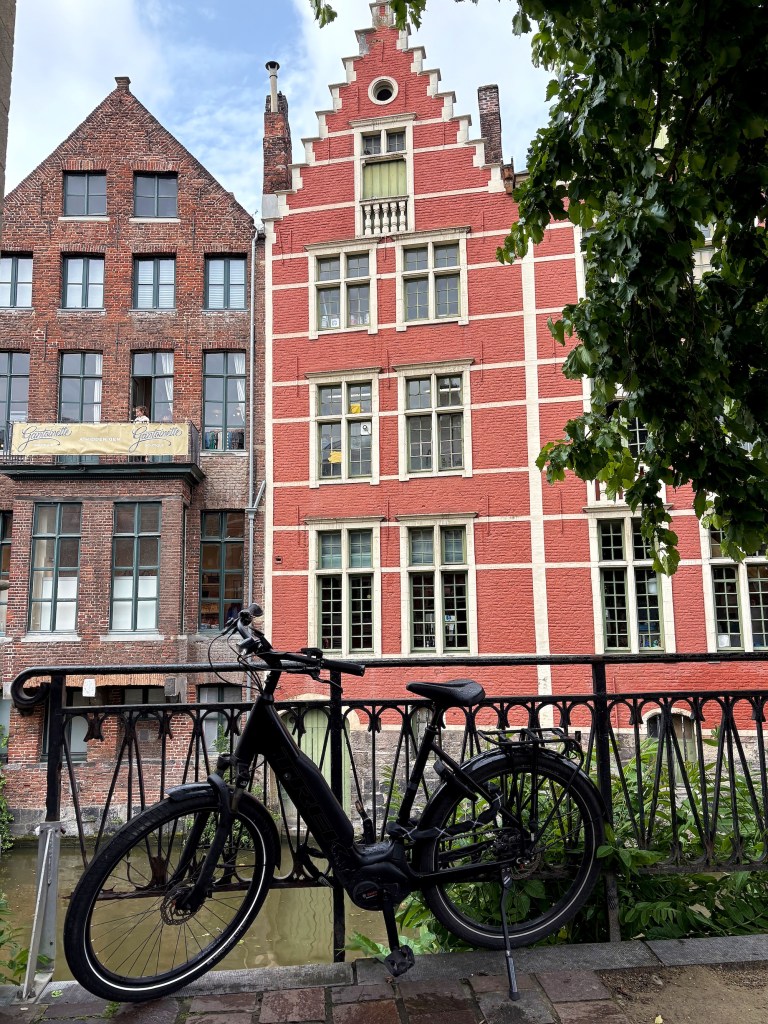
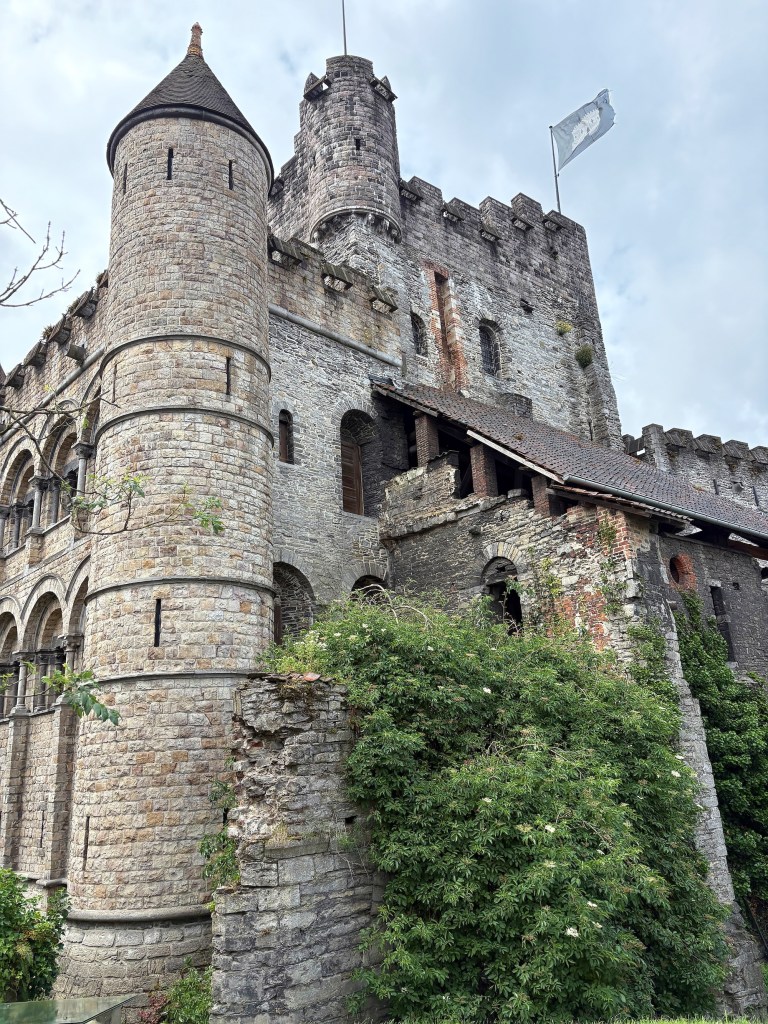
Our destination in Ghent was the Castle of the Counts, a medieval castle that dates back to 1180. We walked in the rain through the modern parts of the city to get to the historic center where the castle and cathedrals were.
The sky was still spitting when we entered the castle, and the air was cold and damp even though it was early June. I was happy to get inside the castle for shelter from the wetness, but the stone walls added no warmth, and wisps of hair around my face curled in the chill humidity inside. Being there gave me a chance to feel the cold dampness I’ve read described in so many novels that take place before electricity.
We climbed spiral stone stairs to the ramparts where we looked through the slits and weapon openings to see the skyline of Ghent. The stone pathways glistened in the rain and looked slick. I put my umbrella up and listened to rain tick against it while I tried not to slip and fall off the castle wall into the courtyard below. I looked out over the Northern Europe cityscape, all bundled up in my sweater, jacket, jeans, and hat on a June day in Belgium.
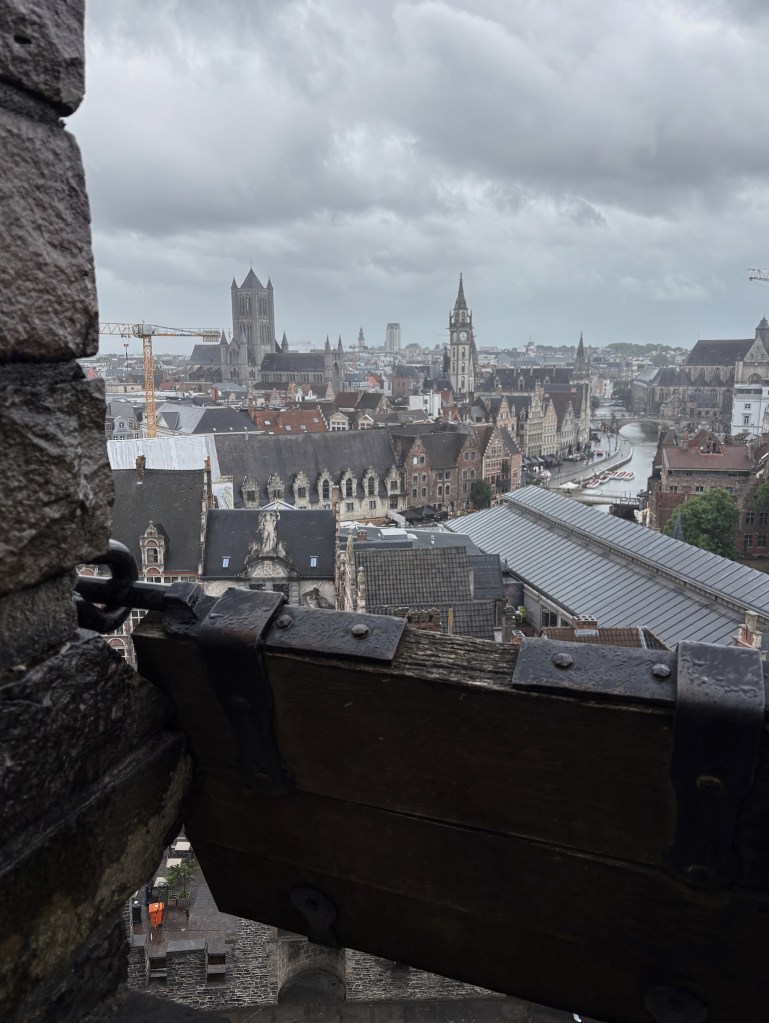

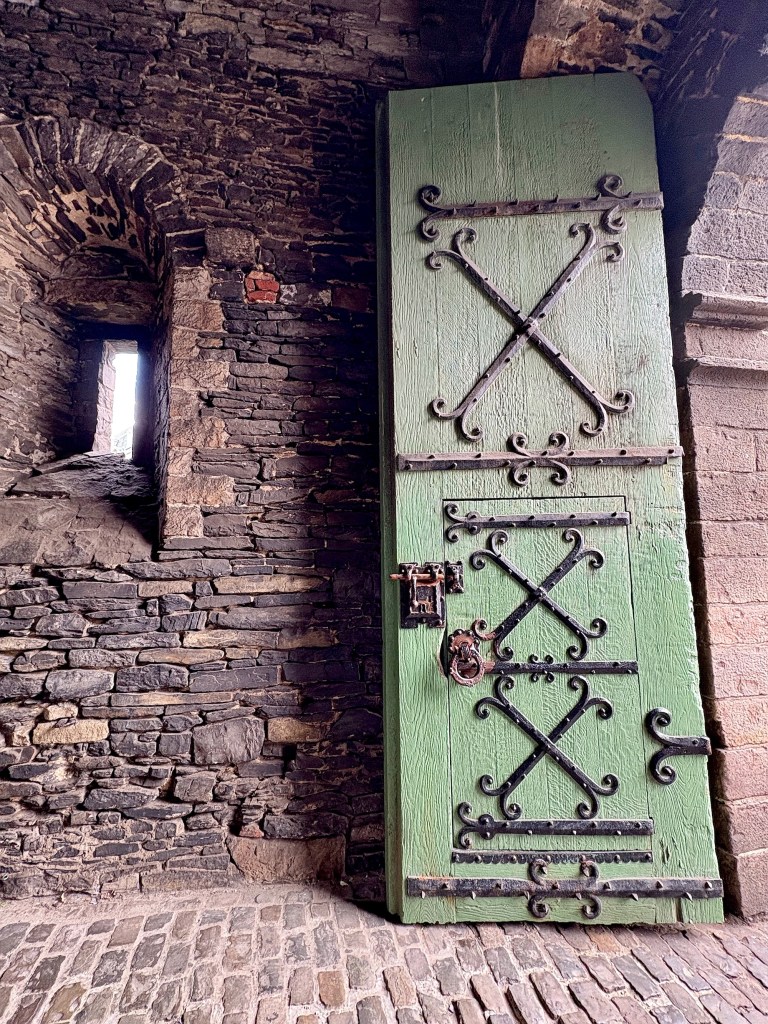
Before our trip to Belgium, I had read somewhere about something something medieval and something something torture chamber. I didn’t remember specifics, so I didn’t realize that was where we were until we entered a room with what looked like a well in the middle of it. It was a dungeon hole. I looked down into it, into the hole where prisoners would be held in this stone-walled pit, and was reminded of a scene in a post-apocalyptic book I’d recently read where the dad pried open a door to a cellar full of writhing people being held there to be eaten. Both the scene in the book and this very real dungeon pit were chilling.
We entered a room filled with armor and weapons of the day, including a two-handed sword that was taller than me, and maybe even taller than my 6′ husband. I wondered if I’d even be able to lift the sword, much less wield it. Especially wearing my body weight in metal armor. Seeing these suits of armor and weaponry in their natural habitat of a medieval castle instead of in the sanitized space of a museum made them feel much more real. I was struck that specimens like this, as well as art from each time period, are what make it possible for modern creators to craft realistic representations of warfare and medieval life in cinema and novels. So much of what we saw looked familiar from movies, but this was the real thing.
Throughout the castle are cartoonish depictions of what happened in the torture chambers, or what I assume were torture chambers since neither of us listened to the audio tour the castle staff really wanted us to listen to. Beheadings. Boiling in cauldrons. Pegs through the tongue. It’s all very gruesome.


By the time we emerged from the castle, the rain had blown through, and the sky was a beautiful, scrubbed-clean blue. We walked the historic district along the river, popped into a couple of cathedrals, and headed back to the train station, trying to remember to stay on the grey-white pavers of the sidewalk instead of the brick-red ones.


 Butterfly Mind
3 responses to “Bicycles and a castle in Ghent”
How would you ever find your bike in all that melee?
I wondered that, too!
Having been one of those students: you remember roughly where your bike is and try to park it in a similar spot each time you travel by train (which for a lot of students is every weekend when they travel home).