One of my friends at work gets mad at me every time I say this, but I don’t consider myself to be a very technical person, even though I work at a tech company. At least not compared to all the people I work with. I just want technology to work and do the things I need it to do.
I am decent with language, though, and when things start to get technical, as long as I can ask questions and understand words, I can get there. Fortunately I work with a lot of kind and patient people who are usually excited to help someone else understand the work they’re so passionate about. They answer all my newbie questions and I am enlightened.
And fortunately for me, in this wild world of AI, regular old language can now help me build the technology I need to help me design my garden.
I think in words, not images. This makes it really difficult for me to visualize what something is going to look like if I can’t actually see it: a room painted a different color, furniture arranged a different way, arrangement of plants in a bed. Then, layer on top of that sunlight needs, bloom times throughout the year, vulnerability to different critters, plant form (mounding or upright), foliage type and color, bloom type and color. And then on top of that, I have specific dreams for my garden. As I told Claude, I want to “attract pollinators and to have pretty flowers and pretty foliage, in that order.”
For years, for decades, I have struggled with putting plants together in a way that manages all of the complexities of the plants’ needs and my garden desires while also arranging the flowers in the beds, and the beds in the landscape, in a harmonious and pleasing way. It’s really hard! I’ve tried to graph things out manually or annotate photographs, but I still can’t visualize what it’s going to look like when stuff is actually in the ground and blooming (or not), so it’s always a crapshoot. I mostly I just end up with pick stuff I like at the nursery, put it in the ground and hope it works, and then feel frustrated that everything looks hodgepodge.
When I was on a run the other day, thinking about how I need to solve my new problem of the groundhog eating all of my beloved echinacea, it hit me: can I build software that can help me plan my beds and generate images of what they’d look like with different plant arrangements? Thinking in words isn’t good for visualizing, but it is good for working with conversational AI, where I can just tell it what problems I want to solve and then work together to solve them.
So that’s what I’m working on this weekend. Ultimately, I want an app that will help me design my garden, research plants, and track how plants do over time. I want it to do exactly what I want it to do, in the way I want it done, for the preferences and constraints I care about. It will know everything about my specific garden: what my USDA plant hardiness zone is, which plants get mowed down by deer despite “Deer resistant!” on the tags, and what the size, shape, and sunlight are for all of my flower beds so it can help me fill in with plants that will attract butterflies, and so that the beds will have something interesting going on in every season. And won’t have invasives. And, oh yeah, I also want caterpillar hosts.
Before starting on an app that will allow me to repeat the process with each bed, I started with the one problem I want to solve right now: the groundhog in the echinacea. Starting with the real problems I want to address — my struggle with visualizing and the need to plan around so many mammal grazers — grounded the development and gave us a practice session to build a spec for what the final app will need to contain and what output I want from it.
For the back bed, we came up with plants for aesthetics, butterflies, spring, summer, and fall interest, a shopping list for the plants I don’t yet have, schematic plans to help me position the plants, and a funny and also really helpful visual of how the plants will go together.
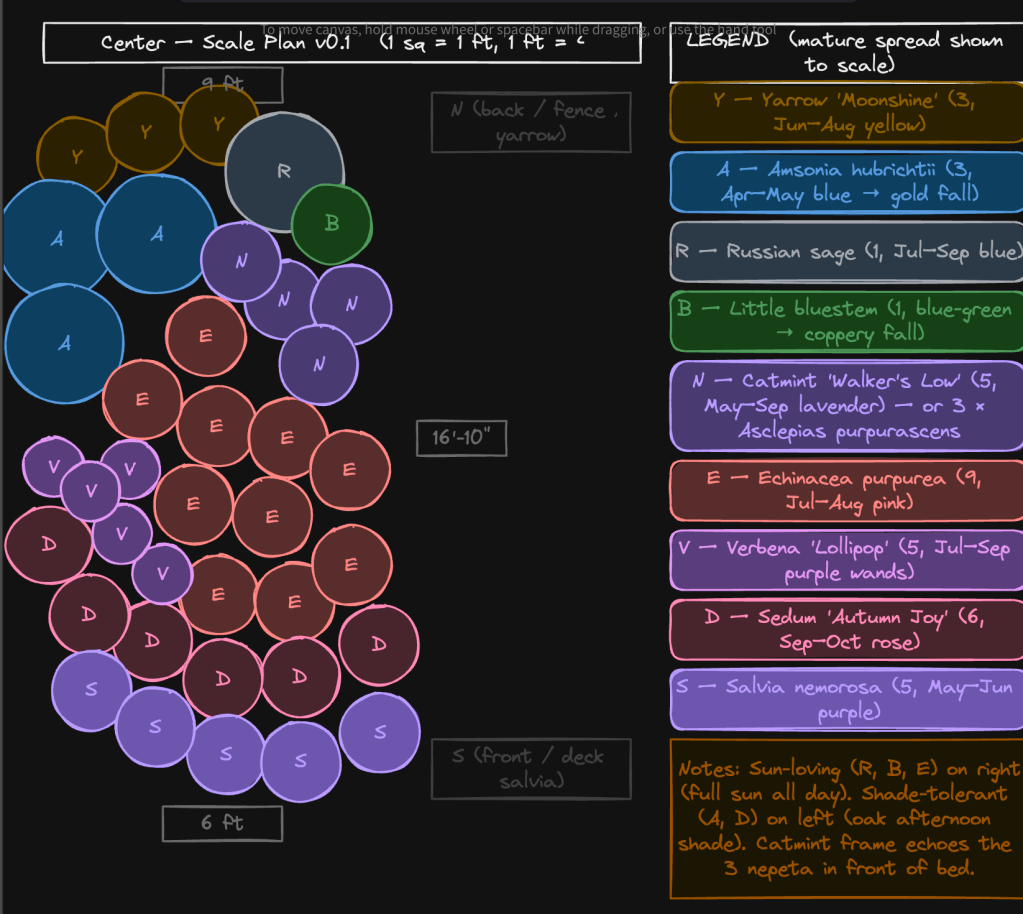
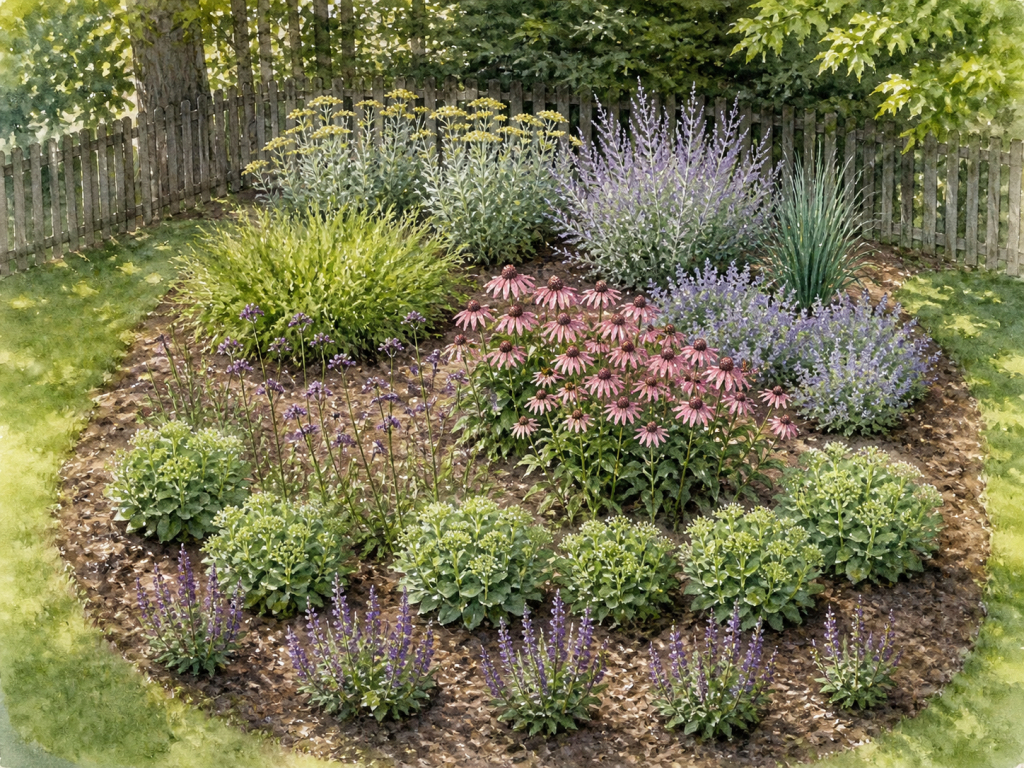
We’ve got a long way to go, Claude and me, but I’m delighted by the possibilities. Now it’s using what we did with the back bed — my constraints changed what will go in the database, my excited reaction to the rendering (vs my lukewarm one to the planting plan) bumped up the important of the visual — to execute on the spec. I get to write this post while it does all the technical work of building the software I want.
 Butterfly Mind
3 responses to “I’m building a gardening app”
Brilliant!!! I love this. And you are right, you are a master of language so you’ll be better at getting Claude to do what you need it to do than many of us will be 🩷
I tried to use ChatGPT to layout furniture recently and was very disappointed. Maybe I am doing it wrong. I think you have inspired me to blog about it!
It could be that there is a lot of plant information on the internet, with information on each plant about its height, width, sun and water needs, mammal resistance, bloom time, bloom color, foliage type and color, etc. So Claude can cross reference all of that against my needs and wants, and the bed’s dimensions and sun/water profile. I also shared an “ideal end state” : a PDF of a bed plan from Better Homes and Gardens that provides a plant list, a schematic planting grid, and a rendering of what the plantings would look like when filled in and in bloom. I think that PDF did a lot of work in guiding Claude toward the outcome I wanted.