Book blurb for Andrea Reads America, due out sometime in the very far future:
From the Alabama bayou to the Alaska tundra, from the Texas desert to the Washington rain forest, Andrea Reads America explores the United States: in books. Curious about the American landscape and seeking the perspectives of men, women, and authors of color alike, writer and literature-lover Andrea Badgley spent four years reading her way across the US in three books per state. She read literary fiction, mysteries, westerns, romance; she read white, black, Native, Latino, Asian American, Indian American; she read women; she read men. The result is a glimmering multicultural mosaic that reflects the diversity of the United States, sharp edges and all, and the humanness that brings us together – love, family, community, respect – no matter our color or creed. Part travel guide, part literature review, and part cultural exploration, Andrea Reads America will take you on a journey into the American experience.
Zippers and buttons clank against the metal drum of the dryer: snowpants tumbling after a morning romp in fresh snow. Our eight year old daughter, her hair a stringy mess of snow-wet tangles, blows on a pot of boiling water, trying to make the starchy foam go down after adding a cup of dry elbow noodles. Our ten year old son forks the scrambled egg she made him. “Since eggs are better when they’re hot, will you watch the noodles while I eat this?” he asked her.
It is Tuesday. A school day. I look out the window and watch snow fall.
Now they both peer into the boiling pot. They wear pajamas at lunch time. He is teaching her how to cook pasta. After – after I empty the dishwasher then reload it – I will make hot cocoa while I grind nuts for almond butter, then scrape the food processor and grind nuts for nutella; I’ll only have to wash the bowl and blades once if make the butters back to back.
I sit at the table eating a lettuce wrap with my left hand and writing with my right. A tomato slips out the end of my wrap and splats onto my plate. Our daughter groans when I ask if they’ve grated Parmesan for their noodles. “Well, you don’t have to have Parmesan,” I say. She slumps her shoulders and stomps to the cabinet where we keep the box graters. She sticks her lip out. “I want Parmesan,” she says as she jangles metals together in the cabinet, “I just don’t want to grate it.”
Welcome to the world, kid.
Our son stands on a stool and stirs the pot with a wooden spoon. Steam rises in front of his red, snow-play cheeks. The window next to him fogs up in the corners; beyond the glass panes are white-covered cars, a line of white along the top rail of the park’s split rail fence, sticky clumps of white on twiggy tree limbs.
Our son lifts a noodle from the steaming pot with his wooden spoon, steps down from the stool, and walks to the kitchen sink where he runs cold water over the macaroni spiral. He tastes it and says, “Mom, the noodles are ready. Will you come pour them out for us?” That’s the one step I’m still uneasy about: our eight- or ten-year old carrying a pot of boiling water across the kitchen and pouring its heavy, hot load into a colander. I set down my pen and my lettuce wrap, remove the napkin from my lap, and drain the pasta for them.
He takes over then, spooning noodles into bowls, drizzling olive oil, bringing his sister’s portion to her at the table. The kitchen counter is strewn with Parmesan cheese shreds, measuring cups, pots, pans, the tub of spreadable butter, a macaroni box. A dry elbow crunches under my slipper, then another. Parmesan curls litter the floor.
One thing at a time. I’ll teach them how to cook, then I’ll teach them how to clean.
Our children have finished their plates and await their hot cocoa. Soon, after the floor is swept, and the counters wiped, and the dishwasher is running (again), we will pull downy pants on, hot from the dryer, and we will traipse out the door to go sledding.
As a coastal person, I was uncomfortable reading Arizona. The dry cracked land, the absence of emerald-green, and the silence where dripping should be were disorienting to me. I think my soul might dry up and blow away if I were to move to the desert. But where I feel withered and desolate, the people who are native to the land find magic – the sky is so big that shamans walk among the stars, and the first summer rain is so significant it signals the beginning of a new year.
Aside from The Bean Trees, the books I chose for Arizona were challenging for me. I don’t know if the landscape made my mouth too dry, or if the books I chose weren’t my kinds of books, or (and this is my hunch) if it’s because I read them in winter, when I would normally curl up with The Shipping News and cold snowy books, but I found myself wishing for something else, a different kind of place. A place of blues and greens, not of reds and browns. I will say, though, that what Arizona lacks in water, it makes up for in characters. The three books I selected from Arizona were filled with scrappy, no-nonsense folks for whom parched land, prickly plants, and flash floods cultivated a toughness that I don’t have, but I admire.
They also cultivated in me a hunger for Tex Mex food.
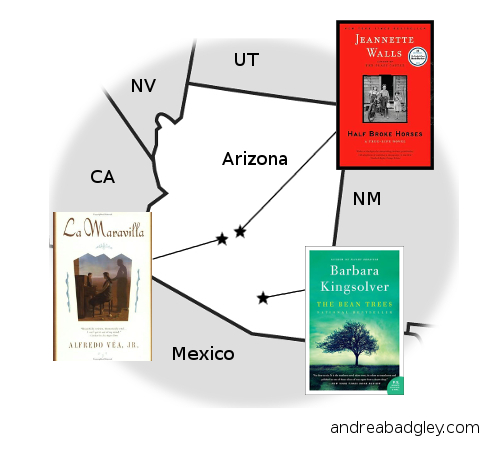
Novel: Half Broke Horses
Author: Jeannette Walls, born Phoenix, AZ
Setting: 1920s through 40s Arizona
Categories: Historical fiction
Half Broke Horses, set in Texas and Arizona, is a true life novel of Lily Casey Smith, author Jeannette Walls’s sassy, swaggering pioneer grandma. Fans of Walls’s memoir The Glass Castle will appreciate going deeper into the Walls family history with Half Broke Horses, which takes us back to the beginning, when Walls’s grandmother, Lily, broke horses on her family ranch as a girl, and as a young teen rode 500 miles, alone, on her horse, Patches, from Texas to Arizona to take a teaching job in the 1920s. Walls calls this a novel because it was necessary that she fill in details and recreate dialogue, but the voice and wild events, like Lily’s grand entrance in her ranch town’s premier of Gone With the Wind, to which she wore a dress she made from curtains, are authentic and amusing. Lily is spunky and resourceful, a pioneer woman, and I loved her sass:
“Don’t you ‘little lady’ me,” I said. “I break horses. I brand steers. I run a ranch with a couple dozen crazy cowboys on it, and I can beat them all in poker. I’ll be damned if some nincompoop is going to stand there and tell that I don’t have what it takes to fly that dinky heap of tin.” (Lily Casey Smith to a flight instructor who pooh-poohed her when she wanted to take flying lessons from him)
Half Broke Horses is filled with great lines like this, some that characterize Lily, as the one above, and others that characterize the land and the varmints who called it home:
As I sat by my little fire at night, the coyotes howled just like they always had, and the huge moon turned the desert silver.
Arizona, with its wide open spaces and no one peering over your shoulder, had always been a haven for folks who didn’t like the law or other busybodies to know what they were up to.
I didn’t think this was as compelling as The Glass Castle, but I appreciated Walls’s ability to paint the Arizona landscape, and sear me with the desert suns’ heat, and show me a woman with sand, whose grit ensured her survival in an unforgiving place.
Novel: La Maravilla
Author: Alfredo Véa, Jr., born 1952 near Phoenix, Arizona
Setting: 1950s-1960s, outside of Phoenix, AZ
Categories: Native American Fiction, Hispanic Fiction
Set in the late 1950s and early 1960s beyond the fizzled out end of Buckeye Road – beyond where asphalt turns to dirt after Buckeye Road has left Phoenix – La Maravilla is a novel of the displaced fringes who congregate along this sandy road in the Arizona desert: negritos and indios, prostitutes and transvestites, Arkies and Okies, and Beto, a young boy who lives with his Mexican healer grandmother and his Yaqui Indian grandfather. Beto’s mother has abandoned him there in her quest for a shiny, new, dust-free life in California. Beto’s home at the end of Buckeye Road and his Mestizo-Yaqui-Filipino-American heritage reflect the author’s own background: Alfredo Véa, Jr., an American author with Mexican, Native American, and Filipino heritage grew up with his grandparents in the Buckeye barrio outside of Phoenix, just as Beto does.
Peppered with Spanish and Yaqui phrases; brimming with frijoles, burritos, and an elaborate Mexican fiesta complete with sixty pounds of pork and beef that simmered all morning “with fifty cloves of garlic, ten chopped onions, cups of crushed comino and a handful of cilantro;” and populated with a Catholic Mexican curandera (healer), the Mighty Clouds of Joy Negro Church, and Huichol, Yaqui, and Tarahumara Indians who go out into the desert to fly on spirit journeys, and eat peyote, and initiate Beto into these ways as part of his manhood ceremony, La Maravilla serves a rich, flavorful, satisfying banquete of Arizona culture:
The woman in black looked up into the high, endless sky. The skin of the hand that shaded her eyes was browned and softened by the tannins of her life.
Neither Manuel nor Josephina was the same person in their different languages.
The Arkies were kind of like Mexicans, the boy felt; they could suffer and do hard work and they always fed everybody’s kids.
Ghosts are like tumbleweeds. No one pays attention to the plant when it’s green. No one even knows what it’s called. But when it’s dead it receives a name and people who see the weeds rolling across open fields are suddenly stricken with loneliness.
I wish I could mourn for him like those crazy Mexicanos. The bake death and eat it. They roll it in sugar and put it on sticks for the children to lick at.
I admit that there were long portions of the book that dragged for me; I admit that were I not reading this for my Andrea Reads America project, I might have abandoned the book; and I admit there were many times when I wondered where Véa was going with this, and why he inserted this scene and that character. I’m still not sure I know, and I think the book could have been distilled for more potency, but like many books that I’m not sure I like when I’m struggling through them, my mind has returned many times to La Maravilla. I loved Véa’s use of Latino and Yaqui words, how they gave the narrative an authentic feel for being among the characters. Like Two Old Women, the other book I’ve read so far by a Native American author (Alaska), La Maravilla is filled with wisdom, spirituality, and a deep respect for elders, family and sticking together as a community.
Novel: The Bean Trees
Author: Barbara Kingsolver, lived 20 years of adult life in Tucson, AZ
Setting: late 1970s Tucson, Arizona
Categories: Fiction, American Fiction
Set in 1970s Tucson, Arizona, The Bean Trees is the story of Taylor Greer, a plucky, lovable twenty-something who drives away from her rural, dead-end Kentucky home town in her ’55 Volkswagen bug with “no windows to speak of, and no back seat and no starter.” She leaves Pittman County, where folks “had kids just about as fast as they could fall down the well and drown,” and heads west where, at a pit stop somewhere in Oklahoma, a small Cherokee child is deposited in the front seat of her car by a native woman – the child’s aunt – who tells Taylor to the child away from here. The old woman will not take no for an answer as she turns and walks away to face the child’s father – and abuser.
Like so many of Kingsolver’s works, The Bean Trees is a gratifyingly readable book; I think I finished it in three or four nights. Filled with funny Kentucky colloquialisms and the dry desert air of Tucson, The Bean Trees can feel light in its page-turning readability, but flowing beneath that lively tone are undercurrents of weighty issues. True to form, Kingsolver weaves in the strong pulse of nature,
At three o’clock in the afternoon all the cicadas stopped buzzing at once. They left such an emptiness in the air it hurt your ears. Around four o’clock we heard thunder.
If you looked closely you could see that in some places the rain didn’t make it all the way to the ground. Three-quarters of the way down from the sky it just vanished into the dry air.
Everything alive had thorns.
and heart wrenching themes of social justice:
Mrs. Parsons muttered that she thought this was a disgrace. “Before you know it the whole world will be here jibbering and jabbering till we won’t know it’s America… They ought to stay put in their own dirt, not come here taking up jobs.
When people run for their lives they frequently neglect to bring along their file cabinets of evidence.
Set in a border state and dealing with issues of immigration and human cooperation, The Bean Trees is a story of friendship, and heart, and symbiosis. It is a story of plants and people thriving in poor soil and thorny country, not because they are tough, or better adapted, or because they are strong enough to do it alone. They survive because they open themselves to being helped, and to helping each other out.
For Further Reading in Arizona
Books that have been recommended to me but I have not yet read: Concrete Desert by Jon Talton Almanac of the Dead by Leslie Marmon Silko Mojave Crossing by Louis L’Amour Goats by Mark Jude Poirier Bisbee/17 by Robert Houston The Devil’s Highway by Luis Alberto Urrea (nonfiction) Crossers by Philip Caputo
I am reading America: 3 books from each state in the US with the following authorships represented – women, men, and non-Caucasian writers. To follow along, please visit me at andreareadsamerica.com.
I am looking for titles set in each US state by authors from that state. Can you help? Scroll down for details on the project. Thank you!
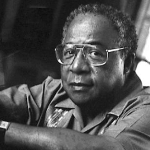
Alabama: Alberty Murray
Alaska: Velma Wallis
Arizona: Alfredo Vea, Jr
Arizona: Leslie Marmon Silko
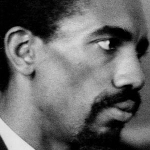
Arkansas: Henry Dumas
Arkansas: Maya Angelou
Arkansas: Janis F. Kearney
California: Chitra Banerjee Divakaruni
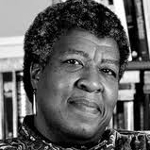
California: Octavia Butler
California: Amy Tan
Colorado: ?
Connecticut: Ann Petry
Delaware: Bertice Berry
D.C.: Edward P. jones
Florida: Zora Neale Hurston
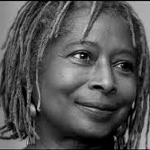
Georgia: Alice Walker
Hawaii: Kiana Davenport
Hawaii: Kaui Hart Hemmings
Hawaii: Lois-Ann Yamanaka
Idaho: Janet Campbell Hale
Illinois: Richard Wright
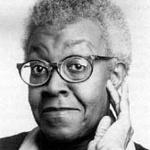
Illinois: Gwendolyn Brooks
Indiana: ?
Iowa: Bharati Mukherjee
Kansas: Langston Hughes
Kentucky: William H. Turner
Louisiana: Lalita Tademy
Maine: ?
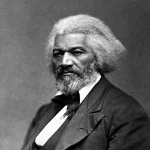
Maryland: Frederick Douglass
Massachusetts: Dorothy West
Michigan: Ben Carson
Minnesota: Louise Erdrich
Mississippi: Jesmyn Ward
Mississippi: Richard Wright
Missouri: ?
Montana: James Welch
Nebraska: ?
Nevada: ?
New Hampshire: ?
New Jersey: Junot Diaz
New Mexico: Rudolfo Anaya
New Mexico: M. Scott Momaday
New York: Oscar Hijuelos
New York: Nella Larsen
New York: James Baldwin
New York: Toni Morrison
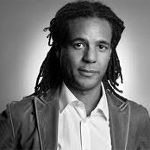
New York: Colson Whitehead
North Carolina: Harriet Jacobs
North Dakota: Louise Erdrich
Ohio: Toni Morrison
Oklahoma: Linda Hogan
Oregon: Heidi Durrow
Oregon: Mitchell S. Jackson
Pennsylvania: M.K. Asante
Rhode Island: Jhumpa Lahiri
South Carolina: ?
South Dakota: Charles Eastman
Tennessee: Alex Haley
Texas: Ito Romo
Texas: Jovita Gonzalez
Utah: ?
Vermont: Jamaica Kincaid
Virginia: Edward P. Jones
Washington: Sherman Alexie
Washington: Jamie Ford
West Virginia: ?
Wisconsin: Nina Revoyr
Wyoming: ?
One of the most challenging aspects of my Andrea Reads America project* has been finding works of fiction set in each state written by non-Caucasian authors who are either from the state or have lived there as a resident (*my project is to read each state via male, female, and non-Caucasian authors). When I wrote about this difficulty in a previous post, Where are the ethnic authors?, several readers asked that I compile a list of the titles I have so far so that they could help fill in the gaps. (Thank you @LissGrunert and The Afro-Librarians for the suggestion. I’m holding you to your offer now.)
I have not been looking super far ahead, so as of the original posting date of this entry (January 13, 2014) there are a ton of gaps beyond Arkansas, which is as far as I’ve gotten in my research. I have found non-Caucasian authors from 22 states (and the District of Columbia) and am lacking titles for the remaining from 28. If you have favorite titles that meet the following criteria, please leave me a note in the comments below (or via Twitter at @andreabadgley) and I will add them to the list. If you know a title set in a specific state but do not know where the writer is from, don’t worry: please give me your titles anyway and I’ll research the author’s background. All genres are welcome:
Non-Caucasian author (African-American, Asian American, Latino, Native American, Indian American, etc.)
Narrative set in a specific US state
Author born in or has lived in the state in which the title is set OR author writes about personal ancestors in the state
For a minute I considered waiving the residency requirement in favor of only reading fiction, but after my husband said, Whoa, hold on a minute there Tiger, I changed my mind. He reminded me of the original spirit of my quest, which is to experience the United States through the voices of its people. I think the fairest way to maintain consistency and the authentic experience of each state is to read work written by authors who were born or raised, or who lived or died in that state. So whether you’ve got nonfiction or fiction titles (including short story collections), please feed them to me here, as long as they meet the criteria above. Thank you so much for your help, and here we go!
Please pass this list around to any readers you know so we can fill it in and provide a resource for folks who’d like to diversify their reading. Thank you!
*I am reading America: 3 books from each state in the US with the following authorships represented – women, men, and non-Caucasian writers. To follow along, please visit me at andreareadsamerica.com.
My Andrea Reads America project is turning out to be more complex than I thought. I am reading my way around the US in three books per state, and my original hope was to read works of fiction written by men, women, and non-Caucasian authors who are natives of the state, or at least lived there a while:
Three works set in each US state
Male, female, and non-Caucasian writers
Fiction
Authors native to or residents of the state
I gave myself these parameters for a number of reasons: setting plays a huge role in my love for literature, and I want to get to know my country better, through language and story; I love fiction – it’s my favorite; I want to read a variety of voices; and I want to read each state from the perspective of its own people, from writers whose minds have been shaped by the state’s landscape and culture.
Mainly, though, I set these criteria to give shape to what might otherwise be an unwieldy enterprise. I thought I was going to need limitations to help me narrow down the choices; already in Georgia, my home state, I can think of ten books that represent the landscape and culture, and I have no idea how I’m going to pare the list down to three.
As far as male and female authors go, or I should say as far as male and female white authors go, my parameters are doing exactly what I intended them to do: they are helping me eliminate titles so that I am not overwhelmed by all of the possibilities. It is the non-Caucasian component of the project that is introducing complexity.
I knew when I got up into Maine, the whitest state in the United States (95%) I might have trouble finding a non-Caucasian fiction author. When I began my project, I figured I had plenty of time before I get to Maine; I could sort that out when I got there.
I started at the beginning of the alphabet, in Alabama. I thought Alabama would be easy. According to the 2000 census, Alabama ranked 7th in America in its percentage of African Americans: a full 26% of the Alabama population in 2000 was African American. On top of that, Alabama has a rich racial history, was pivotal in the civil rights movement, is the birthplace of Rosa Parks, and was home to Martin Luther King, Jr. There’s lots of story there. Yet, after I easily found novels by an Alabama man and an Alabama woman, and had several more piled up I could read, all of the authors I found were white. I racked my brain trying to think of a novel set in Alabama written by an African American author, and I couldn’t. I did some digging, was not satisfied, and ultimately, I got a recommendation from an editor at Book Riot. Unlike with white authors, I did not have a large pool to select from. I had one title.
Alaska and Arizona were not as problematic. Though there still weren’t a lot of authors to choose from, I was able to find titles written by Native American and Latino authors who are also natives of their states. But as I move through Arizona and prepare myself for Arkansas, I am stuck. Once again, I’ve got plenty of selections by white men and women, but not a single title by an author of color. Or at least not one that fits my parameters.
There is an interesting discussion going on over at Book Riot, where they are running a Who Are Your Favorite Writers of Color? poll. One reader commented, “Why do we have to call them writers of color? Why can’t they just be writers?” My mom asked a similar question over Christmas – why do we keep talking about race? Aren’t we all Americans? And ultimately, yes, it would be great to get to that point, where we don’t constantly distinguish between our own people – white, black, Asian American, Latino. But the fact is, when I’m trying to find authors of color to read their perspectives, to hear their voices, and it takes me days to find just one author, that concerns me.
I am not sure what the reason is for finding so few titles by non-Caucasian authors. Are ethnic fiction writers that rare? Is the publishing industry not picking up their manuscripts, or are they publishing them but not promoting them? Or is it a failure of research on my part? Perhaps I am not looking in the right places to find more titles. I have contacted several faculty in the English department at the University of Arkansas with the hope that they might have some suggestions for me.
Meanwhile, I am working out my options for relaxing the restrictions of my project. My first priorities are setting – the narratives must be set in the state of interest – and that I read a diversity of authors, which still includes men, women, and non-Caucasian writers. The commenter on the Book Riot poll is right that they are all writers – white, black, man, woman – and my mom is right that we are all Americans. And my purpose with this project is to listen to them all: to hear many voices, to read an America that is not my story. So these parameters must stay:
Three works set in each US state
Male, female, and non-Caucasian writers
As for fiction and the residency of the authors, I think I’ll address those on a case by case basis. This is my project after all, not an assignment that someone else has given me; I have the power to relax my own rules.
In Arkansas, if I don’t hear back from those professors I contacted, I could read Maya Angelou’s autobiography from her Arkansas years, I Know Why the Caged Bird Sings; though it doesn’t fit my fiction criterion, hers is an excellent book. Or I could stick with fiction and read Sugar, an Arkansas-set novel by African American author Bernice McFadden. McFadden was born and raised in New York, not Arkansas, but the blurb for her book excites me:
Sugar brings a Southern African-American town vividly to life, with its flowering magnolia trees, lingering scents of jasmine and honeysuckle, and white picket fences that keep strangers out–but ignorance and superstition in.
In fact, the blurb makes me want to skip out of the Arizona desert right now and luxuriate in the languid South.
And with that, I think I’ve made my choice.
If you enjoy reading diverse authors, please participate in Book Riot’s Who are Your Favorite Writers of Color? poll – it will be open through Sunday January 12, 2014. And if you have any recommendations for my Andrea Reads America reading project, please leave your suggestions in the comments.
I am reading America: 3 books from each state in the US with the following authorships represented – women, men, and non-Caucasian writers. To follow along, please visit me at andreareadsamerica.com.
“Alright, kiddos, we’re changing the structure of your allowances.” I leaned forward on the couch with my elbows on my knees. My hands were clasped, and I opened them to say, “You get a raise with the new year” – our children bounced and clapped their hands – “BUT with the condition that you put a portion away for long term savings, and you put a portion aside for charity.”
—-
My husband and I discussed the kid’s allowance for weeks as we worked on our own budget. After ten years of supporting a family of four on one income (an income which consisted of student loans, part time graduate teaching assistantships, and when we hit the big time, a post-doctoral stipend), we are behind on savings: retirement savings, college savings, orthodontic savings. Emergency savings for car repairs and those surprise bills that always seem to arrive when you finally think you’ve got your finances under control.
Over the past year and a half we have worked to catch up on paying off debts, and now its time to start carving money out of my husband’s checks to build up a savings buffer. And though every cent of our income was already accounted for – groceries, gas, clothing, sports – we wanted to build charitable giving in as well. Using our new budgeting software*, You Need a Budget (YNAB), we cut a little here, arranged a little there, reduced our family entertainment budget, and created a little pile for charities we feel strongly about supporting.
“Most of the financial stuff I read recommends setting aside 10% of your income for long term savings,” my husband told me. He dunked his tea bag as he ran numbers in his head. “We’re doing well with that through the University’s retirement plan.”
“Okay,” I said, “we can set that same goal for the kids: 10% of their allowance towards long term savings – savings they can’t touch til they are 16 or something.” I remembered my savings account, the one my Grandmother encouraged by matching contributions to it. I adored getting my statement in the mail and seeing tens of dollars turn to hundreds. I don’t remember what I ultimately used the money for, but I loved the safe feeling that savings account gave me.
“That’s going to suck for them to watch their allowance go down,” my husband said. His eyebrows worked together, wrinkling his forehead as he worried for the kids. “It’s already hard enough for them to save up for something they want.”
“Well, that’s pretty much how it works for us too,” I said. “We think we have all this money, then we budget it out and there’s barely enough to go to a movie.”
“But they get so little.” Our son saved allowance for ten months to buy a Wii U. His resolve to save was inspiring; he opted every allowance cycle to put money in his bank account instead of getting paid in cash. For almost an entire year. It seemed wrong to shrink his income when it already took so long to save for short term purchases.
“What about charity?” I asked. “What are the recommendations for that?”
“It’s kind of all over the place,” my husband said. Suggestions range anywhere from 2.5% of income to 10% of income or 1% of net worth, whichever is greater.
“How about we suggest 5% to the kids?” I ran calculations in my head and realized even at that rate their total annual contribution would be less than $10. I sighed. “Anything less and it will barely be pennies,” I said.
“I don’t know. This could be a hard sell.”
Our previous allowance model gave them the option of $5 in cash or $6 in their bank account to encourage saving. “Well, I’ve budgeted their allowance at $6 apiece,” I said. “We could up their allowance to $6 so it won’t be such a hard transition for them. Their pocket money would end up being the same.”
“That works for softening the blow to their wallets, but it doesn’t leave much for their savings accounts or donations,” my husband said. We both worked numbers in our head and realized that at this savings rate, by the time our son turns 16, he will have only saved about $200. That won’t do much for buying a car. My husband sighed. “I guess the point is to get them in the habit.”
“Maybe we can offer matching like my Grandma did for me. If someone gifts them money, we could match whatever portion they choose to put into savings.” Now my forehead was the wrinkled one as I tried to figure out where that money would come from.
“Well, it’s when you donate some of your money to someone in need, or to a place that isn’t in the business of making money, but is in the business of providing a service that isn’t focused on profiting but on spreading awareness, or culture, or sharing art.” Our ten-year-old son cocked his head at me. He didn’t know what I meant.
“You know that radio station Daddy and I always listen to? The one with the funny Car Talk guys?” They both nodded. “That’s called public radio; they don’t sell advertising, and the only way they can provide their service is if people donate money to them.”
“Oooooh,” our son said.
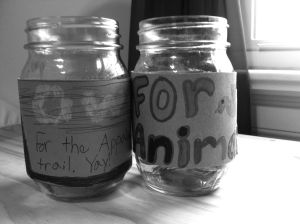
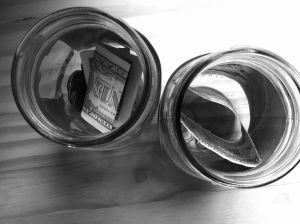
“So that’s one of the places Daddy and I donate money.” I stood up and told them to hang on a second. I trotted downstairs to the storage shelves in the basement and pulled two Ball jars off the wooden slat. I cut a rectangle of paper to a length and width that would wrap around the jar and carried the three components upstairs.
I set the jars on the coffee table and asked the kids, “Is there anything you feel really strongly about donating money to? There are a million causes you could support: libraries, the arts, giving books to people who don’t have access to them, animals -”
“OOOHH! Animals!” Our daughter jumped up and down. I gave her the rectangle of paper as a template to cut a label for her charity jar.
“You can decorate it however you want, and when you get your allowance, you will put your 5% for charity in the jar,” I said. I turned to our son. “What about you, buddy?” He didn’t seem moved by additional suggestions I gave. “Do you have anything you feel strongly about supporting?” He looked at the floor and didn’t answer.
“Oh, I have an idea,” I said. “Daddy is giving some of his personal allowance money to help keep the Appalachian Trail maintained and protected. Do you think you’d like to support that too?” Besides soccer, our son’s favorite activity is hiking. He loves nature and waxes philosophical when we are out on the trail.
His eyes got big and he shook his head up and down and smiled. He grabbed his jar and ran upstairs. “Wait! Your change!” I counted out quarters and nickels from the rolls my husband picked up at the bank and jogged them up to our kids’ rooms.
A few minutes later both kids trampled down the stairs to show me their jars.
“But these have dollar bills in them,” I said. “I only gave you change.”
“I know,” our son said. “I wanted to give some more.”


































 Butterfly Mind