I remember in grade school we would sometimes get puzzles or logic problems to work on. My favorites were rebuses, the pictograms that represented a word or phrase. For some reason, this one always stuck with me:
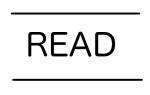
I think it stuck with me because though I solved the puzzle — Read between the lines — I didn’t understand the expression. I knew what it meant at an academic level, but I had never experienced reading between the lines before. I didn’t know how to do it or when it was necessary.
It wasn’t until much later in life, when I started reading Hemingway, that I finally felt the Aha! moment of picking up on allusions, of filling in the blanks the author leaves empty, of understanding what the author is telling you without telling you.
Hemingway is a master of this. His words tell one story — a story that often seems simplistic and superficial when the lines are the only thing you’re reading. It’s the words he leaves out that tell a deeper, more complex, more human story, as in the frustrated love between Jake and Brett in The Sun Also Rises, or the unspoken story behind the dialogue in “Hills Like White Elephants.”
I remember the sensation of it all clicking for me when I picked up on the unwritten story in a book. I don’t recall the book — it may have been Life of Pi — but I remember thinking, “This is what it means to read between the lines.” It was one of those moments when your scalp prickles and you get a rush of heat in your chest. And when it all clicked, when I finally understood, I thought of that pictogram from grade school, as I still do whenever I think of reading between the lines.
The bigger mystery to me now is how does a writer achieve this phenomenon, of creating a story behind the words? It requires deliberate, precise choices: this act of omission, this art of leaving negative space. It is a rare and precious skill.
 Butterfly Mind