Smooth flat stones, a cobbled alley to our hotel door. The stones are laid tidily underfoot, old and worn, between sunny walls. Neat herbs and flowers line the path.
On the afternoon walk to my room, I stroke leaves as I pass waist-high herb pots. This one’s leaves are long and flat like tarrogon, but the scent on my fingers is rosemary. I pluck another leaf and rub it between my fingers so I can keep smelling it.
Pink geraniums and yellow daisies spill from window boxes, and when the breeze is just right, I smell the almond scent of flowering trees along the nearby Landstrasse. I inhale deeply every perfumed breath.
Along the Landstrasse, on the walk from the underground, I hear the clatter of crockery as I pass the outdoor patios and open doors of cafés. I pass two, three, four gelato shops, each with a patchwork in shades of vanillas, chocolates, nut tones, and deep red berries. The frozen smooth creams glisten, cold and fresh, in the hot afternoon, and I nearly follow the sweet fragrance of freshly baked almond cookies into a pastry shop. Almond cookies are my favorite.
Yesterday, before my talk, I took the morning to myself. I walked the city blocks near our hotel, delighted over and over again by the cascade of greenery and bright flowers spilling from window sills. I drank coffee and ate a croissant at an outdoor café as I watched the Viennese morning go by: moms and dads standing behind their children on foot powered scooters, pushing off and gliding along sidewalks together; four men smoking cigarettes and drinking coffee a couple tables over — they were in no hurry on a Friday morning; the wait staff bustling around the patio, placing cushions on wooden slatted chairs before more guests arrived.
I love the pace of this city. It is relaxed but efficient, like the CAT train that arrived early at the airport, sat still, peaceful, and quiet in the station for several minutes while people boarded at their leisure, then left promptly at its scheduled time: 9 minutes after the hour.
I feel welcome here in Vienna. I feel comfortable. I regret I don’t have more time to explore.
You don’t need this post. You’re an awesome blogger, right? You post exciting content every day and you never ever run out of ideas, amiright?
Yeah. Me neither.
Days go by, and then weeks. You think about how good posting would feel: to write, to publish, to get those likes and comments. But you don’t actually do anything about it. The longer your blog sits there, the more pressure you feel to make your next post AWESOME. Which of course means you now have writer’s block, because really, who can write under the pressure of having to write something amazing? So you don’t post. Your visitors leave. Your views dry up. You feel like a terrible blogger and you go cry in a corner.
Your blog doesn’t have to sit empty
When I started working full time, I no longer had time or focus for my blog. I stopped publishing regularly. My views and followers dwindled. I felt bad about myself for neglecting the blog I had grown to love, and that helped me find my career path with WordPress.com.
Abandoning my blog was not okay with me. So I tried to figure out what was keeping me from blogging. I determined that I had two blockers: time and topics.
During my blogging drought, I’d think “I don’t have time for my blog anymore,” or if I made time, I’d sit down with my pen and paper only to be blocked by, “I don’t have anything interesting to say.” So I came up with a way to make time, and I devised a tool that ensured I’d never run out of topics
Time
I was a once member of a weekly writing group. We did what’s called “free-writes”: we’d set a timer, write for 10 minutes without lifting our pens from the page, and when the timer dinged, we put our pens down and read what we wrote.
To make time in my life for blogging, I iterated on the idea of the free-write and decided to carve 10 minutes out of my day, every day, to write.
Use a timer to guide 10-minute free writes
Ten minutes is so little. You can do it after an early morning walk, when exercise has gotten your creative juices flowing. Or you can do it as soon as you wake, when you’re still in a dream state. Or you can do it on lunch, or with a cocktail. Or in bed at night when you realize, oh crap, I haven’t written yet today.
The main thing to remember is that ten minutes can be squeezed in anywhere in the day.
To REALLY make this work, here’s a pro-tip: Create a cue. Carve out a specific time of day and create a trigger for your writing time so that you will make a habit of it. Set an alarm for when you want to write, and give yourself a reward for following through. I give myself coffee to go with my writing time. Pairing a trigger, like an alarm, with a reward, like coffee, will help you build a habit of writing every day.
Carve out time every day for writing, and reward yourself for following through.
Topics
The ten-minute write takes care of the time issue, but what about topics? When I stopped blogging after starting my full time job, I found it difficult to begin posting again. The longer my blog sat inactive, the higher the wall of my writer’s block grew. Each time I thought about writing, I fretted: “But what will I write about?”
Again, I’ll turn to a writing group strategy. At our gatherings, we always placed a silver box filled with folded slips of paper in the middle of the table. At the beginning of each free write, one of us would pull a piece of paper from the box and read the words written on it aloud. We’d then write for ten minutes about whatever the prompt was.
Fill a box with writing ideas — a grab bag of topics
This same strategy works for blogging. To create a prompt box, snip a sheet of paper into about 30 slips. On each slip, write a word or phrase that has meaning to you. Examples of some of mine are marshmallows, reading on boats, and prairie grass. If you’re writing for a business site, you could seed your box with employee names, materials you use, or anything unique to your business or the way it operates.
Once you’ve written your prompts, fold the slips and place them in a box. Whenever you sit down to write, if you have nothing to say, pull a prompt out and start writing.
Start publishing
To overcome writer’s block and start publishing again, pair the ten-minute free write with the prompt box. During the time you’ve carved out for your writing, grab your timer and your box. Pull a prompt, write for ten minutes, and when the timer dings, stop writing.
You’re skeptical. You wonder, Does this really work? What about editing?
In April, I dedicated to publishing a 10-minute write every day for 30 days. Each morning, I poured a cup of coffee before my work day started, pulled a slip of paper from my prompt box, started a timer, and wrote until the timer dinged. I did a quick scan for spelling and punctuation errors, then scheduled the post to publish the following morning.
The scheduling delay allowed me to do extra editing if I wanted to, but I rarely did. Why didn’t I edit? Because during that month, I learned to live by the creed, Perfect is the enemy of Done.
Don’t let perfectionism be a blocker to publishing.
Publishing this way is liberating. Some posts will bomb, but some posts will take off more than you can anticipate. It’s like shooting 100 frames to get the right photograph: every shot isn’t going to be brilliant, but each click of the shutter helps you improve and sets you up for when a prime moment arrives for you to capture it; because you’ve been practicing, and because you’re ready, you’ll capture it beautifully.
Using the prompt box and the timer, I published every day in the month of April. My blog no longer sat empty and neglected. Visitors climbed 26%, and views increased 45% over the previous month, from 3700 in March to 5400 views in April. My blog was active again, and readers loved the spontaneity of it. In fact, they got involved by sending me prompts. When I wrote from a reader’s prompt, I gave credit and linked back to their site, helping build community.
Views climbed from 3700 in March to 5400 in April, when I published a 10-minute free write every day for a month.
Giving yourself meaningful topics to write about and then carving out the time to write will get you not only practicing, but will get you publishing again. It will make your blog active and will bring visitors to your site.
Starting is the hardest part. Once you start, the writer’s block wall will begin to crumble. By making a habit of writing, and by making sure you always have topics on hand, you’ll be able to reduce that wall to a pile of rubble that you can easily kick out of your way.
Now is the time to break down that writer’s block wall. Create a prompt box today.
How to get started? Right here, right now. Create a prompt box. Make a list of 20 things you love: chocolate, sausage, fonts, portraits.
When you are out in the world, whether eavesdropping in a coffee shop or observing people on park benches, make notes of objects or scenes that strike you. Record a voice memo on your phone or ink these ideas on your hand so you can remember them. When you return home, add those mementos to your prompt box.
Then? Write.
More ten-minute protips:
Write every day, but publish every other day. This gives your readers some breathing room, and it will allow you to stockpile posts for when you are on vacation or for those days when you don’t want to share what you’ve written.
To mix it up for your readers, keep some photos on hand. A compelling photograph with a well-written caption doesn’t require a long blog post and can take only minutes to craft.
Share a link to an online article you read, along with a quote or your own thoughts about the piece. Here is an example of this from Andrew Spittle, one from Luca Sartoni, and another from Matt Mullenweg.
WordCamp Europe is almost here! I fly out this afternoon — my first trip to Europe since before our kids were born, 13 years ago, when my husband and I travelled to France and Spain.
I’m kind of terrified. I don’t know the language, I haven’t prepared for travelling overseas at all, I’m speaking, and last night, as I printed my boarding passes, my husband asked, “Did you get a visa?”
Uhhhh. Do I need a visa?
My stomach turned and I raced to my laptop. No, I do not need a visa. But boy did that make me realize how I’ve been going non-stop right up until this trip. San Francisco for SupConf in late May, two weeks in Georgia and Florida to take our kids to see their grandparents (while I tried out digital nomadding) in early June, taking on a new role at work while on the road (I’m a team lead now!), and flying out this afternoon for WordCamp Europe. 😱
Despite my terror, I am so excited, y’all. Vienna! My former lead always talked about how amazing his Alpine water is in Vienna, so I can’t wait to test that out. And of course the city, and seeing so many colleagues, and Austria, and WORDCAMP EUROPE! Wow. I may have neglected the visa, but I did remember my camera.
Our grass-killing seems to have worked. After cutting the grass close to the ground, covering it with cardboard, then covering the cardboard with mulch to build up flower beds, we let them sit for a couple of weeks before planting.
On Mother’s Day weekend, we dug more than 150 holes, dropping perennials, annuals, and herbs into our newly formed beds. Now, the garden is growing. Most of the plants are still small, but echincea buds are plumping up, milkweed is blooming, basil is flourishing, and butterflies are finding us.
When I wrote about our new record player, my dad left a comment on the post:
Remember, I have about ten feet of vinyl you’re welcome to browse the next time you’re here!
I’m here now, and oh my goodness have I browsed. Sunday was a rainy, blustery day at my folks’ house, so we spent the day indoors. I made myself a cup of coffee, went down the stairs to my dad’s man cave, and started flipping through albums.
My dad asked, “Do you want to listen to some while you search?” and we put on an old Rod Stewart album, then Queen, then a Beatles album my daughter picked out.
Mom’s Beatles collection
I got more and more excited as a looked, remembering albums I had listened to when I lived at home, and finding others I appreciate even more now as an adult. Every ten seconds I texted my husband. “23 Beatles albums!” “OMG, U2, Simon & Garfunkel. Do you like The Who?” “Should I grab Chicago?” “I’ve got the Star Wars soundtrack in my lap :-)”
As I searched, Dad found a few he hadn’t digitized yet, so he’s got a stack he’s working on before we leave. Cream. Pink Floyd. Jesus Christ Superstar.
I don’t have enough room in the car for all the albums we’re taking with us, and my husband is dying to know what I grabbed. I have a feeling I’m going to have to find a new place for my books. It looks like an entire shelf will be filled with vinyl when I get home.
West Side Story!Stack of vinylA few I know my husband will like
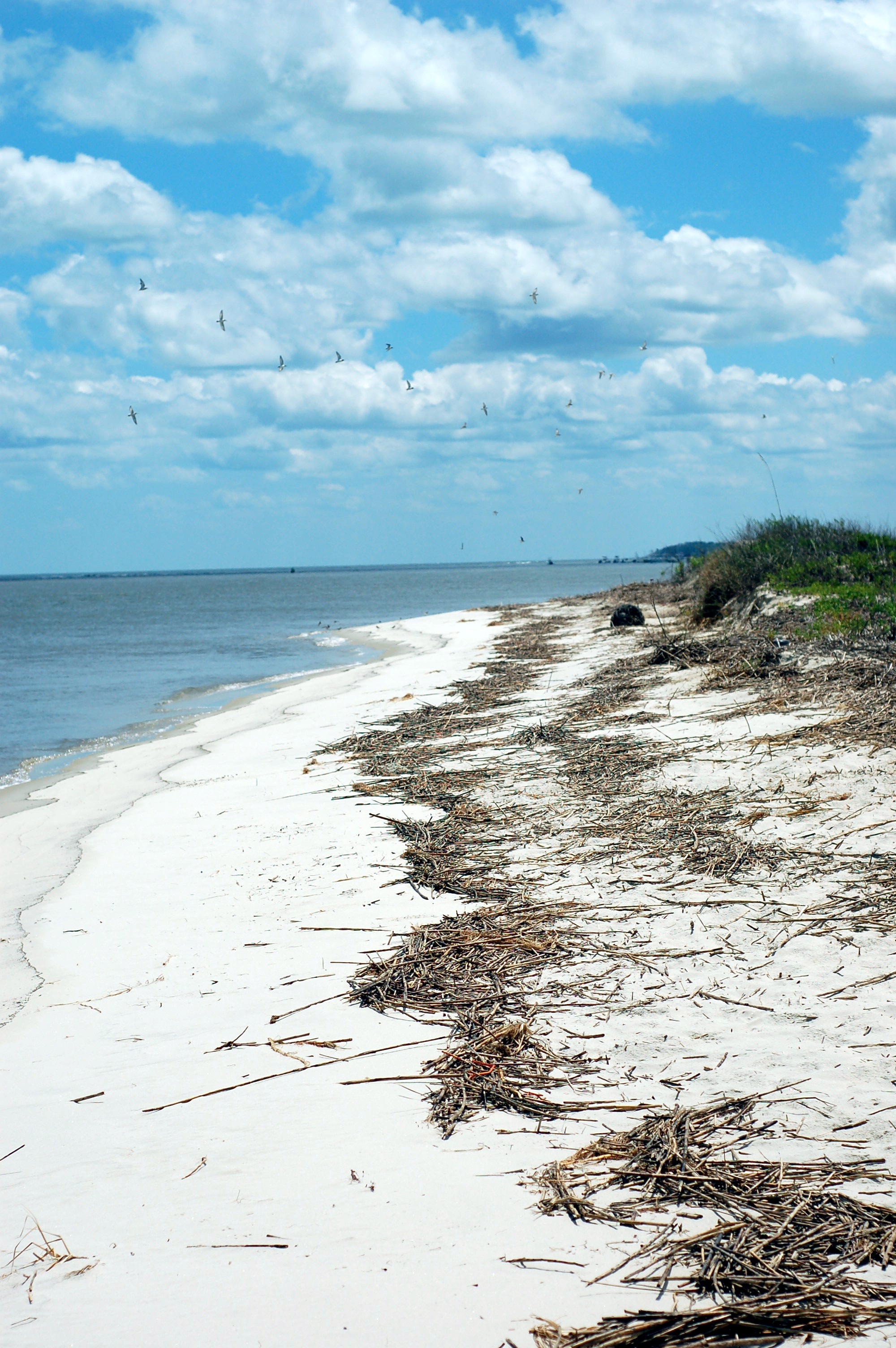
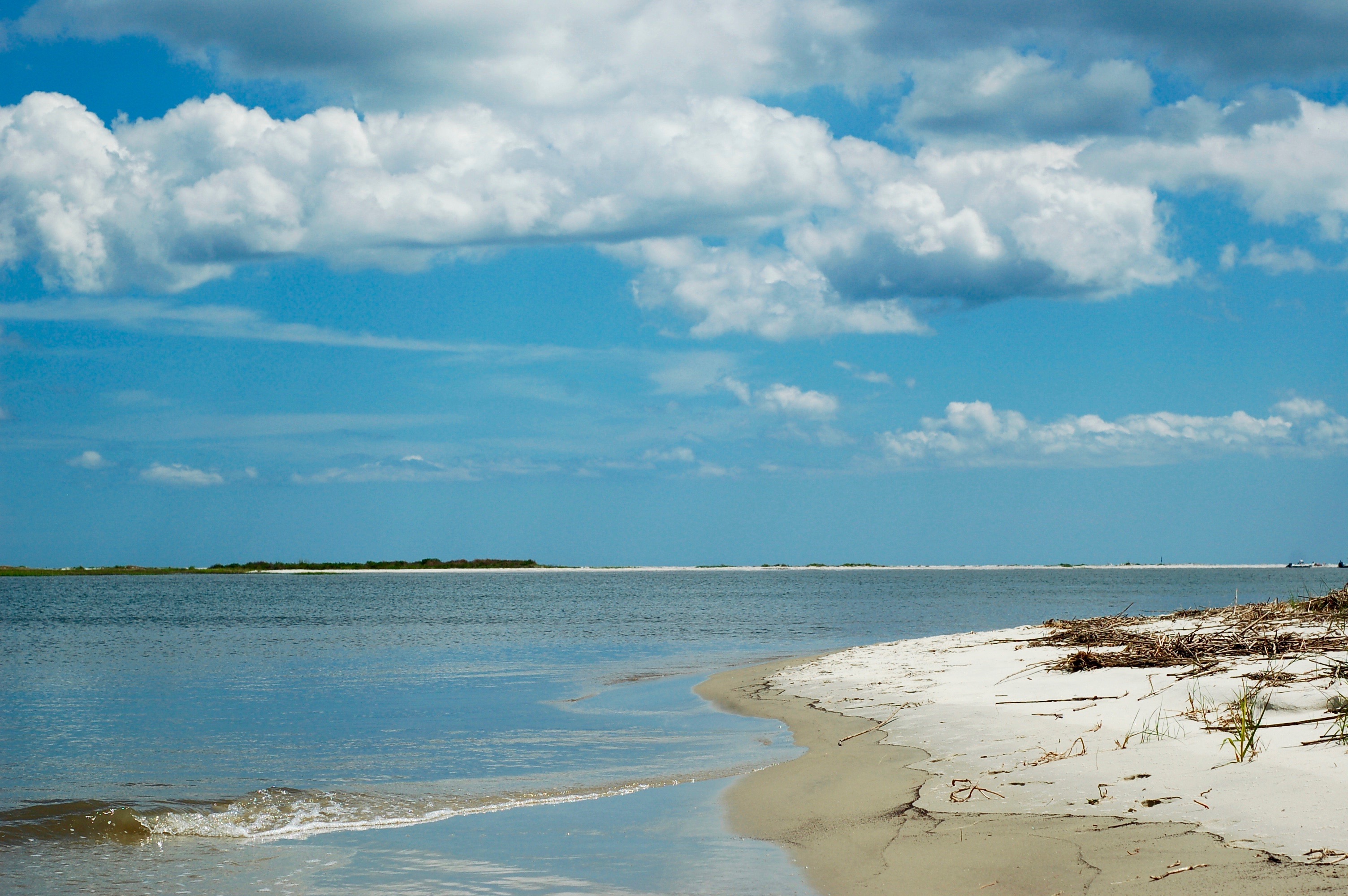
For the first week of summer, I brought our kids to my parents in Georgia, to the tidal playground of my childhood home. Before we arrived, my dad studied his charts to find the path through “the cut,” a serpentine route we navigated on summer days 20 years ago to get to an uninhabited barrier island south of us.
Riding through marshes on a rising tideMy parents and I wanted the kids to experience that boat ride, and the island at the end.
A beach to ourselves Angel wing Our island Palm tree roots and trunk
Sun bleached palm trunk
Riding in boats through salt marshes
Fallen palm tree on beach
Beach on uninhabited barrier island of Georgia
Marshes from the boat
Big sky, marshes, and a palm tree.
Tree trunk bench
The waters and the islands have changed quite a bit. Barrier islands migrate, and tidal waterways shift. But the ride, and the islands at the end, were as quiet, natural, and beautiful as I remember.





 I’m kind of terrified. I don’t know the language, I haven’t prepared for travelling overseas at all,







 Butterfly Mind