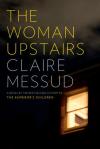
I officially quit on a book last night. Shelved it under DNF (did not finish) on Goodreads, removed it from the homepage of my Nook, and resumed the recurrent task of trying to find something gripping to read.
When I was younger, I refused to quit on a book. Even if it bored me to tears, or I hated the characters, or it took me places in the human psyche that I really didn’t want to go, I’d rally, and rally, and rally until I turned the last page. Some books were worth it. Like A Prayer for Owen Meany. John Irving drags the beginning of that book out forever, not just setting a stage, but shopping for lumber, forging steel for scaffolding, and then bolting the infrastructure of it together before finally showing you what its going to look like.
Likewise, he develops his characters slowly (and consequently, deeply), and all the while you wonder, I like Owen and all, but where is this going? I wanted to quit on Owen Meany a hundred times in the first 100 pages. But since so many of my peers, my reading peers whose shelves I respected, claimed Owen Meany as a top five favorite, I persisted. I rallied. And I persevered.
I am doomed to remember a boy with a wrecked voice. Not because of his voice, or because he was the smallest person I ever knew, or even because he was the instrument of my mother’s death, but because he is the reason I believe in God. – John Irving, A Prayer for Owen Meany
Now, our son is named for Owen Meany (in my mind, at least).
Later in life, though, I stopped rallying. As our days became stuffed with more and more real life responsibilities – earning money, paying bills, laundry; rearing children, paying bills, managing a household, laundry – free time became a precious commodity. More valuable, even, than money.
My first DNF was Les Miserables. It was terrible to give it up, a monumental struggle. Especially because it was a gift from my uncle, whose patronage has provided some of my most treasured titles – Life of Pi, The Shipping News, Long Quiet Highway. His own copy of To Kill a Mockingbird when I graduated from college. The books Uncle Syd has given me have changed my life, made me believe in God, humbled me before excellence, permitted me to write, deepened my empathy. I re-read them, over and over again.
So when I decided to close Les Miserables and not open it back up, it was with enormous anxiety. What am I going to miss by not finishing this? Uncle Syd gives masterpieces – deep, life-changing books – and I’m abandoning this one.
But.
To still be struggling, and forcing, and rallying, and rallying, and rallying after 700 pages is excessive. Especially when there are another 700 pages to go and you realize that one day you will die, and that day is getting closer with every day, every minute, every precious second that you are alive.
I abandoned Les Miserables more than ten years ago. Now, with two kids and my life approaching its (estimated) midpoint, time is even more sacred to me than it was then. I don’t feel guilt anymore, or anxiety, or what might I be missing? when I walk out on a book. I know a better one will come along. One that will grip me, and change me, and leave me hung over when I’m done. One that I will buy for our own shelves after borrowing it from the library’s, so that I can re-read it, over and over and over again.
The book I abandoned was The Book Thief by Markus Zusak. Because of all of its five star reviews, I gave it about 150 pages. It still hadn’t hooked me and I found myself browsing the library for something new to read. Never a good sign mid-book.
Swinging Bridge at Babcock State Park, West Virginia
“Hey Mom, are trees living things or living beings?”
Our nine year old son looked into the forest then up at me as we hiked side by side along a gurgling brook. His dad and sister walked a few steps ahead of us. Upstream was the Glade Creek Grist Mill in West Virginia, a rustic wooden building with a pitched roof. Today its wet planks were framed by yellowing autumn trees.
Glade Creek Grist Mill, Babcock State Park, WV October 2013
Glade Creek Grist Mill, Babcock State Park, WV autumn 2013
Glade Creek Grist Mill, Babcock State Park, West Virginia October 2013
Stream with rocks and autumn leaves, Babcock State Park, WV October 2013
“I guess that depends on what you mean by living being,” I said. “I think of a being as — ” I tried to think of words that would be familiar to him. I failed. “As a sentient being — something that has a soul.” The path was littered in gold, red, and toast brown leaves, and I kicked at a drift with my leather hiking shoe.
“Personally, I think of trees as living beings,” I told him, “but I think a lot of people probably think of them as living things.” Our son looked up the mountain into the dripping forest.
“What’s a soul?” he asked.
I sucked in a big breath. “Oh boy,” I said. Up ahead, our daughter twirled a red maple leaf between her thumb and pointer finger. “Your soul, if you believe in souls, is…” I struggled to find words. “It’s the part of you that makes you you.”
“You mean like your personality?” he asked.
“No, the spirit part. The part that is left after you die,” I said, then immediately knew what was going to come next.
“So like a ghost then!” our daughter said.
This was difficult.
“Not quite.” I searched my brain, trying to find language to describe souls to a seven and a nine year old.
“Your soul is the parts of you that aren’t physical,” my husband told them. “Your feelings, memories, friendships. The emotions you feel. Love.”
Our son tilted his head. “But isn’t all that stuff just your brain?”
I looked up to the trees again, hoping for some help. There was no wind; the trees were not talking.
“Yes, that’s one way to look at it,” I said. We like to give our kids a suite of options when it comes to spirituality and religion, to let them know that there is no hard and fast answer. No agreed upon truth that works for everyone all at the same time, and that they get to choose what they believe. “Some people believe that what Dad and I are describing as spiritual — feelings, intuition, love — is purely physical. A series of chemical reactions in our brains, nothing more.”
He kicked at leaves, thinking. I was still stuck on the soul thing. I wasn’t satisfied that we’d explained what a soul is.
“Remember when we talked about reincarnation?” I asked. The kids had asked about religion several months prior, and I told them I thought there are as many paths to God as there are people on earth. Then, in typical over-informative fashion, I gave them synopses of several religions of the world: Christianity and Judaism, Buddhism and Hinduism, Wicca, and Islam. The concepts of reincarnation and karma resonated with them more than the idea of heaven and hell did.
Our son’s ambition: to be a bug
“Yeah.” He looked up at me. He remembered the reincarnation talk. “Like I could come back as a bug!” This excited him, the idea of coming back as a bug.
“Remember how I said that when you die some people believe you go to heaven or hell, or in the case of reincarnation, you might come back as something else – another person, or maybe a bug?” I said. “The soul is the part of you that would go from one life to the next, that would go into that bug after your body died. It’s the part that would carry everything you learned in each incarnation.” I gestured uselessly to my heart. “The spirit part.”
My brain hurt from the effort of describing this. Soul, sentient, spirit. How do you explain these things? “But reincarnation is just one idea. Brain chemistry is another.”
“So nobody knows the real answer,” our son said. “What happens when we die, whether our feelings are just our brain or part of our soul.”
“Nope. It all depends on what you believe,” I said. “Nobody knows for sure.”
The leaves in the trees rustled a little. Not much, but enough to remind me of our son’s original question.
Green, red, yellow leaves Babcock state park, WV, October 2013
Appalachian Valley in early autumn, Babcock State Park, WV October 2013
Autumn leaves on grassy hill, Babcock State Park, WV October 2013
Golden tree (beech?) in sunbeam, autumn, Appalachia
“I think mostly people think humans have souls, and maybe animals have souls, but I don’t know that a lot of people think of plants as having souls. So most people would probably call trees living things.” I looked up at the green and orange and yellow and red leaves, and the strong trunks with rough or papery or chunky bark, and I saw how all those trees were nestled together as a community on the mountainside, gathering sunlight, being beautiful. I thought about the times that I have felt one with the whispering forest, when there was no doubt in my heart, or mind, or soul that trees are part of the same absolute that I am a part of, that we are kindred.
“Do you ever feel a connection to nature?” I asked our son. “Like, in your heart, a feeling that doesn’t have words, you just feel it when you’re out in the woods or by a stream or something?” It was my last hope, in this “thing” versus “being” discussion, that he would know what I was talking about.
“Yes.” He said this without hesitation, and I knew he would get it now.
“Me too,” I said. “Sometimes when a breeze blows through and the trees sway and their leaves rustle, I feel like they are talking. I don’t know what they are saying, but they are saying something.” I looked up to the forest again. “In their tree language.” Our son giggled. “I feel connected to them somehow, like they have spirits, or souls, or whatever you want to call it.”
“So when I think of trees,” I said, “I think of them as living beings and not just living things.”
Our son’s eyes flared with understanding as he looked up at me. “Yes,” he said. His body relaxed with the contentment of a seeker who has found the answer he sought. “I think you’re exactly right, Mom.”
Yellow is autumn trees to me. Originally published October 17, 2013.
Last holiday season, when I worked at the Barnes & Noble in Minnesota, a clean-cut 30-something man, about my age, approached me at the information desk. His short, sandy hair was neatly trimmed, his face freshly shaved, and he wore a grass-green long-sleeved polo, tucked into khaki chinos. He stepped up to the counter where I stood waiting to help him and said, straight faced, “Yes, I’m looking for a book called ‘Lost Balls.’ “
It had been nine years since I’d worked in the world, having stayed home with our kids until I started this job at the book store. Though I dressed the part in a pale pink button-down shirt and tailored black slacks, light makeup and petite pearl earrings, I wasn’t accustomed to maintaining professionalism. I smiled involuntarily, tucked in a giggle, and said, “I’m sorry, did you say ‘Lost Balls?’ “
“Yes,” he said, squinching his eyebrows and looking somewhat perplexed.
I typed it into BookMaster and tried to school my face, the hilarity growing inside of me as I watched the letters, one by one, fill in the search box. L-O-S-T- -B-A-L-L-S. The corners of my mouth twitched, and my eyes watered, and the more I tried to remain stoic, the harder it became to contain my Beavis and Butthead reaction. Huh huh. He said balls. I stifled a laugh, but my lips cracked into a smile despite myself.
He tilted his head a little, still serious, still knitting his eyebrows. “It’s about golf balls,” he said.
I looked up from the computer screen, straight into his searching eyes, stretched my mouth into a full grin, and said, “It’s still funny.”
P.S. I am in our kids’ elementary school cafeteria, seated in the half moon arrangement of folding chairs as I wait for our son’s 3rd grade concert to begin. Sitting next to me is a small child – maybe three? – farting up a storm. He squirms around in his chair, his butt aimed mostly at me, and I suffocate in a noxious cloud of toddler toots while he jabbers on, oblivious to his killing cloud. It is all I can do not to burst into laughter as I smell this kid’s farts and write about lost balls. (Okay, I did burst into laughter. The kind that you try to keep in, but still it escapes, through snorts and squeaky giggles. Our daughter is looking at me weird, head tilted, eyebrows squinched. Not unlike the man at the book store.)
P.P.S. I added the graphs last minute in response to the WordPress Image vs. Text challenge. That last one really has me thinking. Who is a subset of whom?
A man without a wife can be lonely in a big black Mercedes, no matter how many readers he has. – Howard Jacobson
Have you ever read a book that just didn’t do it for you, but had one character, one scene, or one line that has stuck with you forever? You’re going through life, feeling sorry for yourself that you don’t have more time to write, and then BAM. You remember a line from a book you had otherwise forgotten, and you thank God you read it?
That’s how it is for me with the line above from Jacobson’s novel, The Finkler Question. The book itself was only okay to me. The characters, meh. Kind of endearing, but kind of annoying, too. The story was not funny in a laugh out loud kind of way, but was witty, in an internal chuckle kind of way.
But that line. I have come back many times to that line. And it made the whole reading worth it.
I met with a fellow writer recently to trade critiques, and our conversation gradually transitioned to where to submit, who pays, who doesn’t, you could pitch it this way for this publication, that way for that journal. She is far more seasoned than I am, and when I asked whether her writing contributes substantially to her family income, she responded, “It doesn’t supplement my husband’s salary, but it pays for my writing studio.” And I was instantly jealous. A writing studio! God, how I’d love a studio. A room of my own, with a window seat, and light on my face, and a door that closes.
But more than that, a designated room would mean that writing was more than a hobby. That it was something serious, that I had time to do, that I wasn’t squeezing into an hour here, a half hour there. I’ve got 17 pieces I have started, then abandoned when it was time to wake the kids up, or volunteer at the school, or shop for groceries, or meet the school bus. By the time I get back to the essays, the mojo is gone. I’m not with the feeling anymore, and I can’t finish.
At these times I get frustrated. I fantasize about having large chunks of time to focus on writing, to research, to finish pieces, to edit, to polish. I go into my head, mulling all those incomplete essays, thoughts for this one jumbling with ideas for that one, and I think, if I were alone, and didn’t have all these responsibilities, I could take care of these. I could get them out, get them done.
A man without a wife can be lonely in a big black Mercedes, no matter how many readers he has.
And then that line from The Finkler Question snaps me back to reality, reminding me what it would really mean, at this stage in our family’s life, if I dedicated that kind of time and mental focus to a life of words. Because that line, regardless of its context within the novel, is about more than the emptiness of fame and fortune, or the loneliness of the writer’s life. It’s about throwing yourself into something so deeply, dedicating so much of your attention to this passion, or job, or hobby, that you risk losing contact, sacrificing closeness, with the most important people in your life.
There will come a time in the not so distant future when our children leave home, and there will be silence where their voices once were. Like the writer in The Finkler Question who lost his wife, I will rattle around in our empty house, with all the time in the world to write, and every room will be a room of my own. I will think of the pies I made with our daughter, of reading The Old Man and the Sea with our son, of answering their questions about sex and bad words, and I will give thanks for that single line in an only okay book. The line that reminded me to take my time, to enjoy my kids. A woman can be lonely in a room of her own, no matter how many readers she has.
The Finkler Question, by Howard Jacobson. “Winner of the 2010 Man Booker Prize, Jacobson’s wry, devastating novel examines the complexities of identity and belonging, love, and grief through the lens of contemporary Judaism.” (Publishers Weekly)
During the holidays I will be republishing posts from my first couple of years on Butterfly Mind. My site has this fancy new look now, and since I don’t foresee myself writing a lot over the next couple of weeks, I didn’t want the makeover to go to waste. This post was originally published two years ago today, on December 18, 2012.
When I originally started Butterfly Mind, I planned my site to be an online home for writing. I wanted words to be the focus – I didn’t foresee using photographs at all – and I selected Oulipo, a journalist theme (layout), to highlight that intention.
Recently, I’ve been feeling the limitations of that choice. I’ve started posting more images on my site, and my original theme was not kind to photography. The column was too narrow to showcase landscape layouts, and there were no options to feature images.
But aside from that, I felt an itch to move the furniture.
Back in June, Cheri Lucas Rowlands wrote about her choice to redesign her blog. She got my wheels turning, and I think I browsed the WordPress.com theme showcase at the time – just to see. I didn’t do anything with my site then, but the seed had been planted. Though I didn’t water or feed it, it grew anyway.
When I returned from Hawaii, I returned inspired. More fluid. Vulnerable to beauty. The past few nights I’ve been staying up, computer on my lap in the big comfy chair, while my husband watches The Walking Dead. I signed up for a free site, set it to private, imported all of my content from Butterfly Mind, and started playing with themes.
I tried several that didn’t suit me, then found a post highlighting themes for writers on Hot Off the Press, the WordPress.com news blog. From there I narrowed my choices down to two. I tweaked widget areas, played with featured images, rearranged menus. And I ultimately decided (with our 9 year old daughter’s help) on Hemingway Rewritten; I was a little giddy that the theme that works best for my blog is named for one of my favorite authors.
The influence of Hawaii is obvious in my color choices and header image, and what I love about Hemingway Rewritten is that it still offers a sidebar like my previous theme, but it eliminates a third column by moving the menu to the top.
Now photographs can take up more space. They can breathe. And I particularly love that I can customize a particular post’s header by attaching a featured image, like here, here, and here. Of course, that means I need to go through nearly 300 posts to attach featured images, but that’s okay – my husband has a lot of Walking Dead to watch.
Do you have a thing you daydream about – an ambition, a wish, a thing you’d love to do but you know it will probably never happen? Some people call it a bucket list, I suppose.
I had that thing. I’ve had it since I was about 12, a freckle-faced island girl with a brother who surfed. He listened to the weather radio as he waited for waves, and his room smelled like Sex Wax, and bleached-hair, tanned-skin 16 year-old boys would trample in and out of our house, bare feet on Mexican-tile floors, salty and sandy as they surfed and returned home, surfed and returned home.
If it ever occurred to me that I might learn to surf, I don’t remember it. Surfing resonated with me in some soul-deep way, but surfing was for boys, not for girls. I was intimidated by the scene and didn’t think I had a place in it.
So instead of surfing myself, I sat on the beach and watched. As I grew older, I sat in my convertible Bug and watched. I screened the movie North Shore over and over as a teenage girl, and when I came home from college I sat on the sea wall and watched.
The fascination has always stayed with me, but it wasn’t until I was an adult that I realized I wished I was surfing, not just watching other people surf. Not just watching movies or reading about surfing. By then it was out of my reach, though. Or at least, I always had excuses: there weren’t consistent waves off the nearby Naples shore; the beach was too far in Tampa; we moved to Minnesota; we moved to the mountains.
I think the reality of it was that I was afraid. I knew it would take time to learn, that it would be dicey on the choppy storm waves of the coasts I’ve known. That I would look like an idiot. That I wouldn’t know the etiquette. That I would fight the water instead of flowing with it. That I would fail.
I think I also knew that once I surfed once – once I stood up on a board and rode a wave – I’d want more.
And I was right.
~
Back in September, a week into my new job at Automattic, a colleague mentioned in passing, “Oh, you need to book your flight to Hawaii.”
What?
“Yeah, we’re having a team meetup in Kauai in December.”
Surf swap in Hanalei, Hawaii
Automattic is a distributed company, meaning we don’t work together in a central office but are scattered all over the world. Most of us work from home. As a result, we don’t see each other every day, or even on a weekly or monthly basis. Since Automattic doesn’t incur office space costs, we gather instead at week-long meetups to give ourselves the opportunity to work — and play — together. Generally a meetup consists of two (or more) travel days, four work days, and two days for activities together.
In the activities link, which offered options for horseback riding, tubing, hiking, it was there: surfing. And not only surfing, but surfing lessons. I knew my chance had come. I wouldn’t have to worry about any of my fears because I would have smooth waves, a long board, and instruction. And I wasn’t just going to surf, I was going to surf in Hawaii. My name was the first one on the spreadsheet.
Five of us drove from the south end of Kauai where we were staying to Quicksilver surf shop on the north end, in Hanalei, Hawaii. When we arrived, the shop signed us in, loaned us rashguards, and introduced us to our instructor, Makani, a lean Hawaiian with an easy smile. He said, “I can tell just by looking at you guys that you’re going to be awesome.” He flashed a white grin that made me believe him.
We spent about 10 minutes on dry land, jumping on longboards to check our stance, starting on our bellies to learn how to stand. Our instructor taught us to lay with our feet less than six inches from the board’s tail, to stand with our back foot planted perpendicular to and bisecting the board’s center line, to put weight on our back foot to brake, on our front foot to go faster. After we pushed up onto our knees, then into a kneel, then into a stand two or three times he said, “You guys are pros! Let’s get in the water,” and we drove to the beach.
We surfed in Hanalei Bay, a protected alcove with a curved shoreline, surrounded by lush volcanic mountains, and with perfectly consistent, perfectly dependable, easy, aqua waves.
Makani, whose name means “wind” in Hawaiian, taught us how to tip our longboards over incoming breakers, and once we were out, he instructed us to turn our boards towards the shore and collected the noses at his chest. He watched the sets roll in behind us and would nod at one of us at a time, allow the wave to come up under us, then give us a shove and say, “Stand.”
He didn’t shout, he didn’t stress, he just said, “Stand.” And I stood.
I wiped out on my first wave, but I got enough of a feel of the wave beneath me that I was already hooked. I paddled back to him instantly for another run.
“Lean back when you stand so your nose doesn’t go under,” he said. He watched the swell behind me, turned his shoulder so my board could move past him, gave me a shove and said, “Stand.” I stood and rode the wave all the way to the beach.
I paddled back out to him again. And again. And again. And again. Each time he gave me a more advanced move.
“Paddle four strong strokes. Stand.”
“Don’t kneel this time. Jump straight to your feet when I say stand. Stand.”
“I want you to do a little hop. You’ve got your left foot forward, yeah? Do a quick hop to turn your body 180 degrees so your right foot is forward. Then hop back.” He scanned the swell behind me. “You do that you’ll be surfing in the big leagues. Learn the balance. Keep your center of gravity low. Stand.”
He motioned three of us to paddle over to him at the same time. “I’m going to put you all on this wave together.” We watched the beach as he watched the surf behind us. All three of our boards pointed at him. He shifted his shoulders so he was between two boards. “Stand.”
And we were on a party wave.
Surfboards in Hanalei, HI
After my 8th or 10th ride, Makani stopped telling me when to stand. I learned the feel of the surge and figured out that I can stand too early and the wave will roll under and give me a ride, but the opposite is not true. If you stand too late you miss out. I practiced the hop on flat water behind the break, when I wasn’t riding a wave but was stable. And again and again I pointed my board at Makani.
I began to worry that maybe I should be trying to catch my own wave. But I wanted more time riding. More time to feel the surge underneath me, to learn balance on liquid, to tap into the energy of the surf. To learn what it feels like to ride a wave so that when I’m on my own, I’ll have those sensations to guide me.
I asked Makani, “Is it okay if I just keep coming to you instead of figuring out how to catch my own wave?”
“Yeah!” he said. “That’s what I’m here for. Now this time, look over your shoulder.”
I looked.
“See that swell coming? When it’s 20 feet away you start paddling. And on this one I want you to do the trick. Do the hop. I know you can do it. Paddle.”
I paddled. I stood. I wiped out.
I paddled out again. I pointed my board at Makani. He watched behind me. “Paddle,” and release.
I paddled. I stood. And somewhere on the ride — I can’t remember if it was as the crest curled beneath me or as I glided into the beach at the end — I did the trick. I hopped. I turned. I hopped and turned back again. And I didn’t wipe out.
We only caught one more wave after that one, and our lessons were over. The tops of my toes and my thighs were shredded from rubbing the board, but I didn’t care. I wanted to keep going. It was perfect. Everything was perfect. I surfed. In Hawaii.
Thank you Store team. Thank you Automattic.
Makani and Automatticians in Hanalei, HI. Photo courtesy of Radford Smith (aka Rads)